Blog Archives
Preaching to the spirits in prison. An interpretation of 1 Peter 3:18-20
Copyright by Bob Rogers, Th.D.

For Christ also suffered for sins once for all, the righteous for the unrighteous, that He might bring you to God, after being put to death in the fleshly realm but made alive in the spiritual realm. In that state He also went and made a proclamation to the spirits in prison who in the past were disobedient, when God patiently waited in the days of Noah while an ark was being prepared. – 1 Peter 3:18-20, HCSB
There are three facts about 1 Peter 3:18-20 which cannot be ignored:
- There was a story in a Jewish book called First Enoch about Enoch (Genesis 5:21-24) who made a journey to the supernatural beings who seduced human women (Genesis 6:1-4). This was at the time of Noah (Genesis 6:5-8). In First Enoch, Enoch is said to preach condemnation on these beings.
- First Enoch was well known in the first century, for Jude 9-10 and Jude 14 and 2 Peter 2:4-5 refer to stories which are in the older book of First Enoch, as does this passage.
- In Greek, verse 19 begins with three words which are transliterated in English letters: en o kai, which in Greek manuscripts would be run together: enokai. Compare that to the name Enoch.
What does all this mean? 1 Peter is well-known for clever arrangements of words. It seems that he is making a pun on the name Enoch in verse 19 because he is referring to a story about Enoch known to his readers.
First Peter 3:18 says that after Jesus died and was buried, he was “made alive in the spiritual realm.” Yet before His resurrection was physically displayed on Easter, He took care of some other-worldly business. He made a journey to the lower world of the dead (see Romans 10:7, Ephesians 4:9), where He “made a proclamation to the spirits in prison” (verse 19). The term “spirits” is never used to mean dead men, so it must refer to the fallen angels of Noah’s day, whom God had bound in prison (Jude 6, 1 Peter 2:4, Revelation 20:1-2, First Enoch 10).
Nowhere does Peter say that Jesus went to hell as punishment for our sins. The journey was to “Tartarus” (2 Peter 2:4, incorrectly translated “hell” in some translations). Tartarus was a Greek name for a place they believed all dead went, good and bad, like Hebrew word Sheol in the Old Testament. This journey was not forced upon Jesus; He went rather than suffer agony while in the grave.
Peter’s readers lived in a world where belief in evil spirits was universal. Some saw the Roman persecution coming, and they longed for protection from the evil spirits of the Romans which they feared might overcome the power of Christ. Peter comforted them with the news that Christ had defeated the most horrible of all spirits, the greatly feared fallen spirits of Noah’s day. In folklore, these spirits were considered to be the most wicked of all spirits.
First Peter 3:19 says Christ made proclamation to these spirits. This does not mean He was giving those who died before the time of His crucifixion a chance to believe the gospel, for he was speaking to spirits, not men. It does not even mean he was presenting the gospel to the spirits, for this Greek word can be used simply to “declare” or “proclaim” (the translation used in many versions, see also Revelation 5:2) with no implication of the gospel being presented. No, Jesus was announcing that He had defeated them! Thus, in verse 22, Peter says He ascended to heaven “with angels, authorities, and powers subject to Him.”
This proclamation of victory over the fallen angels was reassurance to Peter’s readers that they shouldn’t fear evil powers around them, for Christ is more powerful.
A second interpretation of 1 Peter 3:18-20 is worth considering. This view says that Jesus did not descend at all, but that in the same spirit of Jesus which has always existed, He had preached to the evil men of Noah’s day and given them a chance to repent. This takes verse 19 to refer to “in the spiritual realm” in verse 18.
This view appears to answer some questions people have, because it claims that the people living before the time of Jesus’ crucifixion had the same opportunity to repent as we do, for the spirit of Christ has always been around to give them the message, whether it be seen in Noah or Moses or a prophet.
This view is correct in noting that verse 19 simply says, “He went,” not “He descended.” It is also less complicated than the other view.
However, this second explanation seems to take things out of order. In verse 18, Peter refers to the cross, and in verse 22, he refers to the ascension. Verses 19-20 should refer to something in between, not to Jesus’ spirit back in the days of Noah.
Whatever interpretation we+9 follow, we would do well to remember to present it in “gentleness and respect” (1 Peter 3:15).
Further reading: Ernest Best, 1 Peter in the New Century Bible Commentary Series (Grand Rapids, MI: Eerdmans, 1971), 135-146.
E.G. Selwyn, The First Epistle of St. Peter, 2nd ed. (Grand Rapids, MI: Baker Book House, 1946), 197-202.
Ray Summers, “1 Peter” in volume 12 of The Broadman Bible Commentary (Nashville: Broadman Press, 1972), 163-164.
Prayer to experience God’s presence

Copyright by Bob Rogers.
Almighty God, I come into Your presence… I am silent before You… I close my eyes; I am listening for You to speak… My mind is focused on You; surround me with Your providential hand… Seep into my soul; penetrate me with Your peace… I breathe in Your grace, and breathe out Your praise. In Your holy Name I pray. Amen.
Prayer in a national tragedy

Copyright by Bob Rogers.
Lord, our hearts are broken. The images of death scar our minds. The cries of pain pierce our ears. We are numb and speechless with the horror of evil. God, have mercy on our nation. Have mercy on our world. Help us to overcome evil with good, even as You did in Your cross and resurrection. In the Name of the One who took the nails for us. Amen.
The Lord’s Prayer, Revisited

Copyright by Bob Rogers.
After this manner therefore pray – Matthew 6:9, KJV. Jesus did not command us to pray the Lord’s Prayer literally, as He worded it. Rather, He said to pray “after this manner,” or “like this.” In other words, He gave it as a model prayer for us to pray in our own words. Inspired by that thought, I revisited the prayer to write my own prayer “after this manner,” seeking to express His words in my own words. Here is my attempt. May it nudge you to be fresh and sincere as you pray the Model Prayer.
God, You are our intimate Father
Yet You are the transcendent Holy One.
Since You are King in heaven,
May we submit to your Lordship on earth.
We need your physical gift of food,
We need your spiritual gift of forgiveness,
And we need your social gift of grace to forgive others.
Take us by the hand, and lead us away
Far from the devil, that we may not stray.
We crown You, we submit to You, we honor You forever.
Amen.
A prayer to experience God’s presence

Copyright by Bob Rogers.
O God of the universe, I want to experience Your presence. You spoke to Moses in a burning bush, and spoke to Elijah in a still, small voice. You called Samuel from his bed during the night, and You called Paul in broad daylight on the road to Damascus. Teach me to look for You in things great and small, day and night. I want to hear from You when I read Your word, and when I hear a child share a simple truth. I want to see You in the lightning across the sky, and in the smile of a new friend. I want to feel You when I sing in the sanctuary and when I hug someone in pain. May I experience Your presence, and pass on that experience to those I meet this day. In the name of the One who walked on water, yet needed someone to wash his dirty feet, Jesus Christ my Lord.
Prayer for Good Friday

Copyright by Bob Rogers.
Precious Jesus, I meditate on the day of Your death.
Your hands were bound behind Your back
Your mouth was silent before Pilate
Your ears heard the words “Crucify!”
Your head was crowned with thorns
Your back was bloodied with the whip
Your back bore the cross to Calvary
Your hands and feet were nailed to the cross
Your tongue spoke words of forgiveness
Your side was pierced
Your heart was broken
Your work was finished.
Darkness covered the land and blood covered my sin,
the day the Lamb of God was sacrificed.
I cannot take away Your pain
I cannot pay You for my gain
I cannot be sacrificed in Your place
I can only receive Your gift of grace.
Prayer of Worship to the Crucified and Risen Christ
O crucified Son of Man, I worship You. You were arrested that I might be set free. You were falsely accused that I might be acquitted. You paid the price on the cross that I might be redeemed. When Easter morning dawned, and You walked out of that grave, I was given life!
Therefore, even as You walked out of the darkness, Jesus, may I walk in the light. You took the nails in Your hands and feet, may I use my hands and feet to bless others in Your name. You were silent before Your accusers; may I confess my sin as I proclaim Your name, the name of the Risen Son of God, Jesus Christ my Lord!
A prayer of thanksgiving

Copyright by Bob Rogers.
O Giver of good gifts, I am overwhelmed with thanksgiving for Your abundant blessings. I thank You that You opened my eyes this morning, You filled my lungs with air, and kept my heart beating. I thank You that You have given me sufficient food to eat, clothes to wear and a roof over my head. I thank You that You loved me so much that you sent Your only Son to die for my sins. I thank You that You filled my life with Your Holy Spirit. I thank You that You breathed upon Your word, the Bible, and gave it to me as a lamp to guide my way this day. I thank You for giving me a family who love me, and brothers and sisters in Christ in the church who encourage me. I thank You most of all, that because You opened my spiritual eyes to faith in Jesus Christ Your Son, I know that there is a morning coming, when I will open my eyes in heaven, and I will see You face to face. Until that day, may I live a life of gratitude, by serving others in the name of Jesus Christ my Lord.
A prayer in the pandemic
Copyright by Bob Rogers.
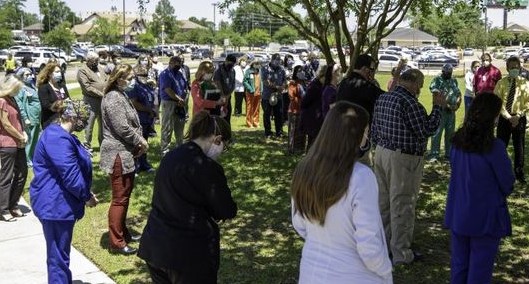
Oh, Lord, how we need Your presence in this pandemic.
For those who are sick, we ask for Your mercy and healing.
For those who are caring for the sick, we ask for Your compassion and strength.
For those who are afraid of the sickness, we ask for Your peace and protection.
For those who make policies about the sickness, we ask for Your wisdom and courage to do the right thing.
Heavenly Father, unite all of us, as Your children, by the bonds of Jesus Christ, our Savior and Lord.
Prayer of forgiveness for oneself

Copyright by Bob Rogers.
Oh, Lord Jesus, You died upon the cross to redeem me from sin, but I struggle to forgive myself. The tax collector prayed, “Have mercy on me, a sinner!” (Luke 18:13). Yet I tend to say, “Woe is me, a sinner!” Since I have repented of my sin and renounced it with all my heart, help me now to have mercy on myself. You said that “if our hearts condemn us, God is greater than all our hearts, and knows all things” (1 John 3:20). So Lord, since You know that I am forgiven, help me to know it, too—not only in my mind, but in my heart.
Easter jazz

Copyright by Bob Rogers.
“Who will roll away the stone?” Mark 16:3
“Who will roll away the stone?” the women asked as they approached Jesus’ tomb. Their Savior had died, their hopes were gone, and their heads hang in despair as the question lingered in the air. Can you relate to that?
We have stones that need to be rolled away, too. Our way is blocked with giant stones with names like cancer and COVID-19, stones with names like debt and divorce, names like shame and sorrow, and the actual names of people like the crazy co-worker, the insane in-law, the nosy neighbor.
Like the women that first Easter Sunday morning, we too wonder, “Who will roll away the stone?”
In many ways, the message of Easter is like jazz music. Jazz music originated with African-American musicians in New Orleans around 1900, and it often expresses discordant notes of pain that are then resolved with the swing of sweet notes of joy.
Easter is like jazz music. The people loved Jesus for His compassion for the outcast, His inspiring teaching of love, and His healing of the sick. Imagine their despair when Jesus was arrested, flogged, spat upon, mocked with a purple robe and crown of thorns, beat upon the head, forced to carry His cross to Calvary, the Place of the Skull, and then the nails slammed through his hands and feet, and forced to hang there naked and suffering, No wonder Jesus cried, “My God, my God, why have You forsaken Me?” It’s bad enough when you and I feel forsaken by God, but here was the Son of God feeling forsaken by God! That despair was shared by Jesus’ disciples. The disciples were hiding out in a room, afraid for their future, fearing they would be next.
But that was on Friday. Very early on Sunday morning, everything changed. The stone was rolled away, an angel in white clothes had bright news, that although they came thinking they would see a dead corpse, instead they saw an empty tomb, because Jesus was crucified, but now He has risen! The One who had been nailed to a cross was now raised from the grave, the One who had been whipped was now being worshiped.
His story was also their story. The wondering women had their stone moved, the shamed Simon Peter discovered that his Savior was alive. Notice verse 7 says to tell the disciples “and Peter.” The frightened disciples became bold preachers of the gospel.
What a crazy change in three days! No wonder they were overwhelmed with emotion.
Verse 5 says they were “amazed” and “alarmed.” Verse 8 says “trembling” and “astonishment overwhelmed them” and that they were “afraid.”
That’s why I say Easter is like jazz— it moves from discord to resolution, from pain to joy, and it requires a certain mystery and faith. Somebody asked Louis Armstrong what jazz music was, and he said, “If you have to ask, you don’t know!”
But you can know the Easter jazz. You can believe in Jesus Christ. His story was their story and it can be your story and mine.
The apostle Paul put it this way in Ephesians 2:1, 4-6: “And you were dead in your trespasses and sins… But God, who is rich and mercy, because of His great love that He had for us, made us alive with Christ, even though you were dead in trespasses. You are saved by grace! He also raised us up with Him and seated us with Him in the heavens in Christ Jesus.”
Listen to 1 Corinthians 15:19-20, 51-52: “If we have put our hope in Christ for this life only, we should be pitied more than anyone. But as it is, Christ has been raised from the dead, the firstfruits of those who have fallen asleep… Listen, I am telling you a mystery: We will not all fall asleep, but we will all be changed, in a moment, in the twinkling of an eye, at the last trumpet. For the trumpet will sound, and the dead will be raised incorruptible, and we will be changed.”
Easter does not mean that we will no longer have problems. The music of our lives will continue to have bent notes and broken cords. But because of His resurrection, the discord will be resolved with the sweet sound of hope for all of us who believe.
What stones do you need to have rolled away? What hope do you need to hear? Shh! Listen closely. I think I hear Jesus playing jazz!
How to get ready for Easter

Copyright by Bob Rogers.
When I served as a Baptist pastor in Rincon, Georgia, I had the unique experience of putting on a white wig and an old robe borrowed from a Methodist, to give a dramatic presentation of the founding pastor of the oldest Lutheran Church in North America. The historic pastor’s name was Johann Boltzius, and his church was Jerusalem Lutheran Church, founded in 1734 in the Ebenezer Community in Effingham County, Georgia, some 30 miles north of Savannah.
School children came from all over Georgia to the retreat center at Ebenezer to learn Georgia history. They visited Savannah, and they also came to the old Jerusalem Lutheran Church, whose sanctuary was built in 1769, to hear me tell the story, in costume, of Boltzius who served a congregation that fled to the New World from Salzburg, Austria, in search of religious freedom.
After the presentation, students were given an opportunity to ask “Pastor Boltzius” questions. One day in March, a student asked me why it was so dark in the church. With a gleam in my eye, I explained that it was Lent, a season in which members of that church remembered Jesus’ death on the cross for our sins. Members of the church fasted, prayed, and thought of other ways to make sacrifices in memory of Jesus, and during this time, they kept the window shutters closed. In fact, on Good Friday, they came into the church and sang songs about Jesus’ death, and then blew out all of the candles and went home in total darkness. The students reflected on that quietly, and I paused. Then I waved my hand at the shutters and shouted, “But on Easter Sunday morning, they threw open the shutters, let the light in, and celebrated, because Jesus is alive!”
Whether or not your church observes the tradition of Lent, it is an important reminder of how any Christian can get ready for Easter, by first reflecting on the suffering of Christ. I encourage you to read the story of the crucifixion from the Gospels of Matthew, Mark, Luke and John. Spend time alone, silent, reflecting on it. Fast and pray. Think about your own sin, your own struggles, your own sorrows, and how the suffering of Christ forgives, redeems and renews you. Meditate on the dark, and the light will brighten you more when it comes. Like that church in Georgia that threw open their shutters, if we will remember how dark it was when Christ died, we will appreciate all the more how glorious it was that He arose!
Lost in New York without knowing it

Copyright by Bob Rogers.
When I was in the seventh grade, Dad was stationed at Fort Hamilton in Brooklyn, New York, in order to attend a nine-month Army Chaplain’s School. Almost every family on the post was there because of a chaplain attending the school. That meant all of the kids were “preacher’s kids,” and all of the families were new, because we would be transferred after a year and a whole new group would come the following school year. The school year was 1970-71. We could see the twin towers of the original World Trade Center under construction across the Hudson River. I went to Public School 104, which was in an Irish-Catholic neighborhood. It was a good school, with strict discipline and excellent academics.
Soon after school started that fall, we learned that on Wednesday afternoons they had “release time.” This was when students got out of school early and could go to their house of worship for religious education, if they wished. On that first Wednesday, all of us Protestant chaplains’ kids, being brand new, simply followed our Catholic friends down the street to their church and went to catechism. Then we returned to school in time to catch the Army bus back to Fort Hamilton.
Needless to say, the phones were ringing off the hook that night when we started telling our parents what kind of notebooks the nuns wanted us to buy for catechism. It only took one week for those chaplains and spouses to organize a Protestant religious education class for us to attend.
But what really got some parents rattled was what happened to my little sister Nancy and some of her friends during their first “release time.” Nancy, who was in second grade, and a few other Protestant chaplains’ daughters, went to the Catholic class but they missed the bus ride home. Their parents had the military police frantically searching the streets of New York for them. Imagine: little girls from places like Kansas, Texas and Mississippi, all lost on the streets of Brooklyn! When the girls were found, they didn’t know they had been lost.
Jesus said that he came to seek and save people who were lost (Luke 19:10). He told parables about a lost sheep, lost coin, and lost (prodigal) son, to illustrate how God goes to great lengths to find people (see Luke 15). Many don’t even know they are lost.
Ironically, my sister Nancy now lives in Brooklyn. She lives there with her husband Alex, and she rides the subway like a native. She doesn’t get lost there anymore; it’s her home. Likewise, when people turn to faith in Christ, they too are no longer lost. Like my sister, they have found their home at last.
(This story will be part of my upcoming book about taking a humorous yet serious look at the Christian life, called, Standing by the Wrong Graveside.)
How big is your Jesus?
Article copyright by Bob Rogers.
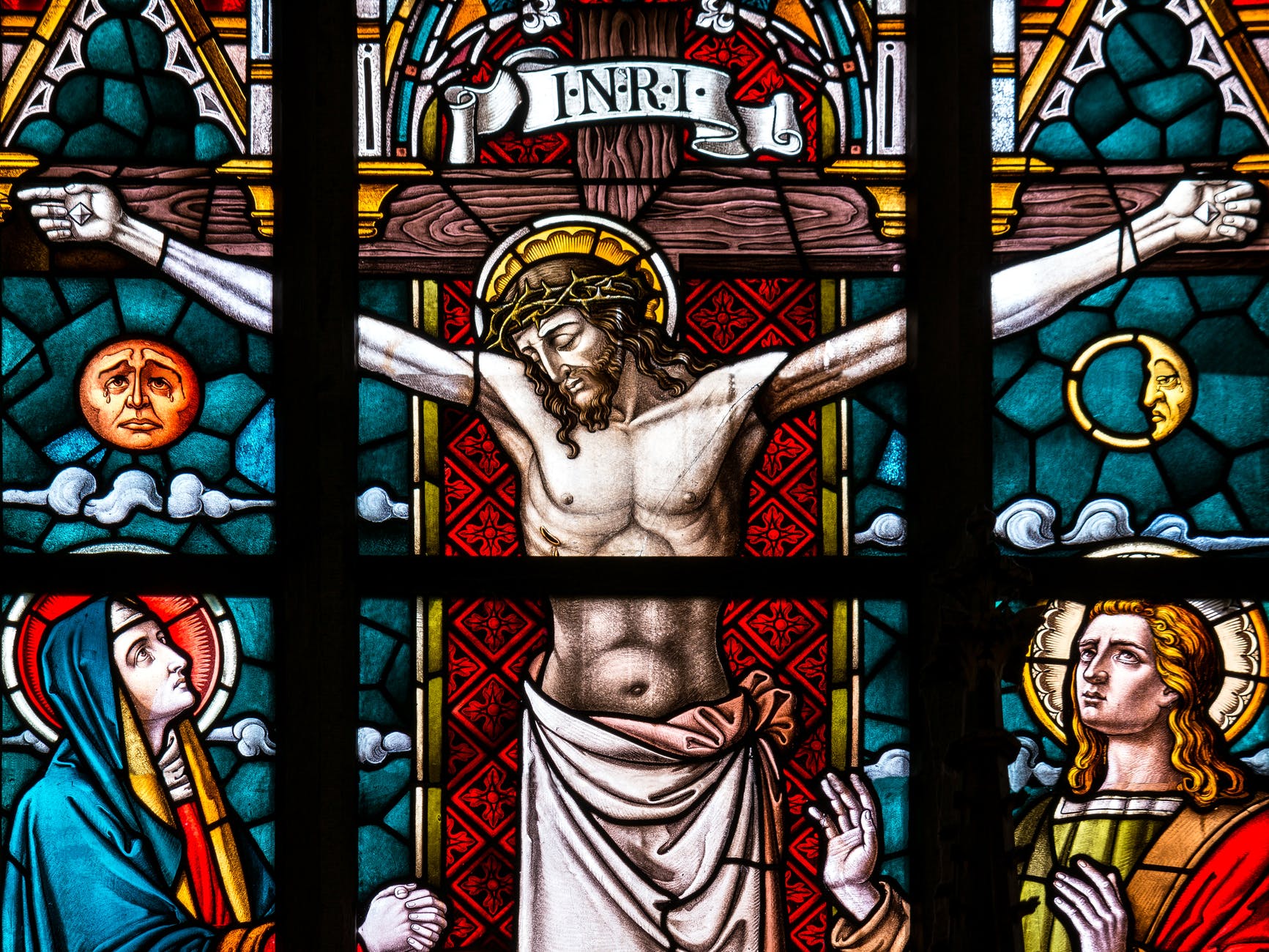
A lady told me that her granddaughter visited her church and saw the large stained glass window picture of Jesus. She said, “Granny, your church has a BIG Jesus!”
What a great statement! Does your church have a “big Jesus”? Are the sermons Christ-centered? Does your worship lift up His Name? Do the leaders prayerfully ask, “What would Jesus do?” before they do what they do?
Christian, what about your personal faith? Do you have a big Jesus? He’s not a little bitty idol that you put on the shelf and take out when you need a little favor. He’s not mini-god for minor problems. He is the Almighty God, Everlasting Father, Prince of Peace, Good Shepherd, Great Physician, the Alpha and the Omega.
The apostle Paul prayed that the church at Ephesus would have a big Jesus. Here is how he put it:
I also pray that you will understand the incredible greatness of God’s power for us who believe him. This is the same mighty power that raised Christ from the dead and seated him in the place of honor at God’s right hand in the heavenly realms. Now he is far above any ruler or authority or power or leader or anything else—not only in this world but also in the world to come. God has put all things under the authority of Christ and has made him head over all things for the benefit of the church. And the church is his body; it is made full and complete by Christ, who fills all things everywhere with himself. – Ephesians 1:19-23, NLT
Now that is a big Jesus! He is available to every church and every believer. How big is your Jesus?
Easter Sunday, Day of Surprise!

Article copyright by Bob Rogers.
Many people who doubt the truth of Jesus’ resurrection say something like this: “People in the first century were superstitious, simple-minded people, and they were much more likely to believe in a resurrection than modern people are today. So, probably something else happened, and they just wanted so badly for Jesus to live that they convinced themselves that Jesus was raised.”
But when we read the Gospels, a totally different picture appears. The early disciples were just as surprised then as we would be now.
The Gospel of Mark could hardly have used more words to describe ow surprised they were. Mark 16:5 says they were “alarmed.” The angel calmed them by saying, “Don’t be alarmed… You are looking for Jesus the Nazarene, who was crucified. He has risen! He is not here.”
Mark 16:8 says, “Trembling and bewildered, the women went out and fled from the tomb. They said nothing to anyone, because they were afraid.”
“Alarmed.” “Trembling.” “Bewildered.” “Afraid.” Mark was letting us know that they were totally surprised by the resurrection. They never expected it. Jesus had plainly told them he would be raised (see Mark 8:31-32; 9:30-32; 10:32-34), but they reacted to those predictions with fear and disbelief, just as people would today. Yet it really happened!
And because it happened, world history is changed. Time is divided from B.C. to A.D., because of Jesus. Within five weeks, 10,000 Jews in Jerusalem were following Jesus, and within 300 years, the Roman Empire came under the sway of Christianity.
Best of all, because of Jesus’ resurrection, we don’t have to escape reality, we can face reality! So many people try to escape their painful lives by diversions and entertainment. But Jesus’ resurrection changes all that. The sick man doesn’t have to transport himself into the imaginary world of a basketball star who slam dunks the ball; the sick man knows that in Christ, one day he will walk on streets of gold! The unloved woman does not have to escape into a world of romance novels to imagine love; one day because of her faith in Christ, she will be in a place where everybody loves her and accepts her, and she will see the One who died and arose to save her.
Surprise! Surprise! Easter is not a myth at all. It really happened, and because it happened, we can face reality.


 Bob Rogers