Blog Archives
As If Heaven Had Ordained It

“Not one word of all the good promises that the Lord had made to the house of Israel had failed; all came to pass.” – Joshua 21:45
When the Continental Congress gathered in Philadelphia in 1774 to unite against the British, they decided to open their proceedings in scripture and prayer. An Episcopalian minister named Jacob Duché was chosen. Before his prayer, rumors arrived that the British had attacked Boston. A frightened and receptive audience awaited as Duché read Psalms 35:1: “Contend, O LORD, with those who contend with me; fight against those who fight against me!” It was the assigned reading for the day in the Episcopal lectionary, but John Adams says members of the Continental Congress were stunned when they heard the words. Adams wrote, “It seemed as if Heaven had ordained that psalm to be read on that morning.” Have you had such an experience where the scripture seemed perfect for what you were going through at the time? I have several such scriptures marked in my Bible. Once when I was anxious about a situation at work, I read Psalm 34:4, “I sought the LORD, and he answered me and delivered me from all my fears.” That verse gave me sudden comfort. Eventually, everything worked out. Another verse that has helped me when facing a difficult decision is the promise of James 1:5, “If any of you lacks wisdom, let him ask God, who gives generously to all without reproach, and it will be given him.” Praying over that promise, God has given me direction time after time. Once when I was a hospital chaplain, I visited a patient writhing in pain, asking me to pray. As I was about to pray, two nurses entered and gave her tablets to take for pain, then left the room. Immediately I began to pray, and I sensed God telling me to quote Psalm 23, so I did. Even before I finished the psalm, she grew peaceful and still. I finished quoting the psalm, added a few more words asking God for healing, and then I looked up. The patient was resting. Her sister-in-law looked at me, eyes wide in amazement. I said, “That pain medicine hasn’t had time to work, has it?” The sister-in-law said, “No, but Psalm 23 did!” What scripture has given you guidance, comfort, or strength “as if Heaven had ordained” it?
Prayer
Lord, my heart is full of anxieties and desires, but your word is full of good promises and timely guidance. As I read scripture, show me how it applies to my life as if Heaven had ordained it for this day.
A challenge to Calvinism: M.T. Martin and the controversy that rocked Mississippi Baptists in the 1890s
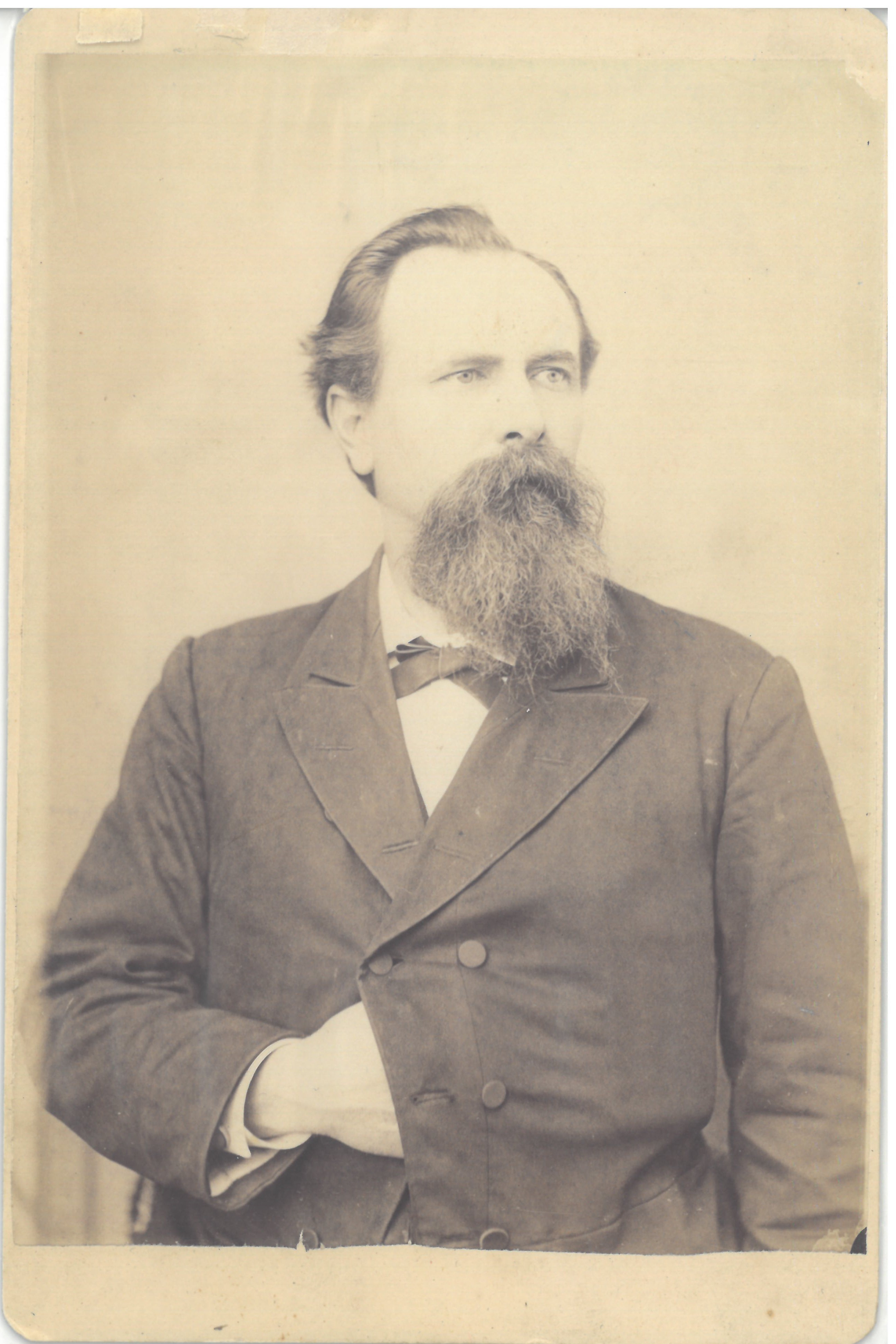
Copyright by Robert C. Rogers and the Mississippi Baptist Convention Board.
In 1893, a controversy began in the Mississippi Baptist Association and eventually spread across the state. Jesse Boyd wrote, “Its rise was gradual, its force cumulative, its aftermath bitter, and its resultant breach slow in healing.”1 While it may have been a quibble over words rather than a serious breach of Baptist doctrine, it illustrates how Mississippi Baptists clashed over Calvinist doctrine by the end of the 19th century.
M. Thomas Martin was professor of mathematics at Mississippi College from 1871-80, and he also served as the business manager of The Baptist Record from 1877-81. He moved to Texas in 1883, where he had great success as an evangelist for nearly a decade, reporting some 4,000 professions of faith. However, his methods of evangelism drew critics in Texas. According to J.H. Lane, while Martin was still in Texas, “the church in Waco, Texas, of which Dr. B. H. Carroll is pastor, tried Bro. Martin some years ago, and found him way out of line, for which he was deposed from the ministry.” In 1892 Martin returned to Mississippi and became pastor of Galilee Baptist Church, Gloster (Amite). Martin preached the annual sermon at the Mississippi association in 1893. His sermon had such an effect on those present, that the clerk entered in the minutes, “Immediately after the sermon, forty persons came forward and said that they had peace with God, and full assurance for the first time.” The following year, Mississippi association reported on Martin’s mission work in reviving four churches, during which he baptized 19 people, and another 60 in his own pastorate. Soon Mississippi Baptists echoed the Texas critics that he was “way out of line,” not because he baptized so many, but because so many were “rebaptisms.”2
The crux of the controversy was Martin’s emphasis on “full assurance,” which often led people who had previously professed faith and been baptized, to question their salvation and seek baptism again. In 1895, the Mississippi association called Martin’s teachings “heresy” and censured Martin and Galilee for practicing rebaptism “to an unlimited extent, unwarranted by Scriptures.” When the association met again in 1896, resolutions were presented against Galilee for not taking action against their pastor, but other representatives said they had no authority to meddle in matters of local church autonomy. As a compromise, the association passed a resolution requesting that The Baptist Record publish articles by Martin explaining his views, alongside articles by the association opposing those views, “that our denomination may be… enabled to judge whether his teachings be orthodox or not.” The editor of The Baptist Record honored the request, and Martin’s views appeared in the paper the following year. The association enlisted R.A. Venable to write against him, but Venable declined to do so. Martin also published a pamphlet entitled The Doctrinal Views of M.T. Martin. When these two publications appeared, what had been little more than a dust devil of controversy in one association, developed into a hurricane encompassing the entire state.3
Most of Martin’s teachings on salvation were common among Baptists. Even his opponent, J.H. Lane, admitted, “Some of Bro. Martin’s doctrine is sound.” Martin taught that the Holy Spirit causes people to be aware that they are lost, and the Spirit enables people to repent and believe in Christ. He taught that people are saved by grace alone, through faith, rather than works, and when people are saved, they should be baptized as an act of Christian obedience. Martin said that salvation does not depend on one’s feelings, and that children of God have no reason to question their assurance of salvation.
These teachings were not controversial. What was controversial, however, was what Lane called “doctrine that is not Baptist,” and what T.C. Schilling said “is not in accord with Baptists.” Martin said if a man doubted his Christian experience, then he was never true a believer.
He considered such doubt to be evidence that one’s spiritual experience was not genuine, and the person needed to be baptized again. “If you have trusted the Lord Jesus Christ,” Martin would say, “you will be the first one to know it, and the last one to give it up.” He frequently said, “We do wrong to comfort those who doubt their salvation, because we seek to comfort those whom the Lord has not comforted.” Therefore, Martin called for people who questioned their salvation to receive baptism regardless of whether they had been baptized before. “I believe in real believer’s baptism, and I do not believe that one is a believer until he has discarded all self-righteousness, and has looked to Christ as his only hope forever… I believe that every case of re-baptism should stand on its own merits, and be left with the pastor and the church.”4
The 1897 session of the Mississippi association took further action against Martinism. They withdrew fellowship from Zion Hill Baptist Church (Amite) for endorsing Martin and urged Baptists not “to recognize him as a Baptist minister.” The association urged churches under the influence of Martinism to return to the “old faith of Baptists,” and if not, they would forfeit membership. When the state convention met in 1897, some wanted to leave the issue alone, but others forced it. The convention voted to appoint a committee to report “upon the subject of ‘Martinism.’” Following their report, the convention adopted a resolution of censure by a vote of 101-16, saying, “Resolved, That this Convention does not endorse, but condemns, the doctrinal views of Prof. M. T. Martin.” While a strong majority condemned Martinism, a significant minority of Baptists in the state disagreed. From 1895 to 1900, the Mississippi association declined from 31 to 22 churches, and from 3,042 to 2,208 members. In 1905, the state convention adopted a resolution expressing regret for the censure of Martin in 1897.5
Earl Kelly observed two interesting doctrinal facts that the controversy over Martinism revealed about Mississippi Baptists during this period: “First, the Augustinian conception of grace was held by the majority of Mississippi Baptists; and second, Arminianism was beginning to make serious inroads into the previously Calvinistic theology of these Baptists.” It is significant that Mississippi association referred to Martinism as a rejection of “the old faith of Baptists,” and that when J.R. Sample defended Martin, Lane pointed out that Sample was formerly a Methodist.6
(Dr. Rogers is the author of Mississippi Baptists: A History of Southern Baptists in the Magnolia State, to be published in 2025.)
SOURCES:
1 Jesse L. Boyd, A Popular History of the Baptists of Mississippi (Jackson: The Baptist Press, 1930), 178-179.
2 Boyd, 196-197; Minutes, Mississippi Baptist Association, 1893; 7; Z. T Leavell and T. J. Bailey, A Complete History of Mississippi Baptists from the Earliest Times, vol. 1 (Jackson: Mississippi Baptist Publishing Company, 1904), 68-69; The Baptist Record, May 6, 1897.
3 Minutes, Mississippi Baptist Association, 1895; 1896, 9.
4 Boyd, 179-180; The Baptist Record, March 18, 1897, May 6, 1897, June 24, 1897, 2.
5 Minutes, Mississippi Baptist Association, 1897, 6, 14; Minutes, Mississippi Baptist Convention, 1897, 13, 17, 18, 22, 31; 1905, 47-48; Leavell and Bailey, vol. 1, 70; Boyd, 198. Martin died of a heart attack while riding a train in Louisiana in 1898, and he was buried in Gloster.
6 Earnest Earl Kelly, “A History of the Mississippi Baptist Convention from Its Conception to 1900.” (Unpublished Doctoral Thesis, Southern Baptist Theological Seminary, Lousville, Kentucky, 1953), 114; The Baptist Record, May 6, 1897.
Preaching to the spirits in prison. An interpretation of 1 Peter 3:18-20
Copyright by Bob Rogers, Th.D.

For Christ also suffered for sins once for all, the righteous for the unrighteous, that He might bring you to God, after being put to death in the fleshly realm but made alive in the spiritual realm. In that state He also went and made a proclamation to the spirits in prison who in the past were disobedient, when God patiently waited in the days of Noah while an ark was being prepared. – 1 Peter 3:18-20, HCSB
There are three facts about 1 Peter 3:18-20 which cannot be ignored:
- There was a story in a Jewish book called First Enoch about Enoch (Genesis 5:21-24) who made a journey to the supernatural beings who seduced human women (Genesis 6:1-4). This was at the time of Noah (Genesis 6:5-8). In First Enoch, Enoch is said to preach condemnation on these beings.
- First Enoch was well known in the first century, for Jude 9-10 and Jude 14 and 2 Peter 2:4-5 refer to stories which are in the older book of First Enoch, as does this passage.
- In Greek, verse 19 begins with three words which are transliterated in English letters: en o kai, which in Greek manuscripts would be run together: enokai. Compare that to the name Enoch.
What does all this mean? 1 Peter is well-known for clever arrangements of words. It seems that he is making a pun on the name Enoch in verse 19 because he is referring to a story about Enoch known to his readers.
First Peter 3:18 says that after Jesus died and was buried, he was “made alive in the spiritual realm.” Yet before His resurrection was physically displayed on Easter, He took care of some other-worldly business. He made a journey to the lower world of the dead (see Romans 10:7, Ephesians 4:9), where He “made a proclamation to the spirits in prison” (verse 19). The term “spirits” is never used to mean dead men, so it must refer to the fallen angels of Noah’s day, whom God had bound in prison (Jude 6, 1 Peter 2:4, Revelation 20:1-2, First Enoch 10).
Nowhere does Peter say that Jesus went to hell as punishment for our sins. The journey was to “Tartarus” (2 Peter 2:4, incorrectly translated “hell” in some translations). Tartarus was a Greek name for a place they believed all dead went, good and bad, like Hebrew word Sheol in the Old Testament. This journey was not forced upon Jesus; He went rather than suffer agony while in the grave.
Peter’s readers lived in a world where belief in evil spirits was universal. Some saw the Roman persecution coming, and they longed for protection from the evil spirits of the Romans which they feared might overcome the power of Christ. Peter comforted them with the news that Christ had defeated the most horrible of all spirits, the greatly feared fallen spirits of Noah’s day. In folklore, these spirits were considered to be the most wicked of all spirits.
First Peter 3:19 says Christ made proclamation to these spirits. This does not mean He was giving those who died before the time of His crucifixion a chance to believe the gospel, for he was speaking to spirits, not men. It does not even mean he was presenting the gospel to the spirits, for this Greek word can be used simply to “declare” or “proclaim” (the translation used in many versions, see also Revelation 5:2) with no implication of the gospel being presented. No, Jesus was announcing that He had defeated them! Thus, in verse 22, Peter says He ascended to heaven “with angels, authorities, and powers subject to Him.”
This proclamation of victory over the fallen angels was reassurance to Peter’s readers that they shouldn’t fear evil powers around them, for Christ is more powerful.
A second interpretation of 1 Peter 3:18-20 is worth considering. This view says that Jesus did not descend at all, but that in the same spirit of Jesus which has always existed, He had preached to the evil men of Noah’s day and given them a chance to repent. This takes verse 19 to refer to “in the spiritual realm” in verse 18.
This view appears to answer some questions people have, because it claims that the people living before the time of Jesus’ crucifixion had the same opportunity to repent as we do, for the spirit of Christ has always been around to give them the message, whether it be seen in Noah or Moses or a prophet.
This view is correct in noting that verse 19 simply says, “He went,” not “He descended.” It is also less complicated than the other view.
However, this second explanation seems to take things out of order. In verse 18, Peter refers to the cross, and in verse 22, he refers to the ascension. Verses 19-20 should refer to something in between, not to Jesus’ spirit back in the days of Noah.
Whatever interpretation we+9 follow, we would do well to remember to present it in “gentleness and respect” (1 Peter 3:15).
Further reading: Ernest Best, 1 Peter in the New Century Bible Commentary Series (Grand Rapids, MI: Eerdmans, 1971), 135-146.
E.G. Selwyn, The First Epistle of St. Peter, 2nd ed. (Grand Rapids, MI: Baker Book House, 1946), 197-202.
Ray Summers, “1 Peter” in volume 12 of The Broadman Bible Commentary (Nashville: Broadman Press, 1972), 163-164.
A Prayer for Christmas Worship

Copyright by Bob Rogers.
“A voice was heard in Ramah, weeping and loud wailing, Rachel weeping for her children, and she did not want to be comforted, because they were gone.” – Matthew 2:19
O sweet little Jesus boy,
Mary magnified the Lord at your birth,
Yet Rachel was heard weeping, refusing all comfort.
Wise men lavished you with gold,
And sweaty shepherds came to gawk.
Today we are a mix of joy and sorrow, health and sickness, knowledge and ignorance.
Yet we are here before You.
We are worshipers, we are hypocrites, we are strugglers, we are doubters,
Yet we are here before You.
Take our golden goodness, gawking greediness, magnificent joy, and mournful sadness.
and mold our mess to be like You, for you are the God of Mary and Rachel.
In the name of Jesus our Messiah and Lord we pray. Amen.
Guest post: What happens to people who die having never heard about Jesus?
Copyright by Wayne VanHorn.

Dr. Wayne VanHorn is Dean at the School of Christian Studies and Arts at Mississippi College. This post was first shared on his Facebook page and is shared here with his permission.
I remember the first time someone asked me, “What happens to all those people who die having never heard about Jesus?” They did not think it was fair for them to go to hell because they happened to be born at the wrong time and place to be in the path of Christian witnesses. Admittedly, I was stumped. I had to do some Bible study and some serious thinking before I could let this question go. Over the years, a few things have happened or come to mind that help me answer the question more substantively.
1. I met a man from in-land China. He grew up in Communism whereas I grew up in Church. He was fed a steady diet of atheistic propaganda: no God, no Jesus, etc. while I was taken to church every time the door was open. One day my Chinese friend was listening to the radio. Poor atmospheric conditions in one part of the world some how enabled an evangelistic radio message to skip across the atmosphere; my Chinese friend heard about Jesus “accidentally.” With no Bible, no Church, no preacher, no missionary, or any other evangelic witness, my Chinese friend heard the Gospel, accepted Jesus, and devoted his life to telling his countrymen about the same Lord who is my Savior. I met “Peter” (we could not pronounce his Chinese name) at New Orleans Seminary. This encounter reminded me that just because I do not know how people in remote areas can hear the Gospel does not mean that they do not hear the Gospel.
2. I came across Titus 2:11, “For the grace of God has appeared, bringing salvation to all men” (NASB) or as the KJV reads, “For the grace of God that bringeth salvation hath appeared to all men.” Once again I realized God is at work in ways I might not know about, might not understand, might be oblivious to, etc.
3. As I studied the Bible, I learned more and more of a loving God, who has gone out of His way to make it possible for sinners to repent and to return to Him.
4. In his book, True for You But Not for Me, Paul Copan wrote, “Third, God’s loving and just character assures us that he won’t condemn anyone for being born at the wrong place and time.” (Copan, p. 189)
5. The Greek text of Titus 2:11, “Ἐπεφάνη γὰρ ἡ χάρις τοῦ θεοῦ σωτήριος πᾶσιν ἀνθρώποις” (Tit 2:11 NA27) utilizes the dative- locative-instrumental form of the adjective “all” and of the noun “men” or “people.” This means God’s salvation-bringing grace has appeared: a. to all people b. for all people. While I cannot fully understand just how God does that, it is not beyond HIS ability to do it.
6. Any impulse or concern I have regarding the un-evangelized is probably God prompting me to share His Gospel with others.
7. Jesus is the only way to salvation, to God, and to heaven, if not, Jesus died in vain. If any religion or any devotion or any sincerely held religious view will save people, Jesus’ did not need to endure the cross and despise the shame. BUT He did endure the cross and He did despise the shame for the joy set before Him (Heb. 12:2). So don’t worry about the un-evangelized, pray for them and witness to them whenever you get a chance. But whatever else you do, don’t let an atheist talk you out of your faith because he/she says it’s unfair that some people will go to hell because they did not get to hear about Jesus. Let me know what you think.
Nine principles of Biblical interpretation
Copyright by Bob Rogers, Th.D.

CONTEXT – How does this verse fit with the verses before and after, and the whole chapter?
LITERARY STYLE – What kind of writing is this? Is it poetry, history, a letter, law, prophecy, etc.?
GRAMMAR – What does the subject and verb of the sentence indicate is the writer’s main point? Note figures of speech, etc.
PARALLEL PASSAGES – The Bible is its own best interpreter, so compare what the rest of scripture says on the subject.
CLEAR MEANING – Clear passages should clarify obscure passages.
HISTORICAL BACKGROUND – When, where and why was this written? What was going on at the time in history? What was the writer saying to people in his day and time?
TRANSLATION – Compare translations, to discern the best English word or phrase.
SPIRITUAL DISCERNMENT – What has the Holy Spirit told you here, as you read and prayed over it?
CHURCH TRADITION – How have Christians around the world and throughout history interpreted this?
The story of Dan Moulder, perhaps Mississippi’s greatest country preacher
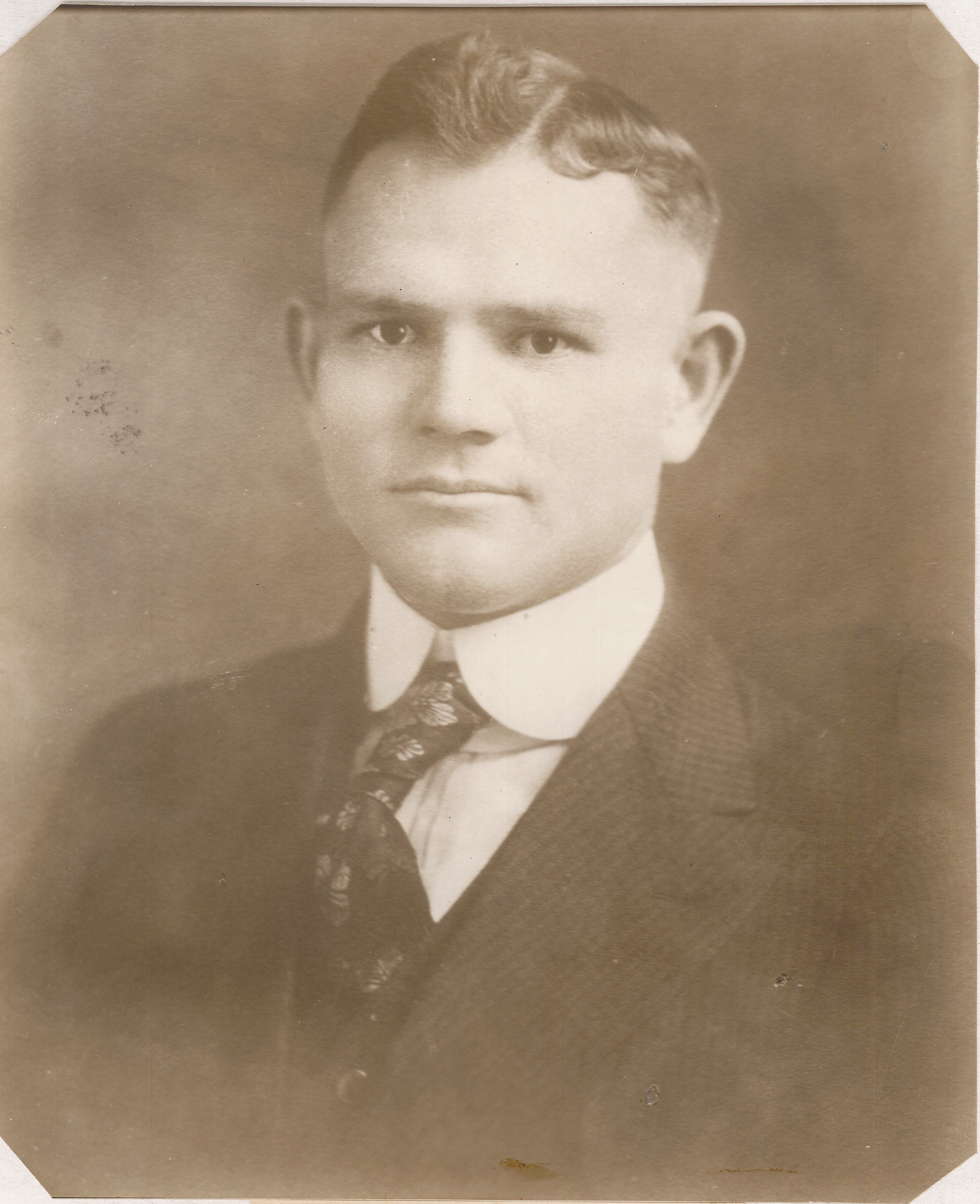
Copyright by Robert C. Rogers and the Mississippi Baptist Convention Board.
One of the greatest country preachers in the history of Mississippi was the remarkable Daniel Wesley Moulder of Lorena in Smith County. He served as pastor of as many as 11 churches at once. Born on November 26, 1867, Moulder was in his 60s at the time of the Great Depression, yet “Brother Dan” was still going strong. He preached at different locations every weekend, multiple times every Saturday and Sunday, and even occasionally on Friday night. Moulder eventually served 42 different churches in Smith, Simpson, Jones, Rankin, Hinds, Covington and Scott Counties, 16 of which he organized. In 1932, he preached 330 sermons in churches of which he was pastor, and 40 more sermons in other churches. He baptized 117 people in 1932, received 75 other new members, conducted 70 funerals, and performed six weddings. In 1933, Moulder was already serving 10 different churches at once as pastor when he organized another at Lorena in Smith County. During the Great Depression, each weekend he preached to churches scattered across Simpson, Smith and Rankin Counties. He once told a preacher who said he had nothing to preach, “Get your Bible and go among your people. You’ll receive more than you’ll ever be able to preach.” When he died in 1953, he was buried at Goodwater Baptist Church in Smith County, the church where he had been ordained. The Mississippi Baptist Convention annual honored Moulder as “one of Mississippi’s greatest country preachers,” and the Smith County Baptist Association remembered him as “Mississippi’s most widely known and best-loved minister.”
Dr. Rogers is the author of Mississippi Baptists: A History of Southern Baptists in the Magnolia State, (Mississippi Baptist Convention Board, 2025). The book is not sold in stores or on Amazon, but it can be obtained from the Mississippi Baptist Historical Commission by making a donation (suggested $15) at this link: https://mbcb.org/historicalcommission/
SOURCES: The Baptist Record, March 17, 1932; January 5, 1933, 1, 5; December 13, 1990, 2; Minutes, Mississippi Baptist Convention, 1953, cover page; Minutes, Smith County Baptist Association, 1953; Letter, D. W. Moulder to J. L. Boyd, January 14, 1927, Archives, Mississippi Baptist Historical Commission.
Prayer of thanks for the extraordinary ordinary

Our mouths were filled with laughter then, and our tongues with shouts of joy. – Psalm 126:2, CSB
Lord, I am so blessed. My lips can kiss my wife each morning when I get up and each evening when I go to bed, and I am grateful. Lord, my hands are able to work and provide for my family, and I am thankful. My mouth is filled with a delicious meal, and I am grateful. My tongue shouts when my team hits a home run, and I am thankful. My ears can here the flowing rivers, my nose can smell the fragrant flowers, and my eyes can see the fertile forests, and I am grateful. My head is covered with a safe shelter each night when I go home, and I am thankful. My knees hit the floor each morning and each night in prayer to You, the source of the extraordinary in the ordinary, and I am grateful.
Breaking news: LifeWay to republish the Holman Christian Standard Bible
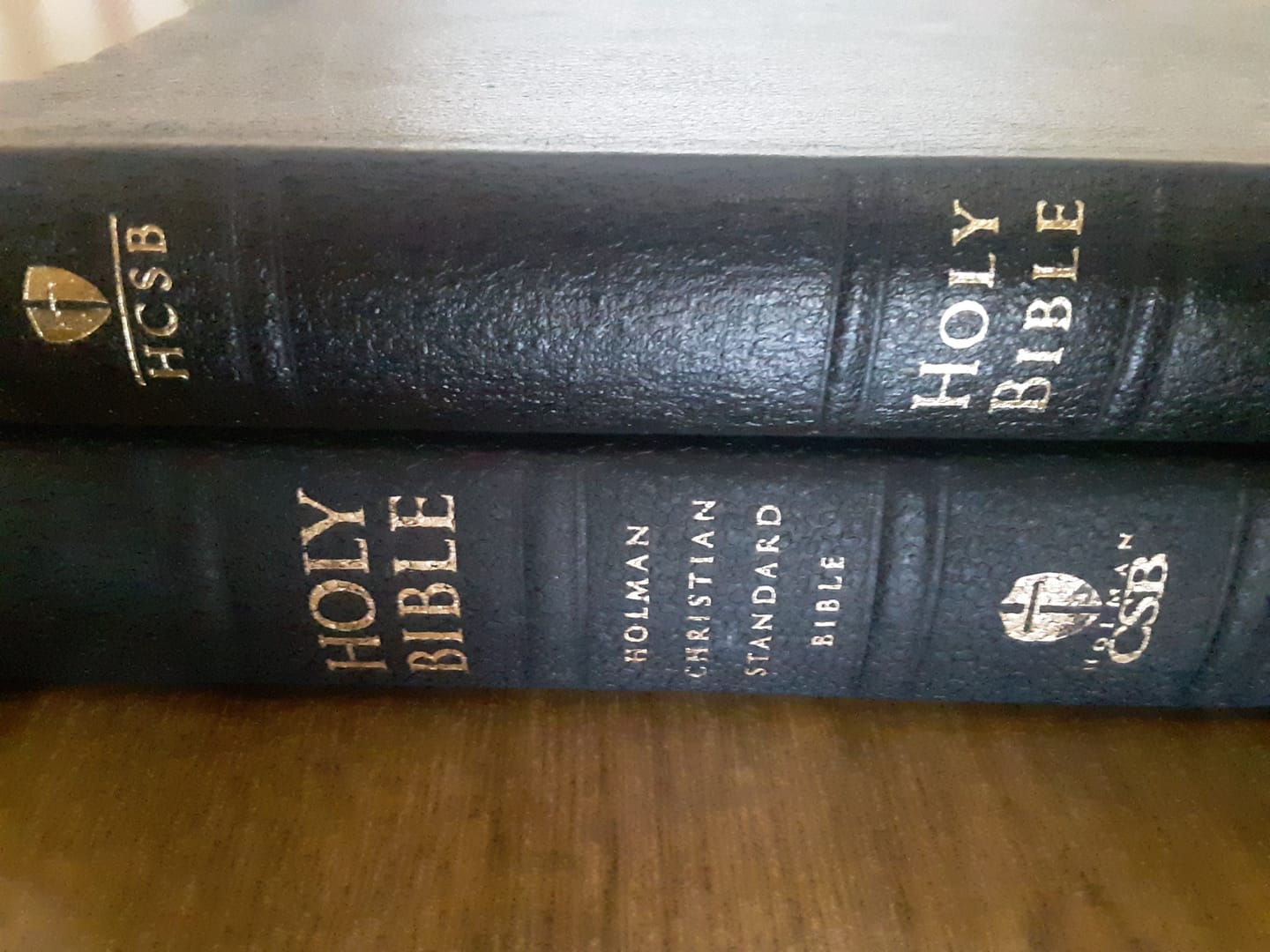
It’s not official yet, but as the administrator of the Facebook fan page for the Holman Christian Standard Bible (HCSB), I have been privy to some internal discussions from editors of LifeWay and Holman Bible Publishers, who have quietly been considering republishing a print edition of the HCSB.
The HCSB was first published in 2004 by Holman Bible Publishers, but discontinued in 2017 in favor of the Christian Standard Bible (CSB). When first published, the HCSB won praise among evangelicals for being more accurate than the popular New International Version (NIV), yet more readable than the reliable New American Standard Bible (NASB). However, it received some criticism for some unusual characteristics, such as occasionally using the literal “Yahweh” for the Old Testament name of God (traditionally translated with all capital letters, LORD), and for taking non-traditional translations, such as interpreting “sixth hour” in John 4:6 to mean that Jesus met the woman at the well at 6:00 in the evening, rather than the sixth hour of the day, at noon. The awkward name, Holman Christian Standard Bible, was also ridiculed by some as the Hard Core Southern Baptist translation, as Holman is owned by LifeWay Christian Resources of the Southern Baptist Convention.
Thus in 2017, Holman Bible Publishers made a major revision of the HCSB, keeping most of the language but removing most of the non-traditional elements of the HCSB, and gave it a simpler name: Christian Standard Bible (CSB). The CSB was released in 2017, and Holman discontinued printing the HCSB, although digital versions were still available on platforms such as YouVersion and Olive Tree Bible app. Holman Publishers hoped to market the CSB to a larger audience, and they did. The CSB consistently ranks in fifth place among purchases of new Bibles, according to ECPA.
However, there remained a faithful and loyal group of people who preferred the HCSB. As the administrator of the Facebook group dedicated to the HCSB, I know. And since I am the administrator, LifeWay CEO Ben Mandrell contacted me recently to discuss the interest in making a simple leatherflex print edition of the HCSB available, as a test market. He emphasized that they are still committed to the CSB, but thought there might stll be a niche market for the HCSB, just as some people prefer older editions of the NASB.
If you are interested in a print edition of the HCSB, do not contact Holman Bible Publishers or LifeWay, because they will not know what you are talking about, since this is an April Fool’s joke.
Prayer when feeling spiritually dry

Copyright by Bob Rogers.
Lord, I am in a spiritual desert. My soul is dry. I thirst for You. How I need Jesus, the spring of living water. Fill me with Your Holy Spirit. Pour Your living word into me. I desire to stand under Your loving presence, as a man stands under a waterfall, mouth open, drinking it in, letting it soak my heart and spirit. Then may I splash Your Spirit all around, that I may refresh those whom I meet this day. In Jesus’ name, Amen.
Life lessons from hospital patients

Copyright by Bob Rogers.
In my hospital ministry, I often ask patients what lessons they have learned. Here are a few of the wise words that I have heard, with limited details about the patients to protect their identity:
Elderly man with COVID-19. “They almost lost me, but the Lord still has a plan for me.” He was discharged a few days later.
Middle-aged woman who survived a car wreck, hit by a drunk driver: “Don’t take life for granted. It could all change in a moment.”
Elderly man with terminal cancer diagnosis: “Be ready to meet God.”
Elderly woman, retired educator, with congestive heart failure: “Do the right thing, treat people right; let be and let God.”
Elderly woman with kidney failure: “Live one day at a time.”
Elderly man in therapy, unable to move legs: “I don’t need money; I just need friends, and people to pray for me.”
Elderly female with multiple medical problems: “Accept what you get.”
Recently retired female pt who may need heart by-pass. “When I was little and there was a storm, mama put us children in a room together and said, ‘When God is doing His work, we be quiet.’” The patient explained that this became a motto for coping with trials: “When God is doing His work, we be quiet.”
Middle-aged female pt who nearly died in the ICU, slowly recovered and went to a room. “Just because life is hard, don’t give up.”
Younger middle-aged female pt who had a seizure and wrecked her car, and went through months of surgeries for broken bones. “I choose joy.”
Recently retired female pt who was told two months ago that she has breast cancer. “Don’t feel sorry for me. God’s got this. I’m not taking God down off His pedestal. What God can’t do, there ain’t no doing.”
Teenage male pt who had surgery for torn ligaments from football practice. “Everything happens for a reason.”
Middle-aged female pt who had a blood clot in the brain. “You can get glad or mad in the same pair of breeches.”
Middle-aged female pt who was in the hospital for a long time, recovering from COVID-19. “Learn to lean on God.”
Younger middle-aged female pt who spent over a month in rehab after spine surgery. “Don’t sweat the petty stuff. Prayer gets you through.”
Senior adult female who had a stroke. “The same God who did miracles for people in the Bible is getting me through this.”
Elderly man with leukemia, going home on hospice. “Money doesn’t mean anything when you leave this earth, and I have some money. The only thing that matters is that you know Jesus.”
Two prayers for Thanksgiving

Copyright by Bob Rogers.
Reflection on how to give thanks
Lord, how can I thank You enough for all You have done for me? Should I offer a thanksgiving offering like the ancient Israelites in their temple? Should I offer a song of thanks, or tell others of your wonderful works? Yes, Lord, I will do all of these things. Because of all that You have done for me, I will bring an offering of my time and money to You in church. I will offer You praise with my voice in song. I will give a testimony of Your goodness to me.
Prayer testifying to God’s goodness
O, give thanks to the Lord! He has saved me from sin and sickness. He has heard my prayers and answered me. He has given me peace in trials, and hope to overcome despair. He has filled my heart with joy through a loving family, and an encouraging church. I have seen Him change lives; I have seen Him rescue people who seemed beyond hope. He has opened my eyes to His truth through the Bible, His word. Let everybody join me in thanksgiving; let us give thanks to the Lord!
A prayer of thanksgiving

Copyright by Bob Rogers.
O Giver of good gifts, I am overwhelmed with thanksgiving for Your abundant blessings. I thank You that You opened my eyes this morning, You filled my lungs with air, and kept my heart beating. I thank You that You have given me sufficient food to eat, clothes to wear and a roof over my head. I thank You that You loved me so much that you sent Your only Son to die for my sins. I thank You that You filled my life with Your Holy Spirit. I thank You that You breathed upon Your word, the Bible, and gave it to me as a lamp to guide my way this day. I thank You for giving me a family who love me, and brothers and sisters in Christ in the church who encourage me. I thank You most of all, that because You opened my spiritual eyes to faith in Jesus Christ Your Son, I know that there is a morning coming, when I will open my eyes in heaven, and I will see You face to face. Until that day, may I live a life of gratitude, by serving others in the name of Jesus Christ my Lord.
Prayer for wisdom

Copyright by Bob Rogers.
Father, how we need Your wisdom. One person says to do this, and another says to do that, and both seem to give good reasons. We don’t know what to do. You say in James 1:5-6 that if we ask for wisdom in faith, You will give it, so we ask with confidence that you will direct us. Show us what is good and right, according to Your Word. Show us what will honor Your name and further Your kingdom. May we humbly make decisions that serve the interests of others more than our own interests, and please give us peace as we act on the wisdom that You give. In Jesus’ Name, Amen.
Prayer to hear God’s voice

Copyright by Bob Rogers.
Then the LORD came and stood, and called as at the other times: “Samuel! Samuel! And Samuel said, “Speak for Your servant is listening.” – 1 Samuel 3:10, NASB
Lord, Your servant is listeniing. Speak to me.
Speak to me through Your scriptures. Uplift me when I feel downcast, correct me when I wander from Your way.
Speak to me when I am quiet, alone in prayer and speak to me when I loudly sing Your praises with Your people.
Speak to me in the gentle voice of wind blowing the grass, the majestic voice of a tall pine tree, the thundering voice of a rainstorm.
Speak to me through the advice of a friend, complaint of a co-worker, and rebuke of an enemy.
Attune my ear to hear quickly and lull my lips to speak slowly, that I may be more like You.
Speak, Lord, Your servant is listening.


 Bob Rogers