Blog Archives
The Presbyterian spy in the Baptist Church

Copyright by Robert C. Rogers and the Mississippi Baptist Convention Board.
The first Baptist church in Mississippi not only faced persecution from the Catholic church but was infiltrated by a Presbyterian spy.
In the 1790s the Spanish controlled the Natchez District, outlawing all public worship that was not Roman Catholic. However, in 1791, Baptist preacher Richard Curtis, Jr. organized a church on Coles Creek, 20 miles north of Natchez, later known as Salem Baptist Church. The Spanish governor, Don Manuel Gayoso de Lemos, allowed private Protestant worship, hoping to win them over to Catholicism. However, when the priests in Natchez complained of the public worship of the Baptist congregation, Gayoso arrested Curtis in April 1795, and threatened to confiscate his property and expel him from the district if he didn’t stop. Curtis agreed, but he and his congregation decided that didn’t prohibit them from having prayer meetings and “exhortation.” Curtis even performed a wedding in May for his niece but did so secretly.
Sometime in 1795, Ebenezer Drayton was sent by Governor Gayoso to infiltrate the Baptist meetings and send back reports. He reported that at first the Baptists were “afraid of me, and they immediately guessed that I was employed by Government, which I denied.” However, he convinced them that his “feelings were much like theirs… my being of the Protestant Sect called Presbyterians and they of the Baptist.” Thus reassured, they allowed Drayton to attend their meetings, but Drayton wrote letters informing the Spanish “Catholic Majesty,” as he called him, of their activities.
Thanks to Drayton, the Spanish learned that Curtis started to go back to South Carolina, but the congregation sent four men to chase him down and insist he stay and preach to them. Considering this God’s will, Curtis returned and continued to preach. Drayton reported that Curtis agonized over his decision to stay, but told his congregation, “God says, fear not him that can kill the body only, but fear him that can cast the soul into everlasting fire… I am not ashamed not afraid to serve Jesus Christ… and if I suffer for serving him, I am willing to suffer… I would not have signed that paper if I had then known that it is the will of God that I should stay here.”
Drayton had a low opinion of Curtis and the Baptists. He wrote that the Baptists “are weak men of weak minds, and illiterate, and too ignorant to know how inconsistent they act and talk, and that they are only carried away with a frenzy or blind zeal about what they know not what…” However, Curtis seemed sharp enough to realize there was spy among them, because in July 1795, he published a letter in Natchez, explaining why he stayed, defending his religious freedom, and saying he was deeply hurt by “the malignant information against us, laid in before the authority by some who call themselves Christians.”
Thanks to their spy, the Spanish knew exactly when and where the congregation met. In August 1795, they sent a posse to arrest Curtis and two of his converts, but they fled to South Carolina, where they remained until the Spanish were forced by American authorities to leave the Natchez District.
Dr. Rogers is the author of a new history of Mississippi Baptists, to be published in 2025.
Guest post: What happens to people who die having never heard about Jesus?
Copyright by Wayne VanHorn.

Dr. Wayne VanHorn is Dean at the School of Christian Studies and Arts at Mississippi College. This post was first shared on his Facebook page and is shared here with his permission.
I remember the first time someone asked me, “What happens to all those people who die having never heard about Jesus?” They did not think it was fair for them to go to hell because they happened to be born at the wrong time and place to be in the path of Christian witnesses. Admittedly, I was stumped. I had to do some Bible study and some serious thinking before I could let this question go. Over the years, a few things have happened or come to mind that help me answer the question more substantively.
1. I met a man from in-land China. He grew up in Communism whereas I grew up in Church. He was fed a steady diet of atheistic propaganda: no God, no Jesus, etc. while I was taken to church every time the door was open. One day my Chinese friend was listening to the radio. Poor atmospheric conditions in one part of the world some how enabled an evangelistic radio message to skip across the atmosphere; my Chinese friend heard about Jesus “accidentally.” With no Bible, no Church, no preacher, no missionary, or any other evangelic witness, my Chinese friend heard the Gospel, accepted Jesus, and devoted his life to telling his countrymen about the same Lord who is my Savior. I met “Peter” (we could not pronounce his Chinese name) at New Orleans Seminary. This encounter reminded me that just because I do not know how people in remote areas can hear the Gospel does not mean that they do not hear the Gospel.
2. I came across Titus 2:11, “For the grace of God has appeared, bringing salvation to all men” (NASB) or as the KJV reads, “For the grace of God that bringeth salvation hath appeared to all men.” Once again I realized God is at work in ways I might not know about, might not understand, might be oblivious to, etc.
3. As I studied the Bible, I learned more and more of a loving God, who has gone out of His way to make it possible for sinners to repent and to return to Him.
4. In his book, True for You But Not for Me, Paul Copan wrote, “Third, God’s loving and just character assures us that he won’t condemn anyone for being born at the wrong place and time.” (Copan, p. 189)
5. The Greek text of Titus 2:11, “Ἐπεφάνη γὰρ ἡ χάρις τοῦ θεοῦ σωτήριος πᾶσιν ἀνθρώποις” (Tit 2:11 NA27) utilizes the dative- locative-instrumental form of the adjective “all” and of the noun “men” or “people.” This means God’s salvation-bringing grace has appeared: a. to all people b. for all people. While I cannot fully understand just how God does that, it is not beyond HIS ability to do it.
6. Any impulse or concern I have regarding the un-evangelized is probably God prompting me to share His Gospel with others.
7. Jesus is the only way to salvation, to God, and to heaven, if not, Jesus died in vain. If any religion or any devotion or any sincerely held religious view will save people, Jesus’ did not need to endure the cross and despise the shame. BUT He did endure the cross and He did despise the shame for the joy set before Him (Heb. 12:2). So don’t worry about the un-evangelized, pray for them and witness to them whenever you get a chance. But whatever else you do, don’t let an atheist talk you out of your faith because he/she says it’s unfair that some people will go to hell because they did not get to hear about Jesus. Let me know what you think.
Spiritual equality of the races in antebellum Mississippi Baptist churches

Copyright by Robert C. Rogers and the Mississippi Baptist Convention Board
It may be surprising to modern readers to know that church minutes from Mississippi Baptist churches in the years before the Civil War gave every indication that while Black members were treated as unequal socially, they were treated as equal spiritually. That is, both Black and White members were received for baptism and by letter with the “right hand of Christian fellowship” and called “brother and sister,” and both Black and White members received church discipline.
In 1846, Hephzibah Church in Clarke County heard a report that a “colored sister Aggy” had “married a man who had a wife living.” They sent a committee to talk to her privately, and reported she confessed it was true but refused to change, so she was excluded from membership. However, in 1853 the same sister Aggy was repentant, forgiven, and restored to the fellowship of the church.
Bethesda Church in Hinds County had a special committee of five called, “the committee to wait on the blacks.” It was their duty to recommend any church discipline among Black members, as well as to recommend any Blacks who joined by experience of faith or church letter. This committee also invited “the widow Jones Peter to exhort the blacks when present.” In 1859, Bethesda Church charged a “Bro. J. T. Martin for striking with a stick and whipping a Negro boy of Bro. John H. Collins and against Bro. J. H. Collins prosecuting at law Bro. J.T. Martin and cultivating an unchristian spirit toward him.” A committee was sent to get the two men to reconcile, but when they refused, both men were excluded from membership. Apparently, the “committee to wait on the blacks” was made up of White members, and thus was patronizing and socially inequal; yet the very existence of the committee was a recognition of the spiritual value of all races, and their actions showed some genuine desire to protect Blacks such as the slave mentioned above.
In April of 1858, Ebenezer Church in Amite County investigated rumors that a member had killed a enslaved girl, but accepted testimony of two witnesses that her death was an accident. However, in December 1858, Ebenezer Church excluded a Peter A. Green because Green killed one of his escaped slaves when he apprehended him. This was an interesting case in which a White person was disciplined by an antebellum Mississippi Baptist church for killing a Black person. While the social inequalities allowed Green to escape murder charges, he did not escape the spiritual discipline of his church.
In no way am I implying that Blacks were treated as fully equal to Whites in Mississippi Baptist churches in the early 1800s. They were not given places of leadership and they were usually required to sit in a separate location from Whites. However, the evidence is strong that when it came to their spiritual value as brothers and sisters in Christ, Blacks were valued far more spiritually in the church than most modern readers would imagine.
SOURCES:
Minutes, Ebenezer Church, Amite County, April 17, 1858, December 18, 1858; Minutes, Bethesda Church, Hinds County, July 1849, October 1849, March 19, 1859, April 16, 1859; Minutes, Hephzibah Church, Clarke County, March 14, 1846, April 18, 1846; November 12, 1853.
Nine principles of Biblical interpretation
Copyright by Bob Rogers, Th.D.

CONTEXT – How does this verse fit with the verses before and after, and the whole chapter?
LITERARY STYLE – What kind of writing is this? Is it poetry, history, a letter, law, prophecy, etc.?
GRAMMAR – What does the subject and verb of the sentence indicate is the writer’s main point? Note figures of speech, etc.
PARALLEL PASSAGES – The Bible is its own best interpreter, so compare what the rest of scripture says on the subject.
CLEAR MEANING – Clear passages should clarify obscure passages.
HISTORICAL BACKGROUND – When, where and why was this written? What was going on at the time in history? What was the writer saying to people in his day and time?
TRANSLATION – Compare translations, to discern the best English word or phrase.
SPIRITUAL DISCERNMENT – What has the Holy Spirit told you here, as you read and prayed over it?
CHURCH TRADITION – How have Christians around the world and throughout history interpreted this?
How Mississippi Baptist churches struggled during the Great Depression

Copyright by Robert C. Rogers and the Mississippi Baptist Convention Board.
During the Great Depression, nearly every church had financial struggles, whether the church was large or small. First Baptist Church in Natchez had already begun a new building when the stock market crashed, dedicating their building in 1930. Unfortunately, the debt of approximately $25,000 proved a heavy burden during the depression, and it took them until 1945 to pay it off. The pastor, W. A. Sullivan, asked that his own salary be cut, and the difference be applied to the church debt. Despite this and other sacrifices, in January 1932 the church was unable to pay the interest on their loan. To avoid default, the church took out another loan to pay the interest on the first loan. It was not until 1939 that the financial situation improved enough that they began to pay down the principal on the debt; it took the Natchez church until 1945 to get out of debt1
First Baptist Church in Clinton borrowed money to build a new building in 1923, but struggled to pay the debt, as it was a small church, with a large majority of the members being college students with little income. The Clinton church’s building debt was a third of its income when the Great Depression came, and the church had little means to pay. In April 1933, the deacons recommended that the pastor serve a month without pay, and that payments to the debt be deferred for six months, paying only the interest. It would be another ten years before they finally paid the debt.2
Calvary Baptist Church in Jackson was a large congregation of 1600 members in 1930, but many members lost their jobs and left Jackson seeking work elsewhere. The hard times caused them to appoint a five-man committee to present a plan to cut expenses. At first, they proposed moderate cuts, eliminating salaries for choir members, getting rid of one telephone, and urging “strictest economy” in electricity and water use. But as offerings continued to fall, they slashed other salaries and stopped purchasing Sunday school literature.3
When the Great Depression started, C. J. Olander was pastor of several churches in the Rankin County area, including First Baptist of Brandon, Bethel, Fannin and Pisgah churches, and he started the church at Flowood. Olander wrote later, “The depression became so severe that the members [at Flowood] moved out for the time being and came back and reorganized.” The Brandon Church paid him $450 a year. To supplement his income, Olander sold milk to townspeople and kept a good garden for food. In 1935, Olander went to the Delta to pastor five churches at once, even though a friend warned him that if he went there, “you will never be heard of again and the folk will starve you to death.” Olander said, “It was bad, it was bankrupt, yet today as a result of that ministry there are six full time churches. There was Morgan City, Tchula, Blaine, Cruger, Sidon and Harmony.”4
Some churches managed to thrive despite the Depression. A. L. Goodrich was called to pastor First Baptist Church, Pontotoc, just 30 days before the banks closed. Rather than let it dampen his spirits, Goodrich focused on sharing the gospel and helping his community. The energetic pastor joined local civic clubs, he took leadership positions in his Association and the State Convention, and he organized the “Pontotoc Cotton Plan” to give hundreds of dollars to the Mississippi Baptist Orphanage. God blessed the church with an increase of 232 members during his years as pastor, 1931-1935. The Pontotoc church’s Sunday night worship attendance was equal to morning worship; they started three choirs, paid off an old debt and installed a pipe organ.5
Dr. Rogers is the author of Mississippi Baptists: A History of Southern Baptists in the Magnolia State (Mississippi Baptist Convention Board, 2025). The book is not sold in stores or on Amazon, but a copy can be obtained by making a donation ($15 suggested) to the Mississippi Baptist Historical Commission at this site: https://mbcb.org/historicalcommission/ .
SOURCES:
1 “A History of First Baptist Church, Natchez, Mississippi, 1817-2000,” Unpublished document, Archives, Mississippi Baptist Historical Commission, 17-19; Daniel A. Wynn, “History of First Baptist Church of Natchez,” in Forward to Freedom: The 175th Anniversary Celebration, First Baptist Church, Natchez, Mississippi, April 26, 1992.
2 Charles E. Martin, A Heritage to Cherish: A History of First Baptist Church, Clinton, Mississippi, 1852-2002 (Nashville: Fields Publishing, Inc., 2001), 93-96.
3 Randy J. Sparks, Religion in Mississippi (Jackson: University Press of Mississippi, 2001), 183.
4 Tom J. Nettles, The Patience of Providence: A History of First Baptist Church Brandon, Mississippi, 1835-1985 (First Baptist Church, Brandon, Mississippi, 1989), 69, 72-73.
5 The Baptist Record, January 3, 1935, 5.
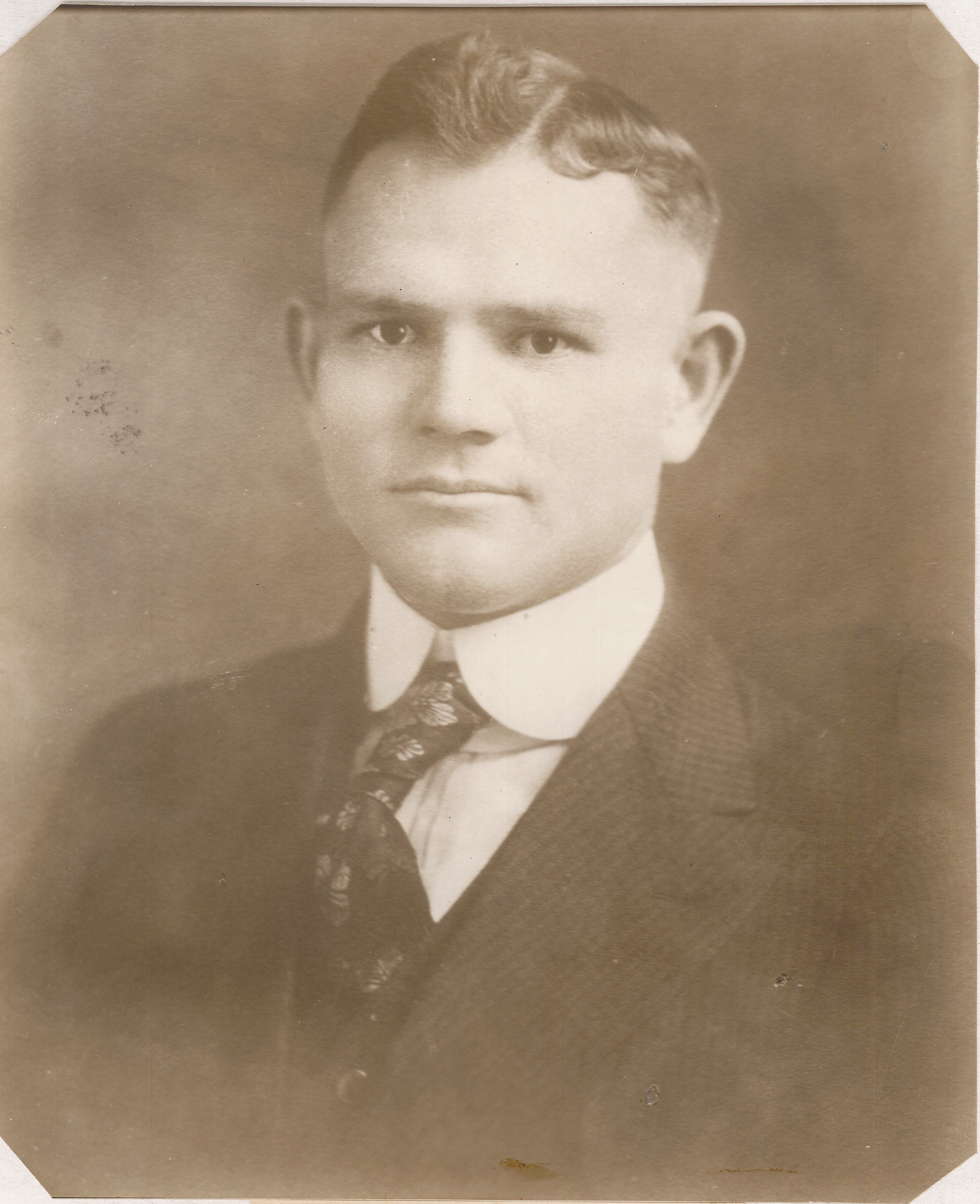
The story of Dan Moulder, perhaps Mississippi’s greatest country preacher
Copyright by Robert C. Rogers and the Mississippi Baptist Convention Board.
One of the greatest country preachers in the history of Mississippi was the remarkable Daniel Wesley Moulder of Lorena in Smith County. He served as pastor of as many as 11 churches at once. Born on November 26, 1867, Moulder was in his 60s at the time of the Great Depression, yet “Brother Dan” was still going strong. He preached at different locations every weekend, multiple times every Saturday and Sunday, and even occasionally on Friday night. Moulder eventually served 42 different churches in Smith, Simpson, Jones, Rankin, Hinds, Covington and Scott Counties, 16 of which he organized. In 1932, he preached 330 sermons in churches of which he was pastor, and 40 more sermons in other churches. He baptized 117 people in 1932, received 75 other new members, conducted 70 funerals, and performed six weddings. In 1933, Moulder was already serving 10 different churches at once as pastor when he organized another at Lorena in Smith County. During the Great Depression, each weekend he preached to churches scattered across Simpson, Smith and Rankin Counties. He once told a preacher who said he had nothing to preach, “Get your Bible and go among your people. You’ll receive more than you’ll ever be able to preach.” When he died in 1953, he was buried at Goodwater Baptist Church in Smith County, the church where he had been ordained. The Mississippi Baptist Convention annual honored Moulder as “one of Mississippi’s greatest country preachers,” and the Smith County Baptist Association remembered him as “Mississippi’s most widely known and best-loved minister.”
Dr. Rogers is the author of Mississippi Baptists: A History of Southern Baptists in the Magnolia State, (Mississippi Baptist Convention Board, 2025). The book is not sold in stores or on Amazon, but it can be obtained from the Mississippi Baptist Historical Commission by making a donation (suggested $15) at this link: https://mbcb.org/historicalcommission/
SOURCES: The Baptist Record, March 17, 1932; January 5, 1933, 1, 5; December 13, 1990, 2; Minutes, Mississippi Baptist Convention, 1953, cover page; Minutes, Smith County Baptist Association, 1953; Letter, D. W. Moulder to J. L. Boyd, January 14, 1927, Archives, Mississippi Baptist Historical Commission.
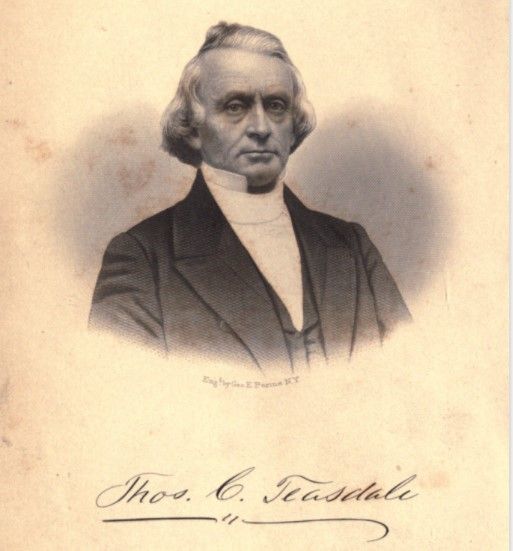
Rev. T. C. Teasdale’s daring adventure with Jefferson Davis and Abraham Lincoln
Copyright by Robert C. Rogers and the Mississippi Baptist Convention Board.
One of the most amazing but lesser-known stories of the Civil War is how a Mississippi Baptist preacher got both Jefferson Davis and Abraham Lincoln to agree to help him sell cotton across enemy lines in order to fund an orphanage. Although the plan collapsed in the end, the story is still fascinating.
Since over 5,000 children of Mississippi Confederate soldiers were left fatherless, an interdenominational movement started in 1864 to establish a home for them. On October 26, 1864, the Mississippi Baptist Convention accepted responsibility for the project. The Orphans’ Home of Mississippi opened in October 1866 at Lauderdale, after considerable effort, especially by one prominent pastor, Dr. Thomas C. Teasdale.1
Rev. Teasdale was in a unique position to aid the Orphans’ Home, because of his influential contacts in both the North and South. A New Jersey native, he came to First Baptist Church, Columbus, Mississippi in the 1850s from a church in Washington, D.C. When the Civil War erupted, he left his church to preach to Confederate troops in the field. In early 1865, he returned from preaching among Confederate soldiers to assist with the establishment of the Orphans’ Home of Mississippi. He launched a creative and bold plan to raise money and solve a problem of donations. A large donation of cotton was offered to the orphanage, and the cotton could bring 16 times more money in New York than in Mississippi, but how could they sell it in New York with the war still raging? Since Teasdale had been a pastor in Springfield, Illinois and Washington, D.C. and had preached to the Confederate armies, he was personally acquainted with both U.S. President Abraham Lincoln (from Illinois) and Confederate President Jefferson Davis, and many of their advisers. In February and March 1865, he set out on a dangerous journey by horseback, boat, railroads, stagecoach and foot, dodging Sherman’s march through Georgia, crossing through the lines of the armies of both sides, and conferred in Richmond and Washington, seeking permission from both sides to sell the cotton in New York for the benefit of the orphanage.2
Confederate President Davis readily agreed, and on March 3, 1865, Davis signed the paper granting permission for the sale. Next, Dr. Teasdale slipped across enemy lines and entered Washington, a city he knew well, since he was a former pastor in the city. He waited in line for several days for an audience with President Lincoln, but he could not get in, since government officials in line were always a higher priority than a private citizen. Finally, he sent a note to Mr. Lincoln, whom he knew when they both lived in Springfield, Illinois, saying that he was now a resident of Mississippi and that he was there on a mission of mercy. Lincoln received him, and he listened to the plea for cotton sales to support the orphanage, but the president was skeptical. Why should he help Mississippi, a State in rebellion against the United States? In his autobiography, Teasdale records Lincoln’s words: “We want to bring you rebels into such straits, that you will be willing to give up this wicked rebellion.” Dr. Teasdale replied, “Mr. President, if it were the big people alone that were concerned in this matter, I should not be here, sir. They might fight it out to the bitter end, without my pleading for their relief. But sir, when it is the hapless little ones that are involved in this suffering, who, of course, who had nothing to do with bringing about the present unhappy conflict between the sections, I think it is a very different case, and one deserving of sympathy and commiseration.” Lincoln instantly said, “That is true; and I must do something for you.” With that, Lincoln signed the paper, granting permission for the sale. It was March 18, 1865. However, a few weeks later, on April 9, 1865, General Robert E. Lee surrendered his Confederate Army to Union forces under General Ulysses S. Grant. By the time Teasdale returned home, the war was over, the permission granted by Jefferson Davis no longer had authority, Lincoln was assassinated, and Teasdale abandoned his plans. Teasdale said, “This splendid arrangement failed, only because it was undertaken a little too late.” Undaunted, Dr. Teasdale volunteered as a fundraising agent for the orphanage and staked his large private fortune on its success. Rarely has there been a more daring donor to a Christian cause!3
Dr. Rogers is currently writing a new history of Mississippi Baptists.
SOURCES:
1 Minutes, Mississippi Baptist Convention, 1866, 3, 12-17; 1867, 29-31.
2 Jesse L. Boyd, A Popular History of the Baptists in Mississippi (Jackson: The Baptist Press, 1930), 131.
3 Thomas C. Teasdale, Reminiscences and Incidents of a Long Life, 2nd ed. (St. Louis: National Baptist Publishing Co., 1891), 173-174, 187-203; Boyd, 130-132; Minutes, Mississippi Baptist Convention, 1866, 3, 14-16.
Prayer for a servant attitude

Copyright by Bob Rogers.
Lord, forgive me when I make my encounters with others all about myself.
You said that You came not to be served, but to serve and give Your life a ransom for many (Mark 10:45). Teach me not to tell my story before listening to the stories of others. Teach me not to pray for myself until I have prayed for others. Teach me not to grab a gift for myself until I have handed a gift to others. May I never use other people for my ends, but rather, may I give away my life for their good. In Jesus’ Name. Amen.
A prayer for bad politicians
Copyright by Bob Rogers.
O God, I cry out to You for my nation. You told us to pray for kings and all those in authority, but how do I pray for bad politicians? The wicked restrict the righteous, and justice comes out perverted. God, do something new! Lord, You remove kings and establish kings; You even used an unbelieving King, Cyrus of Persia, to rescue Your people from exile. Knowing this, Lord, I ask that you either remove bad leaders from their positions, or work through bad leaders to do good. Lord, I will watch and pray for You to work through our nation. I will keep my eye on our leaders to pray for them, but I will keep my faith in You, for my hope is in You, not in politicians. Lord, I ask that You to give me wisdom to vote my values, that You give me courage to volunteer my time and that You give me generosity to donate my money to those who are overcoming evil with good. In the Name of the Righteous Judge. Amen.
Based on Ezekiel 9:8; 1 Timothy 2:1-2; Habakkuk 1:2, 5; Isaiah 44:28-45:1, Daniel 2:21; Habakkuk 2:1; Matthew 26:41; Romans 12:21.
For a Biblical study on this subject, see: https://bobrogers.me/2016/11/06/how-to-pray-for-corrupt-politicians/
A prayer for wisdom

Copyright by Bob Rogers.
O God, all the depths of the riches of wisdom and knowledge dwell in You.1 Like Solomon, who prayed for wisdom, we have faith that You give wisdom generously to each of us who ask You.2 Please pour out Your rich wisdom to each of us who are poor in insight. Transform our minds, that we might have the mind of Christ.3 Fill us with the knowledge of Your will and spiritual understanding, so we may discern what is good and pleasing to You. This will help us to walk in ways pleasing to You, bearing good fruit and growing in our knowledge of God.4
Biblical references:
1 Romans 11:33
2 2 Chronicles 1:10; James 1:5
3 Romans 12:2, Philippians 2:5
4 Romans 12:2, Colossians 1:9-10
How one man started the Mississippi Baptist Convention
Copyright by Robert C. Rogers and the Mississippi Baptist Convention Board.
Mississippi Baptists organized a state convention in 1824 that failed. Internal discord and dissension from the anti-missions movement and teachings of Alexander Campbell resulted in the dissolution of this convention in 1829. As the Primitive Baptists and Disciples of Christ separated themselves from Mississippi Baptist churches, the mission-minded Baptists who remained were ready to try the experiment again. All they needed was a leader to galvanize them to action.
Ashley Vaughn, the man with the vision
The leader who inspired Mississippi Baptists to action was Ashley Vaughn. This dedicated Baptist minister was born sometime in the early 1800s and came to Mississippi in 1833 “compelled by ill health and on the advice of physicians,” after a two-year pastorate in New York. He became pastor of Clear Creek Baptist Church in Washington, near Natchez, on December 12, 1834. He presented letters for membership for himself and his wife from the Particular Baptist Church of Gibbonville and West Troy, New York.1
Although Vaughn did not come to the Natchez District as an officially appointed missionary, he did take on the role of a missionary. He visited the Baptist churches in the area and reported in a letter to the American Baptist that the churches were barren. He blamed this condition on the migration of settlers to the land recently vacated by the Indians in North Mississippi, as well as the inroads made by the Disciples of Christ, followers of Alexander Campbell. Vaughn immediately set about correcting this destitute situation. In addition to preaching at Clear Creek Church in Washington, in January 1836 he also began preaching at the site of the Old Salem Baptist Church, which had dissolved. In March 1836, Clear Creek Church purchased a parsonage for $1500. At the 1836 Union Association meeting, only Clear Creek Church was not complaining of a low state. With 115 members, Clear Creek was the only Baptist church in the state of Mississippi that reported more than 100 members in 1836. In September Vaughn began publishing the Southwestern Religious Luminary at Natchez, the first Baptist newspaper in Mississippi. The first issue of the paper called for the organization of a state convention to “combine the counsels, concentrate the energies, and unite the efforts of the denomination.” Vaughn traveled four to five hundred miles on horseback that autumn to associational meetings to get support for a state convention, and he was so successful that the Mississippi Baptist Association suggested a gathering at Vaughn’s church in December 1836 so that “the Baptists of this State should meet in convention by delegation, to take into consideration the adoption of some systematic plan, by which the efforts of our denomination may be united….”2
Organization of the Mississippi Baptist Convention
Vaughn’s tireless dedication paid off. A small but influential group of ten delegates met at Clear Creek Church two days before Christmas, December 23-24, 1836, and organized “The Convention of the Baptist Denomination of the State of Mississippi.” The delegates got to work immediately, unanimously approving a constitution, electing officers, electing a delegate to the Triennial Convention (the national organization of Baptists at the time), passing resolutions, and taking up an offering of “near two hundred dollars.” They correctly assumed the support of many others not in attendance. This can be inferred by the fact that these ten men elected 40 men to positions of office and a board of directors! These officers included one man who was not in attendance, Benjamin Whitfield, who would later serve as convention president. They directed Ashley Vaughn to publish 700 copies of their proceedings, indicating the size of the audience they expected. While 700 copies may have seemed like a lot in 1836, the Mississippi Baptist Convention has since grown to a over 700,000 members in 2,100 churches today.3
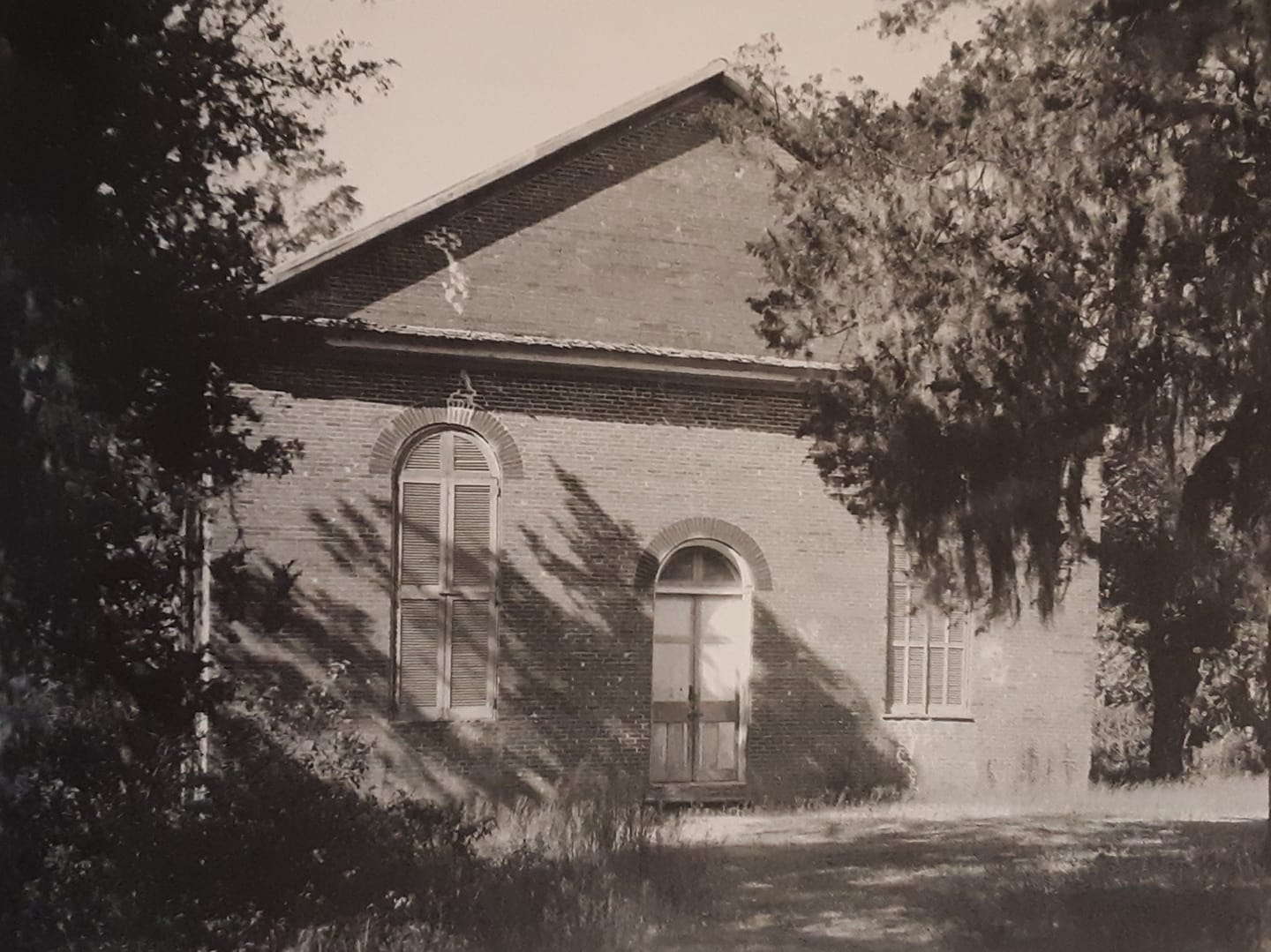
| Above: Meeting house of Clear Creek Baptist Church, Washington, Adams County. Built in 1828. Here the Mississippi Baptist Convention was organized in 1836. The congregation dissolved in the 1880s and the building was later demolished. – Richard J. Cawthon, Lost Churches of Mississippi (Jackson: University of Mississippi Press, 2010), 149. |
SOURCES:
1 Minutes, Clear Creek Baptist Church, Adams County, Mississippi, December 12, 1835; Southwestern Religious Luminary, December 1837; C.B. Hamlett, III, “Ashley Vaughn,” Encyclopedia of Southern Baptists, II, 1442. Hamlett incorrectly states that Vaughn “served as a missionary of the American Baptist Home Mission Society.” However, the society did not record an appointment of Vaughn nor correspond with Vaughn and did not begin work in Mississippi until after his arrival. Vaughn himself criticized the American Baptist Home Mission Society in 1837 for having only one missionary in Mississippi under appointment, saying, “nor do we know indeed that he has accepted of the appointment.”
2 John T. Christian, A History of the Baptists of Mississippi, (Unpublished manuscript, 1924), 124; Minutes, Clear Creek Baptist Church, January 9, 1836, March 12, 1836, July 10, 1836; Frances Allen Cabaniss and James Allen Cabaniss, “Religion in Ante-Bellum Mississippi,” Journal of Mississippi History 6 (October 1944): 205; Southwestern Religious Luminary, September 1836, November 1836; T. M. Bond, A Republication of the Minutes of the Mississippi Baptist Association (New Orleans: Hinton & Co., 1849), 172; Minutes, Mississippi Baptist Convention, 1837, 25-28.
3 Proceedings of a Meeting to Consider the Propriety of Forming a Baptist State Convention, held in the Baptist Meeting House at Washington, Mississippi, 23rd and 24th December 1836 (Natchez: Stanton & Besancon, 1837), 3-8; “Southern Baptist Statistical Data by State,” accessed on the Internet 3 May 2022 at http://www.johnstonsarchive.net/baptist/sbcstatedata.html.
The first Baptist missions to Native Americans in Mississippi

Copyright by Robert C. Rogers and the Mississippi Baptist Convention Board.
Native Americans were an area of concern for Mississippi Baptists. The white man wanted the Indian lands, and but the Baptists desired the conversion of their souls. In 1817, the Mississippi Baptist Association began an aggressive policy by sending Thomas Mercer and Benjamin Davis to visit the Creek Indians and see what cold be done to establish the gospel among them. The missionaries started out on their mission, but the project collapsed when Mercer died. Baptists in Kentucky started an academy for Choctaws in that State in 1819, but it closed in 1821. Richard Johnson, a Baptist leader in Kentucky, then opened an academy for Mississippi Choctaws in 1825 in the district of Choctaw chief Mushulatubbee, which was approximately the area between the modern cities of Columbus and Meridian. This school’s curriculum was secular, but the teachers hoped to “civilize” the Choctaws and lead them to faith in Christ. They met with some success among students, but the missionaries had little impact on adults in the tribe. A young female student wrote: “I do not know that one adult Choctaw has become a Christian. We all pray for them, but we cannot save them; and if they die where will they go? May the Lord pour out his Spirit upon the poor Choctaw people.” It would be many years before missions to the Choctaw tribe would have much impact.
This is one in a series of blog posts about Mississippi Baptist history. Click the links on this blog to read other posts on Mississippi Baptist history. More stories to come.
(Source: T. M. Bond, A Republication of the Minutes of the Mississippi Baptist Association (New Orleans: Hinton & Co., 1849), 60, 71; Clara Sue Kidwell, Choctaws and Missionaries in Mississippi, 1818-1918 (Norman, OK: University of Oklahoma Press, 1995), 100-113.)
Ukrainian Baptist leader speech to his churches

Speech by Valery Antonyuk (President of the Evangelical Baptist Union of Ukraine)
to ministers and churches on the occasion of war. (Translated into English.)
You can view his speech in Ukrainian on YouTube here: https://www.youtube.com/watch?v=dCKqC8NNpPQ
Dear brothers and sisters, Church Ministers!
This morning, February 24, the war in Ukraine began. What we prayed would not happen happened today. And we, as believers, accept that we will have to go through the time of this trial.
The Bible says: “The Lord is my shepherd I shall not want. Even though I walk through the valley of the shadow of death, I will fear no evil,for you are with me,your rod and your staff will comfort me”
That is why we urge everyone to continue and intensify our prayers.
This is our weapon in time of war, our way of fighting. This is the first thing believers do. And we invite everyone, wherever you are, to seek the opportunity to do this in person, in your families, in your churches, on ZOOM, wherever possible, gather together and praise the Lord.
Secondly, it’s important that the Lord gives us His peace right now and that we don’t panic, fear, reckless actions, sudden decisions that can harm us personally and our min hysteria in the ukraine.
We invite all Church ministers in these first days to give a message of hope through God’s Word to all the faithful who have to stand in this gap today and pray for our country. We need to strengthen this time with fasting and prayer because this is the time the Church continues to minister.
We say to all Church ministers, elders, deacons: think about how to maintain hospitality in your church premises, in your headquarters, where you have the opportunity to receive people in need. People moving around Ukraine today and will be targeted, especially along the border areas. Please, it is important for us to organize ourselves so that we can accommodate people in need.
We have many unanswered questions and only by moving step by step can we figure out where we can take the next step. Therefore, we ask that we can organize this at the church level. Our communities must become centers of service, shelters, for our people in times of adversity.
We ask all Christians not to spread unverified information, but to share the information that you witness and know exactly the authenticity, to turn it into an occasion of information, testimony and prayer.
We also pray for the organization of our coordination center, because in the office here near Kiev, we continue to serve and organize all the work even now. We will get in touch with all associations and coordinate in time all those processes that will prove to be important for all the Ukrainian people.
We’ll keep you updated on the situation. From time to time, we will make such calls, report on the current situation, and pray that we will all be together, united in what the Lord is doing.
We believe that God, even through us, wants His Kingdom of peace to spread today, even in times of war. We pray for the protection of our country and firmly believe that God will bless Ukraine!
Therefore, let’s unite together, we serve even in these conditions. We begin a new phase, a new page of ministry that has never been written before. God who has blessed us by making us live peacefully and serenely for decades, but in this time our whole country needs a church that is the light and salt. The Lord is our shepherd, we shall not want and he will guide us even in these moments.
God bless us as we pray for you as we serve the Lord together.
Prayer in dark times

Copyright by Bob Rogers.
Lord, these are dark times. At times, it is so bad that I feel like darkness is my only friend.1 Lord, why have you allowed Your light to be covered? How can I see You when I can’t even see myself in the darkness? Lord, light my lamp; God, dispel my darkness.2 Until dawn comes, remind me as I weep through the night, that joy is coming in the morning.3
Biblical references: 1 Psalm 88:18; 2 Psalm 18:28; 3 Psalm 30:5
Prayer Poem of Hope

Copyright by Bob Rogers.
Lord, may I not be dismayed, even when I feel betrayed.
May my heart be re-fired, even when I feel so tired.
May my praise be fresh and bold, when I feel timid and old.
When I struggle to cope, fill me again with Jesus’ hope.
Amen.


 Bob Rogers