Category Archives: Christian Living
Twisted scripture: “by His stripes we are healed”
Copyright 2016 by Bob Rogers

(NOTE: This is the fifth blog post in a series on scriptures commonly misinterpreted.)
But He was wounded for our transgressions,
He was bruised for our iniquities;
The chastisement for our peace was upon Him,
And by His stripes we are healed. – Isaiah 53:5, NKJV
I often meet people praying for the sick who claim Isaiah 53:5 as a promise that God will heal any sickness if they pray for it in faith. Their logic is straightforward: the prophet said that the Messiah would be crucified for our sins, “and by His stripes we are healed.” Thus, they conclude, the verse is saying that Jesus’ cross has two effects: first, Christ paid for our sins, and second, He also heals our diseases, if we pray in faith. After all, they reason, didn’t Jesus say, “Your faith has made you well?” (Mark 5:34).
Is this really what Isaiah 53:5 is teaching? Does it teach a two-part effect of the cross: a healing from both sin and sickness? This interpretation fails to take into consideration the kind of Hebrew poetic writing used here, often called Hebrew parallelism. That is, the Hebrew poet frequently says the same thing twice in slightly different ways, for emphasis. We see this in many psalms, such as, “While I live I will praise the Lord; I will sing praises to my God while I have being” (Psalm 146:2). If this is Hebrew parallelism, then the second part means the same thing as the first part, and the first part says the Messiah was wounded for our transgressions, not our sickness. But what if this is not Hebrew parallelism?
Here is where we need to apply a very important but often neglected principle of Bible interpretation: scripture itself is the best interpreter of other scripture. So what does the rest of the Bible say on this subject?
The New Testament frequently discusses the effect of the cross of Jesus Christ. Romans 3:24-25 speaks of how Jesus’ blood justifies us from sin, redeems us from sin, and presents Jesus as a sacrifice for our sin. Ephesians 1:7 says His blood gives us forgiveness from our sin. Colossians 1:20-22 says Jesus made peace through the blood of His cross, in order to present you “holy and blameless” before God. Many other scriptures talk about how the cross of Christ offers salvation from sin, but nowhere does the New Testament say that the cross of Christ brings healing from sickness.
Is Isaiah 53:5 directly quoted anywhere else in the Bible? Yes, it is, in 1 Peter 2:24. Here it is:
“Who Himself bore our sins in His own body on the tree, that we, having died to sins, might live for righteousness—by whose stripes you were healed.”
If Isaiah 53:5 was intended to be a prophecy that Jesus’ cross would heal from sickness as well as sin, then when Peter quoted that very same verse, surely Peter would have mentioned the effect of the cross on sickness. Yet it is not there. Read the verse again. It says Jesus “bore our sins in His own body…” It continues, “that we, having died to sins, might live for righteousness.” After making reference to sin twice, Peter then quoted Isaiah 53:5: “by whose stripes you were healed.” There is no question what kind of healing Peter understood Isaiah to mean. He already said it twice: healing from our sins.
Remember this important principle: the best interpreter of scripture is other scripture, not a human preacher or teacher. Should we pray for the sick? Yes, we are commanded to do so (Matthew 10:8; James 5:14). Is God able to heal the sick? Yes, and He often chooses to do so, although not always (Acts 5:16; 2 Corinthians 12:7-10). However, does Isaiah 53:5 teach that the cross of Christ is a promise of physical healing for us to claim in faith? Based on the interpretation of scripture itself, we can only conclude that it is a promise for one type of healing– the greatest kind of all– from our sin.
Twisted scripture: “the truth shall make you free”
Copyright 2016 by Bob Rogers

(NOTE: This is the fourth blog post in a series on scriptures commonly misinterpreted.)
President James A. Garfield said, “The truth will set you free, but first it will make you miserable.” The president was making a humorous allusion to the famous words of Jesus in John 8:32.
Unfortunately, this Bible verse is often taken out of context John 8:32: “And you shall know the truth, and the truth shall make you free.” This verse is engraved on courthouse entrances, implying that if a wise court can grant freedom by finding truth. This verse is cited by educators to say that knowledge is freedom, and it is quoted by investigative reporters who believe that freedom can be found in digging up the truth. While all of these are worthy goals, these interpretations ignore the verse immediately before it. So let’s read it again, this time in context:
Then Jesus said to those Jews who believed Him, “If you abide in My word, you are My disciples indeed. And you shall know the truth, and the truth shall make you free.” (John 8:31-32, NKJV)
What a difference verse 31 makes! This verse gives us the audience to whom Jesus was speaking, and the conditions Jesus laid down to know truth and freedom. Notice what they are:
1. The audience. The audience who first heard these words were believers. Jesus “said to those Jews who believed Him…” Thus this promise is not intended for the general public. It is a promise for those who believe in Jesus Christ. Yet there is more.
2. The conditions. Jesus laid down two conditions to knowing truth and freedom. They link together like links in a chain. First, “If you abide in My word.” The first link is to continually study and obey the words of Christ. The second link results from the first: discipleship. He said, “you are My disciples indeed.” Note the word “indeed.” That is, if we study and obey Christ, then we are real disciples. The third link is in verse 32: “And you shall know the truth.” What is that truth? When Jesus was on trial before the Roman governor, He said, “Everyone who is of the truth listens to My voice” (John 18:37). The governor asked, “What is truth?” Jesus had already answered that question in John 14:6: “I am the way, the truth, and the life.” The fourth link results from the third, of knowing the truth: “And the truth shall make you free.” As we have seen, the truth is Jesus. No wonder Christ said of Himself a few sentences later, “Therefore if the Son makes you free, you shall be free indeed” (John 8:36).
So there you have it. If you believe in Jesus, then abide in Him. Study His word and obey it. If you do, you will be a real disciple. And if you are a real disciple, then you will really know the truth, for the truth is Jesus. And when you really know the truth in Jesus, you will truly be free.
Free from what? From from the power of death and the devil, from deception, and from deeds of sin. (See Hebrews 2:14, 1 John 2:11, 2 Corinthians 10:5, Galatians 5:13).
Engraved on the Statue of Liberty is a poem by Emma Lazarus that says, “Give me your tired, your poor, your huddled masses yearning to breathe free.” Millions of people have passed by the Statue of Liberty as they came into New York harbor, seeking freedom in America. But Jesus Christ has a better offer. He says to those who believe in Him, “If you abide in My word, you are My disciples indeed. And you shall know the truth, and the truth shall make you free.” Real freedom comes from real discipleship, following the real Savior.
Twisted scripture: I can do all things through Christ who strengthens me
Copyright by Bob Rogers

(NOTE: This is the third in a series of blog posts I am doing on some of the most commonly twisted and misinterpreted verses in the Bible.)
“I can do all things through Christ who strengthens me.” – Philippians 4:13, NKJV
Philippians 4:13 is one of the most beloved verses in the Bible. Sports teams emblazon it on their uniforms to inspire them to win games, and business people quote it to inspire their sales force. So what is the problem with that? A closer look at the verse shows that such interpretations violate the cardinal rule of Bible interpretation: context. So let’s put the verse back into its context and unpack it.
The apostle Paul was in jail when he wrote the letter to the Philippians. He stated in the letter that he could die there for the gospel (Philippians 1:12-13, 20-21). In the last chapter of the letter, Paul talked about his suffering in prison, and said, “…for I have learned to be content in whatever circumstances I am. I know both how to have a little, and I know how to have a lot. In any and all circumstances I have learned the secret of being content–whether well-fed or hungry whether in abundance or in need. I am able to do all things through Him who strengthens me” (Philippians 4:11-13, HCSB). From the context, it is obvious that Paul was not talking about winning games or setting sales records. In fact, he didn’t even ask to change his circumstances, to break out of jail. Instead, he was talking about contentment in the midst of his circumstances.
Taken out of context, people often stress the phrase “I am able to do all things,” as if this is a guarantee that we can climb the highest mountain and swim the deepest sea. But taken in the context of Paul’s contentment, despite his imprisonment, the whole verse makes sense. The emphasis of the verse is not about being able to do anything, but on being able to do all things (including handling bad things) through Christ. That is, whatever I face in the physical world, I can face it with with the spiritual strength that Christ gives me.
Understanding the context should not spoil the inspiring words of Philippians 4:13, nor even ban it from a theme for sports teams or business people. It can. It can inspire the team that has lost to get up and go again. It can inspire the business that has failed not to quit. Just remember that this verse is more about Christ than self, more about hope than hype, and more about rising from the bottom than about climbing to the top.
What makes a happy Father’s Day
Copyright 2016 by Bob Rogers

A man came home late from work, exhausted, and went to his son’s room to tell him goodnight. His son sat up in bed and asked, “Daddy, how much money do you make?” Irritated by such a question, he said, “Enough!” But the boy wasn’t satisfied and asked, “I mean how much do you make an hour?” He grumbled, “They pay me $25 an hour.” The boy then asked, “Can I borrow $10?” The father gruffly replied, “No! Now go to sleep!”
The following morning, the overworked dad apologized to his son and handed him a $10 bill. The little guy excitedly ran to his room, and soon returned with his piggy bank. He spilled all of his pennies, dimes and nickels on the breakfast table in front of his father. He said, “I’ve got $15 in my piggy bank.” Then he added the $10 bill to the pile and said, “Here’s $25, Daddy. Can I buy an hour of your time?”
This Father’s Day, let’s remember that our families want a relationship with us more than they want our money. And the greatest example is the relationship that Jesus, Son of God, has with God the Father. This is beautifully expressed by Jesus’ words in John 5:19-23. There we read that Jesus and the Father worked in perfect harmony, as Jesus said, “For whatever the Father does, the Son also does these things in the same way” (John 5:19). Too often, families are like a choir whose members are all are singing a different tune in a different key and rhythm. The result is a discordant chaos. The Father-Son relationship puts harmony to sheet music for the rest of us. Their relationship also proved its love by showing honor. Jesus said, “For the Father loves the Son and shows Him everything He is doing…So that all people will honor the Son just as they honor the Father…” (John 5:20, 23). Too often for us, the very mention of “family” causes a person to get a knot in his or her stomach, because of painful memories, hurtful words, and feelings of rejection. However, the Father-Son relationship is a picture of what love feels like. When Jesus was baptized, the Father proudly proclaimed, “This is My Beloved Son!” (Matthew 3:17). If God had a refrigerator, Jesus’ photos would be all over it.
Jesus said, “whatever the Father does, the Son does these things in the same way.” His way is a relationship path all of us should follow. That’s what makes for a happy Father’s Day!
Twisted scripture: “God doesn’t put on you more than you can handle”
Article copyright by Bob Rogers

(NOTE: This is the second in a series of blog posts I am doing on some of the most commonly twisted and misinterpreted verses in the Bible.)
As a hospital chaplain, I seek to guide patients to find the spiritual strength to handle their problems. After hearing their story, I sometimes ask, “How are you handling that?” Many people will reply, “Well, God doesn’t put on you more than you can handle.” Others will say, “The Bible says God doesn’t give us more than we can bear.” That sounds nice, but it’s not what the Bible says! People get this idea from a misreading of 1 Corinthians 10:13. Here is what the entire verse says [italics mine]:
“No temptation has overtake you except such as is common to man; but God is faithful, who will not allow you to be tempted beyond what you are able, but with the temptation will also make a way of escape, that you may be able to bear it.” – 1 Corinthians 10:13, NKJV
Many people seem to think that this verse says that God will not allow you to be tested beyond what you can bear. But read the verse again. Is that what it says? No! It says God will not allow you to be tempted beyond what you are able. Some people correctly argue that the Greek word can be translated “tested” or “tried,” instead of “tempted.” However, almost all translations prefer the word “tempted” in this verse. Why? Because of the context. A rule of thumb for Bible interpretation is to read the context. So when we read the whole chapter, we see that 1 Corinthians 10 is about temptation. The first part of the chapter gives a series of warnings against falling into disobedience through unbelief. Verse 12 warns, “So, whoever thinks he stands must be careful not to fall.” Fall into what? Temptation. And verse 14 says the solution to the temptation is to “flee.” So the context of 1 Corinthians 10:13 shows that it is about temptation.
But if 1 Corinthians 10:13 does not say God won’t put on us more than we can bear, do other verses teach this? Ironically, Paul says in 2 Corinthians 1:8 that “we were so utterly burdened beyond our strength that we despaired of life itself.” In other words, God put more on him than he could handle! But he goes on to say in the next verse, “But that was to make us rely not on ourselves but on God who raises the dead.” The scripture frequently says that when we cannot handle things, God can give us the strength we need (See 1 Samuel 30:6; Philippians 4:13). (Unfortunately, Philippians 4:13 is also misinterpreted, and we’ll discuss how in the next blog post.)
Here is the bottom line: God is not saying that we won’t face more than we can handle, but He is saying that He will give us the spiritual strength to handle whatever we face.
Twisted scripture: “Putting out the fleece”
Copyright 2016 by Bob Rogers

(NOTE: This is the first in a series of blog posts I will be doing on some of the most commonly twisted and misinterpreted scriptures in the Bible.)
In Judges 6:36-40, Gideon put fleece on dry ground, and asked God for a sign: to make the morning dew fall on the fleece of wool while leaving the ground around it dry, and then a second sign on the second morning, by leaving the fleece dry and covering the ground in dew. God granted Gideon’s request. From this story, we get the expression “putting out the fleece.” For many people, this has come to indicate the practice of asking God for a sign to show them God’s will. They may pray for God to show them a “sign” before making a major decision like getting married or taking a job. Sometimes, they even ask for a specific fulfillment, as putting out their fleece. For example, a person may pray, “God, if you want me to marry this man, have him notice the emerald ring on my right hand.” Or they may pray, “God, if you want me to take the job, then when I go for the interview, have the boss wear a blue tie.”
The problem is, that this is a twisting of scripture, and totally unbiblical. Here’s why:
1. Gideon didn’t just ask for a coincidence, he asked for a miraculous sign. For dew to fall only on the fleece with the ground left dry, and then dew to fall only on the ground with the fleece left dry, is not a natural occurrence, and cannot happen by accident. It required a supernatural intervention from God. So what Gideon asked for cannot be compared with the common idea of asking for an interesting coincidence to happen to guide someone to God’s will.
2. Gideon was not asking for God’s will. He already knew that it was God’s will to fight for their independence from the Midianites. He was looking for reassurance of God’s power and presence. He said, “If You will deliver Israel by my hand, as You said [italics mine], I will put a fleece of wool here…” (Judges 6:36-37)
3. Gideon’s “test” (Judges 6:39) was a violation of Deuteronomy 6:16, where God commanded the Israelites not to put the Lord to a test. Jesus himself interpreted this as a command not to test God with signs, and Jesus refused the temptation to do so (Matthew 4:7). Apparently, Gideon realized that he was treading on dangerous ground, since he asked God not to be angry at him for making the request (Judges 6:39). The fact that God granted Gideon’s request only shows that God is sometimes gracious with us, even in our foolishness.
4. Jesus refused to grant signs, implying we should trust in Biblical revelation instead of mystical experiences. In Matthew 12:38-39, the scribes and Pharisees said, “Teacher, we want to see a sign from You.” He replied, “An evil and adulterous generation demands a sign, but no sign will be given to it except the sign of the prophet Jonah.” He went on to talk about how Jonah was in the belly of the fish for three days and came out, and likewise Jesus Himself will be in the earth three days and come out. So Jesus was pointing them to the scripture and to the events of the gospel, and saying, “Put your trust in this.”
5. All of this points to a rule of thumb for Bible interpretation: Don’t get truth from a descriptive passage of scripture; get truth from prescriptive scripture passages. For example, the Bible often describes people having multiple wives, but 1 Timothy 3:12 prescribes only one wife for deacons in the church. Judges 6:36-40 is descriptive; it describes what happened. That does not necessarily imply that it endorses Gideon’s behavior. Deuteronomy 6:16 is prescriptive; it specifically condemns putting God to a test.
In these strange political times, be a patriotic prayer warrior!
Christians are commanded in scripture (1Timothy 2:1-4) to pray for the president and all of our nation’s leaders. However, many conservative believers expressed more anger than prayer for President Obama, and many liberal people of faith are doing the same today for President Trump. The same was true when President Bush was in office. Yet it is my duty to pray for my president daily.
My friend and fellow hospital chaplain, Dick Allison, usually votes for Democrats. He tells me that during the Watergate scandal that plagued Republican President Richard Nixon, he would often complain about Nixon’s failures. He didn’t vote for Nixon, and he didn’t like him. One day he realized that he had failed to pray for Nixon. “Since that day, hardly a day has gone by that I have not prayed for the president, whoever it was,” says Chaplain Allison.

I have a fuzzy photo of President George W. Bush taken on August 21, 2006, when President Bush spoke in Savannah, Georgia. After speaking, he went through the crowd shaking hands, and I grabbed my camera and took this picture in such a hurry that it came out fuzzy. As Mr. Bush greeted the crowd and shook my hand, I said, “I pray for you every day.” He looked me in the eye, and exclaimed, “Thanks, it’s working!” A priest who disliked President Bush’s policies later told me, “It must not be working.” Because he disagreed with the politician, he dismissed the prayer. How short-sighted! Scripture commands us to pray for our leaders (1 Timothy 2:1-4), and the Old Testament prophets modeled this kind of praying for us. Isaiah said that the Lord “wondered that there was no intercessor” (Isaiah 49:16), Jeremiah wept over the nation, and Ezekiel called for someone to “stand in the gap” (Ezekiel 22:30) on behalf of the nation. Whatever our political persuasion, we can be patriotic prayer warriors. If the praying prophets of ancient Israel could pray for their nation, even when they had evil rulers, can we do less? Will we stand in the gap for America?
The difference in success and failure
Copyright 2016 by Bob Rogers
Above are photographs of fans of the pro football team, the New Orleans Saints. One is a photo of Saints fans in 1980, when the Saints were consistent losers. The fans wore bags over their heads and called the team the “Aints.” The other photo was taken in 2009, when the Saints won the Super Bowl, and fans chanted, “Who dat? Who dat? Who dat say dey gonna beat dem Saints?” What a difference between the thrill of victory and the agony of defeat!
Scripture gives us a powerful example of the difference in success and failure in the story of Joshua and the Israelites in the first and second battle of Ai. After their great victory over Jericho, when the walls came tumbling down, The Book of Joshua, chapter 7, tells the story of how they went up to the small city of Ai with only a small army of 3,000 men, and were soundly defeated. When Joshua cried out to the Lord in prayer, the Lord told him that the entire nation was suffering the consequences of the sin of one man, Achan, who had hid for himself some of the loot from Jericho which was supposed to be sacred to the Lord.
Joshua and all of the Israelites took drastic action, destroying Achan and his family, and then went up a second time to fight Ai. The Book of Joshua, chapter 8, tells how this time, they involved the whole Army, and devised a battle tactic that tricked the men of Ai into chasing a small Hebrew army. When the men of Ai abandoned the city to pursue the Israelites, a larger Hebrew army of 30,000 attacked the city, burned it down, and then both armies attacked the men of Ai from both sides, catching them in the middle with nowhere to run. It was a total victory– all of Ai was destroyed. Afterwards, Joshua took the people to Mt. Gerizim and Ebal and read to them to law of Moses and had them repeat the blessings and curses that Moses had told them to repeat.
For many years, my father, U.S. Army Chaplain Robert H. Rogers, preached a message on this passage called, “The Difference in Success and Failure.” Here are some important lessons that this story teaches us about the difference in spiritual success and spiritual failure:
HOW TO FAIL SPIRITUALLY
1. Belittle the task God gives you. In Joshua 7:3 they said, “Don’t send all the people… since the people of Ai are so few…”
2. Leave God’s work to a few people. In Joshua 7:3 they said, “but send about 2,000 or 3,000 men to attack Ai… don’t wear out all our people there.” The attitude of spiritual defeat says, “I don’t need to share the gospel or minister; that’s what we pray the preacher to do.”
3. Rest on past laurels. Victory at Jericho did not guarantee victory at Ai. Just because you have experienced spiritual victories in the past does not guarantee victory in the future. Celebrate the past, but don’t linger there.
4. Do no more than necessary. They were lazy, trying to get by with minimum effort to conquer Ai. Spiritual losers are apathetic like that, lacking passion for the word of God.
5. Ignore the slide into sin. This is very important. Notice the gradual slide into sin in four steps. Achan confessed in Joshua 7:21: “I saw,” “I coveted,” “took,” “concealed.” First he saw the gold and silver, then he desired it, then he took it, and after he took it, he hid it. This is exactly what I did in major sin in my past. I saw something, then I desired it, then I acted on that desire, and then I tried to hide my sin. People rarely plan ahead to get addicted to drugs or commit adultery and embezzle funds. Instead, they fall slowly into temptation. We cannot ignore those early warning signs against sin.
6. Ignore sin in your midst. This final caution is one that we Americans struggle with, because America is highly individualistic. We red in Joshua 7:1, “The Israelites… were unfaithful… Achan… took some of what was set apart, and the LORD’s anger burned against the Israelites.” How is it that God held all of Israel accountable for one man’s sin? This is the Biblical concept of corporate sin. Because we tolerate sin in our midst, and turn a blind eye, we are all complicit. Don’t you think somebody saw Achan hid the loot in his tent? If we fail to address sin in our own families, our own churches, and our own nation, we we fail spiritually.
HOW TO SUCCEED SPIRITUALLY
1. Become deeply concerned. When they were defeated by Ai, Joshua 7:6 tells us how Joshua responded: “Then Joshua tore his clothes and fell before the ark of the LORD…” We, too, must become deeply concerned about sin and spiritual apathy.
2. Depend upon prayer. Joshua 7:7 tells us that Joshua expressed his concern by prayer. He didn’t run out and get the latest book on “10 Easy Steps to Church Growth.” Instead, he knew it required the hard step of humble prayer. This is a lesson he had to learn again, as we read in Joshua 9:14 that he and the Israelites failed to inquire of God in prayer in the matter of Gibeon, and they were deceived. We must depend on daily prayer to succeed in the daily spiritual battle against sin.
3. Remove sin from your midst. Joshua 7:10-11, 24-26 tells the graphic details of how they discovered that Achan was guilty, and they stoned Achan and his family to death in the valley of Achor. The judgment seems harsh to the modern reader, but it is a reminder that sin cannot be taken lightly. Jesus warned that if the right eye causes you to sin, to gouge it out, and if the right hand causes you to sin, cut it off (Matthew 5:29-30). Yes, the wages of sin is death– that’s the harsh reality of sin. But the good news is that the free gift of God is eternal life through Jesus Christ (Romans 6:23).
4. Follow Godly leadership. After facing the sin, it says in Joshua 8:3, “So Joshua and the whole military force set out…” Joshua chose to be obedient to God, and the people chose to follow his godly leadership.
5. Enlist everyone for God’s work. The word “all” is repeated frequently in these two chapters. Joshua 7:25 says, “all Israel stoned them…” Joshua 8:3 says, “the whole military force set out to attack Ai.” Joshua 8:11 says,“All those who were with him went up…” At the first battle of Ai, they sent a small army of 3,000 against a city of 12,000 and were defeated. At the second battle, they went over 30,000 to ambush the city from behind, while an army of 5,000 attacked and withdrew, then attacked again in a well-planned tactic to entrap Ai. This required the involvement of all of the people. Families and churches that involve everybody in the spiritual battle will win every time.
6. Re-commit to God. Joshua 8:30-35 tells how they went to Mt. Gerizim and Mt. Ebal and renewed their covenant with the Lord, to obey His laws. If we wish to see a lifestyle of continual spiritual victories in our own lives, we too must continually return to God’s Word and pledge ourselves anew to faithful obedience. The end result for them was the conquest of the Promised Land. What will it be for you and me?
If we are made in the image of God…

Then God said, “Let Us make man in Our image, according to Our likeness. They will rule the fish of the sea, the birds of the sky, the livestock, all the earth, and the creatures that crawl on the earth.” — Genesis 1:26, HCSB
Essay Copyright 2015 by Bob Rogers
The Bible says that human beings are made in the image of God. Scholars debate the theological significance of this– that humans resemble God as spiritual beings, rule with God as stewards of His creation, and have a relationship with God by faith. But let’s come down to earth and think about the practical significance of this:
If we are made in the image of God, then abortion is wrong, and murder is wrong, euthanasia is wrong and war is wrong unless it can be shown to be justified by saving more lives than it takes, because these things kill a soul that is made to be with Jesus.
If we are made in the image of God, then racism is wrong, sexism is wrong, pornography is wrong, kidnapping is wrong, and slavery is wrong, because it devalues somebody who is made in the likeness of the king of kings.
If we are made in the image of God, then it is wrong to abuse a child, or abuse a wife or husband, or abuse an elderly person; and it is wrong to neglect and mistreat people because they are poor or mentally unstable or mentally handicapped, physically disabled, or unable to care for themselves due to illness. For each human life is a spiritual life, capable of spending eternity with Christ, so how we treat them down here on earth will be remembered forever up there in heaven.
Thoughts on going to jail over same-sex marriage
Unless you have been living in a cave somewhere, you probably already know that Rowan County, Kentucky clerk Kim Davis has been sent to jail by a judge for refusing to issue any marriage license since the Supreme Court imposed same-sex marriage on all 50 states, causing an eruption of opinions on both sides of this issue.
On one side are those who would make her into a martyr for the faith. While I believe the judge could have been far less harsh (a gay couple in Kentucky who acted in civil disobedience in 2013 against the law were only fined one penny), we should remember that Mrs. Davis is not a private citizen; she is a government official who has sworn to uphold the law, and she could have resigned her position and advocated for change as a private citizen.
On the other side are those who mock her as hypocrite, especially since she has been divorced multiple times. This ignores the fact that Mrs. Davis only recently became a Christian in 2011, and her multiple divorces happened before she had a life-changing conversion to Christ. Now she openly acknowledges her sinful past, says that Jesus has changed her life, and she sincerely wants to obey Him now, no matter how hard that may be. That is not hypocrisy; that is honesty and courage.
Much more could be said about it, but Russell Moore has written by far the best blog that I have read on this subject. Please read this link to his blog before making any comments here.
Why we need the church
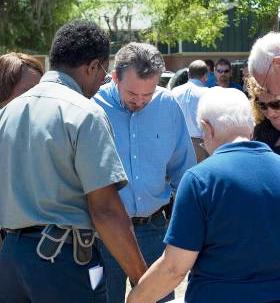
Yet I submit that we need the church. (I’m talking about the people, not a building. The early church met in houses, and many meet in homes today.) In fact, we cannot be biblical Christians apart from the church. Why do I say that?
1. We can’t use our spiritual gifts without the church. The Bible teaches that the Holy Spirit gives spiritual gifts to all believers, but it is always in the context of the church. Romans 12:5-6 talks about how we are all part of the body of Christ as we have different gifts. It says in 1 Corinthians 12:7-12 that every believer is given a spiritual gift for the common good, because we are all part of the body of Christ. Prophesying, teaching, serving, giving, leading, showing mercy, and so many other spiritual gifts are either done among members of the church or together with members of the church.
2. We can’t show we are disciples without the church. Jesus said, “By this all men will know that you are My disciples, if you have love for one another” (John 13:35). We are told to serve each other, teach each other, feed each other, pray for each other, encourage each other. I may know I’m a disciple but I can’t show I’m a disciple if I sit at home alone and don’t show love for fellow believers. No wonder Hebrews 10:25 commands believers not to forsake gathering ourselves together, but instead to encourage each other.
4. We can’t take communion without the church. By definition, the Lord’s Supper is meal of Christians gathered together to remember the body and blood of Christ given for us upon the cross. In 1 Corinthians 11:17-26, the apostle Paul continually uses the phrase “come together” to describe observance of the Lord’s Supper. It says in 1 Corinthians 10:17 observes that by sharing the bread of communion, Christians are expressing their unity: “Because there is one bread, we who are many are one body, for we all partake of the one bread.” Since we cannot take communion without expressing unity with the church, it follows that refusal to express communion with the church is a refusal to express communion with Christ.
Christ is the builder of the church.
Christ is the head of the church.
Christ is the shepherd of the church.
Christ is the groom for His bride, the church.
Christ is coming again for the church, and the gates of Hades will not prevail against His church!
Why Christians are deeply offended by President Obama’s remarks
Yesterday, President Obama spoke at the National Prayer Breakfast. You can read the text of his speech here.
In that speech, he said many good things. He spoke out against terrorist attacks from Paris to Pakistan “by those who profess… to stand up for Islam,” and especially the “brutal, vicious death cult” ISIS, which he calls ISIL. He also spoke up for Iran to release Pastor Saeed Abedini, and he praised the release of Christian missionary Kenneth Bae from North Korea. Unfortunately, when he got to the subject of Nigeria, he only referred to “the murder of Muslims and Christians in Nigeria.” By mentioning Muslims first and Christians second, he played down the reality that it is an Islamic terrorist group, Boko Haram, that is wreaking havoc all over northern Nigeria, and that the killings in Nigeria are overwhelmingly done by Muslims, killing Christians and sometimes killing other Muslims, as well.
However, I was especially troubled by the way he focused on violence done in the name of Christ to imply that Christians were really no better than Muslims. Twice he mentioned violence done “in the name of Christ”– once in reference to the Crusades and the Inquisition, and then again in reference to slavery and Jim Crow. He said, “There is a tendency in us, a sinful tendency, that can pervert and distort our faith.” To sum it up, President Obama clearly implied that Christians are really no different from Muslims, because all religions have people who distort their faith.
So why do I find this so offensive?
1) To have a fair discussion of any religion, we should judge that religion by it’s true followers, not blame it for it’s misguided followers. President Obama, by his own words, appears to agree. So let’s look at the founders of Islam and Christianity. Muhammad was a man of the sword, who sought an earthly kingdom. He wrote in the Qur’an, “Fight against such of those to whom the Scriptures were given as believe neither in Allah nor the Last Day… until they pay tribute out of hand and are utterly subdued” (Sura 9). Through countless sayings attributed to Muhammad in the Hadith, he left them a heritage of permanent war against the “infidels.” In a short time after his life, Muslims conquered the Middle East, Northern Africa, and eventually conquered parts of southern and eastern Europe, forcing non-Muslims into second-class status under their rule. In contrast, Jesus was a man of peace, who rode into Jerusalem on a donkey, a symbol of peace, and allowed His life to be sacrificed to forgive sins. He said, “Put away your sword” (Matthew 26:52), and “My kingdom is not of this world” (John 18:36). In a short time after His life, Christians spread their peaceful message all over the Roman empire, without fighting any wars, at all.
2) To have a fair discussion, we should look at things in balance. It is a fact that the followers of Muhammad, be they misguided or not, sought to conquer the territory of the known world, and nearly succeeded. It is also a fact that the misguided Crusaders sought only to conquer the Holy Land. (See the map below.) The Crusades and other wrongs done by people in the name of Christ are inexcusable, but they are not the norm of the Christian faith, nor can they compare with what was done in the name of Muhammad.
3) To have a fair discussion, we should not blame people today for what their ancestors have done in the past. When I meet a Japanese person today, I do not hold him personally responsible for the attack at Pearl Harbor, which happened less than a century ago. Obama wants to blame Christians for the Crusades that happened ten centuries ago, but does he see roving bands of fundamentalist Christians beheading people, flying planes into buildings, and conquering vast sections of territory today in the name of Jesus? No? Does he see anybody doing anything today in the name of Muhammad? Louisiana Governor Bobby Jindal said it well: “The medieval Christian threat is under control, Mr. President. Please look out for the radical Islamic threat today.”

How Jesus said you can change your world
Copyright 2015 by Bob Rogers

“You are the salt of the earth… You are the light of the world.” (Matthew 5:13-14)
Our world is in a mess, but Jesus Christ told us exactly how to change our world in the Sermon on the Mount, when He said to be salt of the earth and light of the world. Jesus told us what to be and what to do.
1. What you should be: salt and light. Why did Christ pick the illustration of salt and light? Salt is used as a preservative and to flavor food. Likewise, we should influence our world. Paul gave an example of this in 1 Corinthians 7:14, saying that the believer who remains married to an unbelieving spouse can influence them toward salvation. Light reveals and reflects. Likewise, we should reveal truth, glowing with the glory of God in our lives. Interestingly, Jesus said here, “You are the light of the world,” but in John 9:5, He said, “I am the light of the world.” This is no contradiction; Jesus is the source of the light, and we can merely reflect His light. We have no light within ourselves; we only get it when we are plugged into the power source through a relationship with Christ Himself.
2. What you should do: keep your saltiness and shine your brightness. Jesus said in this passage, that if salt loses its taste, it is no longer any good. A lot of Christians are sassy but not salty. We need to keep the saltiness but lose the sassiness. Jesus also says in this passage that nobody puts a lamp under a basket, but he puts it on a stand so everybody can see it. A wise person once said, “The best way to deal with change is to create the change.” Too many Christians are reactive instead of proactive. We have good news! We have hope! Spread it around and let it shine.
3. Why should we be salt and light: to glorify God. Jesus concludes by saying, “Let your light shine before men, so that they may see your good works and glorify your Father in heaven.” The reason for us to be salt and light is not so that others will look at us, but so that they will look at God.
Acts 17:6 says that the people in the city of Thessalonica were so stirred up about the influence of the Christians that they said, “These men who have turned the world upside down have come here, too!” The early Christians changed their world. So can we.
What do you do after Christmas?
Copyright 2014 by Bob Rogers

What do you do after Christmas? What happens after you take down the tree, put up the lights, and put away all the wrapping? You do as the shepherds and Mary did: promulgate, meditate and celebrate!
1. PROMULGATE. In a previous century, they called missionary-sending organizations a Society for the Promulgation of the Gospel. In this century, the need is as great as ever to spread the good news. “After seeing them, they reported the message… about this child” (Luke 2:17). Ask somebody how their Christmas went, and use it as an opportunity to tell them how much it means to you to know Christ as your Savior.
2. MEDITATE. “But Mary was treasuring up all these things in her heart and meditating on them.” (Luke 2:18). Spend some time quietly reflecting on the miracle of the Virgin Birth, and the Incarnation, God coming in flesh.
3. CELEBRATE. “The shepherds returned, glorifying and praising God.” (Luke 2:19). You probably went to church before Christmas. Sadly, the Sunday after Christmas is often one of the lowest in attendance of the year at many churches. But the shepherds rejoiced and worshiped AFTER the birth of Christ. So should we.
Why do we celebrate Jesus’ birth on December 25?
Copyright by Bob Rogers

Since nobody knows the exact date of Jesus’ birth, why do we celebrate Christmas on December 25?
The Beginning of the Christmas Holiday
The answer to that question is submerged under a haze of mystery. An early father of the church, Cyprian, said in 243 that Christ was born on March 28, the spring equinox, for “on that day which the sun was made on the same day was Christ born.” However, Christ’s birthday was not celebrated until the fourth century, and when the tradition of Christmas began, the date of December 25 was preferred in the West, while January 6 was preferred in the East (a date that is still preferred by Eastern Orthodox Christians).
The earliest known reference to celebrating Jesus’ birth on December 25 was in the Philocalian Calendar, a list of martyrs of the Roman Church, written in 354 but reflecting practices in 336. In 376, the bishop of Rome first required churches to keep the nativity festival on December 25. In 386, John Chrysostom refers to the date of the December 25 festival by saying, “It is not yet the tenth year since this day has become clearly known to us.” Ironically, Christmas was celebrated in Bethlehem on January 6 until the sixth century (since Bethlehem was under the influence of the Eastern tradition). After the sixth century, Bethlehem celebrated Christmas on December 25, because Emperor Justin II (565-578) ordered the celebration of Christmas on December 25 throughout the Roman empire.
The Origin of the Date of Christmas
There are two major theories of the origin of these dates: one with pagan roots, and one with Christian roots.
The most commonly accepted theory is that the date was chosen, perhaps by Emperor Constantine, to divert the attention from pagan holidays. Emperor Aurelian had established a pagan winter solstice festival on December 25, 274, and he probably dedicated a temple to the sun god on that date. The birth of the Persian god Mithras, identified with the sun, was celebrated on December 25. Egyptians celebrated the birthday of the sun god Aion on January 6. Many people contend that Christmas should not be celebrated because of this possible connection to these pagan origins. Ironically, some of these same people will themselves seek to replace the pagan celebration of Halloween with a Harvest Festival at their churches, in much the same way as they claim the early Christians celebrated Jesus’ birth to replace a pagan holiday.
Thomas J. Talley, in his book, The Origins of the Liturgical Year, argues that the dates of both December 25 and January 6 can be explained from Christian origins. In rabbinic thought, it was common to remember the conception and death day of patriarchs on the same day. By putting Jesus’ conception on the Jewish day of 14 Nisan (March 25 on the Western calendar and April 6 on the Eastern calendar), His birth nine months later would be either December 25 (according to the Western calendar) or January 6 (according to the Eastern calendar). Thus the birth of Christ could have been set “without reference to pagan public celebrations,” says Talley.
Since Luke 2:8 says the shepherds were outdoors with their flocks when the angel announced Christ’s birth to them, Cyprian’s date of March 28 is probably closer to the actual birthday of Jesus than the colder times of December 25 of January 6. Some would argue that since there is no historical evidence for Jesus’ birth on these dates, that we should not celebrate Christmas. However, there is another piece of the puzzle from history that would argue otherwise. In the fourth century, when the Christmas holiday became popular, Christians were in the midst of a raging controversy of what they believed about Jesus Christ. By celebrating Christmas, orthodox Christians were able to affirm the important doctrine of the Incarnation, that Jesus was God in the flesh. For example, Chrysostom, who himself stated that the festival of December 25 was a relatively new celebration in his time, went on to say this about its importance:
“This day He who is, is born; and He who is, becomes what He was not. For when He was God, He became man… being the Word, He became flesh…”


 Bob Rogers