Blog Archives
Why John Calvin was wrong about Romans 9

Copyright by Bob Rogers, Th.D.
John Calvin was wrong about Romans 9.
Calvin, the Protestant reformer of Geneva, Switzerland, was a great theologian. He became famous for his emphasis on the sovereignty of God and God’s predestination of our salvation. But in his commentary on the ninth chapter of Paul’s Letter to the Romans, John Calvin took predestination beyond anything the apostle Paul intended to say.
Qualifications of what I’m saying
Don’t misunderstand me. I believe that salvation is completely by the grace of God and cannot be earned by our good deeds. I believe that God is merciful and just, and I believe in the sovereignty of God. I also believe that when we believe in Jesus Christ as Savior, the Bible says that we are chosen, or predestined.
My disagreement is with a specific brand of Calvinism and with a specific statement made by John Calvin in his own commentary on Romans. Many will argue that Calvin himself took a different position in some of his other writings, and that may be true, but it does not change the fact that Calvin was wrong in his commentary on Romans 9.
The key verses and Calvin’s comments
The debate centers around the key verses, Romans 9:18, 22 (HCSB): “So then, He shows mercy to those He wants to, and He hardens those He wants to harden… And what if God, desiring to display His wrath and to make His power known, endured with much patience objects of wrath ready for destruction?”
Calvin says in his commentary on Romans 9, “Paul teaches us, that the ruin of the wicked is not only foreseen by the Lord, but also ordained by his counsel and his will… that not only the destruction of the wicked is foreknown, but that the wicked themselves have been created for this very end—that they may perish.” (John Calvin, Commentary on Romans.)
John Calvin’s interpretation of Romans 9:18 and 22 has been called double-edged predestination. This interpretation teaches that the saved are predestined to be saved, but also that the lost are predestined to be damned. At first glance, one can see how Calvin would interpret this passage the way he did. But a study of these verses in light of the entire chapter reveals a completely different picture of what Paul was saying.
God is not unjust
Calvin’s interpretation makes God arbitrary and implies that God is unjust. Yet Paul reminds us in Romans 9:14, “Is there injustice with God? Absolutely not!” Let’s go through the chapter and see how God is both merciful and just.
Hardened clay and melted butter
When Romans 9:18 says that God shows mercy on whom He desires and hardens whom He desires, this does not mean that God is arbitrary or unfair. Let’s look at the context of this statement. In the previous verse, verse 17, Paul spoke about Pharaoh, who hardened his heart and would not let the people of Israel go from slavery. But if one reads the story in Exodus, one finds that half of the time it says God hardened Pharaoh’s heart, and half of the time it says Pharaoh hardened his own heart. What Exodus described was the process by which God brought out the hardness that was already in Pharaoh’s heart. As Dale Moody says, “The sun that hardens the clay melts the butter.” (The Broadman Bible Commmentary, vol. 10: Acts- I Corinthians, “Romans,” by Dale Moody, p. 230.) Thus God was not making Pharaoh do something that Pharaoh didn’t already want to do. Likewise, God does not take away our free will to obey or disobey.
The clay pot and the potter
Next, we note that Paul uses the example of a clay pot to illustrate predestination. He says in verses 20-21, that we have no right as mere humans to talk back to God about His will. It is interesting that Jeremiah 18:5-10 also uses the clay pot illustration to show how God reacts differently when we respond differently. Jeremiah says that if a people whom God warns will repent of their evil, then God will relent of his disaster and not inflict on them the disaster God had planned. This shows how predestination works in the mind and heart of God. Of course, God in His foreknowledge already knows what we will do, so when we choose Christ, God speaks of having chosen us.
A choice by faith
Romans 9:30-33 shows how salvation comes by a free choice to believe the gospel, not by arbitrary predestination. It does this by drawing a contrast between Gentiles who obtained righteousness and the Jews who did not obtain righteousness. What was the difference? It was their faith! Verse 30 says the Gentiles obtained a “righteousness that comes from faith.” Verse 31 says Israel did not achieve this righteousness. “Why is that?” Paul asks in verse 32. His answer: “Because they did not pursue it by faith.”
Objects of wrath and objects of mercy—treated differently
With all of this in mind, let us return to the key verses that are central to this debate, Romans 9:22-23. These verses have been interpreted as teaching double-edged predestination, because they speak of the “objects of wrath ready for destruction” and “objects of mercy that He prepared beforehand for glory.” However, what many people miss here, is that Paul describes the objects of wrath (the damned) and the objects of mercy (the saved) in different ways in this passage. The Greek grammar in verse 22 describes the “objects of wrath ready for destruction” with a perfect participle in the middle or passive voice. Thus it describes the objects of wrath, which refer to the lost, as “having been made ready for destruction,” which may mean they prepared themselves for destruction by their own unbelief. Notice also that God “endured with much patience the objects of wrath.” In other words, God patiently waited for their free choices, because, as 2 Peter 2:9 says, God is not willing that any be lost.
However, the Greek grammar is different when referring to the “objects of mercy” in verse 23. Paul describes the “objects of mercy” as those “that He prepared beforehand for glory.” This time, Paul uses the active voice to describe God’s action of salvation. In other words, Paul speaks of the saved as actively being predestined by God beforehand, but Paul speaks of the damned as passively being predestined, implying it is the result of their own choices, which God in His omniscience already knew they would make.
Why John Calvin was wrong
John Calvin said that the apostle Paul taught in Romans 9 that God created the wicked for the purpose of damning them to Hell. But when we read Paul’s words carefully and in context, we see that Calvin was wrong. Instead, Paul says that God is not unjust. He says that God hardens the heart, but those are hearts that have also freely chosen to harden themselves. He says that we are like clay pots that cannot question God who forms them, but those same clay pots do have a choice to respond to the potter’s hands. If anybody is an object of God’s wrath, it is because that person has failed to obtain salvation by faith. The choice is always ours, but God always knows what choice we will make.
Fearing Friday the 13th

Photo by cottonbro on Pexels.com
Do you suffer from paraskevidekatriaphobia? It is the most widespread superstition in America, better known as fear of Friday the 13th.
People are so superstitious about the number 13, “the Devil’s dozen,” that tall buildings rarely have a 13th floor, but simply go from 12th to 14th.
Where did this fear of Friday the 13th come from? The website www.urbanlegends.about.com claims it has origins in the Bible, since Jesus and the 12 disciples made up 13 people who ate the Last Supper, and then Jesus was crucified the next day, on a Friday.
So should we fear Friday the 13th? Well, if we’re going to fear that day, maybe we should add Monday the 8th to our phobia file.
Yes, let’s fear Monday, the 8th. Since Genesis says God created mankind on the 6th day, the rested on the 7th, and then Adam and Eve took the forbidden fruit and fell into sin, I wonder if they did it the next day, on Monday the 8th? Maybe we should stay indoors on Monday the 8th!
Or how about February 17th? Genesis 7:11-12 says that beginning on the 17th day of the second month, the rains began to come for 40 days and forty nights, flooding the earth. Sounds like we’d better batten down the hatches three days after Valentine’s.
Jerusalem was burned down by the king of Babylon on the seventh day of the fifth month, according to 2 Kings 25:8-9, so perhaps we should stay indoors on May 7th!
Now, just in case some reader takes me seriously and starts marking all of these dates on the calendar with black ink, let me hasten to say that even if Jesus did die on Friday, the 13th, it was not a Black Friday. In fact, Christians call the date of His crucifixion “Good Friday” for a good reason: his death paid for our sin so that all who believe can go to heaven.
So personally, I’m celebrating Jesus on Friday the 13th.
Book review: “Out of Control”
 Ben Young & Samuel Adams’s book, Out of Control, has a very long subtitle: Finding Peace for the Physically Exhausted and Spiritually Strung Out. But the subtitle is accurate. They describe how our culture is out of control because rather than letting the greater efficiency afforded by technology such as cell phones and computers give us more time to rest, we have instead tried to cram even more activity into shorter time.
Young and Adams describe seven symptoms of an “out of control” lifestyle: out of shape (physical), out of sorts (emotional/mental), out of touch (relational), out of time, out of focus, out of balance and out of order (spiritual). Then they confront the lies that keep us out of control, particularly the idea of pleasing the world to be successful and the idea that getting rest is laziness.
The rest of the book takes a pleasantly surprising turn, as it is NOT another “how-to” book with seven easy steps. Instead, they dig into the spiritual disciplines of the Bible, and encourage the reader to practice a real “Sabbath” and take time to unplug completely from technology in order to practice the other spiritual disciplines of solitude and prayer.
This book influenced me to become more serious about unplugging from technology for a large portion of the day on my day off in order to spend more authentic time with God. It was a truly rewarding experience that I pray I will continue to explore for a long time to come.
Tweeting Alien Hymns
Copyright 2013 by Bob Rogers

Twitter is becoming a hotbed of holy humor these days. One can find some crazy characters with names like “Unappreciated Pastor,” “Church Curmudgeon,” “Back Row Baptist,” “Lloyd Legalist,” and “Bad Chruch Secretary” (deliberately misspelled).
Recently, they all came out of the woodwork when one of the top trends on Twitter was #AlienHymns.
For the Twitterless and clueless, let me explain. Twitter uses hashtags with the pound symbol (#) to allow people who don’t even know each other to join in a discussion of the same topic. This is often popular at conventions and during top TV shows, as people can go to the same hashtag and discuss what is going on while it is happening. Sometimes a hashtag gets repeated so much that millions of people are using it, and it becomes a top trend. That’s what happened to #AlienHymns.
In honor of the U.S. government admitting there really is a secret zone called Area 51, “Back Row Baptist” speculated what would be the name of some hymns if they were sung by space aliens. Here were some submissions that erupted on Twitterland:
“It is Well with My Hans Solo”
“Klingon Me, When You’re Not Strong”
“Swing Low, Sweet Mothership”
“Let’s Break Warp Speed Together”
“I Beam Thee Every Hour”
“Amazing Space”
“I Come to the Garden a Clone”
“Just a Lunar Walk with Thee”
“Zoom By Ya”
Okay, enough already. You get the idea. While this sort of silliness may be entertaining for a season, the fact is that hymns and spiritual songs aren’t designed for space aliens; they’re designed for you and me. As the apostle Paul said, “Let the message about the Messiah dwell richly among you… singing psalms, hymns, and spiritual songs, with gratitude in your hearts to God” (Colossians 3:16, HCSB).
So grab your hymnal or project your PowerPoint, and lift your voice in praise to our God. After all, He is out of this world!
Guest blog: OUT OF THIS WORLD! Part Three: Books and audiovisuals on near death experiences and the afterlife.
Copyright 2013 by Joyce C. Rogers
 (For the past two days on this blog, my mother, Joyce Rogers, has shared her insights from scripture and other resources on the subject of what happens when we die. Today she lists the books, articles and audiovisuals she read on the subject, with a brief comment about each.)
ANNOTATED BIBLIOGRAPHY
Alcorn, Randy. Heaven. Tyndale House Publishers, Inc. Randy is considered a leading authority on Heaven. He answers some tough questions as he invites you to picture Heaven as the Scripture does. This is a very scholarly book. One needs more than an afternoon to read it!
Alexander, Eben, Proof of Heaven: A Neurosurgeon’s Journey into the Afterlife. Simon and Schuster Paperbacks. Dr. Alexander spent seven days in a coma and experienced a heavenly reality of love and beauty. His experiences changed his scientific mind to one of profound belief in God, spirituality and love. An excellent book.
Black, Dale. Flight to heaven; A Plane Crash: A Lone Survivor: A Journey to Heaven and Back. Published by Bethany House Publishers. Captain Black pursued his dream of flying planes, even after being severely injured in a plane crash. His trip to Heaven is beautifully detailed. The story is a fascinating read.
Burpo, Todd and Sonja Burpo. Heaven Changes Everything. Published by Thomas Nelson, Inc. This is a sequel to the very popular book, Heaven is for Real, the story of little Colton Burpo’s unforgettable trip to Heaven. This family’s lives were changed. The Burpos show how believing in Heaven helps one survive hardships here on earth, including the death of a loved one, particularly the loss of a child. A sweet and down to earth book.
Burpo, Todd with Lynn Vincent. Heaven is for Real: A little boy’s astounding story of His Trip to Heaven and Back. Thomas Nelson Publishing. A four year old child, he sat on Jesus’ lap, said angels took him from his hospital bed and other wonderful things. Colton spoke with disarming innocence. A delightful and convincing book. Colton and his parents were interviewed on the “Today” show, showing the public interest in this story.
Garlow, James and Keith Wall. Encountering Heaven and the Afterlife: True Stories From People Who Have Glimpsed the World Beyond. People who have had near death experiences (NDEs) bring back word descriptions of the pathway to Heaven or the descent into the darkness of Hell. Those who go to Heaven lose their fear and report amazing feelings of love, warmth and acceptance. Those who go to Hell are horrified and so thankful they get to come back.
.
Graham, Billy. Death and the Life After. Word Publishing. Billy Graham talks about how the culture relates to death, the death of children, living wills, euthanasia, hospice care, the grief process, and preparation for death. He explores the practical side of death. Dr. Graham helps the reader find peace and comfort for those grieving or pre- paring a will or planning a funeral.
Graham, Billy. Nearing Home: Life, Faith and Finishing Well. Thomas Nelson Publishing. At 93, Dr. Graham said that old age was a surprise. He advises one not to retire from life. Many older people have heard and obeyed God’s call. He says leave a legacy of faithfulness. We are meant for Heaven, our final home. Heaven is glorious because it is the dwelling place of God.
Graham, Billy. The Heaven Answer Book. Thomas Nelson Publishing. This short little question and answer book gives straight biblical answers about heaven in typical Billy Graham style. He answers such questions as “Does Heaven really exist?” and “What is a resurrected body?” Dr. Graham is evangelistic in his approach to these questions and answers.
Harris, Trudy. Glimpses of Heaven: True Stories. Published by Revell. A hospice nurse relates stories of those leaving the world in his/her own unique way.
Harrie, Trudy. More Glimpses of Heaven: Inspiring True Stories of Hope and Peace at The End of Life’s Journey. Published by Revell. More stories of the beauty and pain of life’s end as observed by hospice nurse, Trudy Harris.
Lotz, Anne Graham. Heaven, My Father’s House. W. Publishing Group. Billy Graham’s daughter writes about our heavenly home compared to our earthly home. She says, “The invitation to my Father’s house is extended to all, but you have to RSVP.” This is an inspiring little book.
Malz, Betty, My Glimpse of Eternity. Published by Chosen. Betty was “officially” Pronounced dead for 28 minutes before waking to report seeing and hearing angels and understanding several different languages at once. Catherine Marshall said, “Upon occasion God breaks into human life to give us a glimpse of what lies ahead.
Betty Malz’s remarkable experience is a resounding ‘Yes, there is life after death.’”
Neal, Mary C. MD. To Heaven and Back: A Doctor’s Extraordinary Account of Her Death, Heaven, angels, and Life Again. Waterbrook Press. Dr. Neal, a spine specialist, had a kayak accident and drowned. Her friends worked hard to revive her and finally did. In her “in-between “ state, she experienced a joyous welcome celebration in Heaven. Very readable and interesting.
Piper, Don with Cecil Murphy. 90 Minutes in Heaven: A True Story of Death and Life. Published by Revell. A popular book involving a car accident, being pronounced dead and waking up to sing with a minister praying and singing over him. After a long, grueling recovery, Don was persuaded to tell his story.
Prince, Dennis and Nolene. Nine Days in Heaven: A True Story. Charisma House Publishing. Nine Days in Heaven relates the vision of 25 year old Marietta Davis more than 150 years ago, in 1848. Her story is re-written in modern English. She was shown the heavenly nursery where infants are cared for and taught redemption’s story. Each section is supported by Scripture. Beautifully done. Especially helpful for those grieving for a lost child. Not to be confused with 90 Minutes in Heaven by Don Piper.
Rogers, Joyce C. “After This, Then What?” Family Bible Study, Life Ventures Learner Guide. Summer, 2005, p.116-161. LifeWay Sunday School unit. Speaks of salva-tion here and now and throughout eternity, Jesus’ return, and the special place God has prepared for His own.
Sigmund, Richard. My Time in Heaven: A True Story of Dying…And Coming Back. Whitaker House Publishing. Following a traffic accident, Richard found himself in a thick, cloudy veil. He could hear sirens and the words, “He’s dead.” He could hear singing and laughter on the other side. Led along a path by angels, he saw a book containing his name. He claims to have seen mansions belonging to loved ones and many other wonders. The book has testimonies, select scriptures and an index.
Springer, Rebecca. Within Heaven’s Gates. Published by Whitaker House. After feeling alone in her illness far from home and family, Rebecca has a vision of life in Heaven. She describes with unspeakable joy life in Heaven where she has her own mansion and visits with loved ones. A vision, not an NDE.
Stone, Perry. Secrets from Beyond the Grave: The Amazing mysteries of Eternity, Paradise, and the Land of Lost Souls. Published by Charisma House. Detailed studies of questions related to death and the afterlife. The author asserts that Heaven and Hell are real places. Details he relates include: people in Heaven or Hell have all 5 senses; are not limited to time or space or travel hindrances; and have conversations not with words but with thoughts.
Wiese, Bill. 23 Minutes in Hell; One man’s story about what he saw, heard, and felt in That place of torment. Published by Charisma House. Bill Wiese said that he saw the searing flames of hell and was terrorized. He said, “My sincere hope is that this book is the closest you will ever come to experiencing hell for yourself.” A question he answers is “Can ‘Good’ people go to hell? There is an 18-page scripture index.
ANNOTATED BIBLIOGRAPHY Of AUDIO VISUALS
Besteman, Marvin with Lorille Craker, read by Maurice England. “My Journey to Heaven.: What I Saw and How It Changed My Life.” Baker Publishing House, Christianaudio, 2012.. Marvin Besteman shares the true story of his experience of Heaven in detail. He speaks of angels accompanying him to the gate, his conversation with St. Peter, and his joy when he recognized friends and family members who had touched his life. Very interesting story. Running time 4.7 hours. CD.
Malarky, Kevin. “The Boy Who Came Back from Heaven,” Tyndale Entertainment Production in Association with Franklin Films. Based on book by Kevin Malarky. Six year old Alex Malarky suffered a terrible car accident which left him in a coma for 2 months. He awoke to share an incredible story of angels, Jesus and his trip to Heaven. He was left paralyzed, but we see how God is still using him today. This is an amazing and convincing story. Running time 50 minutes. DVD.
_______. “The Final Frontier.” Produced by Eternal Productions. Revived patients encounter some form of extension of consciousness beyond clinical death. They encounter some form of reality: Heaven or Hell. These are not hallucinations, but a highly structured and organized phenomenon. More and more scientific evidence tells us that life after death exists. Where we are going is a matter of choice. We must think about our own lives. This DVD makes one think. Running time 53 minutes.
_______. “The Lazarus Phenomenon: A Glimpse of Eternity.” Eternal Productions. Lan McCormack was stung by jelly fish off the coast of an island in the Pacific and was unable to get help. His experiences changed his life. On the other side of the world, a pastor died and 48 hours later revived. He was shown his death certificate. He also had experiences beyond the veil. Well worth watching. Running time 100 minutes..
Jeremiah, David Dr. “Revealing the Mysteries of Heaven.” Turning Point Television. Shadow Mountain Community Church, San Diego, California.. Sermons on Heaven. Dr. Jeremiah preaches a 3 month series of sermons on Heaven. Each sermon covers A different aspect of Heaven. Topics such as “Won’t Heaven be Boring?” and “What About the Children?” are covered. He says “Worship in Heaven is not about us – its about Him. Its not about here – its about there. Its not about now – its about then. Its not about one – its about many.” Wonderful resource. Each sermon about 30 to 40 minutes. DVD.
Copyright 2013 by Joyce C. Rogers
Guest Blog: OUT OF THIS WORLD! Part One: A Look at Near Death Experiences
 Copyright 2013 by Joyce C. Rogers
(For the next three days I will be publishing a guest blog on what happens upon our death, written by my mother, Joyce Clinton Rogers. Today’s post is on near death experiences. Tomorrow’s post will be on the afterlife. The third post will give an annotated bibliography of her sources, for your further reading.
Joyce C. Rogers is a graduate of William Carey University (B.S.) and the University of Southern Mississippi (M.Ed.). She has written Sunday School literature for LifeWay Christian Resources of the Southern Baptist Convention, including a unit on the afterlife. She and my father, Robert H. Rogers, live in Hattiesburg, Mississippi.)
What happens the moment you die? Where will you go? How will you get there? When you arrive, will you know people? Will angels escort you? What are Heaven and Hell really like? Are near death experiences (NDEs) real? Is death the end?
I experienced deeply moving and spiritual experiences at the deaths of each of my parents, which contributes to my interest in these matters. When my Dad passed away in 1975, I mentally “saw” his body floating at the ceiling of the hospital room. He said, “Don’t cry. I’m fine.” This was said to my mind or spirit – I don’t know how to describe it. It was very real to me. I haven’t forgotten it, after 38 years. Incidents like this don’t seem to be that unusual, as I will explain later in this article.
In 1992, my mother passed away following a long illness and suffering. I began to wonder about my own death. I did not and do not doubt my salvation, but I was troubled about the physical part of dying. I prayed about this continually until I felt directed to read Isaiah. “Do not fear, for I have redeemed you; I have called you by name; you are mine! When you pass through the waters, I will be with you. And through the rivers, they will not overflow you. When you walk through the fire, you will not be scorched, nor will the flame burn you, for I am the Lord your God, the Holy One of Israel, your Savior.” (Isaiah 43:1-3a, NASB)
This answer was very real and satisfying. It was also very emotional. I could not share it without tears for several years, but this answer erased my fear and stopped my worrying. Of course, I am not trying to hurry that time, either.
In my quest to understand more about near death experiences (NDEs), death and the afterlife, I made an exhaustive study of the Bible, as well as 21 books and five audiovisuals. Here is a summary of what I learned. First, we will look at NDEs, and in the second part, we will look at the afterlife. Third, I will give an annotated bibliography to assist you further reading on the subject.
One of the first books I read on the subject of NDEs was the delightful little book, Heaven is for Real, a Little Boy’s Astounding Story of his Trip to Heaven and Back. This book captivated my interest and made me want to know more about these experiences.
Another book that has been an inspiration to me is 90 minutes in Heaven by Don Piper. When I saw and heard Don Piper speak at Hardy Street Baptist Church in Hattiesburg, MS, I was surprised to see that he seemed perfectly normal physically – no limps or obvious scars. He was in a horrific car accident and was pronounced dead for an hour and a half. After a minister prayed over him and sang hymns, he began to sing with the minister! Needless to say, everyone was astonished! He recovered, but it was a long and difficult recovery.
At first, Don did not want to share his NDE. He thought others would not believe him. (This is a common reaction.) He also considered the experience very intimate and holy. Later he was persuaded that others would benefit from his story of going to Heaven, of being welcomed by loved ones, and experiencing heavenly wonders. He then wrote his book and began to speak on many occasions.
One of the most touching stories told in Heaven is for Real is the experience of the little boy, Colton, when he met his sister in Heaven. Since he was not quite four years old, his parents had not told him that his mother had miscarried. But he met a little girl in Heaven who told him that she was his sister. His parents were astonished when they heard this. They had not known that the miscarried baby was a girl or that she was being cared for in Heaven. I shared this incident with a ladies’ group. One lady was in tears because she had miscarried a child. She found immense comfort to think her child was prospering in Heaven.
An extensive account of the sights and sounds of Heaven are given in My Time in Heaven by Richard Sigmund. He declared that “absolute joy and total love are the rule in Heaven.” He tells of being escorted to Heaven by angels and of seeing Jesus.
Earlier, I described the “out of body” experience I had when my father died. There are many stories of “out of body” experiences. One story about a girl hit by a car is in the book Encountering Heaven and the Afterlife by James L. Garlow and Keith Wall. She could see her body and people trying to help her. She felt perfectly at peace at the time. She said she had a conversation with God in which she asked to go back and finish her life. She told God she would witness for Him now that she knows God is real. God allowed her to come back.
There are also many, many accounts of NDEs. I think some people don’t share these accounts because they are afraid that others will not believe they are true. Testimonies of children are to me especially believable and endearing.
Stories of going to Hell are told much less often. However, they are told. In Encountering Heaven and the Afterlife, there is a story of a man whose heart stopped during heart bypass surgery. He became aware of darkness and demons. With horror, he began to pray for God to deliver him. He realized that he had not confessed sin and acknowledged God in his life. He recovered and immediately wanted to be baptized. He was not shy about sharing what happened to him. “I know God is real and that Jesus died so I don’t have to go back to Hell ever again,” he said.
There are stories written by a hospice nurse in Glimpses of Heaven: True stories of Hope and Peace at the End of Life’s Journey by Trudy Harris. Each experience related is unique. Most want their affairs settled, including relationships before they “let go.”
Catherine Marshall wrote the Foreword to Betty Malz’s book, My Glimpse of Eternity. Betty was pronounced dead and the hospital sheet pulled over her head. Twenty eight minutes later, she returned to her body after getting a glimpse of Heaven. Catherine Marshall said, “Upon occasion God breaks into human life to give a glimpse of what lies ahead. Betty Malz’s remarkable experience is a resounding ‘Yes, there is life after death.’” Betty sang with the angels and understood several different languages used in the music.
Copyright 2013 by Joyce C. Rogers
(Coming tomorrow: OUT OF THIS WORLD! Part Two: The Afterlife)
ABC’s of Praying for Missionaries

When you ask missionaries what they need from us, more than anything else, they say, “Prayer.” So how can we pray for them? Here are seven scriptural prayers, arranged alphabetically:
Accepted by the believers
“Pray that I may be rescued from the unbelievers in Judea, that the gift I am bringing to Jerusalem may be acceptable to the saints,” Romans 15:31 (HCSB)
Language study can be difficult, but it’s vital to be accepted among the believers, and fit in. If the missionary isn’t accepted by the believers, he won’t be able to reach the unbelievers.
Unfortunately, believers aren’t perfect, and can have conflict in churches on the mission field, just as churches here can have conflict. So pray for unity between the missionaries and the local believers.
Bold in sharing the gospel
“Pray also for me, that the message may be given to me when I open my mouth to make known with boldness the mystery of the gospel. Pray that I might be bold enough in Him to speak as I should.” Ephesians 6:19-20 (HCSB)
Dr. Cal Guy was a missions professor who was asked to preach a revival. Members were concerned about one man, “Fine Old Mr. Crenshaw,” who was known to be a fine man, but saw no need for Christ. The pastor took Dr. Guy to meet him, and said, “Mr. Crenshaw, I’ve been telling Dr. Guy what a fine man you are.” Dr. Guy retorted, “I don’t believe it. If you’re a man as I’m a man, then you’re a rotten sinner, headed to hell.” After a long pause, Mr. Crenshaw smiled and said, “You’re right. Let’s talk.” And he accepted Christ.
Missionaries cannot be timid about sharing their faith. They need wisdom about when to be bold.
Clear in sharing the gospel
“…that I may make it clear, which is how I ought to speak.” Col 4:4 (ESV)
The gospel can often be misunderstood. Hindus want to add Jesus to their other gods, and need to hear that Jesus is the only way. Muslims often think that when we say Jesus is the “Son” of God, that we are talking about a literal, crude sexual relationship between God the Father and Mary. So pray that missionaries will make the message clear in the culture where they serve.
Delivered from unbelievers
“Pray that I may be rescued from the unbelievers in Judea, that the gift I am bringing to Jerusalem may be acceptable to the saints,” Romans 15:31 (HCSB)
Persecution is very real in many places around the world. Missionaries have been expelled from countries on trumped-up charges. Pray for them to be rescued.
Enter open doors
“At the same time, pray also for us that God may open a door to us for the message, to speak the mystery of the Messiah, for which I am in prison,” Colossians 4:3 (HCSB)
“After they arrived and gathered the church together, they reported everything God had done with them and that He had opened the door of faith to the Gentiles.” Acts 14:27 (HCSB)
Steven Gillum, IMB missionary in Curitiba, Brazil, prayed and prayed to discover an area of his city without a church, and then it was shown to him.
Missionaries are always looking for unreached areas. Pray those doors will open for them to go in.
Fruitful
“Now I want you to know, brothers, that I often planned to come to you (but was prevented until now ) in order that I might have a fruitful ministry among you, just as among the rest of the Gentiles.” Romans 1:13 (HCSB)
“You have already heard about this hope in the message of truth, the gospel 6 that has come to you. It is bearing fruit and growing all over the world,” Colossians 1:5-6 (HCSB)
William Carey labored in India for seven years without a single convert. One North American missionary befriended 60 families among an unreached people group, but has not yet seen one of them convert to faith. The work can be hard. Pray that they will be fruitful, as Carey was, when eventually God sent a revival. Today there are over a million Baptists in India who consider William Carey their spiritual forefather.
Good Health
“Dear friend, I pray that you may prosper in every way and be in good health physically just as you are spiritually.” 3 John 2 (HCSB)
Anytime you go to a different country, you may be exposed to different diseases. When I went on a short-term mission trip to Villa Berthet, Argentina, I noticed trees painted white halfway up, and certain markings on houses. When I asked what it meant, they said that it meant the “chagas” disease from an insect had infected those trees and houses.
In Africa and Asia, missionaries often have to confront malaria, dengue fever, yellow fever, typhoid fever, cholera, and hepatitis A, among other diseases. Pray for their health.
Missionaries serve in many different circumstances and different places around the world. Carlton Walker is a missionary reaching out to some of the 24 million senior adults in Japan. A retired man, Mr. S, takes Carlton around and introduces him to people, and he boldly shares his faith when people who have been Buddhist all of their lives. Pray for missionaries like Carlton Walker and others in the United States and around the world.
Is God a psychotic mass-murderer? A reply to Bill Maher

Copyright 2013 by Bob Rogers
Recently, TV talk-show host Bill Maher said, “God in the Old Testament is a psychotic mass murderer.”
Is this true? Many people think so, because of passages in the Old Testament where God allows people to be destroyed, such as Noah and the flood, the plagues on Egypt, and the many wars that Israel fought with their enemies.
There are three things we need to understand, in order to understand the God in the Old Testament.
I. We need to understand what actually happened
Many people are disturbed by the command of God for the destruction of people and cities in the Old Testament, but they are unaware of the culture and history of the time and the Hebrew words used to describe what actually happened. When one takes a closer look at all this, a completely different picture comes to light.
In some cases, the Old Testament is merely reporting what people did, not saying that God commanded that it be done. For example, King Jehu destroyed all of the worshipers of Baal (2 Kings 10:18-27), but the prophet Hosea said that God would punish King Jehu for this act of brutality (Hosea 1:4). So don’t assume that just because the Bible reports acts of cruelty that it means God endorsed those actions.
But the conquest of Canaan was clearly commanded by God. So how do we justify that?
The Canaanites were not innocent. They defiled the land with detestable practices that included incest, pedophilia, bestiality and homosexuality. (Leviticus 18:24-25)
Deuteronomy 20:16-18 gives the invasion policy for when Joshua was to conquer the land of Canaan. God commanded their destruction (herem, devotion to the ban), because of their wickedness. However, when we study the events of conquest of Canaan more closely, we see that it was not the kind of genocide some have made it out to be.
The word translated “city” in Deuteronomy 20:16 and in Joshua is ‘ir, which can mean a walled fortress, like Jerusalem was when David attacked it in 2 Samuel 5:7, 9. We know from history that in ancient times, the ‘ir was like a walled fort. It was an agricultural society, in which the people lived on farms around the ‘ir, but the military stayed in the ‘ir, which was primarily a military citadel, not an urban city as we think of it today. So when the Book of Joshua says that they conquered city after city, they were actually destroying the walled cities, or forts, of the Canaanites. They were taking military targets.
So when Deuteronomy 20:16 says not to let any living thing survive among each “city,” or ‘ir, of the land, God was ordering a military conquest of an evil empire, not a genocide of an innocent people.
II. We need to understand God’s mercy
Notice how the Old Testament describes God’s mercy.
God waited 100 years in Noah’s day for the people to repent. (Genesis 5:32; 7:6)
God waited 400 years to judge Canaan because “the iniquity of the Amorites has not yet reached its full measure.” (Genesis 15:16)
God waited for generations for Israel to repent, sending them prophets to warn them. “But Yahweh, the God of their ancestors sent word against them by the hand of His messengers, sending them time and time again, for He had compassion on His people and on His dwelling place.” (2 Chronicles 36:15) It was only after they failed to repent that God allowed the Jews to be taken into exile in Babylon.
God takes no pleasure in the death of the wicked. (Ezekiel 33:11) God is patient, not wanting any to perish. (2 Peter 3:9)
Romans 2:4 turns the question on our own generation: “Or do you despise the riches of His kindness, restraint, and patience, not recognizing that God’s kindness is intended to lead you to repentance?”
III. We need to understand God’s justice
We just read 2 Chronicles 36:15, which said that God had compassion on His people “time and time again.” But the next verse, 2 Chronicles 36:16, says, “But they kept ridiculing God’s messengers, despising His words, and scoffing at his prophets, until the LORD’s wrath was so stirred up against His people that there was no remedy.”
The other thing we need to understand about God in the Old Testament is that while He is a God of mercy and grace, He is also a God of justice.
Leviticus 18:24-25 explains that God drove the Canaanites out of the land because they had defiled the land with their sinful lifestyles, and God said, “the land will vomit out its inhabitants.” God is a God of mercy, but eventually if we do not repent, His patience will run out, and His moral stomach will be turned against sin until He can hold it back no longer.
In Genesis 6:3, the LORD said, “My Spirit will not remain with mankind forever, because they are corrupt.” God is merciful, but when mankind continues to reject God’s mercy, God will judge.
As we have seen already, the punishment of the Canaanites was anticipated by God long before it happened, as God told Abraham in Genesis 15:16 that the sin of the Amorites had not reached its full measure. The implication was that when it did reach its full measure, it would then be too late. Throughout the Old and New Testament, we see this pattern: God is a God of grace and mercy who does not wish to punish. But if we continue in rebellion and refuse to repent, eventually God’s patience will run out, and He will execute His justice. We see this with Noah and the flood: God waited 100 years for them to repent, but when they refused, God sent the flood. God waited 400 years for the people in Canaan to repent, but when they refused, He sent Israel to conquer the land. God waited hundreds of years for Israel to repent, but when they refused to listen to the prophets, He allowed them to go into exile. The conquest of Canaan by Joshua and all of the other stories of punishment are not only history, they are also prophecy. It points to the final judgment that we all must face. Hebrews 9:27 says, “It is appointed for people to die once—and after this, judgment.” But God has also provided a way to escape Judgment Day, by sending Jesus as a personal sacrifice for our sins.
God is not a bloodthirsty bully at all. God is a blood-giving Savior, who gave the blood of His own Son Jesus on the cross that we might be saved from judgment and spend eternity with Him in Heaven. This is the God of the Bible, both Old and New Testament.
Wow! I like that surgery!
 Copyright 2013 by Bob Rogers
As a pastor, I visit people who are in the hospital for all kinds of reasons: surgeries, childbirths, injuries and sickness. I have learned to always knock before entering a hospital room, because one never knows what might be behind that door. Hospital gowns are not designed for fashion or full covering, and I certainly don’t want to invade somebody’s privacy.
But one man who goes to my church saw something that he never dreamed he would see in a hospital room.
His wife, who was about 45 years old, went to the hospital for surgery. After a few hours, a nurse came to the waiting room and called the husband’s name. He stood, and she took him by the arm and said, “Come with me. We’re going to see your wife.”
Imagine his surprise when the nurse opened the door to a recovery room, and he saw a beautiful, 22-year-old blond in a hospital bed. Immediately he said, “Wow! I like that surgery!” Later, the man told me, “I’m just glad the young lady was asleep and didn’t hear the nurse tell her that I was her husband!”
Unfortunately, there are a lot of people who go through wrong doors.
Some go through wrong decision doors, rushing into poor choices about important matters such as marrying a spouse or buying a house without stopping to pray for God’s guidance first. Others get sucked into trap doors, as they are enticed into bad habits and unhealthy addictions that leave them feeling like the door was locked behind them and the key thrown away.
But Jesus said, “I am the door” (John 10:7, 9). He didn’t say it would be easy to enter that door. It requires heart surgery—a changed heart by repenting of our sin and trusting in Jesus’ sacrificial death on the cross for our salvation. But the end result is worth it. If we will enter by His door, we will find abundant life here on earth and eternal life in heaven. Like my church member said, “Wow! I like that surgery!”
Why do you go to church?
Sunday, August 11, is “Back to Church Sunday” at the church where I pastor, First Baptist Church of Rincon, Georgia. Thousands of churches across America will observe “Back to Church Sunday” sometime this fall.
We know that many people get out of the habit of going to church during the summer, and many have dropped out altogether. But we want to encourage you to come back! This is a good time, as the church begins its fall activities. Take my poll above, feel free to leave your comments, and watch for more posts about reasons to get back in church.
A collection of Christian thoughts on the Supreme Court ruling on same-sex marriage
 In June 2013, the U.S. Supreme Court struck down the Federal Defense of Marriage Act, allowing federal benefits for same-sex marriage partners in States that already have legalized same-sex marriage.
How should we respond to this? Here are a some brief thoughts of my own, and links to what other Christian bloggers are saying:
1) We must respond with Christ-like love. Ranting and raving on Facebook and Twitter and angry words to our friends and family will only confirm the unbeliever’s preconceived notion that Christians are judgmental and narrow-minded.
LifeWay researcher and Southern Baptist author Ed Stetzer calls for gracious, Christ-like responses in his blog: http://www.christianitytoday.com/edstetzer/2013/june/prop-8-doma-and-christian-response.html.
2) We must prepare to live in a non-Christian culture. Our parents lived in a generation where Judeo-Christian values were the norm. That is no longer the case. We will need to stand by Christian values that are at odds with our culture, and be prepared to graciously endure persecution, if needed, when submission to anti-Biblical standards are demanded of us. Do not conform to this world, but be transformed (Romans 12:1-2).
Sylvania, Georgia youth pastor Steve Dresen reminds us of how the early church responded in a culture that did not share our values: http://stevendresen.wordpress.com/2013/06/27/scotus-same-sex-marriage-and-the-churchs-identity
3) We must not give up. Don’t forget that the majority of States still do not allow same-sex “marriage.” In many nations around the world, such as Africa and Eastern Europe, homosexuality is still considered sinful by the overwhelming majority of people. Just as the prophets in the Old Testament boldy spoke truth to their culture, we too must proclaim the truth, rather than concede defeat. Last year I preached a sermon entitled, “What the Bible teaches about homosexuality may surprise you.” You can read it here: https://bobrogers.me/2012/07/09/what-the-bible-says-about-homosexuality-may-surprise-you/
Roman Catholic scholars make some good points about how the Supreme Court decision does not end the debate and that “gay marriage” is not inevitable. Here is the report from the Catholic News Agency: http://www.catholicnewsagency.com/news/gay-marriage-is-not-inevitable-analysts-say/.
4) We must remember that God is on His throne. God was still on His throne when Noah built the ark, when Moses fled from Pharaoh, when Jerusalem was destroyed by the Babylonians, and when Jesus died on the cross. The demise of God and godliness has been overstated many times before, and God always turns it around for good. Rather than despair, Christian, let us get on our needs and pray for a new movement of God that is totally dependent upon the power of God, not the power of politics.
Book Review: “I Am a Church Member”
 If you are looking for a resource for your church’s new member class, this is a book you will want to read.
Thom Rainer, CEO of LifeWay Christian Resources, has written I Am a Church Member: Discovering the Attitude that Makes the Difference. It is a short book that can easily be read in one sitting, but it has the potential of making a big impact in local churches.
The book opens with a story about two members of the same church with completely opposite attitudes about church. Then he zooms in on the Biblical attitude members should have in six short chapters, based on Rainer’s extensive research in attitudes among church members. These chapters teach members to be active, bring unity, avoid the tendency to insist on personal preferences, pray for leaders, lead their own families to be involved, and to treasure church membership as a gift. The main point of the book is that church membership is not like a country-club membership with perks and privileges.
There are some churches that reject the term “membership,” saying it is an unbiblical modern term. Rainer disagrees, pointing out that 1 Corinthians 12:27-28 speaks of the “individual members” of the church. Rather than reject the term, Rainer seeks to give a Biblical definition of the term “membership.” He emphasizes that Biblical church membership is a treasured gift, just as our salvation is a gift, and thus we should serve in our churches gladly, not begrudgingly.
One of the strengths of this little book is that each chapter includes a pledge of loyalty for members to make. This requires the reader to respond to the challenge of the book. Each chapter also includes discussion questions, making this book an outstanding resource for small group or one-on-one study for church members, both new and old.
Guest blog: Georgia Baptist president’s observations on the 2013 Southern Baptist Convention
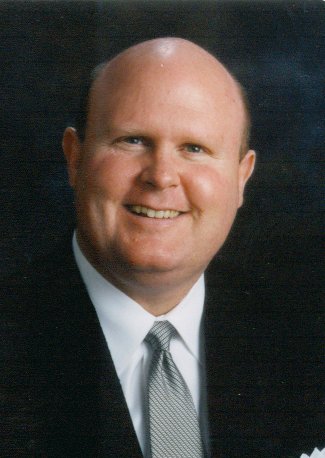 (Below is a guest blog by Dr. John Waters, pastor of First Baptist Church, Statesboro, Georgia, and president of the Georgia Baptist Convention. He shares his personal observations about the 2013 Southern Baptist Convention, which met last week in Houston, Texas.)
Southern Baptists gathered in Houston, Texas, this month for our annual convention meeting. Controversy or unsettled issues often marked previous conventions, so the annual meetings usually morphed into an annual show down, with messengers already having made up their minds regarding a particular issue weeks before their arrival.
This year’s Southern Baptist Convention, however, seemed to mark a course correction. With a shockingly low attendance barely breaking the 5,000 mark, not many Southern Baptists made the trek to the Lone Star state for this annual meeting, but those who attended participated in a well-planned and effective event.
Having attended this year’s annual gathering, I offer the following four observations about this year’s Southern Baptist Convention:
1. Baptists are beginning to favor cooperation over conflict.
With several potentially divisive issues before us, Baptists chose to respond with wisdom, grace, and a plea for unity. The theme of “Revive Us: That We May Be One” set the stage for a spirit of cooperation that sadly has been absent in many of the previous conventions. The report regarding Calvinism and the resolution about Boys Scouts of America were characterized more by their thoughtfulness than their abrasiveness, and messengers seem to be resisting the urge to fight, choosing instead to make strong statements tempered by love and the spirit of Christ.
2. Previous “hot issues” seemed noticeably absent.
With the commotion caused in recent conventions about the Great Commission Resurgence (Orlando, 2010) and the descriptor name of “Great Commission Baptists” (New Orleans, 2012), it was remarkable how these hot topics seemed to be long forgotten. Even though these issues were passionately debated and subsequently approved, Southern Baptists seemed to have put them in the past, relegating them to the historical archives of the Convention for anyone who wants to search for them. But did the adoption of these quasi-controversial matters substantively change the make up and DNA of Southern Baptists? Given the deafening silence about these issues only a few years after their acceptance, they apparently were forgotten as quickly as they were adopted.
3. The call for global missions has been re-ignited among Baptists.
It was difficult to miss the mandate to get the Gospel to the nations, and rightly so. Over the past 30 years or so, Southern Baptists privately swelled with pride when talking about our global mission strategies and our thousands of fully funded missionaries around the globe. But the growing statistics of lostness among the nations and the fatness among Southern Baptist churches have been a wake up call. Danny Akin’s closing sermon was particularly insightful, as he reminded messengers that they could be parachuted into places on the globe and walk for weeks on end without ever meeting a single believer or seeing a single church. They would find, instead, countless people groups representing millions of souls that have never once heard the name of Jesus. In an over-saturated America with churches on every proverbial street corner, maybe it is time we managed with less at home so that we can poke deeper and wider holes in the darkness in parts of the world that don’t even have access to the Gospel.
4. Fred Luter’s genuine spirit set the right temperature for Baptists.
Noticeably uncomfortable in certain settings requiring parliamentary finesse, president Fred Luter displayed an affable and infectious spirit that endeared him even more to Baptists, if that is even possible. He capably handled all of the business required of any SBC president, but his love for churches and pastors was apparent and set a gracious tone for the entire meeting. His gregarious manner was perhaps best displayed after he struck the gavel for the close of the annual meeting and then looked into the crowd and shouted, “Love y’all!” With men like Fred Luter leading the Southern Baptist Convention, the days ahead will be good ones indeed.
The Top Ten Gifts NOT to give on Father’s Day
Copyright 2013 by Bob Rogers

What are the top ten gifts NOT to give on Father’s Day?
Here’s my list:
10. Necktie
9. “World’s Best Dad” coffee mug
8. “World’s Best Dad” t-shirt with a picture of Darth Vader
7. “World’s Best Dad” certificate signed by a Lazy Son or Daughter
6. The book, Fatherhood for Dummies.
5. A text message saying “Happy Father’s Day.”
4. Nose and ear hair trimmer
3. Big Mouth Billy the Bass singing fish
2. Book a cruise and charge it to Dad’s credit card.
1. Nothing.
Yep. Nothing. The worst gift of all is to forget Father’s Day and fail to call or say anything about it. Even a text message is better than nothing at all.
“Honor your father and your mother so that you may have a long life in the land that the Lord your God is giving you.” (Exodus 20:12, HCSB)
Book review: “The Founding Fathers and the Place of Religon in America”
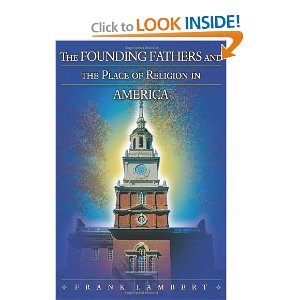
Frank Lambert, professor of history at Purdue University, does an excellent job of surveying this complex topic over a 200-year period. He does so thoroughly, yet concisely, in only 296 pages. While making generalizations at times, he often illustrates his points with quotations from original sources of the time period.
He begins by criticizing extremists on both sides of the issue, and proceeds to present a balanced approach. However, as I will explain at the end of this review, he shows his bias at the end.
Lambert’s thesis is this: America WAS first settled by people who wanted to make it a Christian nation, whether Puritans in New England, Anglicans in Virginia, or Quakers and others in Pennsylvania. These early founders had a vision of making America “a city on a hill,” a model Christian commonwealth. However, two major influences led the founding fathers to establish a government that separated church and state. These two influences were the Enlightenment and the Great Awakening. Men like Thomas Jefferson and Thomas Paine, who were influenced by the Enlightenment, felt that men should be free to use their own reason in matters of religion. The Baptists and others who benefitted from the rapid growth of “free” churches in the Great Awakening were persecuted by established churches and wished to have no established church, so they joined with men like Jefferson in calling for separation of church and state.
Lambert shows that there was great division over these issues, and gives interesting anecdotes and quotations from both sides. He quotes frequently from religious leaders on both sides of the issue. However, near the end of the book he spends much more time quoting Republicans like Thomas Jefferson and James Madison, and gives little space to Federalists like George Washington and John Adams. At one point, on page 161, Lambert implies that John Adams was a deist, even though biographies of Adams have shown him to be a devout Christian with a Puritan heritage.
Lambert shows his view in his conclusion, as he criticizes accomodationists such as Judge William Rehnquist and “religious right” preachers like Pat Robertson.
While Lambert gives both sides of the argument, he clearly leads the reader to his own separationist interpretation. Because the book is so full of useful information, I highly recommend it as a textbook on the subject, but let the reader understand that Lambert has his own bias, too.


 Bob Rogers