Blog Archives
Best biographies I read in 2025
If you know me, you know that I nerd out on history. In 2025, I read a lot of biographies. These were particularly interesting to me:

*Confessions of St. Augustine. The spiritual and psychological autobiography of one of the greatest theologians in history. What more can I say? Read it!
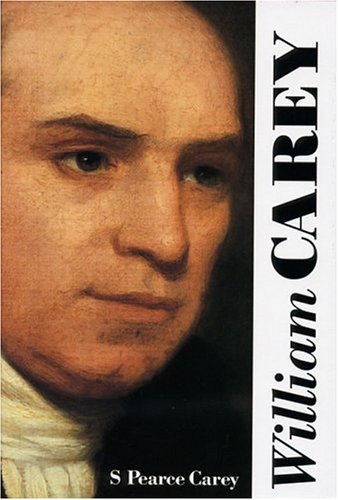
*William Carey, by S. Pearce Carey. A masterful story of the father of modern missions by his great-grandson. Inspiring beyond measure. Thanks to Dr. Bennie Crockett for recommending it.
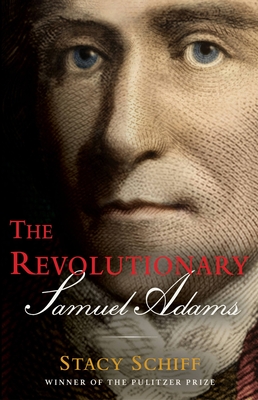
*The Revolutionary, Samuel Adams, by Stacy Schiff. With our nation’s 250th anniversary coming up, I wanted to read up on that era. Schiff shows how Samuel Adams was perhaps the greatest instigator behind the revolution. Fascinating.
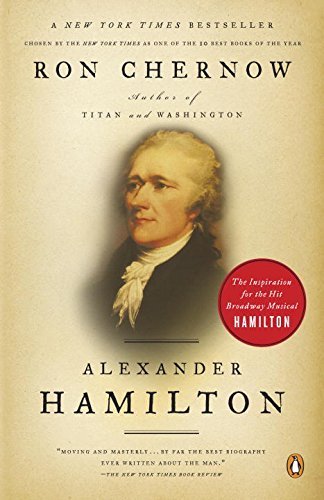
*Alexander Hamilton, by Ron Chernow. No wonder they made a Broadway play based on this book. The guy had more drama in his lifetime than some nations have in their entire history.
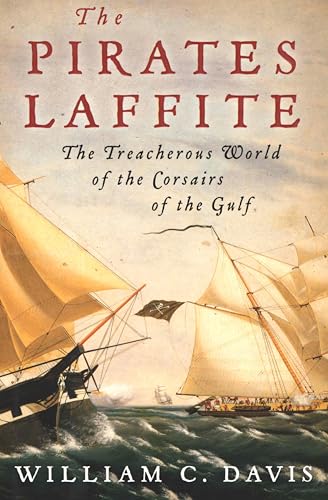
*The Pirates Lafitte, by William C. Davis. Entertaining and illuminating about the Gulf Coast culture and history in the early 1800s through the raucous lives of the pirates Jean and Pierre Lafitte. I really enjoyed this one.
Book Review: “Love Does” by Bob Goff
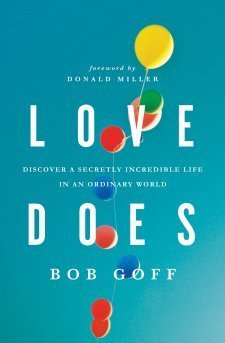
Bob Goff is a lawyer who loves the word “whimsy,” a word he uses constantly. His whimsical book starts each chapter by stating what he used to think and how he changed his mind (generally along the lines of how he used to think love was a feeling but now he thinks it is an action), followed by a whimsical true story from his life to illustrate his point. His stories are full of whimsical humor and talk about Jesus as his motivation for doing good deeds– and Goff does amazing deeds, particularly in Uganda, where he helped end injustice in the prison system and provided an education for countless children who were former fighters in the civil war.
His Christian motivation is inspiring, but his theology is shallow. He calls “missing the mark” a “stupid analogy” in chapter 16, and ridicules Bible teachers who use the term. One wonders if he even knows that “missing the mark” is the literal translation for the Greek word for sin, since in chapter 29 he ridicules people who study the Hebrew and Greek background of scripture.
Goff’s love in action is admirable– but his whimsy can be annoying if you value hard work and organization, such as when he tells how he got into law school by pestering the dean instead of doing the hard work to pass the entrance exam, and how he lied to get in a friend’s hotel room and ran up a $400 room service bill before the guy arrived as a “prank.” He describes many such adventures, never with a plan, but always with whimsy. He certainly gets a lot of good things done, but he swings the pendulum so far away from planning toward risk-taking that one wonders when one of his unplanned adventures will eventually cause some regrettable disaster. So far, so good– but I won’t risk reading any more of his books.
Book review: “Politics and Piety: Baptist Social Reform in America, 1770-1860”

Menikoff, Aaron. Politics and Piety: Baptist Social Reform in America, 1770-1860. Eugene, Oregon: Pickwick Publicaitons, 2014.
Aaron Menikoff fills in important gaps in Baptist history with this well-researched study of Baptist involvement in social reform between the American Revolution and Civil War. He is well-prepared to write on the subject, with a Ph.D. from Southern Baptist Theological Seminary, and experience as a legislative assistant to U.S. Senator Mark Hatfield, a Baptist.
This book debunks the common idea that Baptists in the 19th century were only concerned about personal salvation, and neglected social issues. He first examines the overall attitude of Baptists toward salvation, morality, politics, and church and state, with particular emphasis on how Baptists held in tension the idea that church and state should be separate, yet a nation needed to be virtuous to survive. In other words, the Baptist understanding of separation of church and meant the government had no right establishing a particular religion, but this did not mean a separation between church and society– far from it.
Next, Menikoff examines how this Baptist attitude played itself out in five major issues of the time: political parties, slavery, the Sabbath Mail Controversy, poverty, and the temperance movement. He shows the majority Baptist approach to each issue, while also revealing how different Baptists took different sides on each of these issues. ]
On political parties, Baptists usually avoided endorsing candidates or parties, yet spoke out on political issues, and some were more directly involved as candidates and supporting parties.
On slavery, Menikoff shows the complexity and diversity of Baptist views, including the colonization movement to resettle slaves in Africa. While Northern Baptists generally joined the abolitionist movement and southern Baptists opposed it, he shows how there were southern Baptists opposed to slavery in the south as late as the 1830s, and Baptist leaders like Richard Furman called upon slaveholders not to neglect the spiritual needs of their slaves.
The Sabbath Mail Controvesy is largely forgotten today, but at the time there was great religious opposition to the delivery of mail on Sunday, including most Baptists. He tells the fascinating story of how a Baptist Senator, Richard Johnson, gave the Congressional report supporting the delivery of mail every day, calling his fellow Baptists hypocrites for trying to unite church and state over the issue.
On poverty, the author shows how Baptists were active in relief efforts for the poor, although they often blamed the poor for getting themselves into their situation and focused on targeted giving of the “deserving poor.”
The temperance movement to abstain from alcohol was the most popular Baptist cause, as all Baptists saw alcohol abuse as a major social problem. However, Menikoff shows that Baptists also had different opinions over the temperance issue, especially defending the liberty of conscience for individual Baptists who drank moderately, and those Baptists who opposed to political efforts at prohibition on the grounds that it mixed church and state.
This book gave me a new perspective on several issues, especially the fascinating Sabbath Mail Controversy as well as how complex and diverse Baptist opinions were on slavery in the south. Menikoff’s research is carefully documented, with hundreds of footnotes and an exhaustive bibliography, leaving a rich resource for further study on the subjects covered. It is not light reading, but for those interested in Baptist history, it is rewarding, indeed.
Four 19th century biographies of Southern slavery
Recently, I’ve read four 19th century biographies and autobiographies of men and women who escaped slavery in the South. If you want to read about what slavery was really like in that time, these classic books will let you hear the stories in the words of those who experienced it.

Sarah Hopkins Bradford, Harriet, the Moses of Her People.
This biography, written by a white friend of Harriet Tubman gives a firsthand account of the amazing life of an amazing woman who bravely made so many trips to the South to rescue over 300 of her people along the “Underground Railroad.” The author is somewhat patronizing toward African-Americans, yet beautifully portrays the unwavering Christian faith that sustained Harriet through it all, and the events surrounding her that some call “supernatural.” Her story has recently been made into the film, Harriet.

Solomon Northrup, 12 Years a Slave.
The most dramatic story I have read of someone escaping slavery is that of Solomon Northrup, a free black man who was kidnapped in New York, and sold into slavery in Louisiana, where he suffered until his dramatic rescue. Northrup himself vividly describes his experiences, which shows the cruelty of slavery in the Deep South. The events surrounding his rescue will have you on the edge of your seat. No wonder this was made into an Academy Award Winning film!

Harriet Ann Jacobs, Incidents in the Life of a Slave Girl Written by Herself.
This account of a female former slave, using the name Linda Brent, shares graphic details of brutality and especially sexual abuse by white owners. There is a constant tension between Linda and her owner, Dr. Flint, whose affections she continually rejects. Although a true story published at the outbreak of the Civil War, it reads like a novel, and I read it quickly. It gives so many insights into slave life in the South, and even discrimination against blacks in the North.

Josiah Henson, The Life of Josiah Henson, Formerly a Slave.
This true story was the basis for Uncle Tom’s Cabin. I downloaded it and read it in one day. Henson was an industrious man with great leadership and organizational skills. The storyline moves quickly and is so emotional, that it overcomes the 19th century formal writing style. I highly recommend this short read to get a feel for the heartless institution of slavery in the South.
Children’s book review: The Quiet Crazy Easter Day
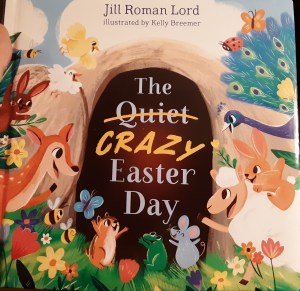

The Quiet Crazy Easter Day by Jill Roman Lord (B & H Kids) is a 22-page, colorful children’s storyboard book that is perfect for the Easter season. The word “quiet” is crossed out in the title, because the theme of the book is how likely it was that all of God’s creatures rejoiced at Jesus’ resurrection.
Using rhythm and rhyme, the book book imagines how every creature, from ladybugs to ladies and eagles to angels burst into howls and shouts of praise. The book should be fun to read, and easy to understand, although perhaps one line could have replaced “distinctive” with a simpler word such as “special.” The illustrations by Kelly Breemer are bright, clear, and use a full range of colors that fit very well with the theme.
I highly recommend this book as a cheerful way to teach children the true meaning of Easter, while also teaching about different animals and the sounds they make.
Disclosure statment: I received a complimentary copy of this book upon promise of review. I was under no obligation to write a favorable review.
Book review: “Not Forsaken” helps those who had a bad Dad
 Louie Giglio, pastor of Passion City Church, a megachurch in Atlanta, writes Not Forsaken to help people see God as a good Heavenly Father, especially those who have had a bad earthly father. The subtitle says it well: “Finding Freedom as Sons & Daughters of a Perfect Father.”
Giglio begins by stating that every person has an innate need for a good father who is proud of him or her, yet the author readily recognizes that many people have had an abusive or absent earthly father, and this makes it difficult for them to affirm God as good. Giglio confronts this dilemma step-by-step, making frequent use of scripture. First, he explains that God is good, even if Dad was bad: “God is not the reflection of your earthly dad. He is the perfection of your earthly dad” (p.76). Then, Giglio encourages the reader to “reverse the curse” through forgiveness of a bad father, saying, “Bitterness continues to pave a path to your past, while forgiveness paves a way to your future” (p. 114). Next, Giglio guides the reader to an understanding of the good fatherly qualities of God. He acknowledges some people will ask, If God is so good, why doesn’t He stop evil? In a paragraph worth repeating, he responds to this question:
I think the answer is because the moment He steps in and removes all the collateral damage of this broken world from ever happening again, that will mark the instant life on earth is over. And in that moment the lost will be lost forever and many whom God wanted to become sons and daughters will be separated from His arms. So, He waits and extends grace another day. And for twenty-four more hours, we are caught in the crossfire of a sin-shattered world. (p. 178)
Finally, he challenges readers that just as we tend to pick up the qualities of our parents, so we should “grow up like Dad,” our heavenly Father.
Although the book is only 235 pages, divided into 10 chapters, Giglio tends to repeat statements he has already made, which is normal for a public speaker like himself, but seems redundant when reading a book. Perhaps with more editing, he could have communicated just as well with fewer than 200 pages. Nevertheless, Giglio writes in a personal, encouraging style, based on solid Biblical interpretation, with many insightful illustrations. This book can be quite helpful to readers who struggle with the idea that God is a good Father.
DISCLAIMER: I received a complimentary copy of this book from B&H Bloggers, but I was under no obligation to write a favorable review.
Book review: “A History of the Modern Middle East”
A
A History of the Modern Middle East by William L. Cleveland and Martin Bunton, 6th ed., (Westview Press, 2016).
This history does as the title promises, focusing more on the modern period of the Middle East, especially from the Ottoman Empire through 2015. The book covers the rise of ISIS but was written before the downfall of ISIS. It includes the Arab Spring of 2011, which Cleveland prefers to call the “Arab Uprisings.” It includes balanced discussions of areas from Turkey to Iran to the Arabian Peninsula to Egypt. It does not include neighboring countries such as the Sudan, North Africa or Afghanistan in the discussion, except where events there affect the Middle East proper, such as the Egyptian war in Sudan, the harboring of Osama bin Laden by the Taliban in Afghanistan, and the Arab uprisings that began in Tunisia and led to the downfall of Libya’s dictator, too.
The book gives much attention to the Arab-Israeli conflict, which is appropriate, as well as thorough coverage of the Kurdish problem of being a people without a homeland.
Perhaps due to his focus on the modern period, Cleveland passes over the Crusades with barely a mention, which I found peculiar, since modern Arabs like Osama bin Laden referred to Christians as the “Crusaders.”
While Cleveland strives to present a balanced report of both the positive and negative traits of each people and each personality, he appears to have certain biases. He clearly is sympathetic to the plight of the Palestinians verses the Jews, and is favorable to the Muslim worldview (for example, he blames Islam’s low view of women on the influences of the cultures neighboring the Arabs, and refers to the Muslim Brotherhood as “moderate”). Nevertheless, he does a good job of explaining the various sectarian and ethnic groups, such as the Sunni and Shi’a, and minority groups like Arab Christians, Assyrians, Yazidis, Druze, Alawites, etc.
Book review: The Best Yearly Devotionals

Many people like to get a book with devotional readings for the entire year. If you are shopping for an annual devotional book, the two classic, all-time best, in my opinion, are Experiencing God Day-by-Day, by Henry T. Blackaby and Richard Blackaby, and My Utmost for His Highest, by Oswald Chambers (I recommend spending a little extra to get the updated edition of Chambers, because his work was originally written in 1917, and the language of the original can be difficult to follow.) Both of these devotionals are strongly rooted in the scripture, with penetrating insights that will drive you to deeper prayer and faithfulness.
Another excellent classic, Morning and Evening, by Charles Spurgeon, provides readings for morning and evening every day. A Year with C.S. Lewis provides great selections from Lewis’s writings for every day of the year. The Songs of Jesus, by Timothy Keller, has a year of brief, Christ-centered daily devotionals through the Psalms. The prayers Keller offers are particularly inspiring. Keller has also published a devotional on the Proverbs (which includes some passages from Ecclesiastes and Job), God’s Wisdom for Navigating Life. It groups wisdom sayings by topics, and does an excellent job of balancing different perspectives of practical, moral, and social issues. New Morning Mercies, by Paul David Tripp, takes daily tweets and elaborates with wise, biblical words on living in God’s grace; although Tripp’s devotions are longer than most, it’s well worth your time. All of the above devotionals will cause you to think deeply and inspire you.
My brother Todd highly recommends the two-volumes of devotionals by D.A. Carson, For the Love of God. It is designed to go with a two-year daily Bible reading plan, and goes into depth. It is not light reading.
If you want a lighter devotional, Daily Guideposts, published annually by Guideposts magazine, include many inspiring stories by a different author every day. They are well-written, although they lack as much substance as the other devotionals mentioned above.
My Daily Pursuit by A.W. Tozer is a collection of thoughts from Tozer’s sermons, which I plan to read through in 2021, so look for an update next year.
Jesus Calling by Sarah Young is an extremely popular devotional that uses the literary device of speaking to the reader as if it is the words of Jesus Himself. The devotionals in Jesus Calling are brief but quite encouraging, especially to those who need to find peace in their lives. However, the devotional has been criticized because the author claims she received the messages directly from Jesus, and some authors have pointed out minor errors in her book that prove not all messages were directly from God. (For more on this controversy, check the excellent book review by Tim Challies here.) Despite these criticisms, I think her devotional is very helpful, and to her credit, Young includes scripture references at the end of each devotional. Young also has published spin-off devotionals that are similar, such as Dear Jesus.
Voices of the Faithful, edited by Beth Moore, has devotional stories by missionaries.
If you are looking for a devotional for married couples, Our Love Is Here to Stay: A Daily Devotional for Couples, by Tony and Lois Evans, is the best one I have read on the subject. It is well-written, interesting, and full of practical wisdom.
Book review: “Love and Respect”

Love and Respect: The Love She Most Desires; The Respect He Desperately Needs by Emerson Eggerichs is an extremely helpful Christian book on marriage. It was first published in 2004, and has sold over one million copies. My wife Mary and I listened to it together and we agreed he correctly understands the emotional needs of husbands and wives.
Eggerichs makes a great contribution to understanding marriage by his insight into the importance of taking Ephesians 5:33 literally: “Let each of you love his wife as himself, and let the wife see that she respects her husband.” The author points out that the greatest emotional need of the wife is for love, and the greatest emotional need of the husband is respect.
He gives specific ways that men can show love to their wives, and wives show respect to their husbands, to avoid the “crazy cycle,” as he calls it, of each spouse withholding what the other needs because of not getting what they themselves need. He speaks of the “energizing cycle” when spouses meet the need of the other. He concludes by emphasizing that the motivation of a Christian to meet the need of his or her spouse should be obedience to Christ, which he calls the “reward cycle.”
Book review of children’s book: “Who sang the first song?”


Who Sang the First Song? is a large hardback children’s book, written in rhyme by songwriter Ellie Holcomb and beautifully illustrated by Kayla Harren. In 24 pages that flow through 12 large two-page colorful drawings, Holcomb repeatedly asks the question, “Who sang the first song?” and then suggests the answer with questions, as it the names parts of the creation. The questions come in an order similar to the days of creation, flowing through poetic references to wind, moon, stars, sun, sea creatures, animals, plants and birds. The book answers, “All these guesses we’ve made are quite good, but they’re wrong. It was God, our Maker, who sang the first song!” Then Holcomb explains that God “wrote His song into everything” and tells children they are good and wonderfully made, and that God wants children to “sing with your life and your voice.” Each page shows happy children, and includes musical notes in the sky. Harren’s contrasting colors and detail delighted my grandchildren, who enjoyed pointing out things like the frog on an umbrella or a girl holding a basket of rabbits. I read this book to my grandchildren, ages 2, 3, 4 and 6. (In the photo, my grandson is reading the page with his favorite illustration.) The youngest were fascinated by the illustrations and wanted to see it again and again, while the older ones also understood the message.
Ironically, although the book is published by B&H Kids of Nashville (publishing arm of Southern Baptists), it is printed in Shenzhen, China (next door to Hong Kong), in a communist country that suppresses Christians from sharing the faith with their own children.
(Disclaimer: I received a complimentary copy from the publisher, but was under no obligation to write a positive review.)
Book review: “Letters to an American Christian”

How should the faith of American Christians affect their politics?
Bruce Riley Ashford, professor of theology and culture at Southeaster Baptist Theological Seminary, answers this question in a scholarly yet readable way in his new book, Letters to an American Christian (Nashville: B & H, 2018). He uses the technique of imaginary letters to a young new believer, named “Christian.” Imagining he is responding to Christian’s questions and experiences as a new believer and college student in a liberal secular university, he covers a vast array of topics from a Biblical worldview, including church and state, free speech, women’s rights, racism, Black Lives Matter, political correctness, big government, judicial activism, gun ownership, gay rights, transgenders, environmentalism, immigration, nationalism, war and peace, and fake news.
The author frequently includes catchy quotations, humor and personal references to his fictional friend that make the scholarly portions of the book come across more human. Yet he is clearly a scholar, drawing from a vast reading and rooted in Biblical references and concepts. In his chapter on immigration, I was surprised that he made no reference to the Old Testament injunction to protect the “sojourner” and “alien” among Israel, since they were once sojourners in Egypt. His political views are self-described as “center right” (p. 211), and this comes across consistently, as he defends most conservative views, but does it with compassion and moderation. He is strongly critical of secular and liberal political views. He also criticizes alt-right, ultra-conservative views, especially those that are mean-spirited.
Few people are likely to agree with every position Dr. Ashford takes on so many topics, but most Bible-believing Christians will find his book thought-provoking and helpful in forming their own positions.
(Disclaimer: I received a complimentary copy of the book from the publisher, but I was under no obligation to write a positive review.)
Book review: “Preaching By The Book: Developing and Delivering Text-Driven Sermons”

R. Scott Pace, professor of preaching at Southeastern Baptist Theological Seminary, has written this concise, but thorough, manual on how to preach expository sermons.
The chapters are structured — like many sermons– with alliterated titles, under three main parts (The Foundation, The Framework, The Finishing Touches), and chapters under those parts (Inspiration, Investigation, Interpretation, Implementation, Introductions, Illustrations, Invitations, Conclusion). However, a better way to understand this book is found on page 18, where he gives a chart of a seven-step process of sermon development. The rest of the book fleshes out the skeleton of these seven steps. As an experienced preacher myself, I can testify that this is a very helpful, balanced, and Biblical approach. It is helpful because it is practical and applicable. It is balanced between theory and practice, and balanced in cautioning against extremes (such as not using too few or too many illustrations). It is consistently affirmed with Biblical reasons and quotations. The only major omission I noticed was no discussion whatsoever of Bible translations, which is a dilemma for many preachers.
Given the brevity of this book (115 pages of text), I was surprised at how much it covered. He does not go into great detail, yet he covers every important topic in the sermon process. He gives sufficient information and examples where needed, such as on page 62, where he gives a sample outline of a text. He frequently gives practical advice, as on page 15 where he advises the rule of thumb that the preacher dress one degree more formal than his listeners, and on page 106 where he suggests a preacher give those responding to the invitation one word to say as they come forward, to cope with their nervousness.
Overall, this can be an excellent textbook for a class on preaching (supplemented by a professor’s assignments of practicing sermon writing and delivery), a primer for a new preacher, and a tune-up for the seasoned preacher.
I received a complimentary copy of this book from B & H Bloggers. I was not obligated to write a positive review.
Book review: “A Hospital Chaplain at the Crossroads of Humanity”

Alberts, William E. A Hospital Chaplain at the Crossroads of Humanity, 2012.
This short, easy-to-read book is a series of 54 diverse vignettes that Rev. Alberts shares about people to whom he ministered as a board-certified, CPSP hospital chaplain at Boston Medical Center. He has a loving and accepting approach to all of his patients, and he models some excellent approaches and conversations to the “crossroads of humanity” who need medical care. Health care chaplains and all those who minister to the sick will relate to many stories and can learn much from his compassion and wisdom.
The book is full of touching stories and pithy quotes, such as “religion is about the Golden Rule and not about the ‘gold’ that rules,” and a patient who was transformed from “a hopeless dope addict into a dopeless hope addict.”
However, those like myself who have a conservative, deeply held personal faith will likely be distracted and even annoyed that Rev. Alberts favors those who believe that all roads lead to God, which he spells with the small “g.” He emphasizes his theological position as a Unitarian and United Methodist (more Unitarian than Methodist), and stresses his distaste for conservative politics, especially military spending. Thus it seems odd to me, as a less experienced hospital chaplain myself, that he repeatedly tells how he begins a visit by asking a person’s religious affiliation. He frequently reports that people are defensive or confused by this question, yet he continues to ask it. He even reported that patients occasionally responded with apologies for not attending church, thus showing that the question put them on the spot. Since he seems sincerely focused on serving the needs of all patients, why not just ask the patient what is happening in their lives, and let them talk about their religious affiliation if they want to do so?
The Kindle edition has a few minor errors where lines are repeated or words are missing, such as page 138.
Be aware of these children’s books with an LGBT agenda

The July 1, 2017 issue of World magazine features four books with LGBT storylines that parents should be aware of:
Ashes to Asheville by Sarah Dooley. (Target audience: ages 14 and up.) Set at a time before legalized same-sex marriage, Dooley’s second novel has 12-year-old “Fella” mourning her mother’s death and the disintegration of the only family she has known: Two moms and sister Zany. The story emphasizes prejudice and unfriendly laws, but it speaks louder of brokenness and confusion.
The Best Man by Richard Peck. (Target audience: ages 12 and up.) Archer Magill is slow to realize his fifth-grade teacher is gay and dating Archer’s uncle. Archer and those around him naïvely accept the relationship, which culminates in a wedding.
In Our Mothers’ House by Patricia Polacco. (Target audience: 8 and up.) A picture book told from a child’s perspective, two mothers—Marmee and Meema—appear fully able to offer their three adopted children a loving home. One neighbor snubs them and keeps her kids away, fuming, “I don’t appreciate what you two are!” A hateful neighbor, not the absence of a father, hurts them.
Magnus Chase and the Gods of Asgard: The Hammer of Thor by Rick Riordan. (Target audience: ages 10-13.) Parents and fans of Riordan’s wildly popular books should know that this second installment in his Nordic-themed fantasy series introduces a transgender, “gender-fluid” character, Alex Fierro. A son of Loki with a tumultuous past, “she” spontaneously changes gender and pronouns on any given day.
For more information, consult World magazine, an excellent news and culture magazine that writes from a Biblical worldview. Their website is www.wng.org.
Book review: “A House Put in Order”

A House Put in Order, by J. Brian Broome, is an entertaining paranormal novel of a prison chaplain who must deal with the disaster in his prison just before Halloween, when a Wiccan inmate summons an evil spirit to get revenge on the deputy warden.
Although the book depicts a Christian chaplain responding to evil spirits, the book is not preachy. In fact, he is very respectful toward other religious faiths. That is not to say that he doesn’t include some enlightening insights, such as the comment in chapter 11, “When a man is beaten down by his pain, well, let’s just say pain doesn’t know religious affiliation.”
The author is a retired prison chaplain, and anybody who has spent time in the prison system will recognize how realistic his descriptions are. His characters are also realistic, and at times, humorous. (For example, in chapter 17, the chaplain reflects on an inmate who argued that since he was a new person in Christ, he should be set free from prison. The chaplain’s brilliant reply was to remind him that Jesus said to give to Caesar what is Caesar’s and to God what is God’s, and added, “Your soul may belong to God, but right now your body belongs to Caesar.”)
After setting up characters and building the plot early in the book, the plot picks up pace and rushes straight to a ending that will keep you reading. Some might say the plot is a bit predictable toward the end, or at least it goes the way the reader would hope, although not entirely; you will certainly want to keep reading to find out how it ends. This book would make a great summer read, and a fantastic read around Halloween.


 Bob Rogers