The Prayer Life of Jesus Christ, Part 3

Copyright 2013 by Bob Rogers
This is the third and final post in my series on the prayer life of Jesus. In the past two days we have taken a survey of the times and places Jesus prayed, and the actual words recorded in His prayers. Based on that, here are four lessons I have learned from Jesus’ prayer life:
1. The priority of prayer. He made prayer a high priority. Mark 1:35; Luke 5:16; 6:12-13; 11:1. If prayer was so important for Jesus, how much more necessary is it for us?
2. The privacy of prayer. He constantly prayed in private. Matthew 14:22-23; Mark 1:35; Luke 5:16; 9:18. Oh, how we need to get alone with God like Jesus did.
3. The pinnacle prayer principle. He loved to pray on mountains: Matthew 14:23; Mark 6:46; Luke 6:12; 9:28. However, the fact that He often withdrew to “deserted places” (Luke 5:16) shows that the important thing was to be alone in God’s creation. Your place in nature may be a lake, a small garden, or front porch, or backyard swing. Even if you live in a crowded city, you can find a balcony or quiet room to focus your thoughts on God. The point is that Jesus knew that He had to be in a place where His total attention was upon the Father.
4. The people prayer principle. The more people, the shorter the prayer, the fewer people, the longer the prayer. His public prayers were short. Luke 10:21; John 11:41-42; Matthew 27:46. He condemned long prayers for show in Mark 12:40. His longest recorded prayer, John 17, was with a small group, while His longest prayer of all was totally alone (Luke 6:12). Too often we reverse this and pray too long in public and don’t pray enough in private.
What lessons have you learned from Jesus’ prayers?
The Prayer Life of Jesus Christ, Part 2
 Copyright 2013 by Bob Rogers
Yesterday I began this study of Jesus’ prayer life. We looked at the times and places that He prayed, and today we will look at the actual words He prayed. After the previous study revealed how pervasive prayer was during His earthly life, it is striking to notice that there are relatively few prayers of Jesus for which we have the words recorded. In fact, I have only noticed ten. Of those ten, the first two are actually model prayers that He gave for us to pray, and most of the others are extremely short. The great exception is His “high priestly prayer” in John 17, which should indicate to us how important it is to study that prayer in particular.
Here is a list of the recorded prayers of Jesus:
The Words that He prayed:
1. The Model Prayer (usually called “The Lord’s Prayer”). Matthew 6:4-13; Luke 11:2-4.
2. The Model Confession. Jesus tells a parable and says the prayer of the tax collector is a worthy example of confession. Luke 18:13.
3. Praising God for His revelation. Matthew 11:25-26; Luke 10:21.
4. Thanking God in advance for answering prayer. John 11:41-42.
5. For God to glorify His name. John 12:27-28.
6. His High Priestly Prayer. John 17:1-26. Here Jesus prayed for Himself to be glorified (v. 1-5), for His disciples to be sanctified (v. 6-19), and for all believers to be unified (v. 20-26).
7. For God’s will. Matthew 26:36-44; Mark 14:36; Luke 22:40-46.
8. On the cross: forgiveness. Luke 23:34
9. On the cross: forsakenness. Matthew 27:46; Mark 15:34.
10. On the cross: finality. Luke 23:46.
(To Be Continued Tomorrow)
The Prayer Life of Jesus Christ, Part 1
Copyright 2013 by Bob Rogers

The disciples asked Jesus, “Lord, teach us to pray.” (Luke 11:1). The record of His prayers in the four Gospels teaches us many valuable lessons. We can learn from the times and places that He prayed, and from the words that He prayed. We can also see several patterns in His prayers and draw conclusions from them. Over the next few days, I will share several prayer lessons from Jesus’ prayer life.
First, notice the times and places that He prayed:
1. Early in the morning. Mark 1:35; Luke 4:42
2. At the end of a long day. Mark 6:30-31, 45-56; Mathew 14:22-23
3. All night before a major decision. Luke 6:12-13
4. Before meals (Feeding 5,000 and 4,000; Last Supper). Matthew 14:19; 15:36; 26:26-27; Mark 6:41; 8:6; 14:22-23; Luke 9:16, 22:17; John 6:11
5. In private. Matthew 14:23; Luke 5:15-16; 9:18. (See Matthew 6:6)
6. With a small group of disciples. John 18:1-2.
7. Often in deserted places. Luke 5:16
8. On a mountain. Matthew 14:23; Mark 6:46; Luke 6:12: 9:28
9. For a disciple to be strengthened. Luke 22:31-32
10. At His baptism. Luke 3:21-22
11. At His transfiguration. Luke 9:29
12. On the Mount of Olives in the Garden of Gethsemane. Matthew 26:36; Mark 14:32; Luke 22:39-40. John 18:1-2 says He went there often with His disciples.
(To Be Continued Tomorrow)
Church signs attempt Easter humor

Easter is a happy time. After all, we’re celebrating Jesus’ resurrection from the dead, right? So it should be no surprise that during the Easter season, many churches try their hands at humor on their church signs. I say “try,” because some are failed attempts.
It seems that the Easter bunny is the favorite target of church marquees at Easter time. Some of the signs are cute, like this one:
“NO BUNNY LOVES YOU LIKE JESUS.”
Others are hopping mad at that pagan symbol, such as these:
“EVERY BUNNY KNOWS EASTER IS ALL ABOUT JESUS.”
“THE EASTER BUNNY DIDN’T RISE FROM THE DEAD.”
Then some are simply corny, like this one:
“HOW DOES THE EASTER BUNNY SAY ‘HAPPY EASTER’? HOPPY EASTER!”
My favorite bunny sign is this one:
“EVERY BUNNY IS LOVED BY JESUS”
Of course, church signs don’t just go after the bunny; they also remind us that Easter eggs don’t really relate to the resurrection, either. Read this one:
“EASTER IS MORE THAN SOMETHING TO DYE FOR.”
Then there are a few Easter messages directed at those who attend worship. Some are negative, like these:
“EASTER COMES ONCE A YEAR. HOW OFTEN DO YOU?”
“DON’T FORGET, JUDAS ALSO LEFT EARLY.”
Others are more positive, like this one:
“BEAT THE EASTER RUSH- COME TO CHURCH THIS SUNDAY.”
Personally, I think the best Easter humor is to focus on Jesus Himself. That’s why I like this one:
“YOU CAN’T KEEP A GOOD MAN DOWN. HAPPY EASTER.”
Book Review: “Crime Scene Jerusalem: A Novel”
Copyright 2013 by Bob Rogers

Crime Scene Jerusalem: A Novel by Alton Gansky (published by David C. Cook, 2007) does a masterful job of pulling off a peculiar premise: Max Odom, a forensics expert, is taken back in time to investigate the crucifixion and resurrection of Jesus Christ. Gansky makes the story much more than believable– he makes it gut-wrenching. The forensics expert doesn’t want to be there, and expresses all of the sarcastic humor of a jaded American man. But when he comes face-to-face with the cross, and sees how Jesus’ death speaks to the pain in his own life, he… well, read the book yourself. You will not be able to put it down, and you’ll be changed by the experience. Gansky describes life and culture in first-century Jerusalem vividly, and Gansky keeps the reader guessing what hurt Max Odom experienced that must come to the surface as he witnesses the Passion of Christ. A fascinating read for the Easter season or any season.
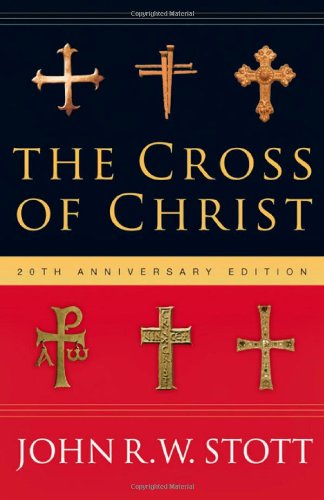
Book review: The Cross of Christ by John R. W. Stott
Copyright 2013 by Bob Rogers
John R. W. Stott, who was pastor of All Soul’s Anglican Church in London before passing away in 2011, was one of the most respected evangelical writers in Great Britain. I thoroughly enjoyed his classic book, The Cross of Christ (InterVarsity Press, 1986, 2006). I found it to be the best book I have ever read about the Cross. I’m not surprised that it received the 1988 Evangelical Christian Publishers Association Gold Medallion Award.
Stott wrote as an evangelical pastor and scholar. While he thought deeply, he wrote with clarity and frequent illustrations. In fact, I used his book as the basis for a series of sermons on the cross.
Stott’s book begins by making a passionate argument for the centrality of the cross to the Christian gospel. Then he explores the reasons for the crucifixion, and while describing many “images” of atonement, he zeros in on Christ as a substitutionary sacrifice to satisfy both the holiness and love of God. His discussion in chapter seven of propitiation, redemption, justification and reconciliation is perhaps the best chapter of the book. The book concludes with chapters on what it means to live as followers of the One who died on the cross, with excellent explanations of service, overcoming evil, and understanding suffering.
Stott has read widely on the subject and he graciously comments on opposing views from liberal scholars and Roman Catholic scholars. He takes other views seriously, but he is faithful to an orthodox evangelical interpretation of scripture. I found it interesting that he disagrees with the popular view of Jesus’ death as a “ransom” paid to the devil in a strictly literal sense. His discussion on the distinctions between Protestant and Roman Catholic views of justification is particularly insightful. Stott rejects the doctrine that God does not suffer, maintaining in chapter 13 that it is precisely because God did suffer on the cross that we are able to bear our suffering.
Many parts of the book read as if they were sermons. This is not surprising, since Stott was a pastor. Yet it comes together as a systematic theology of the cross. His conclusion makes an excellent sermon on how central the cross is to Paul’s Letter to the Galatians.
This is a book that I will read again and again in the years to come.

Valentine’s Day and the Preacher’s Daughters

I always thought that I was romantic. But having two attractive young daughters has taught me that I have a lot to learn about romance. (Sorry, guys, they’re both taken—both are now married.) According to my daughters, there are three different levels in a boy-girl relationship:
1. “Talking.” If you’re “talking,” it means you’re interested in each other, but you’re not committed to being boyfriend and girlfriend. You’re free to talk to others. A lot of this “talking” is actually “typing,” because they often do it by texting on their cell phones.
2. “Going out.” This means a commitment to being boyfriend and girlfriend. My generation called this “going steady,” but today’s teens call it “going out.” The only problem is, if they don’t have a driver’s license, they aren’t really going anywhere. Personally, I think they should call this “talking a lot more,” or “texting a lot more,” because that’s what they’re really doing.
3. “Dating.” This is for older youth who have driver’s licenses. If you’re older, you can go straight from “talking” to “dating.” Also, to further complicate things, you can be “dating” but not yet committed to “going out.” So in this scenario, you actually ARE going out, yet you are not officially “going out.”
To my daughters’ list of three levels, I would add a fourth level. If God leads you to Mr. Right, then at the proper time, you should move to a fourth level in a relationship:
4. “Married.” This is what happens when you decide to go out permanently.
I’m reminded of a conversation I once overheard in a flower shop just before Valentine’s Day. Some young men were in the shop, talking about their constantly changing girlfriends. An older man spoke up and said, “What you guys need to do is stop buying at the news stand and get a subscription.”
The Bible says, “Rejoice in the wife of your youth” (Proverbs 5:18) and “He who finds a wife finds what is good and receives favor from the Lord” (Proverbs 18:22). That’s why I’m happy for my daughters. And I pray that after they are married, they don’t forget to keep dating, and going out, and talking. I know that if they do, their subscription will never run out.
Ten Secrets to Successful Missions
Copyright by Bob Rogers
Luke 10:1-20 records that Jesus sent out 70 people to go on a mission trip, going in pairs to towns and villages where He was about to go. Apparently it was very successful, because we read in verse 17, “The Seventy returned with joy, saying, ‘Lord, even the demons submit to us in your name.’” And Jesus replied in verse 18, “I watched Satan fall from heaven like a lightning flash.”
What made their mission so successful? And how can our mission work and the missionaries we pray for discover the same power in their ministry?
This passages gives us ten secrets to successful missions. Here they are. Open your Bible to Luke 10, and notice these ten truths:
1. Multiplication. (v. 1) Use everybody, not just professional clergy. The Lord commissioned the 12 apostles in Luke 9:1-6, but here he sends out 70. Multiply your ministry. Use volunteers.
2. Teamwork (v. 1) He sent them in pairs, not alone. We can be so much more effective by working together, and it is a testimony to our unity in Christ to work in teams. Southern Baptists believe in the Cooperative Program as an excellent strategy, as thousands of churches pool their resources to support missionaries.
3. Prayer (v. 2) Before sending them out, He told them to pray for workers for the harvest. When Jerry Rankin was president of the International Mission Board, he spoke at Ridgecrest Baptist Assembly and mentioned that the IMB has recently appointed our first missionary to serve openly in Albania. After the service, a woman came up to Dr. Rankin, crying. When she gained her composure, she said that seven years before, she had read that Albania was the most atheistic country in the world, and she called the IMB to ask what we were doing there, only to learn that Albania was completely closed to missionaries. So she went back to her ladies’ group in her church, and asked them to pray for Albania. “For seven years we have been praying for Albania!” she wept, and Dr. Rankin wept tears of joy with her. (Jerry Rankin, To the Ends of the Earth, p. 57-58)
4. Expect opposition (“like lambs among wolves”). (v. 3) A Christian pastor took a group of school children whom he was teaching, for a walk. The Secret Police dogged them at first, but when they went into a zoo, they left them alone. He led them to a lion’s cage and gathered them around so he could speak quietly. He said, “Your forefathers in the Christian faith were thrown to wild beasts like these. They died gladly, because they believed in Jesus. The time may come when you also will be imprisoned, and suffer for being a Christian. Now you must decide whether you are ready to face that day. With tears in their eyes, each in turn said, ‘yes.’ It was the last class he taught before he had to leave his country. (Richard Wurmbrand, God’s Underground. Cited in “The Last Class,” The Voice of the Martyrs, February 2013.)
5. Commitment (v. 4, 7-8) If you care too much about your personal comfort (“money-bag, traveling bag,” “eating what they offer,”) you will become discouraged. If you care too much for sightseeing and socializing (“don’t greet anyone along the road”), you will lose your focus. When William Carey arrived in India, his wife was sick, he face financial hardship, and he was so lonely that he wrote in his journal, “O that I had … an earthly friend to whom I could unbosom my soul!” (Mary Drewery, William Carey, p. 74.) Andrew Baldwin, who ministers to an unreached people group in London, England, says, “This also emphasizes the need to move out in faith and in total dependence on God. Some people insist on having everything in place and being totally prepared – preparation is good, but as the leader who first recruited me to Turkey wisely said, if we waited till we felt completely ready, we’d never go!”
6. Look for a person of peace (v. 5-6). “Shalom” means more than just peace; it means wholeness and health. A person of peace was a person who fully receives the missionary. This is a person living in the culture you are reaching, who welcomes you, receives the message, and can be a bridge between you and your target culture. When Lottie Moon was serving in China, she learned of a village ten miles from where she was, that was open to the gospel. There lived a man named Dan Ho-bang. He had heard from another missionary that Jesus could remove sins from people. Then he learned that Lottie Moon was teaching about Jesus. Mr. Dan sent three people to invite Miss Moon to preach the way of Jesus in his home. She went, and great crowds of people came to the home to listen to the gospel. It became possible, because of Mr. Dan, a man of peace. (Catherine B. Allen, The New Lottie Moon Story, p. 171)
7. Show and tell the gospel (v. 9) In other words, meet their physical needs and also their spiritual needs– by sharing the gospel. While we always have the authority to share the gospel, often they are more receptive to hearing it when we show that we love them in a practical way. But beware: don’t use service or meeting physical needs as an excuse to not share the gospel. Servant evangelism alone is not a substitute for preaching. James Harvey is a missionary to an unreached people in Nashville, Tennessee. He says, “people use it [servant evangelism] as an excuse to be lazy and non-strategic in declaring the gospel message up front with people in their first meeting/encounter, whether it’s a waitress at a lunch meeting, a worldly relative at a family reunion, or a lost co-worker they pass by every day.”
8. Don’t take rejection personally (v. 10-12). If they reject you, they are actually rejecting Jesus, not you. You’re only accountable for sharing the gospel; you are not accountable for their response. When Lottie Moon first went to China, the Chinese called her a “devil woman” because she was a foreigner. She patiently responded, “Do not curse me. I am a human like you.” It took time for them to even accept her. (Catherine B. Allen, The New Lottie Moon Story, p. 158.)
9. Celebrate spiritual victories. (v. 17-19) When the 70 returned with joy that the demons submitted, Jesus rejoiced with them that Satan was being defeated. Whether you experience small victories, such as a person listening to the gospel, or great victories, such as a person coming to faith in Jesus, it is always reason to celebrate God’s work.
10. Find your greatest satisfaction in your own salvation (v. 20) Jesus reminded them that the greatest rejoicing was that their own names are written in the Book of Life. If you have been obedient to your call to be on mission, you will always be successful, no matter what numerical results you see in your lifetime.
A famous artist was asked to paint a picture of a dying church. One would expect that he would paint a small congregation in a dilapidated building. Instead, he painted a beautiful edifice with a rich pulpit and magnificent stained glass windows—and near the door, an offering box marked “Missions,” with the contribution slot covered with cobwebs. (Charles R. Swindoll, Swindoll’s Ultimate Book of Illustrations & Quotes, p. 378.)
It’s very true. If the church of Jesus neglects mission, the church will die, for the heart of Christ is a heart for missions. But if a church will follow the words of Christ for missions listed here in Luke 10, that church will be alive.
Which kind of church will we be? What kind of missionary will you be?
Church football– the other Sunday sport

Many NFL fans are not aware that there is another form of football played on Sunday. It’s called “church football.”
This game is often played by “bench warmers” who do not sing, pray, work or do anything much in the church but sit. They like to put the “backfield in motion” by making a trip back and forth to the restroom or water fountain. During “halftime,” when the music has ended and the sermon has not yet begun, they like to play “staying in the pocket,” keeping their money to themselves as the offering plate is passed.
Church footballers allow their children to run a “draw play” with the bulletin during the service. When the “two-minute warning” sounds and the sermon is almost over, they will try a “quarterback sneak,” leaving quietly during the invitation.
The preacher often tries to catch bench warmers in a “trap play” by calling on them to pray while they’re doing a quarterback sneak out the door. Church footballers often try to avoid the trap play with the “end run,” getting out of church quick, without speaking to the preacher or any other members. Then there is a “blitz” to the local restaurants. Many will also exercise the “halfback option,” as 50% of the congregation will not return to the evening service, especially on Super Bowl Sunday.
But then there is another breed of church football players. They are real winners who refuse to punt when the devil has them down on fourth and long. They choose to get into the game, block for their pastor, and tackle thorny problems. The preacher likes to put these people on the first string. When “sudden death” comes, they are the ones best prepared for the “overtime,” because they have committed the Head Coach’s playbook to memory and trusted Him to be right. They really believe they will win, no matter how big the opponent is, and because of their faith, they experience the thrill of victory, not the agony of defeat.
Which kind of church football player are you?
Does the Bible say ghosts are real?
 Copyright by Bob Rogers.
I received the following question from a man named Jason:
[My wife] came home telling me that somehow at work they got in the conversation about ghosts and whether Christians believe they are real or not. Can you help me with this? And can you provide me with specific scripture?
Here’s my answer:
The King James Version translates “Holy Spirit” as “Holy Ghost,” because in the English language four hundred years ago, the words “ghost” and “spirit” meant the same thing. However, today, we associate the word “ghost” with a shadowy image of a dead person coming back to haunt people, whereas the Bible is referring to the unseen living person of God when scripture calls Him the “Holy Spirit.”
Regarding the modern idea of ghosts, we read in I Samuel 28 that King Saul consults a medium and asks her to bring up the spirit of the dead prophet Samuel to speak to him, and she does! But the Bible strongly condemns mediums and witchcraft (see Leviticus 19:31). In fact, the first part of 1 Samuel 28 mentions that King Saul had banished the mediums and spiritists from Israel, but then violated his own law to try to bring back the ghost of Samuel. So yes, it is real, but the practice of spiritism is satanic and should be avoided. (I’m not saying that the spirit of Samuel was a demonic spirit; but that the practice of spiritism is a demonic practice. Even the spirit of Samuel, when brought up, scolded Saul for summoning his spirit from the dead.) Delving in ghosts leads people into dangerous territory. Instead, we should be consulting God’s word, not spirits of the dead. Isaiah 8:19 warns, “When they say to you, ‘Consult the spirits of the dead’… shouldn’t a people consult their God?” After all, the Holy Ghost is the Lord of hosts!
How to deal with disputable matters in church
 Copyright by Bob Rogers
Two churches were located a few blocks from each other in the same small community. The leadership of the two churches felt it would be wise to merge into one larger, stronger congregation, and so plans were set in motion. But it never happened. Why? They could not agree on the wording of the Lord’s Prayer. One group preferred “forgive us our trespasses” while the other wanted “forgive us our debts.” A newspaper article reporting the failed merger noted that one group went back to its “trespasses” while the other returned to its “debts” (Kenneth Boa and William Kruidenier, Holman New Testament Commentary: Romans, p. 417-418.)
Unfortunately, churches and church members often divide over many minor matters.
In Romans 14:1 (NIV84), Paul says, “Accept him whose faith is weak, without passing judgment on disputable matters.”
There are all kinds of disputable matters that come up in churches today. Church members debate over the translation of the Bible. Church members debate over whether to use organ and piano or use guitars and drums in worship. Church members debate over how much of the budget should go to missions, whether to tithe the gross or the net, and what Sunday School literature to use. Church members debate about whether it is proper for a Christian to have a tattoo or whether to wear dress clothes or casual clothes to church. Some churches debate over whether or not it is proper for a man to wear short sleeves and a woman to wear makeup. Some even debate over the color of the carpet.
So how do we handle it when disputable matters come up in the church?
Romans 14:4 asks, “Who are you to judge someone else’s servant?” The point Paul is making is that the Lord Jesus is the Master, not you or me, so don’t get critical over sideline issues.
How do we define a disputable matter?
This raises a question, however. How do we define what is a disputable matter? After all, most people would agree that whether I preach from the King James Version or some other translation of the Bible is a disputable matter, but for some people, it’s not even open for debate. How can we know? Here are some guidelines:
1) What does the Bible teach on the subject?
First, what does the Bible teach on the subject? Take the example of drinking alcohol. Some Christians drink alcohol, while others feel you cannot be a true Christian and drink alcohol. So what does the Bible teach? The Bible says in some passages that wine was consumed by good people (Melchizedek brought out wine and bread to Abraham in Genesis 14:18; Jesus turned water into wine in John 2:1-11), but it also says that drunkenness is sinful and foolish (Proverbs 20:1; 23:20, Isaiah 5:11). So according to the Bible, drinking alcohol is not a sin, but getting drunk is a sin. So the first principle is to ask what the Bible teaches on the subject.
Of course, there are some areas where sincere Christians have honest differences of opinion about what the Bible teaches on a subject. For example, I believe that the Bible teaches that Jesus’ Second Coming is premillenial. However, I used to believe it was amillenial, and I finally changed my mind after continual study. The reason for differences of opinion is that a person can take scripture and make arguments for both sides, based on scripture. And if two Bible-believing Christians can back up their viewpoints from scripture, then they should respect their differences of opinion.
2) Is the dispute over a practice or a principle?
There is a second guideline that can help us, however. Paul says later in this chapter, in Romans 14:17, “For the kingdom of God is not a matter of eating and drinking, but of righteousness, peace and joy in the Holy Spirit.” Notice that he is making a distinction between practices and principles. “Eating and drinking” are practices. “Righteousness, peace and joy in the Holy Spirit” are principles. Worshiping the Lord is a principle; playing the organ or playing the guitar are practices. We should stand on our principles but be flexible in our practices.
Keeping your dark secret from your pastor
 Copyright 2013 by Bob Rogers
Many pastors have come to learn some deep, dark secrets of members that we must take to our graves. But thanks to HIPAA, one of the secrets we used to find out about has been hidden. I’m talking about the real first names of church members.
You see, hospitals list patients by the name that is on their insurance, not by the name their family and friends call them. In the old days, the preacher could look at the list of patients at the information desk, and find out, for example, that John Smith was actually Orville J. Smith. Of course, John didn’t like to use the name “Orville” and would beg the preacher to keep it a secret. Going to visit “Bubba”? No problem, you could just ask for his last name and find him. But then along came HIPAA.
HIPAA, which stands for the Health Insurance Portability and Accountability Act of 1996, is a law that protects the privacy of hospital patients and wreaks havoc on the hospital visitation ministry of pastors. Under HIPAA, patients have the right to refuse the release of any information to anybody, including their own pastors. And under HIPAA, anybody inquiring about a patient must give the correct name of the patient– even if the patient doesn’t go by that name.
So now when the preacher goes to the hospital and asks for John Smith, the lady at the information desk looks down at “Orville J. Smith” on her computer screen, and then looks up at the preacher with a smirk and says, “I’m sorry, we don’t have anybody by that name.” The preacher can beg and plead and promise to do a wedding for her family for free, but she will just say, “Have you ever heard of HIPAA? I can’t release that information unless you can give me the correct name.”
I must admit, we preachers had it coming. After all, for years we have abused that privileged information, barging into the hospital room and loudly asking, “How are you feeling Orville?” as John (a.k.a. Orville) hides under his sheets in embarrassment. But no more. Now, only God and your doctor have to know your real first name. That is, unless Orville wants his pastor to come pray before his next knee surgery.
The Old Testament prayer of Jesus
Copyright 2013 by Bob Rogers
“Then the Angel of the LORD responded, ‘How long, LORD of Hosts, will You withhold mercy from Jerusalem and the cities of Judah that You have been angry with these 70 years?’ The LORD replied with kind and comforting words to the angel who was speaking with me.” – Zechariah 1:12-13, HCSB
I believe that the person called the Angel of the LORD in this passage is the pre-incarnate Son of God, and that this is a unique example of a prayer of Jesus in the Old Testament.
Notice that He is called “the LORD” in Zechariah 3:2, even though He is called the Angel of the LORD in verse 1 and 4 of that same chapter.
We also see that the Angel of the LORD appears to Abraham in Genesis 22:11-12 yet speaks as God, and appears to Jacob in Genesis 31:11 and wrestles with Jacob in Genesis 32:24-30. In the last passage, Jacob says He saw God face to face. In Daniel 3:24-25, a fourth person appeared in the fiery furnace with the three Hebrews, and one is described as looking “like a son of the gods.” All of this leads many Bible commentators to wonder if these are appearances of Jesus, the Son of God, in the Old Testament.
Another reason why I take Zechariah 1:12 as a prayer of Jesus is the unique wording of the prayer. While we read of angels praising God in Ezekiel 3:12, Luke 2:14, Revelation 15:3-4; 16:5-6, it is unusual for an angel to pray like this, making intercession. However, this prayer fits the prayer and personality of Jesus. Hebrews 7:25 says that Christ always lives to intercede for us, and Matthew 23:37 says that Jesus wept over Jerusalem. In this passage, the Angel of the LORD prays for God to show mercy and forgiveness to the exiles of Jerusalem after 70 years in Babylon.
Notice also how the LORD replies to the prayer of the Angel in Zechariah 1:13: “with kind and comforting words.”
Oh, that Christ might intercede for us, who are His followers, and He does! Oh, what joy to know that the Son prays for mercy for us and the Father replies to that prayer with comforting words!
What really matters

Copyright 2013 by Bob Rogers
Millions of people gather around their television sets to watch sports championship games. Some will be very happy after the game, and others will be very disappointed. But in the end, it really doesn’t matter.
Philippians 2:10-11 says that in the end, “At the name of Jesus every knee will bow… and every tongue should confess that Jesus Christ is Lord.”
In the end, it will not matter what team you follow, but it will matter whether or not you followed Jesus. In the end, it will not matter what nation you lived in, but it will matter whether you were you in the kingdom of God. In the end, it will not matter what terrorists you feared, but whether you feared God. In the end, it will not matter which church you attended, but whether you were part of the body of Christ.
In the end, it will not matter what your political affiliation was, but whether your affiliation was with Jesus. In the end, it will not matter where you worked, but whether you served Jesus. In the end, it will not matter what family or culture you were born in, but whether you were born again into the family of God. Because in the end, what will matter is not whether you got your name in the history books, but did you get your name in the Lamb’s Book of Life?


 Bob Rogers