Category Archives: Bible teaching
The power of a mother’s prayer


Copyright 2015 by Bob Rogers
Many people have had mothers who prayed for them. The great theologian, Augustine, attributed his Christian conversion to the prayers of his mother, Monnica. Evangelist Billy Graham said, “What a comfort it was for me to know that no matter where I was in the world, my mother was praying for me.”
A Jewish mother named Hannah was a model of motherly prayer. The Bible says in the Book of First Samuel, chapter one, that Hannah was distraught because she could not have a child, and went to the tabernacle of the Lord to pray. There she met the priest Eli, who told her, “Go in peace, and may the God of Israel grant the petition you’ve requested from Him” (1 Samuel 1:17). Later, she gave birth to her son, Samuel, the prophet who anointed the first two rulers of Israel, King Saul and King…
View original post 425 more words
The difference in success and failure
Copyright 2016 by Bob Rogers
Above are photographs of fans of the pro football team, the New Orleans Saints. One is a photo of Saints fans in 1980, when the Saints were consistent losers. The fans wore bags over their heads and called the team the “Aints.” The other photo was taken in 2009, when the Saints won the Super Bowl, and fans chanted, “Who dat? Who dat? Who dat say dey gonna beat dem Saints?” What a difference between the thrill of victory and the agony of defeat!
Scripture gives us a powerful example of the difference in success and failure in the story of Joshua and the Israelites in the first and second battle of Ai. After their great victory over Jericho, when the walls came tumbling down, The Book of Joshua, chapter 7, tells the story of how they went up to the small city of Ai with only a small army of 3,000 men, and were soundly defeated. When Joshua cried out to the Lord in prayer, the Lord told him that the entire nation was suffering the consequences of the sin of one man, Achan, who had hid for himself some of the loot from Jericho which was supposed to be sacred to the Lord.
Joshua and all of the Israelites took drastic action, destroying Achan and his family, and then went up a second time to fight Ai. The Book of Joshua, chapter 8, tells how this time, they involved the whole Army, and devised a battle tactic that tricked the men of Ai into chasing a small Hebrew army. When the men of Ai abandoned the city to pursue the Israelites, a larger Hebrew army of 30,000 attacked the city, burned it down, and then both armies attacked the men of Ai from both sides, catching them in the middle with nowhere to run. It was a total victory– all of Ai was destroyed. Afterwards, Joshua took the people to Mt. Gerizim and Ebal and read to them to law of Moses and had them repeat the blessings and curses that Moses had told them to repeat.
For many years, my father, U.S. Army Chaplain Robert H. Rogers, preached a message on this passage called, “The Difference in Success and Failure.” Here are some important lessons that this story teaches us about the difference in spiritual success and spiritual failure:
HOW TO FAIL SPIRITUALLY
1. Belittle the task God gives you. In Joshua 7:3 they said, “Don’t send all the people… since the people of Ai are so few…”
2. Leave God’s work to a few people. In Joshua 7:3 they said, “but send about 2,000 or 3,000 men to attack Ai… don’t wear out all our people there.” The attitude of spiritual defeat says, “I don’t need to share the gospel or minister; that’s what we pray the preacher to do.”
3. Rest on past laurels. Victory at Jericho did not guarantee victory at Ai. Just because you have experienced spiritual victories in the past does not guarantee victory in the future. Celebrate the past, but don’t linger there.
4. Do no more than necessary. They were lazy, trying to get by with minimum effort to conquer Ai. Spiritual losers are apathetic like that, lacking passion for the word of God.
5. Ignore the slide into sin. This is very important. Notice the gradual slide into sin in four steps. Achan confessed in Joshua 7:21: “I saw,” “I coveted,” “took,” “concealed.” First he saw the gold and silver, then he desired it, then he took it, and after he took it, he hid it. This is exactly what I did in major sin in my past. I saw something, then I desired it, then I acted on that desire, and then I tried to hide my sin. People rarely plan ahead to get addicted to drugs or commit adultery and embezzle funds. Instead, they fall slowly into temptation. We cannot ignore those early warning signs against sin.
6. Ignore sin in your midst. This final caution is one that we Americans struggle with, because America is highly individualistic. We red in Joshua 7:1, “The Israelites… were unfaithful… Achan… took some of what was set apart, and the LORD’s anger burned against the Israelites.” How is it that God held all of Israel accountable for one man’s sin? This is the Biblical concept of corporate sin. Because we tolerate sin in our midst, and turn a blind eye, we are all complicit. Don’t you think somebody saw Achan hid the loot in his tent? If we fail to address sin in our own families, our own churches, and our own nation, we we fail spiritually.
HOW TO SUCCEED SPIRITUALLY
1. Become deeply concerned. When they were defeated by Ai, Joshua 7:6 tells us how Joshua responded: “Then Joshua tore his clothes and fell before the ark of the LORD…” We, too, must become deeply concerned about sin and spiritual apathy.
2. Depend upon prayer. Joshua 7:7 tells us that Joshua expressed his concern by prayer. He didn’t run out and get the latest book on “10 Easy Steps to Church Growth.” Instead, he knew it required the hard step of humble prayer. This is a lesson he had to learn again, as we read in Joshua 9:14 that he and the Israelites failed to inquire of God in prayer in the matter of Gibeon, and they were deceived. We must depend on daily prayer to succeed in the daily spiritual battle against sin.
3. Remove sin from your midst. Joshua 7:10-11, 24-26 tells the graphic details of how they discovered that Achan was guilty, and they stoned Achan and his family to death in the valley of Achor. The judgment seems harsh to the modern reader, but it is a reminder that sin cannot be taken lightly. Jesus warned that if the right eye causes you to sin, to gouge it out, and if the right hand causes you to sin, cut it off (Matthew 5:29-30). Yes, the wages of sin is death– that’s the harsh reality of sin. But the good news is that the free gift of God is eternal life through Jesus Christ (Romans 6:23).
4. Follow Godly leadership. After facing the sin, it says in Joshua 8:3, “So Joshua and the whole military force set out…” Joshua chose to be obedient to God, and the people chose to follow his godly leadership.
5. Enlist everyone for God’s work. The word “all” is repeated frequently in these two chapters. Joshua 7:25 says, “all Israel stoned them…” Joshua 8:3 says, “the whole military force set out to attack Ai.” Joshua 8:11 says,“All those who were with him went up…” At the first battle of Ai, they sent a small army of 3,000 against a city of 12,000 and were defeated. At the second battle, they went over 30,000 to ambush the city from behind, while an army of 5,000 attacked and withdrew, then attacked again in a well-planned tactic to entrap Ai. This required the involvement of all of the people. Families and churches that involve everybody in the spiritual battle will win every time.
6. Re-commit to God. Joshua 8:30-35 tells how they went to Mt. Gerizim and Mt. Ebal and renewed their covenant with the Lord, to obey His laws. If we wish to see a lifestyle of continual spiritual victories in our own lives, we too must continually return to God’s Word and pledge ourselves anew to faithful obedience. The end result for them was the conquest of the Promised Land. What will it be for you and me?
If we are made in the image of God…

Then God said, “Let Us make man in Our image, according to Our likeness. They will rule the fish of the sea, the birds of the sky, the livestock, all the earth, and the creatures that crawl on the earth.” — Genesis 1:26, HCSB
Essay Copyright 2015 by Bob Rogers
The Bible says that human beings are made in the image of God. Scholars debate the theological significance of this– that humans resemble God as spiritual beings, rule with God as stewards of His creation, and have a relationship with God by faith. But let’s come down to earth and think about the practical significance of this:
If we are made in the image of God, then abortion is wrong, and murder is wrong, euthanasia is wrong and war is wrong unless it can be shown to be justified by saving more lives than it takes, because these things kill a soul that is made to be with Jesus.
If we are made in the image of God, then racism is wrong, sexism is wrong, pornography is wrong, kidnapping is wrong, and slavery is wrong, because it devalues somebody who is made in the likeness of the king of kings.
If we are made in the image of God, then it is wrong to abuse a child, or abuse a wife or husband, or abuse an elderly person; and it is wrong to neglect and mistreat people because they are poor or mentally unstable or mentally handicapped, physically disabled, or unable to care for themselves due to illness. For each human life is a spiritual life, capable of spending eternity with Christ, so how we treat them down here on earth will be remembered forever up there in heaven.
Why we need the church
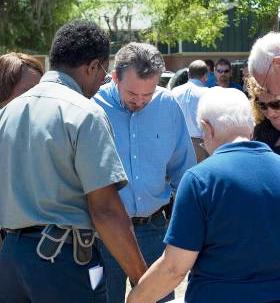
Yet I submit that we need the church. (I’m talking about the people, not a building. The early church met in houses, and many meet in homes today.) In fact, we cannot be biblical Christians apart from the church. Why do I say that?
1. We can’t use our spiritual gifts without the church. The Bible teaches that the Holy Spirit gives spiritual gifts to all believers, but it is always in the context of the church. Romans 12:5-6 talks about how we are all part of the body of Christ as we have different gifts. It says in 1 Corinthians 12:7-12 that every believer is given a spiritual gift for the common good, because we are all part of the body of Christ. Prophesying, teaching, serving, giving, leading, showing mercy, and so many other spiritual gifts are either done among members of the church or together with members of the church.
2. We can’t show we are disciples without the church. Jesus said, “By this all men will know that you are My disciples, if you have love for one another” (John 13:35). We are told to serve each other, teach each other, feed each other, pray for each other, encourage each other. I may know I’m a disciple but I can’t show I’m a disciple if I sit at home alone and don’t show love for fellow believers. No wonder Hebrews 10:25 commands believers not to forsake gathering ourselves together, but instead to encourage each other.
4. We can’t take communion without the church. By definition, the Lord’s Supper is meal of Christians gathered together to remember the body and blood of Christ given for us upon the cross. In 1 Corinthians 11:17-26, the apostle Paul continually uses the phrase “come together” to describe observance of the Lord’s Supper. It says in 1 Corinthians 10:17 observes that by sharing the bread of communion, Christians are expressing their unity: “Because there is one bread, we who are many are one body, for we all partake of the one bread.” Since we cannot take communion without expressing unity with the church, it follows that refusal to express communion with the church is a refusal to express communion with Christ.
Christ is the builder of the church.
Christ is the head of the church.
Christ is the shepherd of the church.
Christ is the groom for His bride, the church.
Christ is coming again for the church, and the gates of Hades will not prevail against His church!
The power of a mother’s prayer

Copyright by Bob Rogers
Many people have had mothers who prayed for them. The great theologian, Augustine, attributed his Christian conversion to the prayers of his mother, Monnica. Evangelist Billy Graham said, “What a comfort it was for me to know that no matter where I was in the world, my mother was praying for me.”
A Jewish mother named Hannah was a model of motherly prayer. The Bible says in the Book of First Samuel, chapter one, that Hannah was distraught because she could not have a child, and went to the tabernacle of the Lord to pray. There she met the priest Eli, who told her, “Go in peace, and may the God of Israel grant the petition you’ve requested from Him” (1 Samuel 1:17). Later, she gave birth to her son, Samuel, the prophet who anointed the first two rulers of Israel, King Saul and King David.
If we look closely at this scripture, we will see four reasons why this mother’s prayer was so powerful:
1. It was a broken prayer. Verse 10 says, “Deeply hurt, Hannah prayed…” God rejects pride, but he often responds to brokenness and humility, especially in our prayers. He did so for King Hezekiah (2 Kings 20:1-6), He did for Hannah, and He has done so for many mothers who cry out to God for their families.
2. It was a committed prayer. Verse 11 says that Hannah prayed, “I will give him to the Lord all the days of his life, and his hair will never be cut.”” She was promising God that Samuel would take a Nazirite vow, a special commitment of service to God symbolized by uncut hair and drinking no wine. Many people call on God but don’t want God to call on them. Hannah readily offered her own son to the call of God on his life. God loves the prayers of mothers like Hannah, who are completely committed to the Lord.
3. It was a consistent prayer. Verse 12 says, “…she continued praying in the LORD’s presence…” She didn’t simply toss up one prayer in the air and give up when she didn’t get an instant answer. Hannah was like Epaphras, whom the apostle Paul praised because “he is always contending for you in his prayers” (Colossians 4:12). There is power in the persistent prayers of mothers who continue to cry out.
4. It was a believing prayer. Verse 18 says that after Eli blessed her, “Hannah went on her way; she ate and no longer looked despondent.” It was some time later before she conceived and gave birth to a son (1 Samuel 1:20), but long before she had her answer, she believed. The Bible promises that God answers when we pray in faith (Matthew 21:22), in the name of Jesus (John 16:23), and the will of God (1 John 5:14). A mother named Hannah prayed like that, and in every generation, men and women have discovered the same power in prayer. We don’t always get the things for which we pray– or, we may receive answers in ways other than what we prefer, but there is no doubt that there is power in prayer.
On Mother’s Day, we honor women like Hannah. But the greatest honor we can give our mothers– whether living or not– is to pray to the same God who desires to pour out His love on us in answer to our prayers.
David the King Meets B.B. King
Copyright 2015 by Bob Rogers


Imagine if legendary blues singer B.B. King died and went to heaven, and met King David, singer of the psalms. What would their conversation be like? Here’s how I imagine it:
B.B.: Are you David? Nice to meet you, sir. My name is Riley B. King, but my friends call me B.B.
David: Why do they call you B.B.?
B.B.: It stands for Blues Boy. You know, David, we have a lot in common!
David: What’s that?
B.B.: Both born in small towns, you in Bethlehem, and me in Itta Bena, Mississippi. Both played stringed instruments, you the harp and me the guitar. This is my guitar, Lucille. And we both sang the blues.
David: I’m glad you recognize that. When people think of my psalms, they may think of praises to God. But if you really read the psalms, you will find that many of them express disappointment with God. I wrote many of them in hard times.
B.B.: Yeah, growing up a black man in the Mississippi delta, I can relate to a lot of your psalms. One of my big hits was “Every Day I Have the Blues.”
David: You had the blues every day, and I had them all night long. Psalm 6 is about that. I was so depressed that I felt I was going to die, and I tried to convince God not to let me die by saying I could not praise the Lord from the grave. I did not mean that I didn’t believe in the afterlife– in fact, in Psalm 16, I said God would not abandon me in the graven, nor let his “Holy One” see decay. Hey, B.B., did you know that “Holy One” is Hasid in Hebrew, a play on words on my own name, David. You see, we Hebrews knew how to have fun with a pun, too. But it was still the blues. As I said in Psalm 6, verse 6, “I am worn out from weeping all night.”
B.B.: I like that one. It reminds me of a song by Slim Harpo. He sang, “You can cry, cry, baby, cry, cry all night long. But when you wake up in the morning, You’re gonna find your good man gone.”
David: Yeah, but the beautiful thing is that although I cried all night, God finally answered my prayer. I put that in near the end of Psalm 6: “The Lord has heard my plea for help; the Lord accepts my prayer.” B.B., let me ask you a question. Are black folks the only ones who sang the blues in your time? I mean, I’m a Hebrew, and like you said, many of my psalms were sad.
B.B.: I like to say that playing the blues and being black is like being black twice. But truth is, black folk ain’t the only ones singin’ the blues. In fact, lots of folk call country music the white man’s blues. In fact, one of your psalms reminds me of a country song.
David: Which one was that?
B.B.: Psalm 10.
David: The sequel to Psalm 9. Yes, I remember that one. It opens, “Why, O Lord, do you stand far off? Why do you hide yourself in times of trouble?”
B.B.: Yeah, there was a country song that said, “Where, O where, are you tonight? Why did you leave me here all alone?” Like I said, the white man’s blues.
David: But again the difference is that I ended my song with faith. Listen to verse 17: “You hear, O Lord, the desire of the afflicted.” It reminds me of something I heard one of your American presidents say after he got shot and came up here. Abraham Lincoln said, “Often I am driven to my knees because there is nowhere else to go.”
B.B.: That’s cool. I like ole Abe. Hey, didn’t you say this Psalm 10 was the sequel to Psalm 9? How’s that?
David: Psalm 9 and 10 form an acrostic in Hebrew, with each stanza beginning with each of the successive letters of the Hebrew alphabet, so Psalm 10 finishes the acrostic that starts in Psalm 9. Psalm 9 praises the Lord with enthusiasm and even says, “For you, Lord, have never forsaken those who seek you.” So remember when you read Psalm 10, not only that it moves from doubt to faith, but that it is part of another psalm of faith.
B.B.: Man, I didn’t know that! It’s like you didn’t cut a single, you was putting out a theme album, dude! So when I think the thrill is gone, I just need to hang on to God, cause it ain’t gone after all.
David: That’s right, B.B.
B.B.: But sometimes folks don’t see that. They just drown in their tears.
David: I wrote a psalm about that, too. I begin Psalm 13 by crying to God for times, “How long, O Lord?”
B.B.: Yeah, makes me think of some blues dudes named K-Ci & Jojo. They had a song that said, “How long just I cry, how long must I try, to make happiness my friend?”
David: I had the answer to that in my Psalm. I said, “But I trust in Your unfailing love.” Again, the mood changes to confidence in God.
B.B.: How can you have so much trust in God? I mean, with King Saul chasin’ you all over the hills, trying to slit your throat?
David: Yeah, Saul had the army of Israel and I had a rough band of 600 men. In fact, one time I felt like God had completely forsaken me. That’s when I wrote the bluest of my blues– Psalm 22. I sang, “My God, my God, why have you forsaken me?”
B.B.: Hey, wait a minute, man! I know those words. Jesus said that on the cross! Dude, you wrote that?
David: Yeah, check it out. When Jesus said that on the cross, Jesus was singing the blues, B.B. — literally! The words Jesus quoted from the cross, and not only those words, but other parts of Psalm 22 remind us of the cross. Listen to these lyrics from that psalm:
“He trust in the Lord, let the Lord rescue Him…”
“They have pierced my hands and feet.”
“They divide my garments among them and cast lots for my clothing.”
All of those lines are quoted in the gospels when they talk about Jesus’ crucifixion. So you see, no matter how bad life seems, Jesus knows how it feels. He’s been there. He suffered for our sins on the cross, and experienced the very absence of God, because God cannot look upon sin, and Jesus became sin for us.
B.B.: That’s one of the reasons Jesus is my Main Man. I mean, if anybody had a reason to sing the blues, He did after what they did to Him on the cross.
David: But remember that Jesus didn’t stay on the cross. He arose from the grave! Jesus knew this when he sang Psalm 22. Even this psalm moves to hope, because near the end it says, “He has not hidden His face, but has listened to my cry for help.” B.B., remember how I explained to you that Psalm 10, a psalm that expresses a feeling of forsakenness, was preceded by Psalm 9, a psalm expressing God’s presence. In a similar way, Psalm 22 begins with “Why have you forsaken me?” but it is followed by my # 1 hit, Psalm 23, which talks about how God never forsakes us, even when we walk through the valley of the shadow of death!
B.B.: Cool, man! You know, folks down in my home state of Mississippi have been singing the blues ever since Hurricane Katrina came down there and wiped things out. There’s this blues rock singer named Marc Broussard; he was trying to raise money for victims of the hurricane, and he used your Psalm 22. Here, I got the thing on my iPod. Listen to a little of it: (David puts on the headphones, and listens to a few bars of Bootleg to Benefit the Victims of Hurricane Katrina.)
David: Wow, brother, it sounds different on my harp.
B.B.: Same broken heart, though, isn’t it? In Broussard’s song, “My God,” he concludes with these words:
“My God, my God, heal this sin-stained soul. I give my life to you, take me and make me whole. Oh, You are the way, the truth and the life. Burn over me, Lord, send me Your might. Oh, I can do nothing without You. With Your strength this dark night I’ll get through.”
David: Yes, it is. Same broken heart. Same faith at the end. Speaking of a broken heart, I have to confess that I often sang the blues because of trouble I brought on myself.
B.B.: Yeah, I heard about you and your woman, Bathsheba. But I read Psalm 51 when you confessed it. Dude, you really laid your soul bare. That’s what I’m talkin’ about.
David: B.B., that wasn’t the only psalm I wrote after that. I also wrote Psalm 32 and Psalm 38. I was sick. Sick in my body. My bones felt brittle. I was so sick and disgusted with my own sin.
B.B.: Dude, there’s an indie rock band in Seattle, Washington, called Sorry the Band. They’re white boys, but they know how to sing the blues. I think they bootlegged Psalm 32 and Psalm 38, man.
David: Really? What do they call the song?
B.B. I think they just call the song “Shame.”
David: B.B., that’s the thing I wish people on earth could understand– that they can overcome their shame.They can beat the blues. Each of my psalms were soul therapy. They started with doubt, but ended with faith.
B.B.: I know it, man. That’s what Ray Charles and I were singing about on his last album before he died. We sang, “Lord, have mercy, please have mercy on me. Well, if I’ve done somebody wrong, Lord, please have mercy, if you please.”
David: That’s what the Lord did for me and did for you! When I did somebody wrong, I pleaded for mercy, and He gave it when I least deserved it. He told me that the Messiah would come through my descendants and He did! God sent Jesus the Messiah, and He died on the cross to pay the penalty for my sins and yours. Now by faith in Jesus, the Lord has mercy on all who sing the blues.
B.B.: Amen, brother!
The key to understanding the Sermon on the Mount
Copyright 2015 by Bob Rogers
 The high standards of Jesus’ Sermon on the Mount, recorded in Matthew 5-7, have encouraged millions to live a better life, while at the same time the sermon has left many discouraged, feeling the bar is set so high, they can never reach it. Who is able to turn the other cheek, go the extra mile, love their enemies, and forgive those who mistreat them? Then, to top it off, Jesus said, “be perfect, as your Father in heaven is perfect” (Matthew 5:48).
The key to understanding the Sermon on the Mount is found early on, when Jesus said, “For I tell you, unless your righteousness surpasses that of the scribes and Pharisees, you will never enter the kingdom of heaven” (Matthew 5:20). This statement must have made the disciples catch their breath, because the scribes and Pharisees were considered the holiest people in Israel. Yet Jesus said his disciples must surpass the scribes and Pharisees, or not enter the kingdom of heaven at all! How could this be?
Immediately after this breath-taking statement, Jesus launched into his explanation. The scribes said not to murder; Jesus said not to be angry. The scribes said not to commit adultery; Jesus said not to lust. Jesus was zeroing in on the real issue: faith is a matter of the heart.
This theme of focusing on the heart continued throughout the sermon. Instead of legalistically saying it is okay to hate our enemies as long as we love our neighbors, Jesus called on His disciples to love their enemies and pray for those who persecuted them. This can only happen with a changed heart. Instead of showing off our religion by giving, praying and fasting in public, Jesus called on His disciples to do it in private. Repeatedly, Jesus said that God rewards those who don’t do it for show, and He labeled as hypocrites those who practiced their faith for show. Why? Because giving, praying and fasting in private comes from a pure heart, with no desire for earthly praise. Jesus told His disciples to look at the log in their own eyes before trying to judge their brothers by removing the speck from their brothers’ eyes. Again, this turned the focus back to self-examination– of one’s own heart. Near the end of the sermon, Jesus said that many will say to Him on Judgment Day, “Didn’t we prophesy in Your name, and in Your name drive out demons and perform many miracles?” Jesus’ reply was astonishing. He said that He would tell many of them, “I never knew you,” and send them to Hell. Why? Because if people have not given their hearts to Christ, it doesn’t matter how many good deeds they have done for Him.
If we have hearts hot with a fire to follow Christ, then we will surpass the scribes and Pharisees, for our faith will be an expression of what is inside of us, not an outward show of religion.
But what about that pesky phrase, “be perfect?” The word used in Matthew 5:48 is the same word used by Christ on the cross when He said, “It is finished!” (John 19:30). It is a word for completion. Just as a baseball player can throw a “perfect” game even though he may throw some balls and even walk some players, we can “be perfect,” if we completely, and wholeheartedly build our lives on Jesus, “the rock” (Matthew 7:24-25).
How Jesus said you can change your world
Copyright 2015 by Bob Rogers

“You are the salt of the earth… You are the light of the world.” (Matthew 5:13-14)
Our world is in a mess, but Jesus Christ told us exactly how to change our world in the Sermon on the Mount, when He said to be salt of the earth and light of the world. Jesus told us what to be and what to do.
1. What you should be: salt and light. Why did Christ pick the illustration of salt and light? Salt is used as a preservative and to flavor food. Likewise, we should influence our world. Paul gave an example of this in 1 Corinthians 7:14, saying that the believer who remains married to an unbelieving spouse can influence them toward salvation. Light reveals and reflects. Likewise, we should reveal truth, glowing with the glory of God in our lives. Interestingly, Jesus said here, “You are the light of the world,” but in John 9:5, He said, “I am the light of the world.” This is no contradiction; Jesus is the source of the light, and we can merely reflect His light. We have no light within ourselves; we only get it when we are plugged into the power source through a relationship with Christ Himself.
2. What you should do: keep your saltiness and shine your brightness. Jesus said in this passage, that if salt loses its taste, it is no longer any good. A lot of Christians are sassy but not salty. We need to keep the saltiness but lose the sassiness. Jesus also says in this passage that nobody puts a lamp under a basket, but he puts it on a stand so everybody can see it. A wise person once said, “The best way to deal with change is to create the change.” Too many Christians are reactive instead of proactive. We have good news! We have hope! Spread it around and let it shine.
3. Why should we be salt and light: to glorify God. Jesus concludes by saying, “Let your light shine before men, so that they may see your good works and glorify your Father in heaven.” The reason for us to be salt and light is not so that others will look at us, but so that they will look at God.
Acts 17:6 says that the people in the city of Thessalonica were so stirred up about the influence of the Christians that they said, “These men who have turned the world upside down have come here, too!” The early Christians changed their world. So can we.
The Old Testament roots of Jesus’ Beatitudes

Copyright by Bob Rogers.
Jesus’ Sermon on the Mount begins with eight blessings in Matthew 5:3-10, often called “Beatitudes,” because they are blessings on those who have these attitudes. Jesus shows His deep connection to the Old Testament in these blessings. It’s structure is like the Ten Commandments, which begin with four commandments about our relationship with God and end with six commandments about our relationship with people. The first four Beatitudes relate to God, and the last four relate to people. His third blessing, “Blessed are the meek, for they will inherit the earth,” is nearly a quotation of Psalm 37:11, “The humble will inherit the land.” The entire passage has echoes of Isaiah 61:1-9, a passage that Jesus read when He inaugurated His ministry at Nazareth (see Luke 4:16-21). Like the Beatitudes of Jesus, Isaiah 61 mentions good news for the poor (v. 1), comfort for those who mourn (v. 2), possession of the land by the downtrodden (v. 7), and the passage ends with how “they are a people the Lord has blessed” (v. 9).
Why would there not be a seamless connection between these Old Testament passages and the Beatitudes? The same Divine Mind inspired both. Now come in flesh, Jesus the Messiah spoke His distinctive message into the Beatitudes. As in His parables, He begins and ends with a reference to the “kingdom of heaven” (Matthew 5:3, 10). These are the attitudes of citizens of the kingdom, under the Lordship of the King of kings, Jesus Himself:
*those who are poor in spirit
*those who mourn
*those who are gentle
*those who hunger and thirst for righteousness
*those who are merciful
*those who are pure in heart
*those who are peacemakers
*those who are persecuted for righteousness
What a radically different kingdom this is from the world we know– yet one that is declared “blessed.”
What do you do after Christmas?
Copyright 2014 by Bob Rogers

What do you do after Christmas? What happens after you take down the tree, put up the lights, and put away all the wrapping? You do as the shepherds and Mary did: promulgate, meditate and celebrate!
1. PROMULGATE. In a previous century, they called missionary-sending organizations a Society for the Promulgation of the Gospel. In this century, the need is as great as ever to spread the good news. “After seeing them, they reported the message… about this child” (Luke 2:17). Ask somebody how their Christmas went, and use it as an opportunity to tell them how much it means to you to know Christ as your Savior.
2. MEDITATE. “But Mary was treasuring up all these things in her heart and meditating on them.” (Luke 2:18). Spend some time quietly reflecting on the miracle of the Virgin Birth, and the Incarnation, God coming in flesh.
3. CELEBRATE. “The shepherds returned, glorifying and praising God.” (Luke 2:19). You probably went to church before Christmas. Sadly, the Sunday after Christmas is often one of the lowest in attendance of the year at many churches. But the shepherds rejoiced and worshiped AFTER the birth of Christ. So should we.
Christmas Trivia Quiz
Copyright 2014
Below is a “True/ False” Christmas Trivia Quiz, developed by the chaplains at the hospital where I work. See how many you get right. Click on the “Comments” below to read the answers in the first comment.
1. John’s Gospel names Bethlehem as the birthplace of the Messiah.
2. The name, “Jesus,” was not prophesied in the Old Testament; rather, it was given to Mary by the angel for the Christ-child.
3. The Bible does not provide any clues as to when Jesus was born.
4. Jesus was born in the year 1 A.D.
5. Gabriel was the angel who informed young Mary that she would miraculously conceive a child through the power of the Holy Spirit.
6. According to the Luke’s Gospel, the angel Gabriel told Joseph to not be afraid to take Mary as his wife.
7. The Bible says that Mary rode to Bethlehem while pregnant with Jesus on a donkey.
8. Angels announced Jesus’ birth to shep-herds in the fields nearby.
9. The Magi, or Wise Men, brought gifts to the newborn King on the night of His birth.
10. According to Matthew’s Gospel, the Magi brought gifts of gold, frankincense and myrrh.
11. According to the Bible, Jesus was circumcised on the 8th day of his life.
12. Simeon was the name of the righteous man who blessed Jesus in the temple in Jerusalem.
13. Herod was the evil King who ordered all male children under the age of 2 in Nazareth to be slaughtered in an attempt to kill Jesus.
14. Joseph and Mary fled to Egypt in the middle of the night after being warned by an angel in a dream.
15. Early Christians did not celebrate the birthday of Christ.
Why do we celebrate Jesus’ birth on December 25?
Copyright by Bob Rogers

Since nobody knows the exact date of Jesus’ birth, why do we celebrate Christmas on December 25?
The Beginning of the Christmas Holiday
The answer to that question is submerged under a haze of mystery. An early father of the church, Cyprian, said in 243 that Christ was born on March 28, the spring equinox, for “on that day which the sun was made on the same day was Christ born.” However, Christ’s birthday was not celebrated until the fourth century, and when the tradition of Christmas began, the date of December 25 was preferred in the West, while January 6 was preferred in the East (a date that is still preferred by Eastern Orthodox Christians).
The earliest known reference to celebrating Jesus’ birth on December 25 was in the Philocalian Calendar, a list of martyrs of the Roman Church, written in 354 but reflecting practices in 336. In 376, the bishop of Rome first required churches to keep the nativity festival on December 25. In 386, John Chrysostom refers to the date of the December 25 festival by saying, “It is not yet the tenth year since this day has become clearly known to us.” Ironically, Christmas was celebrated in Bethlehem on January 6 until the sixth century (since Bethlehem was under the influence of the Eastern tradition). After the sixth century, Bethlehem celebrated Christmas on December 25, because Emperor Justin II (565-578) ordered the celebration of Christmas on December 25 throughout the Roman empire.
The Origin of the Date of Christmas
There are two major theories of the origin of these dates: one with pagan roots, and one with Christian roots.
The most commonly accepted theory is that the date was chosen, perhaps by Emperor Constantine, to divert the attention from pagan holidays. Emperor Aurelian had established a pagan winter solstice festival on December 25, 274, and he probably dedicated a temple to the sun god on that date. The birth of the Persian god Mithras, identified with the sun, was celebrated on December 25. Egyptians celebrated the birthday of the sun god Aion on January 6. Many people contend that Christmas should not be celebrated because of this possible connection to these pagan origins. Ironically, some of these same people will themselves seek to replace the pagan celebration of Halloween with a Harvest Festival at their churches, in much the same way as they claim the early Christians celebrated Jesus’ birth to replace a pagan holiday.
Thomas J. Talley, in his book, The Origins of the Liturgical Year, argues that the dates of both December 25 and January 6 can be explained from Christian origins. In rabbinic thought, it was common to remember the conception and death day of patriarchs on the same day. By putting Jesus’ conception on the Jewish day of 14 Nisan (March 25 on the Western calendar and April 6 on the Eastern calendar), His birth nine months later would be either December 25 (according to the Western calendar) or January 6 (according to the Eastern calendar). Thus the birth of Christ could have been set “without reference to pagan public celebrations,” says Talley.
Since Luke 2:8 says the shepherds were outdoors with their flocks when the angel announced Christ’s birth to them, Cyprian’s date of March 28 is probably closer to the actual birthday of Jesus than the colder times of December 25 of January 6. Some would argue that since there is no historical evidence for Jesus’ birth on these dates, that we should not celebrate Christmas. However, there is another piece of the puzzle from history that would argue otherwise. In the fourth century, when the Christmas holiday became popular, Christians were in the midst of a raging controversy of what they believed about Jesus Christ. By celebrating Christmas, orthodox Christians were able to affirm the important doctrine of the Incarnation, that Jesus was God in the flesh. For example, Chrysostom, who himself stated that the festival of December 25 was a relatively new celebration in his time, went on to say this about its importance:
“This day He who is, is born; and He who is, becomes what He was not. For when He was God, He became man… being the Word, He became flesh…”
Taking the road less traveled

Copyright 2014 by Bob Rogers
I’m glad that I met some angry dogs on a country road.
This summer, I was going for a walk on a country road where my in-laws live. I have walked that road for years. I know that many of the homes have dogs, so sometimes I carry a stick for protection. That particular day, I brought my pepper spray. Unfortunately, a woman near the end of the road let her dogs chase me. I had to use the pepper spray to keep the dogs away from me. The woman and I exchanged a few words. I’m not really proud of the argument we had.
This fall, I was visiting my in-laws again, and I decided to go for a walk again with a stick and my pepper spray. I don’t enjoy conflict, and even though I thought the “crazy woman with the dogs” was wrong, I had no desire to have another confrontation. Right before I reached her home, there is another road that turns left, so I turned left down that road. I’m so glad that I did. The side road was so beautiful and peaceful that I put away the spray and got out my cell phone to take a picture. At the top of this page is the photograph I took that day. Click on it and you can see how beautiful the view was. It reminded me of the poem “The Road Not Taken” by Robert Frost, which ends with these words:
Through this experience, God showed me a spiritual truth. Sometimes we have trouble in life, and we don’t understand why it comes. It may cause us to go down a different path, a path we did not expect. But often God works through these circumstances to bring about something beautiful and new. We just need to look for it.
We need to listen to the Holy Spirit when He puts up a road block on a path, and be open to going down a new path. Isaiah 30:21 says, “Whenever you turn to the right or to the left, your ears will hear this command behind you; ‘This is the way. Walk in it.'” When we face trouble, we need to trust in a loving God who desires to bring good results out of the bad circumstances, if we will be faithful. As Romans 8:28 says, “God causes all things to work together for good to those that love the Lord and are called according to His purpose.”
I regret that I had the conflict that sent me down a different road. I’m even embarrassed that I let myself get into a senseless argument with a woman over her dogs. But, like Robert Frost, I’m glad that the conflict I had on that road opened up a new road I would otherwise have never seen. How about you?


 Bob Rogers