Blog Archives
Book review: “Multiply” by Francis Chan
 Francis Chan, author of the influential books Crazy Love and Erasing Hell, has written Multiply: Disciples Making Disciples for the purpose of multiplying disciples in the church.
The book has some excellent material; however, I was disappointed in the book, because it was not what I expected. I downloaded the book and read it on my Kindle, deceived by the title into thinking it was about how to make disciples. While the introduction and first three chapters (about 40 pages) discuss how to use the book for discipleship, that’s about it. The rest of the book is an overview of the teachings of the Bible.
Don’t misunderstand me. The overview of the Bible is excellent. It’s well-written, and has good support material with questions for discussion and videos available to watch online. If you are a mature Christian, you will find very little new information here, but it is a good, solid summary of what the Bible teaches. If a person goes through this material with a new believer, that person will be very well-founded in a biblical worldview.
The bottom line: if you are looking for material for an in-depth teaching of the basics of Christianity for a small group or one-on-one, this is a great book. But if you are looking for a book on how to organize your church for the purpose of multiplying disciples, you will probably find more help elsewhere, such as Real-Life Discipleship by Jim Putman.
10 Biblical steps to getting out of debt
 Back at the beginning of “The Great Recession” in early 2009, our church went through a study on how to get out of debt, using the teaching materials of Crown Financial Ministry. Here is a summary of 10 wise and Bible-based principles for getting out of debt:
1. Pray for God’s provision (see 2 Kings 4:1-7 for an example).
2. Start giving regularly (Malachi 3:8-10).
3. Don’t go further into debt. Stop charging with credit cards!
4. Establish a written spending plan by writing down every penny that you spend for a month, and then developing a spending plan that is realistic and living within your means.
5. Open a savings account and contribute faithfully to it until you have $1,000 in savings for emergencies. (This prevents further debt because you can use your savings for unexpected expenses.)
6. List everything you own and see if you can sell unnecessary assets to eliminate debt (Proverbs 27:23).
7. Make a list of everything you owe.
8. Establish a debt repayment schedule. Pay off the smallest debts with the highest interest first. When that debt is paid, apply that payment amount to the next second debt, and so on. See Crown Financial Ministries for free calculators and tools that can help at www.crown.org/Tools/Calculators.
9. Consider earning additional income.
10. Consider a radical change in your lifestyle (Romans 12:1-2).
Guest blog: “Lunch Encounters of a Spiritual Kind”
 (The guest blog below is a touching story with a practical lesson for believers, written by Biblical Counselor Sherri Edenfield Hall, from Macon, Georgia. You may email her at sj.hall77@gmail.com.)
Her name is Sabrina. I don’t even know her last name. My two children and I were enjoying lunch at a local restaurant, when this attractive, beautifully dressed woman of color entered with her little girl.
Something more than her appearance struck me. Her girl (perhaps 3 years old) tried desperately to capture her mother’s attention, but to no avail. “Something is wrong with this picture,” I thought.
Understanding suffering helps to identify it, perhaps. I recognize it well. So, I began to pray for an opportunity to speak with this lady, whose daughter was now twirling down the aisle in a ruffled dress.
We finished lunch. The kids took my keys and headed to the van to read. My plan was to initiate conversation with this new friend who had spoken to me when I went to the counter. She liked my “Fruit of the Spirit” bracelet. I thanked her, and began to listen to her story.
I learned that Sabrina had flown back home to Georgia for a funeral that very day. One of her parents died years ago. Now the other was gone, too. Then she said, “Two weeks ago, I buried my husband. He committed suicide.”
There was a long silence. Sabrina motioned toward her precious little girl and continued, “She doesn’t even know her daddy’s gone.”
We sat there for what seemed an eternity, saying nothing.
For years I have shared my faith in Christ, and knew countless methods by which to do so. At that moment I felt compelled to simply tell my story.
Although very different, our stories had one thing in common. We both realized that sometimes life comes at you. Before you can catch your breath, the wind is knocked out of you.
Sabrina wanted to hear. So, I shared wave after wave of painful events I experienced as a young person. That was the hard part. Then, I was able to share the good news!
One night in my apartment in Athens, Georgia, I gave my life (and all my hurt) to the Lord. A poem called “Surrender” in a Home Life magazine riveted my heart. Immediately, it was as if my Heavenly Father whispered, “Baby girl, I know all your hurts. You are trying to be strong. Just give up. Rely on Me. Surrender everything to Me.”
The flood gates opened! I got on my knees. I gave Christ control of my life. Running from God was wearing me out, anyway! No longer desiring to lead my own life and make poor decisions, I surrendered my past, present, and future to Christ in a radical abandonment of self.
I told Sabrina that although I knew nothing about living the exchanged life with Christ, as Galatians 2:20 offers, this is exactly what occurred. I have never been the same! There was an unexplainable freedom and joy. Christ overwhelmed me with His love and peace.
I will never forget the hopelessness in her eyes when she asked, “What does it mean to surrender?” I told her about God’s love for us through Christ’s death on the cross and His power over death in His resurrection. To my amazement, I found myself offering my treasured bracelet to Sabrina. Tears filled her eyes as we parted ways.
Sabrina’s question haunted me for days. “What does it mean to surrender?” At that time, I only understood what it meant to me personally. It was a radical abandonment of self to Christ. As I searched Scripture, words like “submit,” “yield,” and “offer up” ourselves took on deeper meaning. Ultimately, surrender is the posture of our heart humbled before Christ’s Lordship.
Because Sabrina was experiencing complicated grief, and was still somewhat in shock, I did not expect her to make a decision to follow Christ immediately. I did, however, envision that she would benefit greatly from our divinely-orchestrated conversation later in her journey.
Although there are many benefits to a “Surrendered life” to Christ, three obvious benefits are:
Healing Begins – We literally change focus from self to Christ, and He sets us free! John Piper says, “The healing of the soul begins by restoring the glory of God to its flaming, all-attracting place at the center. We are all starved for the glory of God, not self.”
1 Peter 5:6-7 (NASB) encourages to “Humble yourselves, therefore, under the mighty hand of God… casting all your anxiety (cares) upon Him, because He cares for you.”
In the gospel, we “see and savor the glory of God in the face of Christ” (2 Corinthians 4:6). This kind of “seeing” is literally the healing of our disordered lives.
Maximizes Study of God’s Word – The attitude and posture of our hearts, a “yieldedness” to Christ through faith, increases our receptivity of God’s Word. When our hearts are receptive, we gain clearer understanding.
In Romans 12: 1-2, we are encouraged to “Offer yourselves to God” first, that we may be “transformed by the renewing of our minds.”
Overcomes Deceptive Thinking – Truth always trumps deceptive thinking. Jesus, in fact, defines reality! For years I have had a front row seat in the counseling office to witness the truth of God’s Word (when applied to receptive hearts) expose and overcome deceptive thinking.
Submission is a protection against deception. “Submit therefore to God. Resist the devil and he will flee from you” (James 4:7, NASB).
Christ transforms people by exposing the blind spots and disconnects in our lives and relationships. Our goal is not to overcome our issues necessarily, but rather to engage them with a growing knowledge of Christ. It begins by bowing to Christ’s Lordship.
Although we may never meet again here on this earth, I hope to see Sabrina again one day! She’ll probably be wearing the bracelet I gave, or should I say, that I “surrendered,” to her.
Question: How would you have answered Sabrina’s question, “What does it mean to surrender?” Do you remember your own radical abandonment of “self” to Christ’s Lordship?
~~~~~~~~~~~~~~~~~~~~~~~~~~~~~~~~~~~~~~~~~~~~~~~~~~~
(Sherri Edenfield Hall is a Biblical Counselor with Creative Counseling Solutions for Women, and Inspirational Speaker, who resides in Macon, GA. To inquire for speaking engagements, please email her at sj.hall77@gmail.com.)
Taking it to the bank
 Copyright 2013 by Bob Rogers
When I went off to seminary, I moved from Woodville, Mississippi, to New Orleans, Louisiana. It was only a few hours’ drive, but the two cultures were light-years apart.
I had been serving Woodville Baptist Church as their youth minister. Woodville was, and still is, a small county-seat town located south of Natchez in the extreme southwest corner of the state. Woodville’s claim to fame was that it was the boyhood home of Jefferson Davis. Woodville also boasts the first standard-sized railroad line ever built in America, which once was used to ship cotton down to the Mississippi River at St. Francisville, Louisiana. Although it was a tiny town, they had very active Baptist, Methodist, Presbyterian, Episcopalian and Catholic churches, each one claiming to be the oldest of their denomination in the state. You could leave your house unlocked in Woodville and not worry about anybody breaking in.
I took my new bride from Woodville to New Orleans. We settled into an apartment belonging to New Orleans Baptist Theological Seminary, and I promptly went to a big New Orleans bank to open a checking account.
The bank clerk took one look at my check from Woodville, and said, “I can’t deposit this check. It doesn’t have an account number.” I said, “That bank doesn’t use account numbers. They go by your name.” The clerk sarcastically replied, “This is 1980. Nobody does that anymore.”
I just shrugged and said, “They do. Why don’t you call them and ask them?”
So the bank clerk took my challenge and left me sitting at his desk while he went off to another room and called. In a few minutes, he came back with a sheepish grin on his face.
I asked, “Well, did they tell you that my check was good?”
He said, “Yeah, and the guy also said to tell you hello.”
It’s nice to be known by your name rather than just a number, isn’t it?
God knows your name. Revelation 10:15 tells us that he has the names of all who believe in Jesus Christ written in his Book of Life. And beside the name of each believer, that book has these words written: “Paid in Full,” because Christ made full payment for our sins upon the cross (1 Corinthians 6:20). That’s one book that I’ve made sure has my name. And you can take that to the bank!
Why I am praying for President Obama

Copyright 2013 by Bob Rogers
Thursday, May 2, is the National Day of Prayer, a day when Christians gather to pray for the president and all of our nation’s leaders. However, many Christians express more anger than prayer for President Obama. The same was true when President Bush was in office. Just as much vitriol was poured out against him from the left as is now being poured out against President Obama from the right. Yet it is my duty to pray for my president daily.
This fuzzy photo is a picture of President George W. Bush. On August 21, 2006, I led a public prayer for President George W. Bush at a campaign rally. After the president spoke, he went through the crowd shaking hands, and I grabbed my camera and took this picture in such a hurry that it came out so fuzzy.
As Mr. Bush greeted the crowd and shook my hand, I said, “I pray for you every day.” He looked me in the eye, and exclaimed, “Thanks, it’s working!” A priest who disliked President Bush’s policies later told me, “It must not be working.” Because he disagreed with the politician, he dismissed the prayer. How short-sighted! Scripture commands us to pray for our leaders. The apostle Paul said, “I urge that petitions, prayers, intercessions and thanksgivings be made for everyone, for kings and for all those who are in authority…” (1 Timothy 2:1-2, HCSB).
The Old Testament prophets modeled this kind of praying for us. Isaiah said that the Lord “wondered that there was no intercessor” (Isaiah 49:16), Jeremiah wept over the nation, and Ezekiel called for someone to “stand in the gap” (Ezekiel 22:30) on behalf of the nation.
So I must pray for President Obama, just as I prayed for President Bush.
After all, if first century Christians could pray for a Roman emperor who threw them to the lions, cannot we pray for an elected president with whom we may disagree? Notice that when Paul urged us to pray for political leaders, he also gave us a reason: “… so that we may lead a tranquil and quiet life in all godliness and dignity” (1 Timothy 2:2b). African-American pastor Tony Evans points out, “What many conservative Christians fail to realize … is that when our first black president, Barack Obama, is dishonored through caricatures, name-calling, or disrespectful talk by white Americans, it merely creates a greater chasm between the races.” (Tony Evans, Oneness Embraced, p. 52). Evans illustrates what the apostle Paul was talking about– angry words instead of words of prayer for President Obama create chaotic lives, not tranquil lives. One preacher pointed that that if we would pray for the president instead of complain about the president, maybe he would do better.
So I am praying for President Obama. Will you join me this Thursday and every day?
Unusual church names

Copyright by Bob Rogers
Recently I heard about a church named “Church by the Side of the Road.” I’m sure there was a good reason to name the church that, but for some reason it conjured up pictures in my head of a church broken down and abandoned on the roadside.
I once served as pastor of Calhoun Baptist Church in Hot Coffee, Mississippi. Hot Coffee is the name of a rural community with two country stores and one church. I always thought it would be fun to change the name of the church to Hot Coffee Baptist Church, but I found out that I would be getting into hot water to suggest such a radical change. They might have decided to send me to Boiling Springs Baptist Church, which is in Soperton, Georgia.
Nevertheless, that experience caused me to pay attention to unusual church names.
A real tongue-twister from Mississippi is Eastabutchie Baptist Church. (Try saying that aloud really fast.) Saint James the Less Catholic Church in New Orleans has to be careful how they display their name on their sign, because they don’t want anybody to think they’re “Less Catholic.” I wonder if Spray United Methodist Church in Eden, North Carolina believes in more than just sprinkling. Cape Coral, Florida has a congregation named “Church Today.” Can you imagine the confusion when you ask a member, “Have you been to church today?”
Lots of churches are named “Unity” and “Harmony,” but in Miller’s Grove, Texas, they were honest enough to name the church Divide Baptist Church. I wonder if they split off from Petty United Methodist Church, which is also in Texas.
A member of North Spoon Baptist Church in Pearl River County, Mississippi, told me they chose their name “because there was already a South Fork.” Somewhere in Africa, there is a Wet Cow Manure Baptist Church. Apparently when the tribal chief asked what they should name it, the missionary told them to name it after something precious to them.
The state of Georgia, where I lived for years, is full of interesting church names. I’d love to visit Star of Bethlehem Baptist in Douglasville at Christmas, and I’d love to celebrate communion at Church of the Living Bread in Stone Mountain. I’m sure that Georgia New Seoul Baptist Church in Tucker is a Korean congregation, but I love the double-meaning.
Whispering Pines Baptist Church in Hephzibah sounds like a peaceful place to worship, and God’s Acre Missionary Baptist Church in Atlanta must have the perfect location. I’ve always heard that there is no perfect church, but the folks might disagree at Ideal Baptist Church (located in Ideal, of course.)
Which reminds me that, while there is no perfect church, there is a church that is ideal for you, if you’ll just look around with an open mind and heart and seek a church that loves Jesus, loves the Bible, and loves people.
Recommended reading on The Lord’s Prayer
There are many wonderful books that have been written on the Lord’s Prayer, but there are two in particular that I have found inspiring.

Max Lucado’s book, The Great House of God: A Home for Your Heart, uses the creative analogy of a big mansion to compare to the Lord’s Prayer. He takes each part of the prayer and compares it to part of the great house. For example, the study is where we learn “thy will be done,” and the kitchen is where we pray “give us this day our daily bread.” Lucado draws a visual image of the prayer that helps the reader see it in fresh ways.

Albert Haase’s book, Living the Lord’s Prayer: The Way of the Disciple, is my favorite book on the Lord’s Prayer. He challenges the reader to live the prayer, not just say the prayer. He takes each part of the prayer and challenges us to put the principles into practice. He uses personal and deeply moving illustrations that encourages the reader to be different because of this prayer.
The Prayer Life of Jesus Christ, Part 3

Copyright 2013 by Bob Rogers
This is the third and final post in my series on the prayer life of Jesus. In the past two days we have taken a survey of the times and places Jesus prayed, and the actual words recorded in His prayers. Based on that, here are four lessons I have learned from Jesus’ prayer life:
1. The priority of prayer. He made prayer a high priority. Mark 1:35; Luke 5:16; 6:12-13; 11:1. If prayer was so important for Jesus, how much more necessary is it for us?
2. The privacy of prayer. He constantly prayed in private. Matthew 14:22-23; Mark 1:35; Luke 5:16; 9:18. Oh, how we need to get alone with God like Jesus did.
3. The pinnacle prayer principle. He loved to pray on mountains: Matthew 14:23; Mark 6:46; Luke 6:12; 9:28. However, the fact that He often withdrew to “deserted places” (Luke 5:16) shows that the important thing was to be alone in God’s creation. Your place in nature may be a lake, a small garden, or front porch, or backyard swing. Even if you live in a crowded city, you can find a balcony or quiet room to focus your thoughts on God. The point is that Jesus knew that He had to be in a place where His total attention was upon the Father.
4. The people prayer principle. The more people, the shorter the prayer, the fewer people, the longer the prayer. His public prayers were short. Luke 10:21; John 11:41-42; Matthew 27:46. He condemned long prayers for show in Mark 12:40. His longest recorded prayer, John 17, was with a small group, while His longest prayer of all was totally alone (Luke 6:12). Too often we reverse this and pray too long in public and don’t pray enough in private.
What lessons have you learned from Jesus’ prayers?
The Prayer Life of Jesus Christ, Part 2
 Copyright 2013 by Bob Rogers
Yesterday I began this study of Jesus’ prayer life. We looked at the times and places that He prayed, and today we will look at the actual words He prayed. After the previous study revealed how pervasive prayer was during His earthly life, it is striking to notice that there are relatively few prayers of Jesus for which we have the words recorded. In fact, I have only noticed ten. Of those ten, the first two are actually model prayers that He gave for us to pray, and most of the others are extremely short. The great exception is His “high priestly prayer” in John 17, which should indicate to us how important it is to study that prayer in particular.
Here is a list of the recorded prayers of Jesus:
The Words that He prayed:
1. The Model Prayer (usually called “The Lord’s Prayer”). Matthew 6:4-13; Luke 11:2-4.
2. The Model Confession. Jesus tells a parable and says the prayer of the tax collector is a worthy example of confession. Luke 18:13.
3. Praising God for His revelation. Matthew 11:25-26; Luke 10:21.
4. Thanking God in advance for answering prayer. John 11:41-42.
5. For God to glorify His name. John 12:27-28.
6. His High Priestly Prayer. John 17:1-26. Here Jesus prayed for Himself to be glorified (v. 1-5), for His disciples to be sanctified (v. 6-19), and for all believers to be unified (v. 20-26).
7. For God’s will. Matthew 26:36-44; Mark 14:36; Luke 22:40-46.
8. On the cross: forgiveness. Luke 23:34
9. On the cross: forsakenness. Matthew 27:46; Mark 15:34.
10. On the cross: finality. Luke 23:46.
(To Be Continued Tomorrow)
The Prayer Life of Jesus Christ, Part 1
Copyright 2013 by Bob Rogers

The disciples asked Jesus, “Lord, teach us to pray.” (Luke 11:1). The record of His prayers in the four Gospels teaches us many valuable lessons. We can learn from the times and places that He prayed, and from the words that He prayed. We can also see several patterns in His prayers and draw conclusions from them. Over the next few days, I will share several prayer lessons from Jesus’ prayer life.
First, notice the times and places that He prayed:
1. Early in the morning. Mark 1:35; Luke 4:42
2. At the end of a long day. Mark 6:30-31, 45-56; Mathew 14:22-23
3. All night before a major decision. Luke 6:12-13
4. Before meals (Feeding 5,000 and 4,000; Last Supper). Matthew 14:19; 15:36; 26:26-27; Mark 6:41; 8:6; 14:22-23; Luke 9:16, 22:17; John 6:11
5. In private. Matthew 14:23; Luke 5:15-16; 9:18. (See Matthew 6:6)
6. With a small group of disciples. John 18:1-2.
7. Often in deserted places. Luke 5:16
8. On a mountain. Matthew 14:23; Mark 6:46; Luke 6:12: 9:28
9. For a disciple to be strengthened. Luke 22:31-32
10. At His baptism. Luke 3:21-22
11. At His transfiguration. Luke 9:29
12. On the Mount of Olives in the Garden of Gethsemane. Matthew 26:36; Mark 14:32; Luke 22:39-40. John 18:1-2 says He went there often with His disciples.
(To Be Continued Tomorrow)
Church signs attempt Easter humor

Easter is a happy time. After all, we’re celebrating Jesus’ resurrection from the dead, right? So it should be no surprise that during the Easter season, many churches try their hands at humor on their church signs. I say “try,” because some are failed attempts.
It seems that the Easter bunny is the favorite target of church marquees at Easter time. Some of the signs are cute, like this one:
“NO BUNNY LOVES YOU LIKE JESUS.”
Others are hopping mad at that pagan symbol, such as these:
“EVERY BUNNY KNOWS EASTER IS ALL ABOUT JESUS.”
“THE EASTER BUNNY DIDN’T RISE FROM THE DEAD.”
Then some are simply corny, like this one:
“HOW DOES THE EASTER BUNNY SAY ‘HAPPY EASTER’? HOPPY EASTER!”
My favorite bunny sign is this one:
“EVERY BUNNY IS LOVED BY JESUS”
Of course, church signs don’t just go after the bunny; they also remind us that Easter eggs don’t really relate to the resurrection, either. Read this one:
“EASTER IS MORE THAN SOMETHING TO DYE FOR.”
Then there are a few Easter messages directed at those who attend worship. Some are negative, like these:
“EASTER COMES ONCE A YEAR. HOW OFTEN DO YOU?”
“DON’T FORGET, JUDAS ALSO LEFT EARLY.”
Others are more positive, like this one:
“BEAT THE EASTER RUSH- COME TO CHURCH THIS SUNDAY.”
Personally, I think the best Easter humor is to focus on Jesus Himself. That’s why I like this one:
“YOU CAN’T KEEP A GOOD MAN DOWN. HAPPY EASTER.”
Book Review: “Crime Scene Jerusalem: A Novel”
Copyright 2013 by Bob Rogers

Crime Scene Jerusalem: A Novel by Alton Gansky (published by David C. Cook, 2007) does a masterful job of pulling off a peculiar premise: Max Odom, a forensics expert, is taken back in time to investigate the crucifixion and resurrection of Jesus Christ. Gansky makes the story much more than believable– he makes it gut-wrenching. The forensics expert doesn’t want to be there, and expresses all of the sarcastic humor of a jaded American man. But when he comes face-to-face with the cross, and sees how Jesus’ death speaks to the pain in his own life, he… well, read the book yourself. You will not be able to put it down, and you’ll be changed by the experience. Gansky describes life and culture in first-century Jerusalem vividly, and Gansky keeps the reader guessing what hurt Max Odom experienced that must come to the surface as he witnesses the Passion of Christ. A fascinating read for the Easter season or any season.
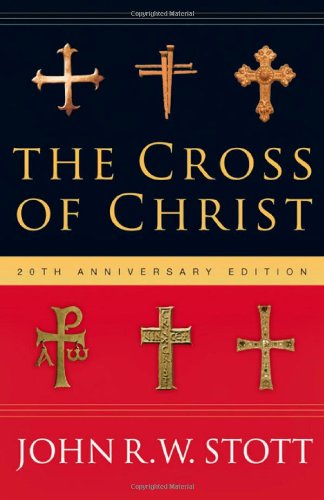
Book review: The Cross of Christ by John R. W. Stott
Copyright 2013 by Bob Rogers
John R. W. Stott, who was pastor of All Soul’s Anglican Church in London before passing away in 2011, was one of the most respected evangelical writers in Great Britain. I thoroughly enjoyed his classic book, The Cross of Christ (InterVarsity Press, 1986, 2006). I found it to be the best book I have ever read about the Cross. I’m not surprised that it received the 1988 Evangelical Christian Publishers Association Gold Medallion Award.
Stott wrote as an evangelical pastor and scholar. While he thought deeply, he wrote with clarity and frequent illustrations. In fact, I used his book as the basis for a series of sermons on the cross.
Stott’s book begins by making a passionate argument for the centrality of the cross to the Christian gospel. Then he explores the reasons for the crucifixion, and while describing many “images” of atonement, he zeros in on Christ as a substitutionary sacrifice to satisfy both the holiness and love of God. His discussion in chapter seven of propitiation, redemption, justification and reconciliation is perhaps the best chapter of the book. The book concludes with chapters on what it means to live as followers of the One who died on the cross, with excellent explanations of service, overcoming evil, and understanding suffering.
Stott has read widely on the subject and he graciously comments on opposing views from liberal scholars and Roman Catholic scholars. He takes other views seriously, but he is faithful to an orthodox evangelical interpretation of scripture. I found it interesting that he disagrees with the popular view of Jesus’ death as a “ransom” paid to the devil in a strictly literal sense. His discussion on the distinctions between Protestant and Roman Catholic views of justification is particularly insightful. Stott rejects the doctrine that God does not suffer, maintaining in chapter 13 that it is precisely because God did suffer on the cross that we are able to bear our suffering.
Many parts of the book read as if they were sermons. This is not surprising, since Stott was a pastor. Yet it comes together as a systematic theology of the cross. His conclusion makes an excellent sermon on how central the cross is to Paul’s Letter to the Galatians.
This is a book that I will read again and again in the years to come.

Valentine’s Day and the Preacher’s Daughters

I always thought that I was romantic. But having two attractive young daughters has taught me that I have a lot to learn about romance. (Sorry, guys, they’re both taken—both are now married.) According to my daughters, there are three different levels in a boy-girl relationship:
1. “Talking.” If you’re “talking,” it means you’re interested in each other, but you’re not committed to being boyfriend and girlfriend. You’re free to talk to others. A lot of this “talking” is actually “typing,” because they often do it by texting on their cell phones.
2. “Going out.” This means a commitment to being boyfriend and girlfriend. My generation called this “going steady,” but today’s teens call it “going out.” The only problem is, if they don’t have a driver’s license, they aren’t really going anywhere. Personally, I think they should call this “talking a lot more,” or “texting a lot more,” because that’s what they’re really doing.
3. “Dating.” This is for older youth who have driver’s licenses. If you’re older, you can go straight from “talking” to “dating.” Also, to further complicate things, you can be “dating” but not yet committed to “going out.” So in this scenario, you actually ARE going out, yet you are not officially “going out.”
To my daughters’ list of three levels, I would add a fourth level. If God leads you to Mr. Right, then at the proper time, you should move to a fourth level in a relationship:
4. “Married.” This is what happens when you decide to go out permanently.
I’m reminded of a conversation I once overheard in a flower shop just before Valentine’s Day. Some young men were in the shop, talking about their constantly changing girlfriends. An older man spoke up and said, “What you guys need to do is stop buying at the news stand and get a subscription.”
The Bible says, “Rejoice in the wife of your youth” (Proverbs 5:18) and “He who finds a wife finds what is good and receives favor from the Lord” (Proverbs 18:22). That’s why I’m happy for my daughters. And I pray that after they are married, they don’t forget to keep dating, and going out, and talking. I know that if they do, their subscription will never run out.


 Bob Rogers