Blog Archives
Twisted scripture: “Putting out the fleece”
Copyright 2016 by Bob Rogers

(NOTE: This is the first in a series of blog posts I will be doing on some of the most commonly twisted and misinterpreted scriptures in the Bible.)
In Judges 6:36-40, Gideon put fleece on dry ground, and asked God for a sign: to make the morning dew fall on the fleece of wool while leaving the ground around it dry, and then a second sign on the second morning, by leaving the fleece dry and covering the ground in dew. God granted Gideon’s request. From this story, we get the expression “putting out the fleece.” For many people, this has come to indicate the practice of asking God for a sign to show them God’s will. They may pray for God to show them a “sign” before making a major decision like getting married or taking a job. Sometimes, they even ask for a specific fulfillment, as putting out their fleece. For example, a person may pray, “God, if you want me to marry this man, have him notice the emerald ring on my right hand.” Or they may pray, “God, if you want me to take the job, then when I go for the interview, have the boss wear a blue tie.”
The problem is, that this is a twisting of scripture, and totally unbiblical. Here’s why:
1. Gideon didn’t just ask for a coincidence, he asked for a miraculous sign. For dew to fall only on the fleece with the ground left dry, and then dew to fall only on the ground with the fleece left dry, is not a natural occurrence, and cannot happen by accident. It required a supernatural intervention from God. So what Gideon asked for cannot be compared with the common idea of asking for an interesting coincidence to happen to guide someone to God’s will.
2. Gideon was not asking for God’s will. He already knew that it was God’s will to fight for their independence from the Midianites. He was looking for reassurance of God’s power and presence. He said, “If You will deliver Israel by my hand, as You said [italics mine], I will put a fleece of wool here…” (Judges 6:36-37)
3. Gideon’s “test” (Judges 6:39) was a violation of Deuteronomy 6:16, where God commanded the Israelites not to put the Lord to a test. Jesus himself interpreted this as a command not to test God with signs, and Jesus refused the temptation to do so (Matthew 4:7). Apparently, Gideon realized that he was treading on dangerous ground, since he asked God not to be angry at him for making the request (Judges 6:39). The fact that God granted Gideon’s request only shows that God is sometimes gracious with us, even in our foolishness.
4. Jesus refused to grant signs, implying we should trust in Biblical revelation instead of mystical experiences. In Matthew 12:38-39, the scribes and Pharisees said, “Teacher, we want to see a sign from You.” He replied, “An evil and adulterous generation demands a sign, but no sign will be given to it except the sign of the prophet Jonah.” He went on to talk about how Jonah was in the belly of the fish for three days and came out, and likewise Jesus Himself will be in the earth three days and come out. So Jesus was pointing them to the scripture and to the events of the gospel, and saying, “Put your trust in this.”
5. All of this points to a rule of thumb for Bible interpretation: Don’t get truth from a descriptive passage of scripture; get truth from prescriptive scripture passages. For example, the Bible often describes people having multiple wives, but 1 Timothy 3:12 prescribes only one wife for deacons in the church. Judges 6:36-40 is descriptive; it describes what happened. That does not necessarily imply that it endorses Gideon’s behavior. Deuteronomy 6:16 is prescriptive; it specifically condemns putting God to a test.
The power of a mother’s prayer


Copyright 2015 by Bob Rogers
Many people have had mothers who prayed for them. The great theologian, Augustine, attributed his Christian conversion to the prayers of his mother, Monnica. Evangelist Billy Graham said, “What a comfort it was for me to know that no matter where I was in the world, my mother was praying for me.”
A Jewish mother named Hannah was a model of motherly prayer. The Bible says in the Book of First Samuel, chapter one, that Hannah was distraught because she could not have a child, and went to the tabernacle of the Lord to pray. There she met the priest Eli, who told her, “Go in peace, and may the God of Israel grant the petition you’ve requested from Him” (1 Samuel 1:17). Later, she gave birth to her son, Samuel, the prophet who anointed the first two rulers of Israel, King Saul and King…
View original post 425 more words
In these strange political times, be a patriotic prayer warrior!
Christians are commanded in scripture (1Timothy 2:1-4) to pray for the president and all of our nation’s leaders. However, many conservative believers expressed more anger than prayer for President Obama, and many liberal people of faith are doing the same today for President Trump. The same was true when President Bush was in office. Yet it is my duty to pray for my president daily.
My friend and fellow hospital chaplain, Dick Allison, usually votes for Democrats. He tells me that during the Watergate scandal that plagued Republican President Richard Nixon, he would often complain about Nixon’s failures. He didn’t vote for Nixon, and he didn’t like him. One day he realized that he had failed to pray for Nixon. “Since that day, hardly a day has gone by that I have not prayed for the president, whoever it was,” says Chaplain Allison.

I have a fuzzy photo of President George W. Bush taken on August 21, 2006, when President Bush spoke in Savannah, Georgia. After speaking, he went through the crowd shaking hands, and I grabbed my camera and took this picture in such a hurry that it came out fuzzy. As Mr. Bush greeted the crowd and shook my hand, I said, “I pray for you every day.” He looked me in the eye, and exclaimed, “Thanks, it’s working!” A priest who disliked President Bush’s policies later told me, “It must not be working.” Because he disagreed with the politician, he dismissed the prayer. How short-sighted! Scripture commands us to pray for our leaders (1 Timothy 2:1-4), and the Old Testament prophets modeled this kind of praying for us. Isaiah said that the Lord “wondered that there was no intercessor” (Isaiah 49:16), Jeremiah wept over the nation, and Ezekiel called for someone to “stand in the gap” (Ezekiel 22:30) on behalf of the nation. Whatever our political persuasion, we can be patriotic prayer warriors. If the praying prophets of ancient Israel could pray for their nation, even when they had evil rulers, can we do less? Will we stand in the gap for America?
The difference in success and failure
Copyright 2016 by Bob Rogers
Above are photographs of fans of the pro football team, the New Orleans Saints. One is a photo of Saints fans in 1980, when the Saints were consistent losers. The fans wore bags over their heads and called the team the “Aints.” The other photo was taken in 2009, when the Saints won the Super Bowl, and fans chanted, “Who dat? Who dat? Who dat say dey gonna beat dem Saints?” What a difference between the thrill of victory and the agony of defeat!
Scripture gives us a powerful example of the difference in success and failure in the story of Joshua and the Israelites in the first and second battle of Ai. After their great victory over Jericho, when the walls came tumbling down, The Book of Joshua, chapter 7, tells the story of how they went up to the small city of Ai with only a small army of 3,000 men, and were soundly defeated. When Joshua cried out to the Lord in prayer, the Lord told him that the entire nation was suffering the consequences of the sin of one man, Achan, who had hid for himself some of the loot from Jericho which was supposed to be sacred to the Lord.
Joshua and all of the Israelites took drastic action, destroying Achan and his family, and then went up a second time to fight Ai. The Book of Joshua, chapter 8, tells how this time, they involved the whole Army, and devised a battle tactic that tricked the men of Ai into chasing a small Hebrew army. When the men of Ai abandoned the city to pursue the Israelites, a larger Hebrew army of 30,000 attacked the city, burned it down, and then both armies attacked the men of Ai from both sides, catching them in the middle with nowhere to run. It was a total victory– all of Ai was destroyed. Afterwards, Joshua took the people to Mt. Gerizim and Ebal and read to them to law of Moses and had them repeat the blessings and curses that Moses had told them to repeat.
For many years, my father, U.S. Army Chaplain Robert H. Rogers, preached a message on this passage called, “The Difference in Success and Failure.” Here are some important lessons that this story teaches us about the difference in spiritual success and spiritual failure:
HOW TO FAIL SPIRITUALLY
1. Belittle the task God gives you. In Joshua 7:3 they said, “Don’t send all the people… since the people of Ai are so few…”
2. Leave God’s work to a few people. In Joshua 7:3 they said, “but send about 2,000 or 3,000 men to attack Ai… don’t wear out all our people there.” The attitude of spiritual defeat says, “I don’t need to share the gospel or minister; that’s what we pray the preacher to do.”
3. Rest on past laurels. Victory at Jericho did not guarantee victory at Ai. Just because you have experienced spiritual victories in the past does not guarantee victory in the future. Celebrate the past, but don’t linger there.
4. Do no more than necessary. They were lazy, trying to get by with minimum effort to conquer Ai. Spiritual losers are apathetic like that, lacking passion for the word of God.
5. Ignore the slide into sin. This is very important. Notice the gradual slide into sin in four steps. Achan confessed in Joshua 7:21: “I saw,” “I coveted,” “took,” “concealed.” First he saw the gold and silver, then he desired it, then he took it, and after he took it, he hid it. This is exactly what I did in major sin in my past. I saw something, then I desired it, then I acted on that desire, and then I tried to hide my sin. People rarely plan ahead to get addicted to drugs or commit adultery and embezzle funds. Instead, they fall slowly into temptation. We cannot ignore those early warning signs against sin.
6. Ignore sin in your midst. This final caution is one that we Americans struggle with, because America is highly individualistic. We red in Joshua 7:1, “The Israelites… were unfaithful… Achan… took some of what was set apart, and the LORD’s anger burned against the Israelites.” How is it that God held all of Israel accountable for one man’s sin? This is the Biblical concept of corporate sin. Because we tolerate sin in our midst, and turn a blind eye, we are all complicit. Don’t you think somebody saw Achan hid the loot in his tent? If we fail to address sin in our own families, our own churches, and our own nation, we we fail spiritually.
HOW TO SUCCEED SPIRITUALLY
1. Become deeply concerned. When they were defeated by Ai, Joshua 7:6 tells us how Joshua responded: “Then Joshua tore his clothes and fell before the ark of the LORD…” We, too, must become deeply concerned about sin and spiritual apathy.
2. Depend upon prayer. Joshua 7:7 tells us that Joshua expressed his concern by prayer. He didn’t run out and get the latest book on “10 Easy Steps to Church Growth.” Instead, he knew it required the hard step of humble prayer. This is a lesson he had to learn again, as we read in Joshua 9:14 that he and the Israelites failed to inquire of God in prayer in the matter of Gibeon, and they were deceived. We must depend on daily prayer to succeed in the daily spiritual battle against sin.
3. Remove sin from your midst. Joshua 7:10-11, 24-26 tells the graphic details of how they discovered that Achan was guilty, and they stoned Achan and his family to death in the valley of Achor. The judgment seems harsh to the modern reader, but it is a reminder that sin cannot be taken lightly. Jesus warned that if the right eye causes you to sin, to gouge it out, and if the right hand causes you to sin, cut it off (Matthew 5:29-30). Yes, the wages of sin is death– that’s the harsh reality of sin. But the good news is that the free gift of God is eternal life through Jesus Christ (Romans 6:23).
4. Follow Godly leadership. After facing the sin, it says in Joshua 8:3, “So Joshua and the whole military force set out…” Joshua chose to be obedient to God, and the people chose to follow his godly leadership.
5. Enlist everyone for God’s work. The word “all” is repeated frequently in these two chapters. Joshua 7:25 says, “all Israel stoned them…” Joshua 8:3 says, “the whole military force set out to attack Ai.” Joshua 8:11 says,“All those who were with him went up…” At the first battle of Ai, they sent a small army of 3,000 against a city of 12,000 and were defeated. At the second battle, they went over 30,000 to ambush the city from behind, while an army of 5,000 attacked and withdrew, then attacked again in a well-planned tactic to entrap Ai. This required the involvement of all of the people. Families and churches that involve everybody in the spiritual battle will win every time.
6. Re-commit to God. Joshua 8:30-35 tells how they went to Mt. Gerizim and Mt. Ebal and renewed their covenant with the Lord, to obey His laws. If we wish to see a lifestyle of continual spiritual victories in our own lives, we too must continually return to God’s Word and pledge ourselves anew to faithful obedience. The end result for them was the conquest of the Promised Land. What will it be for you and me?
Why we need the church
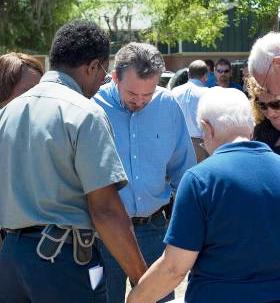
Yet I submit that we need the church. (I’m talking about the people, not a building. The early church met in houses, and many meet in homes today.) In fact, we cannot be biblical Christians apart from the church. Why do I say that?
1. We can’t use our spiritual gifts without the church. The Bible teaches that the Holy Spirit gives spiritual gifts to all believers, but it is always in the context of the church. Romans 12:5-6 talks about how we are all part of the body of Christ as we have different gifts. It says in 1 Corinthians 12:7-12 that every believer is given a spiritual gift for the common good, because we are all part of the body of Christ. Prophesying, teaching, serving, giving, leading, showing mercy, and so many other spiritual gifts are either done among members of the church or together with members of the church.
2. We can’t show we are disciples without the church. Jesus said, “By this all men will know that you are My disciples, if you have love for one another” (John 13:35). We are told to serve each other, teach each other, feed each other, pray for each other, encourage each other. I may know I’m a disciple but I can’t show I’m a disciple if I sit at home alone and don’t show love for fellow believers. No wonder Hebrews 10:25 commands believers not to forsake gathering ourselves together, but instead to encourage each other.
4. We can’t take communion without the church. By definition, the Lord’s Supper is meal of Christians gathered together to remember the body and blood of Christ given for us upon the cross. In 1 Corinthians 11:17-26, the apostle Paul continually uses the phrase “come together” to describe observance of the Lord’s Supper. It says in 1 Corinthians 10:17 observes that by sharing the bread of communion, Christians are expressing their unity: “Because there is one bread, we who are many are one body, for we all partake of the one bread.” Since we cannot take communion without expressing unity with the church, it follows that refusal to express communion with the church is a refusal to express communion with Christ.
Christ is the builder of the church.
Christ is the head of the church.
Christ is the shepherd of the church.
Christ is the groom for His bride, the church.
Christ is coming again for the church, and the gates of Hades will not prevail against His church!
The power of a mother’s prayer

Copyright by Bob Rogers
Many people have had mothers who prayed for them. The great theologian, Augustine, attributed his Christian conversion to the prayers of his mother, Monnica. Evangelist Billy Graham said, “What a comfort it was for me to know that no matter where I was in the world, my mother was praying for me.”
A Jewish mother named Hannah was a model of motherly prayer. The Bible says in the Book of First Samuel, chapter one, that Hannah was distraught because she could not have a child, and went to the tabernacle of the Lord to pray. There she met the priest Eli, who told her, “Go in peace, and may the God of Israel grant the petition you’ve requested from Him” (1 Samuel 1:17). Later, she gave birth to her son, Samuel, the prophet who anointed the first two rulers of Israel, King Saul and King David.
If we look closely at this scripture, we will see four reasons why this mother’s prayer was so powerful:
1. It was a broken prayer. Verse 10 says, “Deeply hurt, Hannah prayed…” God rejects pride, but he often responds to brokenness and humility, especially in our prayers. He did so for King Hezekiah (2 Kings 20:1-6), He did for Hannah, and He has done so for many mothers who cry out to God for their families.
2. It was a committed prayer. Verse 11 says that Hannah prayed, “I will give him to the Lord all the days of his life, and his hair will never be cut.”” She was promising God that Samuel would take a Nazirite vow, a special commitment of service to God symbolized by uncut hair and drinking no wine. Many people call on God but don’t want God to call on them. Hannah readily offered her own son to the call of God on his life. God loves the prayers of mothers like Hannah, who are completely committed to the Lord.
3. It was a consistent prayer. Verse 12 says, “…she continued praying in the LORD’s presence…” She didn’t simply toss up one prayer in the air and give up when she didn’t get an instant answer. Hannah was like Epaphras, whom the apostle Paul praised because “he is always contending for you in his prayers” (Colossians 4:12). There is power in the persistent prayers of mothers who continue to cry out.
4. It was a believing prayer. Verse 18 says that after Eli blessed her, “Hannah went on her way; she ate and no longer looked despondent.” It was some time later before she conceived and gave birth to a son (1 Samuel 1:20), but long before she had her answer, she believed. The Bible promises that God answers when we pray in faith (Matthew 21:22), in the name of Jesus (John 16:23), and the will of God (1 John 5:14). A mother named Hannah prayed like that, and in every generation, men and women have discovered the same power in prayer. We don’t always get the things for which we pray– or, we may receive answers in ways other than what we prefer, but there is no doubt that there is power in prayer.
On Mother’s Day, we honor women like Hannah. But the greatest honor we can give our mothers– whether living or not– is to pray to the same God who desires to pour out His love on us in answer to our prayers.
Why should God answer my prayer for help? A study of Psalm 143
Copyright 2014 by Bob Rogers

“Hear my prayer, O LORD, give ear to my pleas for mercy!” – Psalm 143:1, ESV
Your life is a mess, and you cry out to God for help. Have you ever stopped to consider why God should answer your prayer? In Psalm 143, David shows us how to pray for help for the right reasons. This is not a method to manipulate God; this is a supplication that submits to the Almighty.
In the psalm, David asks God to hear his cry. He talks about how his enemies are hot on his trail, and how he is so weary and worn out that he is ready to give up. Then he concludes his prayer with the right way to appeal to Yahweh.
First, notice the wrong reasons to ask God for help.
1) Not because I’m good. “No one living is righteous before You,” David says to the Lord (v. 2). God isn’t going to answer me because I’m good, because I’m not.
2) Not because I beg him. In verses 4-6, David sounds pitiful, saying his spirit faints and his spirit fails. Yet, as we shall see, all of this begging is not the reason that God answers.
3) Not because I need him. In verse 7, David says he’s afraid he’s going to end up at the bottom of the pit. Yes, God cares about our needs, yet even this is not the reason God comes to my aid, because, as we shall see, it’s not about me.
Second, notice the right reasons to ask God for help.
1) Because God is good. “Let your good Spirit lead me on level ground!” (v. 10). The Hebrew word used here means “good, gracious, beautiful and pleasant.” God answers because God is good, not because we are good (no one is righteous– v. 2).
2) Because God glorifies His name. “For your name’s sake, LORD, preserve my life!” (v. 11). Whenever you see “LORD” in all capital letters, it translates the given name of God, Yahweh. God answers our prayer for help to glorify His holy name, that He might draw people to faith in Him.
3) Because God is faithful to His covenant love. “And in your steadfast love you will cut off my enemies…” (v. 12). The phrase “steadfast love” translates one word in Hebrew, chesed, the word for God’s love that He gives in His grace to His people, not because we deserve it, but because He promised to do it when He made a covenant with His people. David also uses this word in verse 8, saying, “Let me hear in the morning of your steadfast love.”
So if you are crying out to God to help you, ask for the right reasons. Don’t ask because you’re good, because you’re not. Ask because God is good. Don’t ask to help because you want it; ask because it will glorify God. Don’t ask for help because you need it; ask God to help because God has promised to be faithful to you and love you. Don’t tell God what a big problem you have, tell your problem what a big God you have, and stand back and watch Him work in ways you never dreamed.
Prayers for the sick

Article copyright by Bob Rogers.
Perhaps more than any other kind of prayer, people pray for the sick. Yet many are at a loss as to what to say in their prayers.
Honest, simple prayers are best. The Bible teaches us to be honest and straightforward with God in our prayers. King Hezekiah just reminded God of his service to the Lord, and wept. God heard his prayer and his tears and answered his prayer. (2 Kings 20). Mary and Martha prayed a simple prayer to Jesus when their brother Lazarus was sick. They just presented him to the Lord, saying, “Lord, the one You love is sick.” (John 11:3) Lazarus died, and they may have felt their prayer was not heard. Yet a few days later, Jesus raised Lazarus from the dead! Let that be a reminder to us that what matters in our prayer for the sick is the One to whom we pray, not the words that we say.
Pray in faith. It is also important to remember that when we pray, we must pray in faith, believing God really has power to do amazing things in answer to our prayer. James 5:15 says, “The prayer of faith will save the sick person.” If we only think prayer is positive thinking to make us feel good, we might as well just dispense with the pretense that we are talking to Almighty God, and say, “Hey, cheer up! Think good thoughts!” Most of us know that such pop psychology as a denial of reality. We know there truly is a Person greater than us, a Supreme Creator, who revealed His love to us in the Person of Jesus Christ.
With that said, people still struggle with how to put their heart-felt faith into words. So with the above in mind, here are some prayers that I have prayed for the sick, or have heard others pray. May they be an encouragement to others to pray in faith to the Great Physician.
General prayers
“Heavenly Father, we thank You for the medicine and knowledge used by the doctors and nurses, but we realize that these are gifts from You, for You are our Great Physician and Healer. Please give wisdom to the doctors as they seek the best treatment, give compassion to the nurses as they care for their patients, give stamina to the family who are caring for their loved ones, and give to the patient Your peace that passes all understanding, that guards our hearts and minds in Christ Jesus.”
“Heavenly Father, how we thank You that we may call You ‘Father,’ just as Jesus taught us to pray, ‘Our Father who art in heaven,’ because You watch over us, provide for us, and we have a relationship with You through Your Son, Jesus Christ. Just as a child crawls up into the lap of his (or her) father and asks for help, we come to you as our Father, and ask that You continue to bless this Your child, giving him (or her) healing, according to Your will, and Your peaceful presence. Watch over his (or her) family in this time that they are by his (or her) side.”
“Jesus, we present to You the name of this one who is sick. We present them to You. like Mary and Martha, when their brother Lazarus was sick, and they simply said, ‘Lord, the one You love is sick.’ So Lord, the one You love is sick! We trust You to heal in your way and your time, not ours. We trust that You are here, even when we don’t see it. You didn’t come to Lazarus when Mary and Martha expected, but when You did come, You did more than they expected! We trust that You care, even when we don’t feel it. You wept at the tomb of Lazarus, even though You knew that You were going to raise him from the dead. So here we are, with the one You love. This one is sick. We put thir need in Your holy hands, even as we put ourselves in Your hands. In Jesus’ Name, Amen.”
“Heavenly Father, we lift the name of this patient before Your throne of grace, and we thank You that it is a throne because you are King of kings, and it is a throne of grace because you are a God of grace and mercy. We ask that you would work in such a wonderful way, that Your Name would be glorified, our faith would be edified, and the old devil would be horrified. As our prayers go up, may your blessings come down.”
“Father, we thank You for Your power to heal, for You created our bodies. We thank You for Your presence in our time of sickness, to bring us strength and encouragement. We thank You for the prayers of our family and friends, who lift up this one who is sick to Your throne of grace. In Jesus’ Name. Amen.” – Nathan Barber (adapted)
“God, my loved one is ill. I ask for your healing power to come upon them. You give us life and you have the power to renew life. I believe in your power to heal. Open my loved one to whatever for your healing power takes. And help me remember that, no matter what happens, you are the same yesterday, today and forever. You are always with us. Amen.” – Norman Vincent Peale
“Jesus, when You walked this earth, you often touched the sick and healed their bodies. We also know that you did more than heal bodies—you brought healing to the spirit and soul, forgiveness to sinners, and reconciliation to enemies. Today we ask that you heal this one who is sick in any and every way that he needs—touch his body, soul and spirit with your healing power. And we will give You the glory for all that you will do. In Jesus’ Name we pray. Amen.”
“O Great Physician, we call on You to bless our loved one who is sick. She (or he) is in pain and not well yet physically, yet we know that You are working. We see You working through the doctors, nurses, therapists and all the other medical staff. We see You working through the medicine. We see You working through the love of this family by her side, and her church family who are lifting her up in prayer. We see You providing Your peace and assurance through Your Holy Spirit. Now we ask for your healing, all according to Your plan. If You choose to heal her body, we will thank You. If you choose to heal her spirit, we will thank You. Bless her and her family with Your special touch. In the name of Jesus, our Lord and Savior, we pray.”
“O thou who hearest prayer, we pray thee to be very kind and merciful to thy child, whose body suffers in pain and weakness. Grant unto him patience and tranquility of mind; peace, purity, and courage of soul; the strong will to live; and a heart ready to trust thee waking or sleeping. Bless all the means used for his recovery, and all who minister to him in his suffering. Restore him speedily to health, if it please thee, and above all things grant him that which thou knowest to be best for him, and keep him thine for evermore; through Jesus Christ our Saviour. Amen.” – Henry Van Dyke
“I pray, God, that You will refuse Satan’s requests when he accuses people (as with Job), I ask You, God, to let nothing hinder Your good plans in their lives, and that You use their situation for Your glory, to bring them and those around them closer to You, and that You heal them if that be what’s best for them.” – Emily Jordan Leggett
“Lord, we ask for Your will to be done in every situation, for wisdom for doctors, strength for families and the one who is sick. We ask for healing, for guidance in every situation, for peace and comfort, for Your Spirit to fill each and every person involved, that Your wrap Your arms around them, that they will know without a doubt that You’re with them. We thank You, Lord, for being our provider, our comforter, our strong tower, our peace, our refuge and our strength in time of need. And we thank You, Lord, for being all of everything for the ones who need healing. We ask for Your army of angels to protect them and may Your will be done. In Jesus name.” – Crystal Hallauer Basdeo (adapted)
Prayer for yourself when you are the one sick
Lord, it is hard to pray when I feel sick. My head aches, and I can’t think straight. My body is wracked with pain, and it keeps me from focusing on You. All that I know to do is to come before You, and say, “Here I am.” I need Your strength in my sickness. Take this frail body of mine, and do Your will. Please show me mercy, and heal my body and soul. Even if my flesh fails, I am resolved to worship You. In the Name of the Great Physician, Jesus Christ, my Lord, I pray. Amen.
Lord, I know that You are the One who removes sickness.1 Jesus, You healed the sick wherever You went.2 So I trust my sickness to You, and ask for healing. Remind me, also, that there is something worse than sickness. I know that a man’s spirit can endure sickness, but who can endure a broken spirit?3 So I pray that my sickness will be for the glory of God.4 and I pray that even in my sickness, I will find peace to my soul.5 Biblical references: 1 Deuteronomy 7:15, 2 Matthew 9:35, 3 Proverbs 18:14; Lamentations 3:17, 4 John 11:5, 5 1 Thessalonians 5:23
Prayers for the caregivers
“Heavenly Father, You are the Great Physician. We thank You for the healing of body and soul that you do through our medical workers. They could do nothing by themselves, but with You, all things are possible. We thank You for the knowledge and compassion You have given to the physicians and nurses, and many others who do the work of healing. The battle is sometimes long, and the enemy seeks to discourage them and defeat them, but we know that we are more than conquerors through Jesus Christ, our Lord and Savior. Just as Aarom and Hur held up the arms of Moses until the battle was won, we lift up our prayrs on behalf of each medical worker. Strengthen their hands, refresh their hearts, and lift up their eyes to You, our Ultimate Healder. In Jesus’ Name, we pray. Amen.”
“Thank you, God, for my doctor and nurses. Thank you for their skills and training. Thank you for their patience with me when I am irritable because I don’t feel well. Give them the insight they need to diagnose my illness and determine the right treatment. Steady their hands and give them the power to heal in your name. Amen.” – Norman Vincent Peale (adapted)
“Heavenly Father, we thank You for the knowledge You have given to the doctors, the compassion of the nurses, and the faithful love of this patient’s family. We realize they are able to do what they do because You have given them the ability. We ask that you bless each caregiver, so they can be a blessing to this one who is sick.”
Before surgery
“Heavenly Father, we know that you are a good Father, who provides for us, guides us, and leads us in the right way. As the Great Physician, would you guide the attending physicians. As the Prince of Peace, would you give your assurance and peace. As the Good Shepherd, would you guide every decision that is made. We pray this in the mighty Name of our Risen Savior, Jesus Christ.”
“Heavenly Father, this Your servant is preparing for surgery. She’s nervous about it, Father. Would you calm her spirit with your peace that passes all understanding? We thank You for the skill and knowledge of the surgeon, and we ask You to guide the surgeon’s hands to complete a successful surgery. We ask that you give this servant of Yours a full recovery, and the patience that she will need during the time of recovery. Please use that time to draw her closer to You, as she must depend on You more than ever before. We thank you for her family who are here by her side. She is so blessed to have so many people caring for her right now. We thank you for how you work all things together for good to those who love the Lord and are called according to His purpose. We pray this in Jesus’ Name. Amen.”
“Our Father, as we face this new experience we come to You for peace and strength. We have confidence in Your healing power and in the doctor. You gave the very life which we have, and since we belong to You, we have trust and faith. We thank You for the understanding that we are constantly surrounded by Your loving, healing care. May Your power be felt through invisible forces. May this operation be successful that this Your child may return to health and useful living; for the sake of Christ and in His Spirit. Amen.” – Edmond Holt Babbitt (adapted)
For someone in pain
“Jesus, you said, ‘Come unto Me, all ye that are burdened and heavy-laden, and I will give you rest.’ You said, ‘My yoke is easy, and my burden is light.’ We ask that You would lift this heavy burden of pain with your lightness and brightness. We pray this in the Name of Jesus, the Prince of Peace.”
For someone not expected to recover
“My flesh and my heart may fail, but God is the strength of my heart, my portion forever.” – Psalm 73:26
“Oh, Lord, Your Word says in the Shepherd’s Psalm that You prepare a table before us in the presence of our enemies. Lord, in the midst of this enemy of sickness, would you prepare a table of peace, comfort, grace and mercy? We ask that you will pour out your blessings, and we will let You define the blessing.”
“Dear Lord, we do not understand the reason for suffering. We wish we knew the answer to the question, ‘Why?’ But even though we do not have the answer to the question, ‘Why?’, we will not let go of Your hand, for we know that You hold the answer. We will trust You now in the dark, because we know that the Lord is our light and our salvation. We pray this in the name of Jesus Christ, who shed His precious blood on the cross to forgive us, and rose from the dead to give us eternal life. Amen.”
“Heavenly Father, our hearts are broken over the sickness of the one we love. We know that You love him even more than we do. We know that even at this late hour, you are fully able to heal him. But we also know that for every follower of Jesus, there is a spiritual healing that is greater than any physical healing. We know that you have created a place where there is no more suffering, crying or pain. So we ask for peace to accept whatever healing You choose to give him. If You choose to heal him physically now, we will rejoice and glorify You. If You choose to heal him spiritually now, we will rejoice and glorify You, because of our firm hope in the resurrection, through Jesus Christ our Lord. Amen.”
“Our Father, you have given our loved one to us, and You love her even as we do. In confidence and trust we give her back to You. We know that she is Yours. As we climb the steep ascent of faith, please speak peace to our hearts. Take from us all bitterness and mistrust. Although we do not know the answer to many of life’s questions, we do know that we may live in Your love. As we yield ourselves to You, we are confident that You will give Yourself to us; through Him who loved us and gave Himself for us. Amen.” – Edmond Holt Babbitt (adapted)
X
X
X
X
(If you see an ad below this post, please understand that I have no control over these ads, and that I do not necessarily endorse the product.)
Poem: “Pinned and Wriggling”
Copyright 2014 by Bob Rogers
“I am pinned and wriggling on the wall.” – T. S. Eliot, The Love Song of J. Alfred Prufrock

Oh! Beastly burdened groan
Piercing pain in my side
Blood dribbling from my mouth.
I shot the arrow and missed the mark
Boomerang cutting back at me
I am pinned and wriggling on the wall.
Eloi, Eloi, lama sabachthani?
The incomprehensible creature comes
To pull our arrows out
But what will it be like?
I have grown accustomed to chopped flesh
No! I will keep my arrow
How else can I keep close contact with the wall?
X
X
X
X
X
(If you see a video ad below this post, please understand that I have no control over these ads, and that I do not necessarily endorse the product.)
Medical malapropisms and lessons on healing

Copyright by Bob Rogers
I was talking to a Registered Nurse the other day about “malapropisms.”
A malapropism is the use of a wrong word in a sentence, often a word that sounds like the word meant to be used. The results are often humorous. For example, I told her about the time a lady told me a church was “cosmetic” when she meant to say “charismatic.” Also I recalled the time a child in our church Weekday Ministry referred to me as “the creature” rather than “the preacher.”
The R.N. said that malapropisms are very common in the medical field. The example most everybody has heard is popular misnomer for Alzheimer’s Disease: “Old Timer’s Disease.” I smiled and replied that I had called it that myself. My nurse friend said, “That’s actually a pretty good term for Alzheimer’s.” But she had many more examples I had never heard:
— a woman who said she wanted her baby boy “circumscribed.”
— a person with gout who said he had “gouch.”
— someone with fibroids who said, “I have fireballs.”
— a woman coming to get a mammogram who said, “I want mine monogrammed.”
As a hospital chaplain, I have heard a few of my own. One lady told me she worked out on her “Lipitor.” She said, “I love that Lipitor. It’s like riding a bicycle standing up.” Another lady who was talking about the side effects of a vaccine commented, “It gave me a Viagra.” Her husband laughed and said, “No, honey, it didn’t give you a Viagra.” She thought and said, “I mean it gave me a migraine.”
The medical term for a heart attack is a “myocardial infarcation,” but one fellow said he had a “heart fart.”
While it’s funny if people use the wrong word for a medical term, it isn’t funny if we get the healing ministry wrong. I don’t have to tell you that nurses, doctors and medical professionals are under a great deal of stress, because you have huge power over people’s lives.
Thankfully, Jesus Christ has given us some great lessons in healing. Jesus, the Great Physician, went around healing many diseases. In Mark’s Gospel alone, scripture records at least nine healings in the first nine chapters. Take a quick look with me at four lessons we learn from those healings.
I. Compassion. In Mark 1:40-42, Jesus was moved with compassion for a man with a skin disease, perhaps leprosy. Other people wouldn’t touch him, but Jesus did. “Moved with compassion, Jesus reached out His hand and touched him.” (Mark 1:41). I wonder how long it had been since anybody had touched him? What a difference we can make in people’s lives, with when show them some compassion.
II. Time. In Mark 5:24-34, Jesus was interrupted in a crowd by a woman who touched his robe, hoping to be healed. Many of us become irritated with such interruptions, but Jesus stopped to heal her– and gave the gift of time. It reminds me of a dentist who examined a middle-school girl’s teeth, and then sat and chatted with her about school, cheer leading, and other things in her life. Her mother was surprised, and asked the dentist why he lingered with her. He said, “Because behind the teeth is a 13-year-old girl.”
III. Respect. In Mark 7:31-36, Jesus healed a deaf man. Mark says that Jesus took him away privately, put His fingers in the man’s ears and touched his tongue, and looked up to heaven and spoke words of healing. It’s unusual for Jesus to do so many visual motions, but remember that Jesus was healing a deaf man. He was showing respect for the man’s need to see things visually, since he could not hear.
IV. Prayer. In Mark 9:17-29, Jesus healed a boy suffering from demonic seizures, after the disciples had failed to heal him. Afterwards, the disciples asked why they couldn’t heal him. Jesus told them, “This kind can come out by nothing but prayer…” (Mark 9:29). We should never forget that after all that we can do, the greatest thing we can do is pray, for all healing ultimately comes from God.
Remember the R.N. who told me about medical malapropisms, like calling Alzheimer’s “Old Timer’s”? I chuckled at each of her stories, but my favorite one was the lady who referred to spinal meningitis as “Smilin’ Mighty Jesus.”
Spinal meningitis is a serious disease; my nephew suffered from it. That’s why it is good to know that we do have a Smiling Mighty Jesus who looks down on our suffering and cares for us in our sicknesses. Nothing makes Jesus smile more than to see us bring our need before him in faith, believing He can heal us and save us. When four friends brought a paralyzed man to Jesus to heal, Jesus smiled upon their faith and He healed the man both of sin and sickness (Mark 2:1-12). As Hebrews 11:6 says, “Without faith it is impossible to please God.”
So if you want to see a Smiling Mighty Jesus, pray to Him, believing He can change your life! Even if you use the wrong word, He’ll be pleased with your faith.
Book review: “Lord, Show Me Your Glory”
 I was attending a writer’s conference, and a publisher who was speaking to us said that books often sell well because of marketing and famous authors, not because of the quality of the books. Someone asked the publisher to name a book that did not sell well but was such a quality book that he was glad it was published. The publisher said, “Yes, the book is Lord, Show Me Your Glory by Ethel Herr.”
The book was out of print, so I ordered it from amazon.com. I’m glad that I did.
I spent the year of 2008 going through this devotional. A wonderful journey it was. The book is divided into 52 chapters to be used as 52 weeks of devotions. But each “Week” actually has two or three qualities of God to study, so it really amounts to about two or three devotionals for each week. For example, Week Four is a devotional on God is Carpenter, Potter, and a Working God, Week Twelve is on God as Living Bread and Manna, and Week Twenty is on Discipliner, Teacher/Master and Rabbi. You get the idea.
Herr has a very descriptive writing style. For example, in Week Eleven she describes God’s omniscience by saying, “grace without God’s omniscience would be as elusive as a hollow wind whistling through the broken window panes of an empty church” (p. 72). She also has keen insights into the character of God. In Week Eighteen, she says this about God’s as Resurrection and the Life: “So, when He chooses to let our dreams die so He can give us a resurrection rather than a healing, we sometimes feel abandoned” (p. 114). Each section lists scripture readings for further meditation on that particular quality of God. I found that looking up those scriptures was almost as enriching as the text of her book.
The experience of going through this book will help you understand the character of God in a powerful way. If you are looking for a practical devotional that is all about you and how you live your Christian life, this is not it. But if you are looking for a devotional that will make you forget yourself and will leave you in awe of our wondrous God, bowing before Him in worship, then find a used copy of this rare gem of a book online and order it.
X
X
X
(If you see a video ad below this post, please be aware that I have no control over these ads, and that I do not necessarily endorse the product.)
Guest blog: GBC president Hattaway calls Georgia Baptists to pray for revival
(Below is a guest blog post from Dr. Don Hattaway, pastor of Tabernacle Baptist Church in Cartersville, and president of the Georgia Baptist Convention.)
 Revive 2014: A Call to Prayer
A message from Dr. Don Hattaway, President of the Georgia Baptist Convention
The Georgia Baptist Convention has been greatly blessed by God. We have some of the most dedicated pastors and leaders in the history of our convention, excellent educational opportunities and resources, and the technological ability to deliver our message to the masses. In addition, we live in a state with over 7 million lost people desperately in need of the Gospel. Considering these factors, you would think we would be making great strides in reaching our state for Christ. Sadly, the opposite is true. Baptisms are down. Giving is down. Church attendance is down. Despite all of our efforts, we continue to lose ground in the battle for the souls of men, women, boys and girls across our state. If this downward trend is to be reversed, the problem causing it must first be determined.
I have come to believe that the greatest problem facing our convention is of a spiritual nature. We are in desperate need of revival. As the president of the Georgia Baptist Convention, my vision is to see spiritual renewal experienced in the churches throughout our state. This can only happen when we humble ourselves and seek the face of God. The time has come for all Georgia Baptists to cry out to the Father in confession and repentance of sins. When we are right with God and each other, God will be able to use us to impact our state with the Gospel.
If revival is going to be experienced throughout Georgia, prayer is where it will begin. Since there is no such thing as a prayerless revival, I want to call upon all Georgia Baptist pastors and leaders to begin to pray fervently for revival in our state.
Throughout this year, I will travel across Georgia encouraging the formation of prayer groups that will regularly meet to seek God’s face for spiritual renewal. I hope to see the momentum of prayer and spiritual expectancy build throughout the year leading up to our annual convention at Ingleside Baptist in Macon, Georgia. Our theme will be “Revive Us Again!” The Scriptural basis for this focus is Psalm 85:6, “Will You not revive us again so that Your people may rejoice in You?” This emphasis is so important I have chosen to refer to this year’s convention as “Revive 2014.”
When messengers leave “Revive 2014” in November, I want them to be able to say they have experienced God’s power and presence in their lives. My ultimate desire is for Georgia Baptists to come away with a renewed cleansing from God, a unified fellowship among God’s people and a restored passion to worship God and reach our state with the Gospel message.
Before Jesus ascended into heaven, He instructed His disciples to wait in Jerusalem until the Holy Spirit descended to empower the Church. After ministering alongside Jesus for three years, the disciples were not ready to do ministry because they lacked the power of the Holy Spirit. Once the Holy Spirit descended on the Church at Pentecost, Peter preached the Gospel and 3,000 souls were saved. The Church, ministering in the power of God, turned the world upside-down for Christ. We, as believers, have the Holy Spirit living within us. However, sin grieves the Holy Spirit and limits His power in our lives. God wants to demonstrate His power in and through us. For this to happen, we must humble ourselves and pray for a fresh encounter with God. Only then will we be able to minister in the power of God and impact our state for Christ.
Will you join me in consistently praying for a spiritual renewal throughout Georgia in 2014? We must not delay. God wants to do a new work in us and in our convention. Let us join Him in His work.
x
x
x
x
x
x
(If you see a video ad below this post, please understand that I have no control over these ads, and that I do not necessarily endorse the product. If you see an inappropriate ad, feel free to contact me, Bob Rogers, at brogers@fbcrincon.com.)
Pilgrims and Pigs at Thanksgiving
 Cal & Rose Samra tell how Thanksgiving Day was approaching, and a family received a Thanksgiving card with a painting of a Pilgrim family on their way to church.
Grandma showed the card to her small grandchildren, saying, “The Pilgrim children like to go to church with their mothers and fathers.”
“Oh yeah?” her grandson shot back, “if they really like to go, then why is their dad carrying that rifle?”
Which raises a question this Thanksgiving: do you really like to worship God and give Him thanks?
John Walker from Post, Texas, tells about a Christian farmer who visited a city and went to eat at a fine restaurant. When he received his food, he bowed his head and quietly gave thanks to God. Some rowdy teenagers at the next table sneered and said, “Hey farmer, does everybody do that where you live?”
The old farmer looked at the young man and calmly said, “No, son, the pigs don’t.”
Don’t be a pig this Thanksgiving. Be willing to give thanks to your Creator for all His gifts to you. Do it gladly, without somebody having to hold a rifle to your head.
If you see a video ad below this post, please understand that I have no control over these ads, and that I do not necessarily endorse the product.
Blessing the food; ways to say “grace” before meals

Copyright by Bob Rogers
In the Lord’s Prayer, Jesus taught us to pray, “Give us this day our daily bread.” (Matthew 6:11)
Jesus also blessed the food and gave thanks for it when He fed the 5,000, and when He instituted the Lord’s Supper. Thus Christians all over the world make it their regular practice to pray a prayer of blessing and thanks before their meals. But scripture does not record the words Jesus prayed, which is probably a good thing, as it has allowed Christians to develop many different prayers. Here is a collection of prayers I have found from various sources. Of course, it is best to pray from the heart, and avoid getting in a rut. But perhaps by sharing these prayers, it will prompt you to pray some fresh thoughts as you thank God for His blessings each time you eat. Here are the prayers. Where I know the source, I list it in parentheses:
GENERIC PRAYERS
“Thank you, Lord, for the food we are about to receive, and for the nourishment to our bodies. For Christ’s sake, Amen.”
“Humble our hearts, Oh Lord, and make us thankful for these and all our blessings. In Christ name Amen.” (Shared by Brenda Holloway and Darren Thomas)
“Lord, bless this food to our nourishment, and us to Your service. In Jesus’ name, Amen.” (Traditional prayer I heard in my family.)
“Bless us, O Lord, and these Thy gifts which we are about to receive, through Thy bounty through Christ our Lord we pray. Amen.” (Traditional Roman Catholic prayer.)
“Christ God, bless the food and drink of Thy servants, for Thou art holy, always, now and ever, and to the ages. Amen.” (Traditional Eastern Orthodox prayer.)
CHILDREN’S PRAYERS
“God is great, God is good. Let us thank Him for our food. By His hands, we are fed. Give us, Lord, our daily bread. Amen.” (Traditional children’s rhyme.)
“ABCDEFG Thank you, God, for feeding me.”
To the tune of Superman Theme: “Thank you God for giving us food. Thank you God for giving us food. [Both hands pointed up.] For daily bread, that we are fed. [One hand moves to the hip on ‘daily bread’ and then alternate with other hand on ‘we are fed.’] Thank you God [hands up], for giving us food” [hands move to the hips and voice deepens.](Shared by Joseph & Beth Copeck)
“Thank You for the food we eat, yum yum! Thank You for the friends we meet, ho ho! Thank You for the birds that sing, a-ling a-ling! Thank You, Lord, for everything, Amen!” (Robin Anker Peterson of Perth, Scotland, sang this happily to his young children.)
To the tune of Frere Jacques (“Brother John”): “God our Father, God our Father, We thank you, We thank you, For our many blessings, For our many blessings, A-men, A-men.”
WITTY, PITHY PRAYERS
“Good food, good meat, good Lord, let’s eat. Amen.”
“Lord, bless this bunch as they munch their lunch.”
“Grace in the kitchen, Grace in the hall, please O God, don’t let them get it all.” (Shared by Buddy Wasson)
“Lazarus rose, Moses led, Noah built, Jesus fed. Amen.” (Debbie T. Alsup)
PRAYERS MENTIONING FAMILY AND FRIENDS
“Heavenly Father, bless this food, and bless our friends and family who’ve come to dine with us today. Amen.”
“God, we give you thanks for the delicious food on our table, for the loved ones gathered around, and for you, who make it all possible. We are humbly grateful. Amen.” (Norman Vincent Peale, A Prayer for Every Need)
“Dear Lord, we’ve gathered to share good times, good conversation, good friends, and good food, which we thank you for all. Amen.”
“Bless the food before us, the family beside us, and the love between us.” (Shared by Lynda Easterling Stinson)
PRAYERS REMEMBERING THOSE IN NEED
“Give us grateful hearts, O Father, for all thy mercies, and make us mindful of the needs of others; through Jesus Christ our Lord. Amen.” (1928 Book of Common Prayer)
“For food in a world where many are in hunger; For faith in a world where many walk in fear; For friends in a world where many walk alone; We give you thanks, O Lord. Amen.” (Huron Hunger Fund, Anglican Church of Canada)
“Oh Lord, make us grateful for this food that we are about to receive, as we remember those who do not have enough to eat. Amen.”
PRAYERS MENTIONING THOSE WHO PREPARED THE FOOD
“Thank you, Lord for this food, and bless the hands that prepared it. In Jesus’ Name, Amen.” (Traditional prayer I heard in my family.)
“God, many hands made this meal possible. Farmers grew it. Truckers drove it. Grocers sold it. We prepared it. Bless all those hands, and help us always remember our dependence on you. Amen.” (Norman Vincent Peale, A Prayer for Every Need)
“You are mighty Lord, and all providing. We thank you for this food we have been given for nourishment and delight. We ask a special blessing to those who prepared this meal with love and care tonight. Amen.”
PRAYERS IN OTHER LANGUAGES
Read more at http://www.beliefnet.com/Health/2002/07/Bless-This-Food.aspx#MqG6G842Slf51mw8.99
Read more at http://www.beliefnet.com/Health/2002/07/Bless-This-Food.aspx#MqG6G842Slf51mw8.99
“Some hae meat and cannae eat. Some nae meat but want it. We hae meat and we can eat and sae the Lord be thankit.” (Some have meat and cannot eat. Some no meat but want it. We have meat and we can eat and so the Lord be thanked.) (Scottish blessing.)
“Alles das wir haben (All that we have), Alles ist gegaben (All of it is a gift), Es kommt, O Gott, von dir (It comes, O God, from you), Wir danken dir dafuer. (We thank you for it.)” (German blessing.)
“Cristo, pan de vida (Christ, bread of life) Ven y bendice esta comida. Amen. (Come and bless this food.)” (Spanish blessing.)
My mom tells the story that when I was a little boy, a family member asked me to say the prayer at a large family gathering. I gave thanks for everything on the table and everything else in sight, and as my prayer went on and on, my mom tried to bring me to an end by interrupting with an “Amen.” I looked up and said, “But I’m not finished praying yet.” I suppose there are two lessons in that story. On the one hand, we need to keep our public prayers short and sweet. But on the other hand, we should never be finished praying from the heart. As scripture says, “Pray without ceasing” (1 Thessalonians 5:17, KJV).
CLICK BELOW TO READ SOME OF MY OTHER BLOG POSTS ON PRAYER:
In this weird political year, be a patriotic prayer warrior
How to pray for corrupt politicians
ABC’s of praying for missionaries
The Prayer Life of Jesus Christ, Part 1: Times and Places He Prayed
The Prayer Life of Jesus Christ, Part 2: Words that He Prayed
The Prayer Life of Jesus Christ, Part 3: Lessons Learned
NOTE: If you see a video ad below this post, please be aware that I have no control over which ads appear, and I do not necessarily endorse the product.
How do you pray when you are desperate for help?

Copyright 2013 by Bob Rogers
How do you pray when you are desperate for help?
Matthew 9:27 says, “As Jesus went on from there, two blind men followed Him, shouting, ‘Have mercy on us, Son of David!”
Notice three things about their prayer:
1) They refused to give up. They followed Him, shouting! Luke 18:1 reminds us to always pray and not give up.
2) They made a simple plea. They just said, “Have mercy on us.” Your prayer does not have to be complex or eloquent.
3) They recognized Jesus’ authority to heal. By calling Him “Son of David,” they were confessing that He was the Messiah, who was to be a descendant of David. In verse 28, when Jesus asked them if they believed He could heal them, they said, “Yes, Lord.” The miracle of healing the blind never happened in the Old Testament, but Isaiah 35:5 prophesied the blind would be healed by the Messiah. In our times of desperate need, do we believe Jesus has the ability to do in our lives what nobody ever did before?


 Bob Rogers