Category Archives: Books
New devotional through Psalms & Proverbs in a year
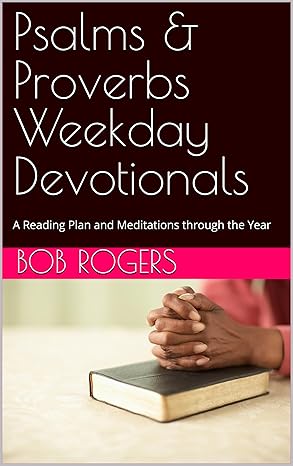
Psalms & Proverbs Weekday Devotionals is my new e-Book with a daily reading plan to read through Psalms and Proverbs weekdays, Monday through Friday, in a year, accompanied by short devotional thoughts to edify your reading. Readings are arranged by weeks and days, not tied to months of the year, so you may begin at any time of the year.
Here is a sample, showing the first reading:
Week 1, Day 1
Read Psalm 1
Psalms 1:1 literally says the one who is blessed does not “walk,” or “stand,” or “sit” with the wicked. There is a progression here of lingering longer and longer with evil. That’s usually how we fall into sin– gradually. I know I have fallen into sin that way. The solution is in verse 2: Meditate on God’s Word both day and night! I pray these daily psalms and proverbs will protect you from sin and guide you with wisdom.
Read Proverbs 1:1-6
Proverbs 1:5 says a wise man will listen and increase his learning. James 1:19 says, “Everyone must be quick to hear, slow to speak…” An excellent resolution is to become a better listener in the New Year.
The e-Book is 164 pages. Buy it for just $2.99 on Amazon here.
Best biographies I read in 2025
If you know me, you know that I nerd out on history. In 2025, I read a lot of biographies. These were particularly interesting to me:

*Confessions of St. Augustine. The spiritual and psychological autobiography of one of the greatest theologians in history. What more can I say? Read it!
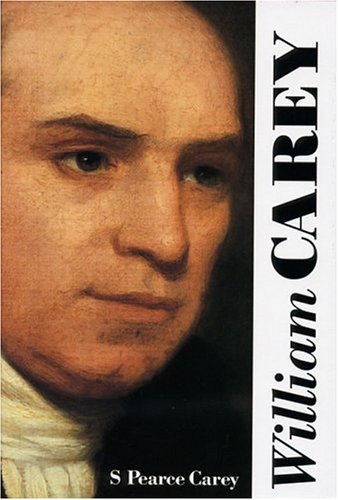
*William Carey, by S. Pearce Carey. A masterful story of the father of modern missions by his great-grandson. Inspiring beyond measure. Thanks to Dr. Bennie Crockett for recommending it.
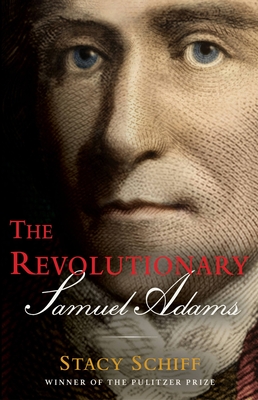
*The Revolutionary, Samuel Adams, by Stacy Schiff. With our nation’s 250th anniversary coming up, I wanted to read up on that era. Schiff shows how Samuel Adams was perhaps the greatest instigator behind the revolution. Fascinating.
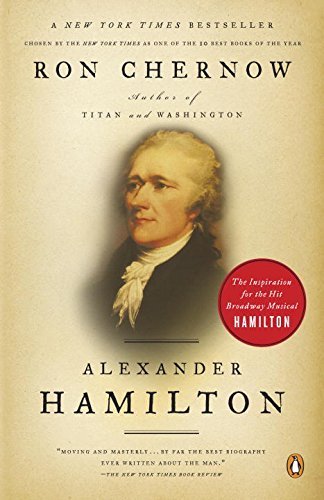
*Alexander Hamilton, by Ron Chernow. No wonder they made a Broadway play based on this book. The guy had more drama in his lifetime than some nations have in their entire history.
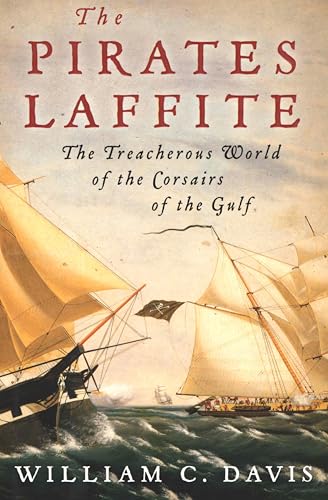
*The Pirates Lafitte, by William C. Davis. Entertaining and illuminating about the Gulf Coast culture and history in the early 1800s through the raucous lives of the pirates Jean and Pierre Lafitte. I really enjoyed this one.
Book review: “Crusaders” by Dan Jones

Dan Jones. Crusaders: The Epic History of the Wars for the Holy Lands. Viking, 2019.
I have read several books on the Crusades, but this is the best I’ve read so far. Dan Jones has written numerous books on the Europeans in the Middle Ages, so this is his area of expertise. His work is thoroughly researched, but he also writes in an engaging style, opening most chapters with vignettes about colorful personalities, and he peppers the book with fascinating quotes and interesting details.
The title Crusaders (instead of “Crusades”) is deliberate, because, as Jones explains in his preface, he focuses on the personalities like Richard the Lionheart, telling stories of the combatants (mostly Christian, but he also gives coverage to prominent Muslim warriors, including a chapter on Saladin). Yet he tells the story in chronological order, which helps the reader to follow the facts.
With so much blood and horrendous violence, Jones could easily depict the Crusaders as pure evil, but as a good historian he leaves it to the reader to make moral judgments, even reminding the reader at times that as bad as the violence was, it was normal for all sides at that time in history. He simply tells the facts and quotes the sources that describe the characters, whether evil or holy, or, as many were, a mixture of both. The book truly helps the reader understand the reasons why the Crusades happened as they did by helping the reader understand life in the Middle Ages. Until I read this book, I didn’t fully understand why the Fourth Crusaders plundered Constantinople instead of invading Muslim territory, but now I understand the economic motivations of the Venetians.
The old adages about history repeating itself and not learning lessons from history are evident in these stories. One example is the defeat of the Fifth Crusade on the Nile River because they didn’t consider the geography of when the Nile would flood and stop their advance. Another example was how Emperor Frederick II was able to gain more by negotiation than the previous Crusaders had gained by war, because he spoke Arabic and was able to gain their trust.
Jones explains that the Crusades included the “Reconquista,” the seven hundred years of battles for Spain to retake the Iberian Peninsula from the Muslims, which finally ended in 1492. Thus, instead of seeing the Crusades as a total failure, since the Crusaders were expelled from the Holy Land after the fall of Acre in 1291, he sees the battle for Spain as a success for the crusaders. He even cities numerous occasions when crusaders on their way to the Holy Land would stop off in Spain and help them win a battle, then sail on for Jerusalem. The author explains how, even as Europe lost interest in raising large international armies to fight Muslims in the Holy Land, the crusading spirit continued and degenerated into hunting down heretics in southern France, fighting pagan tribes in the Balkans, and even papal battles against Christian rulers who refused to submit to the pope.
I wish that Jones had explained more of the results of the Crusades. He does allude to how it gave power to the pope, and he ends the book by explaining the anti-Christian bitterness that remains among Muslims in the Middle East. He could have said more about how it affected Muslim treatment of Christian minorities in the Middle East, and how the contact opened doors of economic, cultural, and intellectual trade between East and West, even helping bring Arabic numerals and Aristotle’s philosophy to the West.
Sadly, Jones points out that the Crusades never fully ended, as Osama bin Laden referred to President George W. Bush as “the Chief Crusader… under the banner of the cross.” As ISIS leader Abu Bakr al-Baghdadi said, “the battle of Islam and its people against the crusaders and their followers is a long battle.”
My new Miss. Baptist history book is now available!

My new book, Mississippi Baptists: A History of Southern Baptists in the Magnolia State, has been published by the Mississippi Baptist Convention Board, and is now available to the public. It is a hardback book, 300 pages of text, plus four appendices, notes, and an index in the back.
In 2021, I signed a contract with the Mississippi Baptist Convention Board and Mississippi Baptist Historical Commission to revise and update R.A. McLemore’s book published in 1971, A History of Mississippi Baptists. While the new work is based on McLemore’s history, it has many more new features than simply the addition of a half century of recent history. I have included new research from the beginning. For example, I discovered evidence that the mother church of Mississippi Baptists was Ebenezer Baptist Church, Florence, South Carolina. Other new research includes the declaration of religious liberty by Richard Curtis, Jr., the first Baptist pastor in Mississippi; social and cultural information on typical Baptist life during different time periods; trends in Baptist theology; and details of the previously untold story of the McCall controversy of 1948-49. Throughout the book, I sought to write in a narrative style, including anecdotes that reflected the flavor of Baptist life.
You can get a book by making a donation to the Mississippi Baptist Historical Commission at the link below. Click on “Donate to the Historical Commission,” then fill out the form, select “MS Baptist Historical Commission” and how much you will donate (I suggest at least $15 to cover their costs), and how many copies of the book you want.
Here is the link: https://mbcb.org/historicalcommission/
Book review: “Baptist Successionism: A Critical Review”
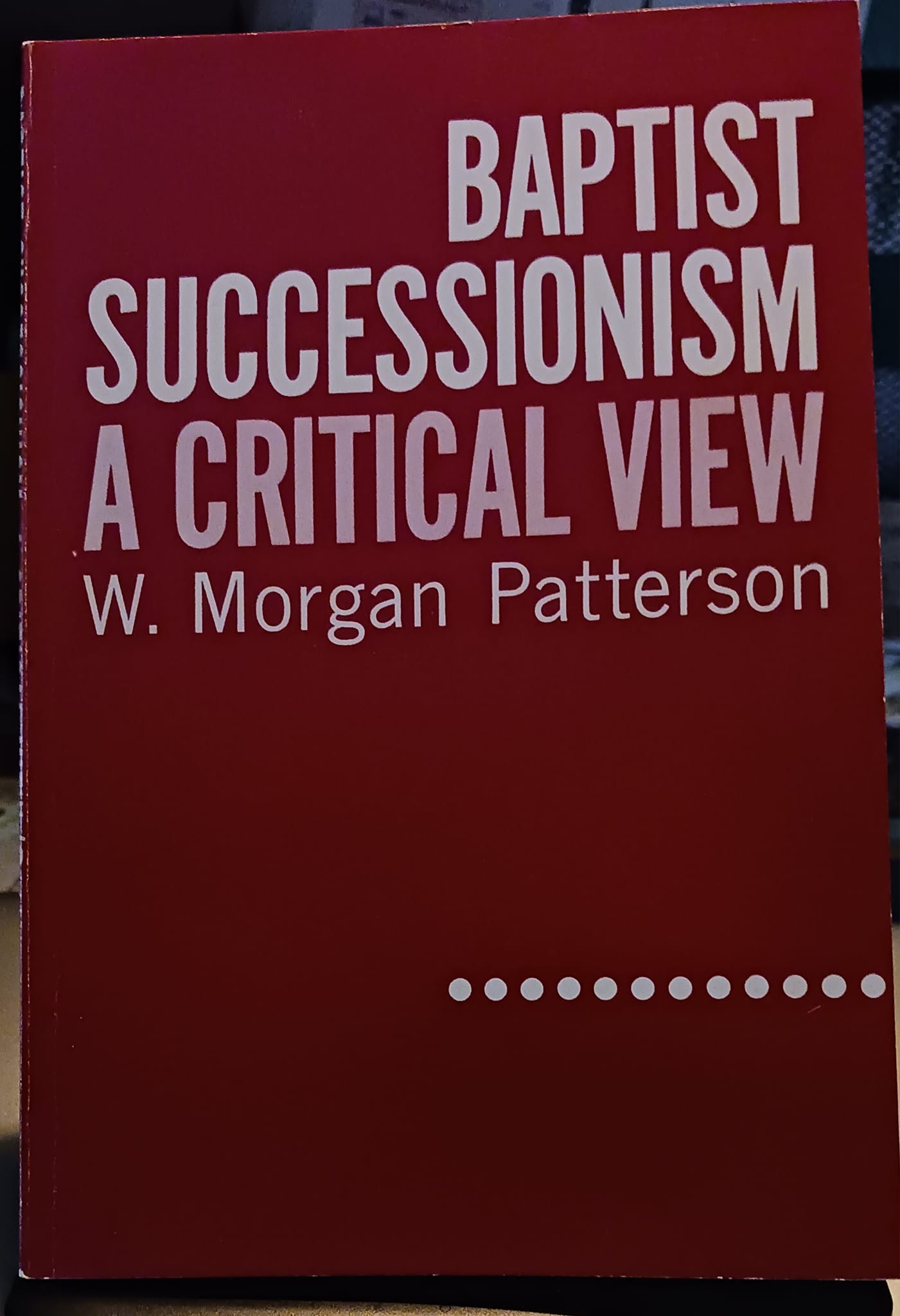
W. Morgan Patterson is a Southern Baptist historian, educated at Stetson University, New Orleans Baptist Theological Seminary, and Oxford University. This book was published in 1979, but I recently picked it up and read it in one day.
This is a concise book (four chapters, 75 pages) that analyzes the failures of the sloppy historical research of Baptists, such as Landmarkists, who believe Baptist churches are in a direct line of succession from New Testament times. The introduction explains there are four different variations of successionist writers, from those who believe they can demonstrate it and that is necessary, to those who believe neither. Chapter one explains how the successionist view was not that of the earliest Baptists, but in the 19th century it was formulated by G.H. Orchard and popularized by J.R. Graves. Chapter two shows how the successionist writers misused their sources. Chapter three shows their poor logic. Chapter four exams some of the motivations behind this erroneous view. The conclusion sums up the book, noting that the successionist view was predominant in the 19th century, but thanks to bold historians like William Whitsitt, whose research debunked the theory in the 1890s, the successionist view became a minority position among Baptist historians in the 20th century.
Patterson is scholarly historian, and he may assume a little too much about the historical knowledge of the reader when he refers to the Münster incident on page 22 without explaining that this was a violent takeover of the city of Münster, Germany in 1534 by an Anabaptist fringe group that came to be associated with Anabaptists and Baptists in the minds of their opponents, and he refers to the Whitsitt controversy on page 24 without explaining the controversy until later.
Patterson could have made his argument stronger by giving more specific details about the heretical beliefs of groups claimed by successionist writers to be Baptists, such as the Donatists, Paulicians, Cathari, etc.
While Patterson’s book is concise, it is substantive, and his reasons are sound. This is an effective critique.
Book Review: “Love Does” by Bob Goff
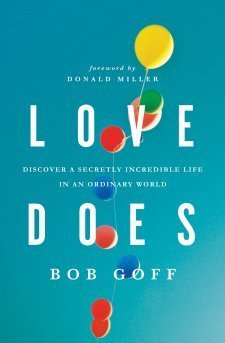
Bob Goff is a lawyer who loves the word “whimsy,” a word he uses constantly. His whimsical book starts each chapter by stating what he used to think and how he changed his mind (generally along the lines of how he used to think love was a feeling but now he thinks it is an action), followed by a whimsical true story from his life to illustrate his point. His stories are full of whimsical humor and talk about Jesus as his motivation for doing good deeds– and Goff does amazing deeds, particularly in Uganda, where he helped end injustice in the prison system and provided an education for countless children who were former fighters in the civil war.
His Christian motivation is inspiring, but his theology is shallow. He calls “missing the mark” a “stupid analogy” in chapter 16, and ridicules Bible teachers who use the term. One wonders if he even knows that “missing the mark” is the literal translation for the Greek word for sin, since in chapter 29 he ridicules people who study the Hebrew and Greek background of scripture.
Goff’s love in action is admirable– but his whimsy can be annoying if you value hard work and organization, such as when he tells how he got into law school by pestering the dean instead of doing the hard work to pass the entrance exam, and how he lied to get in a friend’s hotel room and ran up a $400 room service bill before the guy arrived as a “prank.” He describes many such adventures, never with a plan, but always with whimsy. He certainly gets a lot of good things done, but he swings the pendulum so far away from planning toward risk-taking that one wonders when one of his unplanned adventures will eventually cause some regrettable disaster. So far, so good– but I won’t risk reading any more of his books.
Breaking news: LifeWay to republish the Holman Christian Standard Bible
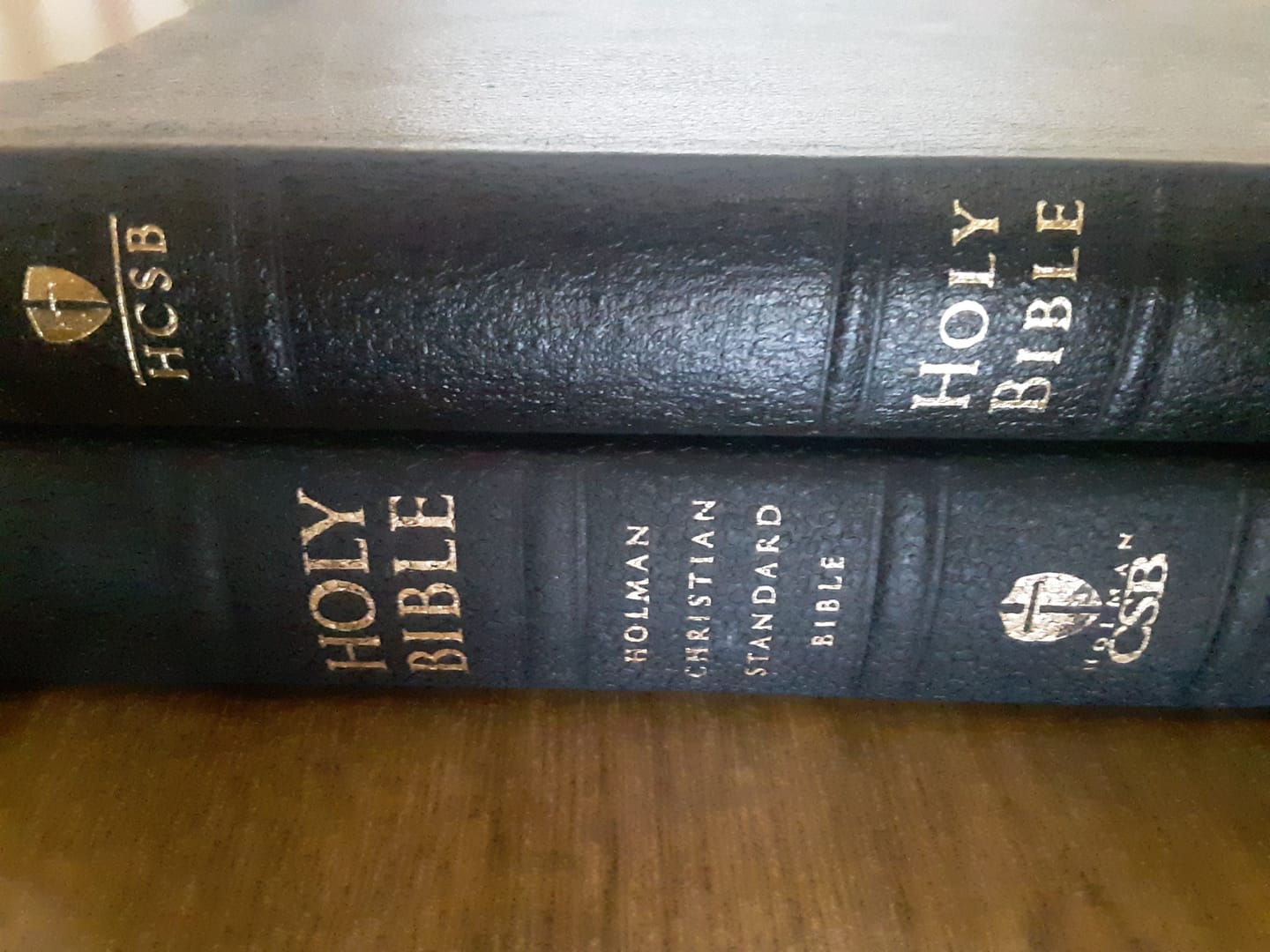
It’s not official yet, but as the administrator of the Facebook fan page for the Holman Christian Standard Bible (HCSB), I have been privy to some internal discussions from editors of LifeWay and Holman Bible Publishers, who have quietly been considering republishing a print edition of the HCSB.
The HCSB was first published in 2004 by Holman Bible Publishers, but discontinued in 2017 in favor of the Christian Standard Bible (CSB). When first published, the HCSB won praise among evangelicals for being more accurate than the popular New International Version (NIV), yet more readable than the reliable New American Standard Bible (NASB). However, it received some criticism for some unusual characteristics, such as occasionally using the literal “Yahweh” for the Old Testament name of God (traditionally translated with all capital letters, LORD), and for taking non-traditional translations, such as interpreting “sixth hour” in John 4:6 to mean that Jesus met the woman at the well at 6:00 in the evening, rather than the sixth hour of the day, at noon. The awkward name, Holman Christian Standard Bible, was also ridiculed by some as the Hard Core Southern Baptist translation, as Holman is owned by LifeWay Christian Resources of the Southern Baptist Convention.
Thus in 2017, Holman Bible Publishers made a major revision of the HCSB, keeping most of the language but removing most of the non-traditional elements of the HCSB, and gave it a simpler name: Christian Standard Bible (CSB). The CSB was released in 2017, and Holman discontinued printing the HCSB, although digital versions were still available on platforms such as YouVersion and Olive Tree Bible app. Holman Publishers hoped to market the CSB to a larger audience, and they did. The CSB consistently ranks in fifth place among purchases of new Bibles, according to ECPA.
However, there remained a faithful and loyal group of people who preferred the HCSB. As the administrator of the Facebook group dedicated to the HCSB, I know. And since I am the administrator, LifeWay CEO Ben Mandrell contacted me recently to discuss the interest in making a simple leatherflex print edition of the HCSB available, as a test market. He emphasized that they are still committed to the CSB, but thought there might stll be a niche market for the HCSB, just as some people prefer older editions of the NASB.
If you are interested in a print edition of the HCSB, do not contact Holman Bible Publishers or LifeWay, because they will not know what you are talking about, since this is an April Fool’s joke.
Announcement: I will be revising and updating A History of Mississippi Baptists

I am pleased to announce that on November 3, 2021, I signed a contract with the Mississippi Baptist Convention to revise and update A History of Mississippi Baptists by Richard Aubrey McLemore. The book was published by the convention, which holds the copyright, in 1971.
I expect the project to take a few years, as I will be doing a thorough revision of the original work, checking it for accuracy and rewriting in a more narrative style. After the revision is done, I will add two more chapters to update the last 50 years. You can read the full news story about the book here.
Follow his blog for stories that I learn and share along the way!
Alternatives to liberal big tech

Copyright by Bob Rogers.
In late February 2021, Amazon suddenly stopped offering a bestselling book that had been published in 2018, When Harry Became Sally: Responding to the Transgender Moment, by Ryan T. Anderson. You can find books that disagree with Anderson on Amazon, but his book is no longer available on the site (which controls 83% of the book market). Amazon still sells books on anarchy or how to make a bomb, as well as Adolf Hitler’s Mein Kampf, but not Anderson’s book, which was is a scholarly, carefully researched work, written with a compassionate, gracious tone—it just challenges the liberal narrative.
Unless your head has been in a hole, you know that the liberal “cancel culture” has been banning and silencing conservative books, videos, and social media posts, while promoting liberal views. This is causing many conservatives to ask, “Do I have other alternatives to liberal big tech and liberal media?” The answer is yes! Below I offer some suggested alternatives, but with a caution. Those of us who are followers of Christ are “not of the world” (John 17:16), yet at the same time, we are “sent into the world” (John 17:18). Thus, even as I recommend using these alternatives, I would suggest that we continue to be “salt and light” (Matthew 5:13-14) in the public square, especially on Facebook and Twitter, as much as possible.
Alternative to Amazon: Barnes and Noble. Barnes and Noble still offers Anderson’s book, and since they are the biggest book competitor to Amazon, it puts the most pressure on Amazon. If you really feel strongly about it, you could cancel your Amazon Prime membership, and tell them why. You may also want to buy books directly from the publisher.
Alternative to Google: DuckDuckGo. DuckDuckGo is an excellent search engine, but unlike Google, it does not suppress conservative information, and it does not violate your privacy by compiling information about you. I have compared the two search engines several times, and found conservative information is often buried by Google several pages later, but conservative information is presented fairly by DuckDuckGo.
Alternative to Facebook: MeWe. MeWe is a social media platform that is gaining millions of new users every week. It operates in ways similar to Facebook, with a huge difference: MeWe protects your privacy and does not collect information on you, nor sell ads. It also doesn’t delete conservative political posts, although it will delete abusive and obscene posts. It makes money by offering a premium version for a few dollars a month.
Alternative to Twitter: Parler. Twitter became notorious for removing Donald Trump and conservative Christian satire site The Babylon Bee (see below), and for suppressing the Hunter Biden scandal. Parler was in the news recently when Amazon stopped hosting its site with claims that Parler allowed violent threats against the government, but Parler is back online now, although it is till struggling to function. Parler users tend to be highly political and very conservative, so be aware. Also, since Elon Musk just became a major shareholder in Twitter, changes may come to Twitter.
Alternative to the Associated Press: World magazine. World is a Christian news source, that reports news objectively, and then takes an in-depth look into issues from a biblical perspective. Its website www.wng.org is free, and offers daily news reports, and also gives an informative free news podcast, “The World and Everything In it.”
Alternative to Snopes: CheckYourFact.com. Snopes is the most popular site for checking rumors and conspiracy theories, but it has been tainted by taking a liberal slant numerous times, notably it has labeled as “false” articles by the conservative Christian satire website, Babylon Bee, even though the articles were obviously satire. CheckYourFact.com is owned by the conservative Daily Caller, but it is independent of The Daily Caller, and is certified by the International Fact Checking Network (IFCN).
Alternative to The Onion: The Babylon Bee. Speaking of satire, The Onion is the most famous satire website, but the stings from The Babylon Bee have generated so much attention that Facebook and Snopes have labeled some of its satire as false in ways that remove it from being viewed, and Twitter removed The Babylon Bee after it satired a transgender being recognized as “woman of the year.” You may want to search for it on DuckDuckGo, and check it out for yourself.
Book review: “Politics and Piety: Baptist Social Reform in America, 1770-1860”

Menikoff, Aaron. Politics and Piety: Baptist Social Reform in America, 1770-1860. Eugene, Oregon: Pickwick Publicaitons, 2014.
Aaron Menikoff fills in important gaps in Baptist history with this well-researched study of Baptist involvement in social reform between the American Revolution and Civil War. He is well-prepared to write on the subject, with a Ph.D. from Southern Baptist Theological Seminary, and experience as a legislative assistant to U.S. Senator Mark Hatfield, a Baptist.
This book debunks the common idea that Baptists in the 19th century were only concerned about personal salvation, and neglected social issues. He first examines the overall attitude of Baptists toward salvation, morality, politics, and church and state, with particular emphasis on how Baptists held in tension the idea that church and state should be separate, yet a nation needed to be virtuous to survive. In other words, the Baptist understanding of separation of church and meant the government had no right establishing a particular religion, but this did not mean a separation between church and society– far from it.
Next, Menikoff examines how this Baptist attitude played itself out in five major issues of the time: political parties, slavery, the Sabbath Mail Controversy, poverty, and the temperance movement. He shows the majority Baptist approach to each issue, while also revealing how different Baptists took different sides on each of these issues. ]
On political parties, Baptists usually avoided endorsing candidates or parties, yet spoke out on political issues, and some were more directly involved as candidates and supporting parties.
On slavery, Menikoff shows the complexity and diversity of Baptist views, including the colonization movement to resettle slaves in Africa. While Northern Baptists generally joined the abolitionist movement and southern Baptists opposed it, he shows how there were southern Baptists opposed to slavery in the south as late as the 1830s, and Baptist leaders like Richard Furman called upon slaveholders not to neglect the spiritual needs of their slaves.
The Sabbath Mail Controvesy is largely forgotten today, but at the time there was great religious opposition to the delivery of mail on Sunday, including most Baptists. He tells the fascinating story of how a Baptist Senator, Richard Johnson, gave the Congressional report supporting the delivery of mail every day, calling his fellow Baptists hypocrites for trying to unite church and state over the issue.
On poverty, the author shows how Baptists were active in relief efforts for the poor, although they often blamed the poor for getting themselves into their situation and focused on targeted giving of the “deserving poor.”
The temperance movement to abstain from alcohol was the most popular Baptist cause, as all Baptists saw alcohol abuse as a major social problem. However, Menikoff shows that Baptists also had different opinions over the temperance issue, especially defending the liberty of conscience for individual Baptists who drank moderately, and those Baptists who opposed to political efforts at prohibition on the grounds that it mixed church and state.
This book gave me a new perspective on several issues, especially the fascinating Sabbath Mail Controversy as well as how complex and diverse Baptist opinions were on slavery in the south. Menikoff’s research is carefully documented, with hundreds of footnotes and an exhaustive bibliography, leaving a rich resource for further study on the subjects covered. It is not light reading, but for those interested in Baptist history, it is rewarding, indeed.
Four 19th century biographies of Southern slavery
Recently, I’ve read four 19th century biographies and autobiographies of men and women who escaped slavery in the South. If you want to read about what slavery was really like in that time, these classic books will let you hear the stories in the words of those who experienced it.

Sarah Hopkins Bradford, Harriet, the Moses of Her People.
This biography, written by a white friend of Harriet Tubman gives a firsthand account of the amazing life of an amazing woman who bravely made so many trips to the South to rescue over 300 of her people along the “Underground Railroad.” The author is somewhat patronizing toward African-Americans, yet beautifully portrays the unwavering Christian faith that sustained Harriet through it all, and the events surrounding her that some call “supernatural.” Her story has recently been made into the film, Harriet.

Solomon Northrup, 12 Years a Slave.
The most dramatic story I have read of someone escaping slavery is that of Solomon Northrup, a free black man who was kidnapped in New York, and sold into slavery in Louisiana, where he suffered until his dramatic rescue. Northrup himself vividly describes his experiences, which shows the cruelty of slavery in the Deep South. The events surrounding his rescue will have you on the edge of your seat. No wonder this was made into an Academy Award Winning film!

Harriet Ann Jacobs, Incidents in the Life of a Slave Girl Written by Herself.
This account of a female former slave, using the name Linda Brent, shares graphic details of brutality and especially sexual abuse by white owners. There is a constant tension between Linda and her owner, Dr. Flint, whose affections she continually rejects. Although a true story published at the outbreak of the Civil War, it reads like a novel, and I read it quickly. It gives so many insights into slave life in the South, and even discrimination against blacks in the North.

Josiah Henson, The Life of Josiah Henson, Formerly a Slave.
This true story was the basis for Uncle Tom’s Cabin. I downloaded it and read it in one day. Henson was an industrious man with great leadership and organizational skills. The storyline moves quickly and is so emotional, that it overcomes the 19th century formal writing style. I highly recommend this short read to get a feel for the heartless institution of slavery in the South.
Book review: The Burdens of Disease: Epidemics and Human Response in Western History

J. N. Hays. The Burdens of Disease: Epidemics and Human Response in Western History. Rutgers, 2003.
During the coronavirus epidemic of 2020, I decided to pull this book off my shelf and read it. I’m glad I did, since it approaches the history of epidemics and disease in Western civilization from a historical and social perspective, explaining how society reacted to such epidemics as the Black Death, leprosy, typhus, cholera, tuberculosis, smallpox, polio, the flu epidemic of 1918, and AIDS. Hays traces the history of how physicians, governments, religion and common people responded to these epidemics. In particular, he gives a history of the development of modern medical science.
Although the book was written long before the international crisis of COVID-19, many lessons in his book will be of interest to readers today. He sees epidemic as a social issue, not just a medical issue, because it affects all of society.
Religious views toward disease have often been a factor. During the bubonic plague (Black Death) of the late Middle Ages, people often thought God was punishing them, and groups of “flagellants” even drew their own blood to atone for sins, assuming the role of Jesus’ sacrifice. Diseases like syphilis and AIDS were especially associated with sexual sin, but also tuberculosis (formerly called “consumption”) and polio were associated with the immorality in filthy slums, until the presence of these diseases among the rich and famous reframed attitudes. Hays tends to be negative toward religious faith, saying the scientific revolution “undercut traditional Christian orthodoxy” (p. 88), although he does not explain how, and later admits that the devout Christian scientist, Isaac Newton, appealed to “the very first Cause, which certainly is not mechanical” (p. 99). On the other hand, Hays also points out the limitations of science, holding in the mirror of irony the bold claims of scientists in 1872 that “men will master the forces of Nature” (p. 213) and in 1955 a news writer’s claim that “man one day may be armed with vaccine shields against every infectious ill that besets him” (p. 240).
Hays shows how disease was used and abused by the powerful, particularly governments, sometimes to protect, and sometimes to control. Italian city-states often quarantined people during the bubonic plague in an attempt to stop the spread of disease, much to the chagrin of businessmen and churches not allowed to meet or trade. Governments cleaned up slums, installed sanitary running water and garbage collection, and required vaccinations, all with a view to better health. However, democracies that valued personal freedoms struggled with this approach, as cities like Hamburg, Germany about 1900 were reluctant to impose vaccinations against the liberties of its people, until the city saw evidence of its effectiveness. City officials in San Francisco denied the existence of plague in Chinatown in 1900, calling it a “scare” and made it a felony to tell the news (p. 183). Governments fighting in World War I suppressed the news stories of the flu epidemic of 1918-19, so as not to divert attention from the war effort, thus it was nicknamed “Spanish flu” because Spain, a non-combatant in the war, reported on it freely. The darkest story of disease was the use of eugenics and euthanasia by Nazi Germany, which considered Jews “diseased” and also exterminated “the tubercular, the homeless, those unwilling or unable to work, and criminals of many sorts” (p. 287). Perhaps the most sinister destruction was the elimination of most of the Native American population by diseases that were brought by Europeans to the New World.
Socially, Hays discusses how social isolation protected people from epidemics in the Middle Ages, when people rarely travelled outside their own villages, and the Black Death only occured after cities arose in Europe and trade developed from nation to nation. He notes that major advances in transportation such as steamships and railroads provided opportunities for plagues to spread rapidly as travel from continent to continent was reduced to days, not giving viruses time to die before they spread to new victims.
Social changes also occurred for the better to prevent disease, as it became socially accepted to take baths, wash hands frequently, drink pastuerized milk, and it became socially unacceptable to spit or sneeze in public, or smoke tobacco in public. One wonders what social changes may occur after our current epidemic, but that is likely the subject of another book.
Children’s book review: The Quiet Crazy Easter Day
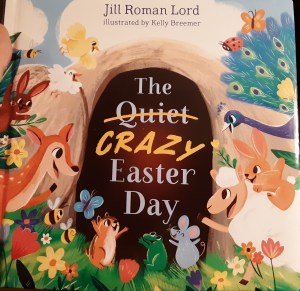

The Quiet Crazy Easter Day by Jill Roman Lord (B & H Kids) is a 22-page, colorful children’s storyboard book that is perfect for the Easter season. The word “quiet” is crossed out in the title, because the theme of the book is how likely it was that all of God’s creatures rejoiced at Jesus’ resurrection.
Using rhythm and rhyme, the book book imagines how every creature, from ladybugs to ladies and eagles to angels burst into howls and shouts of praise. The book should be fun to read, and easy to understand, although perhaps one line could have replaced “distinctive” with a simpler word such as “special.” The illustrations by Kelly Breemer are bright, clear, and use a full range of colors that fit very well with the theme.
I highly recommend this book as a cheerful way to teach children the true meaning of Easter, while also teaching about different animals and the sounds they make.
Disclosure statment: I received a complimentary copy of this book upon promise of review. I was under no obligation to write a favorable review.
Book review: God’s Wisdom for Navigating Life by Timothy Keller

Keller, Timothy. God’s Wisdom for Navigating Life: A Year of Daily Devotionals in the Book of Proverbs. New York: Viking, 2017. I loved this daily devotional! I have read Keller’s devotional through Psalms, and I find this one to be an excellent companion to it. Keller wisely (pun intended) groups the devotionals into topics, rather than trying to go through Proverbs chapter by chapter. By including verses from different parts of the book in a day’s devotional, he gives a greater balance and thoroughness to each, as he often includes wisdom sayings that give different perspectives on the same topic, or give further elaboration and illustration on the same topic. Keller also includes some selections from other wisdom books, especially Ecclesiastes and Job, and ends during the Christmas season with insights from the New Testament and how Jesus is our ultimate source of wisdom. I highly recommend this daily devotional! It will challenge you to think deeply and live wisely. |
Book review: “Not Forsaken” helps those who had a bad Dad
 Louie Giglio, pastor of Passion City Church, a megachurch in Atlanta, writes Not Forsaken to help people see God as a good Heavenly Father, especially those who have had a bad earthly father. The subtitle says it well: “Finding Freedom as Sons & Daughters of a Perfect Father.”
Giglio begins by stating that every person has an innate need for a good father who is proud of him or her, yet the author readily recognizes that many people have had an abusive or absent earthly father, and this makes it difficult for them to affirm God as good. Giglio confronts this dilemma step-by-step, making frequent use of scripture. First, he explains that God is good, even if Dad was bad: “God is not the reflection of your earthly dad. He is the perfection of your earthly dad” (p.76). Then, Giglio encourages the reader to “reverse the curse” through forgiveness of a bad father, saying, “Bitterness continues to pave a path to your past, while forgiveness paves a way to your future” (p. 114). Next, Giglio guides the reader to an understanding of the good fatherly qualities of God. He acknowledges some people will ask, If God is so good, why doesn’t He stop evil? In a paragraph worth repeating, he responds to this question:
I think the answer is because the moment He steps in and removes all the collateral damage of this broken world from ever happening again, that will mark the instant life on earth is over. And in that moment the lost will be lost forever and many whom God wanted to become sons and daughters will be separated from His arms. So, He waits and extends grace another day. And for twenty-four more hours, we are caught in the crossfire of a sin-shattered world. (p. 178)
Finally, he challenges readers that just as we tend to pick up the qualities of our parents, so we should “grow up like Dad,” our heavenly Father.
Although the book is only 235 pages, divided into 10 chapters, Giglio tends to repeat statements he has already made, which is normal for a public speaker like himself, but seems redundant when reading a book. Perhaps with more editing, he could have communicated just as well with fewer than 200 pages. Nevertheless, Giglio writes in a personal, encouraging style, based on solid Biblical interpretation, with many insightful illustrations. This book can be quite helpful to readers who struggle with the idea that God is a good Father.
DISCLAIMER: I received a complimentary copy of this book from B&H Bloggers, but I was under no obligation to write a favorable review.


 Bob Rogers