Category Archives: Books
Is burial preferable to cremation?

Article copyright by Bob Rogers
With the increased popularity of cremation instead of burial, people often ask me if the Bible forbids cremation. The Bible does not prohibit cremation, but it does seem to show a preference for burial.
In defense of cremation, the apostle Paul speaks positively about death by fire in 1 Corinthians 13:3 with the phrase, “if I give my body to be burned…” While Paul was referring to martyrdom, not cremation, the apostle certainly did not think death by burning would prevent him from being in heaven. God can reassemble the molecules of your body at the resurrection, whether they are burned to ashes or decay to ashes.
I have done funerals for people who chose cremation. It certainly is a less expensive option.
Nevertheless, the Bible shows a preference for burial. In the Old Testament, passages such as Genesis 50 show great concern for the proper burial of the remains of Jacob and Joseph. In the New Testament, the Christian belief in resurrection is vividly shown as Lazarus and Jesus were buried and bodily raised from a grave. In Romans 6:4, baptism is depicted as a burial and resurrection: “We were therefore buried with Him through baptism…” Mark Coppenger says, “I would hate to think what sort of ceremony cremation would suggest.”
So while cremation is not prohibited and may be understandable for financial reasons, burial has a stronger basis in the Bible and is a clearer testimony to our faith.
If you see a video ad below this post, please understand that I have no control over these ads, and that I do not necessarily endorse the product.
The Voice translation and The Compass Study Bible
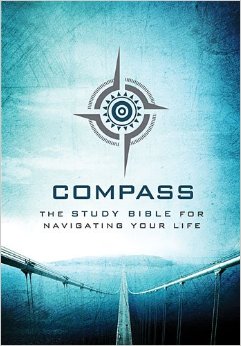
Compass: The Study Bible for Navigating Your Life, is a study Bible edition of The Voice translation, a new translation released in 2012.
I received an advance copy of The Compass Bible to review. It will not be released until February 2014, but The Voice translation itself is available in other editions now.
First, let me discuss the translation itself. Second, I will comment on the distinctions in this study edition.
The Voice translation takes a unique approach in Bible translation, which makes it difficult to classify this as a translation or a paraphrase. Perhaps it’s best to say that it is a translation that is amplified with paraphrase. That is, the text has a fairly accurate translation, but then it inserts additional words into the text in italics for clarity and explanation. For example, Romans 10:9 is translated and amplified like this: “So if you believe deep in your heart that God raised Jesus from the pit of death and if you voice your allegiance by confessing the truth that ‘Jesus is Lord,’ then you will be saved!” Here’s another example that includes even more amplification, Psalm 23:5: “You spread out a table before me, provisions in the midst of attack from my enemies; You care for all my needs, anointing my head with soothing, fragrant oil, filling my cup again and again with Your grace.” In both of these verses, the text without italics is an accurate translation, but the text added in italics amplifies and explains the meaning of the verse. The advantage of this over other paraphrases is that the reader knows which part is translation, and which part is commentary.
But there is more. On nearly every page, there is bracketed, bold text, giving background explanation of the history, culture and meaning of words and events in the passage.
As its name implies, The Voice is written to be heard. It appears in screenplay format, whenever there is dialogue, giving the name of the speaker in bold, followed by a colon. For instance, in Luke 1:60-61, the text is laid out like this:
Elizabeth (disagreeing): No, We will name him John.
Her Relatives (protesting): That name is found nowhere in your family.
The translation pays close attention to alliteration and other devices of sound, such as Genesis 1:16: “the Divine needled night with the stars.” Or another example, when the angels rejoice over Jesus’ birth in Luke 2:14: “To the highest heights of the universe, glory to God! And on earth, peace among all people who bring pleasure to God!”
All of these features make The Voice a Bible that is well-suited to be heard, whether read aloud or heard in the reader’s mind.
The Compass Bible is an edition of The Voice translation that adds some appropriate Bible-reading aids, primarily in the back, which include a 40-day reading retreat plan with suggestions for meditation and prayer, a 365-day reading plan through the whole Bible, an index of notes by topic, and maps. Other than a few Bible-reading aids, there is no difference between the text in the Compass Bible and other editions of The Voice translation, as they all include the topical notes in the text. The Compass Bible is printed on a less expensive paper, and retails for less than the regular edition.
Taken together, the Compass edition of The Voice translation should make the Bible come alive to people who are not familiar with the Bible, and it should bring new insights to those who are familiar with the Bible.
In the interest of full disclosure, let me state that I received a free copy of the Compass Bible for review, without any obligation to give a favorable review, and I did not receive any other compensation for writing this review.
If you see a video ad below this post, I do not necessarily endorse the product.
The purpose of marriage, according to Genesis

Copyright by Bob Rogers
Genesis 2:24 says, “This is why” or “This is the reason” that a man and woman get married, and if you study the first two chapters of Genesis, you will see that marriage has three purposes:
1. A REFLECTION OF GOD’S UNITY. There is a unity within the diversity of the Godhead, as He is one God, yet three persons. Genesis 1:26-27 says that the Triune God said, “Let US make mankind in OUR image… He made them male and female.” The male-female relationship of marriage reflects a unity in the midst of diversity, much as God is one, yet diverse in three persons.
2. A REALIZATION OF HUMAN UNITY. The husband-wife relationship is a joyful discovery of human fulfillment unlike any other on earth. Genesis 2:18 says that God made a “help meet for him” (KJV), or “helper suitable for him” (NIV) or “helper as his complement (HCSB). The last translation is probably the best, because the Hebrew word is a combination of two words that mean “like” and “opposite.” The wife and husband complement one another in roles in the home, and complement one another emotionally and sexually.
3. THE REPRODUCTION OF CHILDREN. While not all couples can reproduce children, God intends to grow families through married couples. Thus in Genesis 1:28, after making them male and female and in His image, God blesses the man and woman and says, “Be fruitful, multiply, fill the earth…”
There is something very important that we should notice here. Today’s society seeks to redefine marriage to include a same-sex union. Notice that same-sex unions fail to meet all three of these Biblical purposes of marriage. Only a heterosexual union reflects God’s unity in His diversity. Only a heterosexual union can form a relationship where two people complement one another as opposites, yet alike. And, of course, only a heterosexual union can reproduce children. That is why Genesis 2:24 says that a man leaves his parents and is united to “his wife.” This has been God’s purpose for marriage from the beginning of human history.
If you see a video ad below this post, I do not necessarily endorse the product.
Warning signs of false religion
 Copyright 2013 by Bob Rogers
There are many religions; how can you tell which one is true and which is false? Some people say it doesn’t matter, because all religions have truth, but don’t tell that to the former followers of Jim Jones or David Koresh.
In 1978, Congressman Leo Ryan went to the South America to investigate a controversial cult based in San Francisco, named the People’s Temple, that had established a commune in Guyana. There were charges that Jim Jones, the founder of the People’s Temple, had defrauded members and was exerting total control over members by threats of violence. At the airport, Congressman Ryan and four others were shot to death, and then 913 members of the People=s Temple, including Jim Jones, committed mass suicide. (“Jones, Jim.” Encyclopedia Britannica 2005.)
In 1993, David Koresh, leader of a religious cult known as the Branch Davidians, stockpiled weapons with his 130 followers at a compound near Waco, Texas. Four federal agents were killed in a shootout with his followers, and for 51 days the government laid siege to the compound. Finally, they attacked the compound and 80 Branch Davidians, including David Koresh, died in a fire. (“Branch Davidians.” Encyclopedia Britannica 2005.)
Many other false religions are not as violent, but equally false. So how can a person tell which one is true and which is false? In the ancient Book of Deuteronomy, we find answers to this question.
I. Beware of False Words (Deuteronomy 18:14-22)
Deuteronomy gives us one of those tests in Deuteronomy 18:21-22.
Verses 21-22 specifically answer the question, “How can we know when a message has not been spoken by the Lord?” The answer is, “If what a prophet proclaims in the name of the Lord does not take place or come true, that is a message the Lord has not spoken.” So the first test of false religion is false words. If the religion makes false predictions, the religion is false.
I know of a false religious cult that has predicted the end of the world many times, evening naming the date. They failed this test.
Contrast them with Jesus, who is the true prophet. Deuteronomy 18:17-18 says the Lord will raise up a prophet.
In Luke 19:41-44, Jesus prophesied that Jerusalem would be destroyed, and in A.D. 70, it was destroyed exactly as He said. No wonder Acts 3:20-22 says the prophet Moses spoke of is Jesus!
Jesus Himself claimed to be the way, the truth, and the life. He speaks the truth; he IS the truth.
II. Beware of False Ways (Deuteronomy 18:9-13)
With the popularity of the Harry Potter novels, witchcraft has almost been sanitized today. And while I realize that the Harry Potter stories are just fantasy, we need to understand that real witchcraft is not taken lightly in the Bible. Beware against thinking that it is okay to delve into magic.
Back up a few verses in Deuteronomy and we find the second test of false religion. Deuteronomy 18:9 warns against the “detestable ways” of the nations in the land the Israelites are entering. Then it proceeds to describe every kind of witchcraft and occult practice you can imagine in verses 10-11.
It gives a specific list here of seven kinds of witchcraft:
1. Human sacrifice. Even today human sacrifice is sometime associated with the occult.
2. Divination and sorcery – using objects to foretell the future, such as psychics, tarot cards, and horoscopes.
3. Interprets omens – interpreting things like cloud or bird movements to reveal the future.
4. Witchcraft – rituals such as charms, spells, and potions
5. Cast spells
6. Medium and spiritist. (Leviticus 20:27 says a medium or spiritist must be put to death)
7. Consults spirits of the dead. Saul did this with the Witch of Endor (1 Samuel 28) and he was condemned.
Why is this so wrong? Isaiah 8:19 says that when people say let’s consult a spiritist or consult the death, shouldn’t a people consult their God? It is wrong because it is an attempt to get answers to life and foretell the future by consulting dead spirits and earth spirits, rather than depending upon the Holy Spirit of God who indwells the believer in Jesus Christ.
III. Beware of False Worship (Deuteronomy 13:1-5)
Remember that we saw in Deuteronomy 18 that false predictions were a warning sign of false religion? But in Deuteronomy 13, scripture informs us that some people might make true predictions and still be false prophets because of false worship. Listen to Deuteronomy 13:1-3: “If a prophet, or one who foretells by dreams, appears among you and announces to you a sign or wonder, and if the sign or wonder spokken of takes place, and the prophet says, ‘Let us follow other gods,’ (gods you have not known) ‘and let us worship them,’ you must not listen to the words of that prophet or dreamer. The LORD your God is testing you to find out whether you love him with all your heart and with all your soul.” So add to false words and false ways, a third test: false worship. Even if people in a religion do good deeds and say some good things, it is still false if their worship is false.
Many cult leaders started out well as members of Christian churches, but then they began to exert total control over their members, making themselves the “Messiah.” Many world religions teach good deeds, but they do not believe in the one true God of the Bible. They often worship other gods and have their own books that they claim are inspired by God.
Galatians 1:6-9 says that even if an angel should bring a different message, let him be accursed! 1 Corinthians 12:3 says that no one who is speaking by the spirit of God says, “Jesus be cursed,” and no one can say, “Jesus is Lord” except by the Holy Spirit. The ultimate test is, does this religion exalt Jesus Christ as Lord and Savior? If not, the religion practices false worship.
Jesus says, “I am the way, the truth and the life.” He IS truth. This is the true religion. Have you trusted in Christ, and Christ alone to save you?
NOTE: If a video ad appears below this post, I do not necessarily endorse the product.
Four great truths from the creation account in Genesis

Copyright 2013 by Bob Rogers.
Some people get so caught up debating how to fit different scientific views to the creation account in Genesis chapter one, that they miss the great theological truths in this chapter:
1) God created! Only God can create, and He does simply by speaking the Word, “Let there be…” and creation comes out of nothing (compare Hebrews 11:3).
2) God’s creation is good! Repeatedly, God saw what he created and “saw that it was good” (Genesis 1:4, 10, 12, 18, 21, 25, 31). When He created mankind, He said it was “very good.”
3) God’s creation is under His Lordship. God is the one in control. He speaks, and it comes to be. God alone is to be worshiped, not “Mother Earth” or the sun or moon, which is why God deliberately did not name the sun and moon (Genesis 1:16). Compare Romans 1:25.
4) God’s creation is under mankind’s trusteeship. Man was told to subdue and rule creation (Genesis 1:28), but also to “watch over it” (2:15). We have a responsibility to be good managers, for we don’t own it; God owns it all (compare Psalm 24:1).
NOTE: If a video ad appears below this post, I do not necessarily endorse the product.
Is gluttony as bad as drunkenness?
 We rarely equate beer with banana pudding, but scripture says nearly as much about gluttony as it does about drunkenness. The Bible teaches that all addictions have the same basic effect: they destroy your mind, your money and your mood.
Look at the warnings in Proverbs against these two addictions: drunkenness and gluttony.
1. Your mind. Your mind will be led astray and deceived.
“Wine is a mocker, beer a brawler, and whoever staggers because of them is not wise.” (Proverbs 20:1, HCSB).
“If you are the type who eats too much too fast, do whatever is necessary to curb your enthusiasm for food.” (Proverbs 23:2, The Voice Translation)
2. Your money. Your addiction will drain your finances and leave you poor. “Don’t associate with those who drink too much wine or with those who gorge themselves on meat. For the drunkard and the glutton will become poor…” (Proverbs 23:20-21, HCSB)
3. Your mood. You will suffer sorrow and disgrace. You will descend into depression if you persist in feeding your addiction.
“Who has woe? Who has sorrow? Who has strife? … Who has needless bruises? Who has bloodshot eyes? Those who linger over wine…” (Proverbs 23:29-30, NIV).
“…a companion of gluttons humiliates his father.” (Proverbs 28:7, HCSB).
We are not able to overcome our addictions until we first see how much they hurt us and others. The reason we become addicted to something is because we like how it makes us feel. Do we want to lose control of our minds? Do we want to lose our money? Do we want to descend into depression? If not, then we need to break free from our addictions, whatever they are. The first step is to recognize that the problem is real. We need to stop making excuses like, “I’m just a social drinker,” or, “It’s only food, and I have to eat.” The second step is to call on the Higher Power of Jesus Christ to give us victory. For most people with addictions, we will need a third step of counseling and/or a support group.
Don’t wait—do it today!
NOTE: If you see a video ad below this post, I do not necessarily endorse the product.
How do you pray when you are desperate for help?

Copyright 2013 by Bob Rogers
How do you pray when you are desperate for help?
Matthew 9:27 says, “As Jesus went on from there, two blind men followed Him, shouting, ‘Have mercy on us, Son of David!”
Notice three things about their prayer:
1) They refused to give up. They followed Him, shouting! Luke 18:1 reminds us to always pray and not give up.
2) They made a simple plea. They just said, “Have mercy on us.” Your prayer does not have to be complex or eloquent.
3) They recognized Jesus’ authority to heal. By calling Him “Son of David,” they were confessing that He was the Messiah, who was to be a descendant of David. In verse 28, when Jesus asked them if they believed He could heal them, they said, “Yes, Lord.” The miracle of healing the blind never happened in the Old Testament, but Isaiah 35:5 prophesied the blind would be healed by the Messiah. In our times of desperate need, do we believe Jesus has the ability to do in our lives what nobody ever did before?
Why John Calvin was wrong about Romans 9

Copyright by Bob Rogers, Th.D.
John Calvin was wrong about Romans 9.
Calvin, the Protestant reformer of Geneva, Switzerland, was a great theologian. He became famous for his emphasis on the sovereignty of God and God’s predestination of our salvation. But in his commentary on the ninth chapter of Paul’s Letter to the Romans, John Calvin took predestination beyond anything the apostle Paul intended to say.
Qualifications of what I’m saying
Don’t misunderstand me. I believe that salvation is completely by the grace of God and cannot be earned by our good deeds. I believe that God is merciful and just, and I believe in the sovereignty of God. I also believe that when we believe in Jesus Christ as Savior, the Bible says that we are chosen, or predestined.
My disagreement is with a specific brand of Calvinism and with a specific statement made by John Calvin in his own commentary on Romans. Many will argue that Calvin himself took a different position in some of his other writings, and that may be true, but it does not change the fact that Calvin was wrong in his commentary on Romans 9.
The key verses and Calvin’s comments
The debate centers around the key verses, Romans 9:18, 22 (HCSB): “So then, He shows mercy to those He wants to, and He hardens those He wants to harden… And what if God, desiring to display His wrath and to make His power known, endured with much patience objects of wrath ready for destruction?”
Calvin says in his commentary on Romans 9, “Paul teaches us, that the ruin of the wicked is not only foreseen by the Lord, but also ordained by his counsel and his will… that not only the destruction of the wicked is foreknown, but that the wicked themselves have been created for this very end—that they may perish.” (John Calvin, Commentary on Romans.)
John Calvin’s interpretation of Romans 9:18 and 22 has been called double-edged predestination. This interpretation teaches that the saved are predestined to be saved, but also that the lost are predestined to be damned. At first glance, one can see how Calvin would interpret this passage the way he did. But a study of these verses in light of the entire chapter reveals a completely different picture of what Paul was saying.
God is not unjust
Calvin’s interpretation makes God arbitrary and implies that God is unjust. Yet Paul reminds us in Romans 9:14, “Is there injustice with God? Absolutely not!” Let’s go through the chapter and see how God is both merciful and just.
Hardened clay and melted butter
When Romans 9:18 says that God shows mercy on whom He desires and hardens whom He desires, this does not mean that God is arbitrary or unfair. Let’s look at the context of this statement. In the previous verse, verse 17, Paul spoke about Pharaoh, who hardened his heart and would not let the people of Israel go from slavery. But if one reads the story in Exodus, one finds that half of the time it says God hardened Pharaoh’s heart, and half of the time it says Pharaoh hardened his own heart. What Exodus described was the process by which God brought out the hardness that was already in Pharaoh’s heart. As Dale Moody says, “The sun that hardens the clay melts the butter.” (The Broadman Bible Commmentary, vol. 10: Acts- I Corinthians, “Romans,” by Dale Moody, p. 230.) Thus God was not making Pharaoh do something that Pharaoh didn’t already want to do. Likewise, God does not take away our free will to obey or disobey.
The clay pot and the potter
Next, we note that Paul uses the example of a clay pot to illustrate predestination. He says in verses 20-21, that we have no right as mere humans to talk back to God about His will. It is interesting that Jeremiah 18:5-10 also uses the clay pot illustration to show how God reacts differently when we respond differently. Jeremiah says that if a people whom God warns will repent of their evil, then God will relent of his disaster and not inflict on them the disaster God had planned. This shows how predestination works in the mind and heart of God. Of course, God in His foreknowledge already knows what we will do, so when we choose Christ, God speaks of having chosen us.
A choice by faith
Romans 9:30-33 shows how salvation comes by a free choice to believe the gospel, not by arbitrary predestination. It does this by drawing a contrast between Gentiles who obtained righteousness and the Jews who did not obtain righteousness. What was the difference? It was their faith! Verse 30 says the Gentiles obtained a “righteousness that comes from faith.” Verse 31 says Israel did not achieve this righteousness. “Why is that?” Paul asks in verse 32. His answer: “Because they did not pursue it by faith.”
Objects of wrath and objects of mercy—treated differently
With all of this in mind, let us return to the key verses that are central to this debate, Romans 9:22-23. These verses have been interpreted as teaching double-edged predestination, because they speak of the “objects of wrath ready for destruction” and “objects of mercy that He prepared beforehand for glory.” However, what many people miss here, is that Paul describes the objects of wrath (the damned) and the objects of mercy (the saved) in different ways in this passage. The Greek grammar in verse 22 describes the “objects of wrath ready for destruction” with a perfect participle in the middle or passive voice. Thus it describes the objects of wrath, which refer to the lost, as “having been made ready for destruction,” which may mean they prepared themselves for destruction by their own unbelief. Notice also that God “endured with much patience the objects of wrath.” In other words, God patiently waited for their free choices, because, as 2 Peter 2:9 says, God is not willing that any be lost.
However, the Greek grammar is different when referring to the “objects of mercy” in verse 23. Paul describes the “objects of mercy” as those “that He prepared beforehand for glory.” This time, Paul uses the active voice to describe God’s action of salvation. In other words, Paul speaks of the saved as actively being predestined by God beforehand, but Paul speaks of the damned as passively being predestined, implying it is the result of their own choices, which God in His omniscience already knew they would make.
Why John Calvin was wrong
John Calvin said that the apostle Paul taught in Romans 9 that God created the wicked for the purpose of damning them to Hell. But when we read Paul’s words carefully and in context, we see that Calvin was wrong. Instead, Paul says that God is not unjust. He says that God hardens the heart, but those are hearts that have also freely chosen to harden themselves. He says that we are like clay pots that cannot question God who forms them, but those same clay pots do have a choice to respond to the potter’s hands. If anybody is an object of God’s wrath, it is because that person has failed to obtain salvation by faith. The choice is always ours, but God always knows what choice we will make.
Guest blog: OUT OF THIS WORLD! Part Three: Books and audiovisuals on near death experiences and the afterlife.
Copyright 2013 by Joyce C. Rogers
 (For the past two days on this blog, my mother, Joyce Rogers, has shared her insights from scripture and other resources on the subject of what happens when we die. Today she lists the books, articles and audiovisuals she read on the subject, with a brief comment about each.)
ANNOTATED BIBLIOGRAPHY
Alcorn, Randy. Heaven. Tyndale House Publishers, Inc. Randy is considered a leading authority on Heaven. He answers some tough questions as he invites you to picture Heaven as the Scripture does. This is a very scholarly book. One needs more than an afternoon to read it!
Alexander, Eben, Proof of Heaven: A Neurosurgeon’s Journey into the Afterlife. Simon and Schuster Paperbacks. Dr. Alexander spent seven days in a coma and experienced a heavenly reality of love and beauty. His experiences changed his scientific mind to one of profound belief in God, spirituality and love. An excellent book.
Black, Dale. Flight to heaven; A Plane Crash: A Lone Survivor: A Journey to Heaven and Back. Published by Bethany House Publishers. Captain Black pursued his dream of flying planes, even after being severely injured in a plane crash. His trip to Heaven is beautifully detailed. The story is a fascinating read.
Burpo, Todd and Sonja Burpo. Heaven Changes Everything. Published by Thomas Nelson, Inc. This is a sequel to the very popular book, Heaven is for Real, the story of little Colton Burpo’s unforgettable trip to Heaven. This family’s lives were changed. The Burpos show how believing in Heaven helps one survive hardships here on earth, including the death of a loved one, particularly the loss of a child. A sweet and down to earth book.
Burpo, Todd with Lynn Vincent. Heaven is for Real: A little boy’s astounding story of His Trip to Heaven and Back. Thomas Nelson Publishing. A four year old child, he sat on Jesus’ lap, said angels took him from his hospital bed and other wonderful things. Colton spoke with disarming innocence. A delightful and convincing book. Colton and his parents were interviewed on the “Today” show, showing the public interest in this story.
Garlow, James and Keith Wall. Encountering Heaven and the Afterlife: True Stories From People Who Have Glimpsed the World Beyond. People who have had near death experiences (NDEs) bring back word descriptions of the pathway to Heaven or the descent into the darkness of Hell. Those who go to Heaven lose their fear and report amazing feelings of love, warmth and acceptance. Those who go to Hell are horrified and so thankful they get to come back.
.
Graham, Billy. Death and the Life After. Word Publishing. Billy Graham talks about how the culture relates to death, the death of children, living wills, euthanasia, hospice care, the grief process, and preparation for death. He explores the practical side of death. Dr. Graham helps the reader find peace and comfort for those grieving or pre- paring a will or planning a funeral.
Graham, Billy. Nearing Home: Life, Faith and Finishing Well. Thomas Nelson Publishing. At 93, Dr. Graham said that old age was a surprise. He advises one not to retire from life. Many older people have heard and obeyed God’s call. He says leave a legacy of faithfulness. We are meant for Heaven, our final home. Heaven is glorious because it is the dwelling place of God.
Graham, Billy. The Heaven Answer Book. Thomas Nelson Publishing. This short little question and answer book gives straight biblical answers about heaven in typical Billy Graham style. He answers such questions as “Does Heaven really exist?” and “What is a resurrected body?” Dr. Graham is evangelistic in his approach to these questions and answers.
Harris, Trudy. Glimpses of Heaven: True Stories. Published by Revell. A hospice nurse relates stories of those leaving the world in his/her own unique way.
Harrie, Trudy. More Glimpses of Heaven: Inspiring True Stories of Hope and Peace at The End of Life’s Journey. Published by Revell. More stories of the beauty and pain of life’s end as observed by hospice nurse, Trudy Harris.
Lotz, Anne Graham. Heaven, My Father’s House. W. Publishing Group. Billy Graham’s daughter writes about our heavenly home compared to our earthly home. She says, “The invitation to my Father’s house is extended to all, but you have to RSVP.” This is an inspiring little book.
Malz, Betty, My Glimpse of Eternity. Published by Chosen. Betty was “officially” Pronounced dead for 28 minutes before waking to report seeing and hearing angels and understanding several different languages at once. Catherine Marshall said, “Upon occasion God breaks into human life to give us a glimpse of what lies ahead.
Betty Malz’s remarkable experience is a resounding ‘Yes, there is life after death.’”
Neal, Mary C. MD. To Heaven and Back: A Doctor’s Extraordinary Account of Her Death, Heaven, angels, and Life Again. Waterbrook Press. Dr. Neal, a spine specialist, had a kayak accident and drowned. Her friends worked hard to revive her and finally did. In her “in-between “ state, she experienced a joyous welcome celebration in Heaven. Very readable and interesting.
Piper, Don with Cecil Murphy. 90 Minutes in Heaven: A True Story of Death and Life. Published by Revell. A popular book involving a car accident, being pronounced dead and waking up to sing with a minister praying and singing over him. After a long, grueling recovery, Don was persuaded to tell his story.
Prince, Dennis and Nolene. Nine Days in Heaven: A True Story. Charisma House Publishing. Nine Days in Heaven relates the vision of 25 year old Marietta Davis more than 150 years ago, in 1848. Her story is re-written in modern English. She was shown the heavenly nursery where infants are cared for and taught redemption’s story. Each section is supported by Scripture. Beautifully done. Especially helpful for those grieving for a lost child. Not to be confused with 90 Minutes in Heaven by Don Piper.
Rogers, Joyce C. “After This, Then What?” Family Bible Study, Life Ventures Learner Guide. Summer, 2005, p.116-161. LifeWay Sunday School unit. Speaks of salva-tion here and now and throughout eternity, Jesus’ return, and the special place God has prepared for His own.
Sigmund, Richard. My Time in Heaven: A True Story of Dying…And Coming Back. Whitaker House Publishing. Following a traffic accident, Richard found himself in a thick, cloudy veil. He could hear sirens and the words, “He’s dead.” He could hear singing and laughter on the other side. Led along a path by angels, he saw a book containing his name. He claims to have seen mansions belonging to loved ones and many other wonders. The book has testimonies, select scriptures and an index.
Springer, Rebecca. Within Heaven’s Gates. Published by Whitaker House. After feeling alone in her illness far from home and family, Rebecca has a vision of life in Heaven. She describes with unspeakable joy life in Heaven where she has her own mansion and visits with loved ones. A vision, not an NDE.
Stone, Perry. Secrets from Beyond the Grave: The Amazing mysteries of Eternity, Paradise, and the Land of Lost Souls. Published by Charisma House. Detailed studies of questions related to death and the afterlife. The author asserts that Heaven and Hell are real places. Details he relates include: people in Heaven or Hell have all 5 senses; are not limited to time or space or travel hindrances; and have conversations not with words but with thoughts.
Wiese, Bill. 23 Minutes in Hell; One man’s story about what he saw, heard, and felt in That place of torment. Published by Charisma House. Bill Wiese said that he saw the searing flames of hell and was terrorized. He said, “My sincere hope is that this book is the closest you will ever come to experiencing hell for yourself.” A question he answers is “Can ‘Good’ people go to hell? There is an 18-page scripture index.
ANNOTATED BIBLIOGRAPHY Of AUDIO VISUALS
Besteman, Marvin with Lorille Craker, read by Maurice England. “My Journey to Heaven.: What I Saw and How It Changed My Life.” Baker Publishing House, Christianaudio, 2012.. Marvin Besteman shares the true story of his experience of Heaven in detail. He speaks of angels accompanying him to the gate, his conversation with St. Peter, and his joy when he recognized friends and family members who had touched his life. Very interesting story. Running time 4.7 hours. CD.
Malarky, Kevin. “The Boy Who Came Back from Heaven,” Tyndale Entertainment Production in Association with Franklin Films. Based on book by Kevin Malarky. Six year old Alex Malarky suffered a terrible car accident which left him in a coma for 2 months. He awoke to share an incredible story of angels, Jesus and his trip to Heaven. He was left paralyzed, but we see how God is still using him today. This is an amazing and convincing story. Running time 50 minutes. DVD.
_______. “The Final Frontier.” Produced by Eternal Productions. Revived patients encounter some form of extension of consciousness beyond clinical death. They encounter some form of reality: Heaven or Hell. These are not hallucinations, but a highly structured and organized phenomenon. More and more scientific evidence tells us that life after death exists. Where we are going is a matter of choice. We must think about our own lives. This DVD makes one think. Running time 53 minutes.
_______. “The Lazarus Phenomenon: A Glimpse of Eternity.” Eternal Productions. Lan McCormack was stung by jelly fish off the coast of an island in the Pacific and was unable to get help. His experiences changed his life. On the other side of the world, a pastor died and 48 hours later revived. He was shown his death certificate. He also had experiences beyond the veil. Well worth watching. Running time 100 minutes..
Jeremiah, David Dr. “Revealing the Mysteries of Heaven.” Turning Point Television. Shadow Mountain Community Church, San Diego, California.. Sermons on Heaven. Dr. Jeremiah preaches a 3 month series of sermons on Heaven. Each sermon covers A different aspect of Heaven. Topics such as “Won’t Heaven be Boring?” and “What About the Children?” are covered. He says “Worship in Heaven is not about us – its about Him. Its not about here – its about there. Its not about now – its about then. Its not about one – its about many.” Wonderful resource. Each sermon about 30 to 40 minutes. DVD.
Copyright 2013 by Joyce C. Rogers
Guest blog: OUT OF THIS WORLD! Part Two: The Afterlife
 Copyright 2013 by Joyce C. Rogers
(This is part two of a guest blog by my mother, Joyce C. Rogers, on what happens to us upon our death. Yesterday she dealt with the subject of near death experiences. Today she talks about out eternal destinations in the afterlife. She speaks from her extensive study of scripture, as well as over 20 books and other resources. Tomorrow she will share her bibliography, for your further reading on the subject.)
I studied Scriptures about Heaven and Hell when I wrote a Sunday School unit about the afterlife for Lifeway in the summer edition of 2005. Randy Alcorn’s book, Heaven, is considered a defining book on Heaven and the afterlife. He says death is not a wall but a turnstile. He uses many Scripture passages in his writings. Other books, such as Billy Graham’s writings, are worthy of reading. Dr. David Jeremiah’s sermons on Heaven are great resources.
Revelation 21 plainly tells us that there will be new Heavens and a new Earth. God will dwell with us on the new Earth. Everything will be new and perfect as it was in the beginning in the Garden of Eden before sin entered. The animals will not harm anything or anyone. The Earth itself will be changed. There will be no pollution. Vegetation will be perfect. There won’t be sin among people because God can’t live with sin.
This teaching about the new Earth is not well known. Many seem to think we will be in the present Heaven forever. However, in the End Times, things will change. We don’t have to understand it all, but simply trust God in the here and now and for the future. I think of I Corinthians 13:12 (NASB), “For now we see in a mirror dimly, but then face to face; now I know in part, but then I will know fully just as I also have been fully known.”
Revelation 21 tells us that God’s holy city, the new Jerusalem, will come down out of Heaven. God will live with men and be their God. There will be no more tears, death, mourning, crying or pain. The New Jerusalem will shine with the glory of God. The city is described in its vastness and beauty. The 12 gates are 12 Pearls. The great street is made of pure gold. There will be no temple, no sun, no moon, no night, nothing impure, nothing shameful nor deceitful. This and much more is plain and obvious just from reading Revelation 21.
Some people think Heaven will be boring. When our son was about three years old, he asked “What will people do in Heaven, fly around naked all day?” We laughed, but he already had seen pictures of angels flying around, dressed with only a strip of cloth, as a picture of Heaven.
We will serve God in Heaven, Revelation 22:3 tells us. That could mean a vast number of ways to serve God. Music will surely be a part of worship. Maybe we will work in the nursery. Maybe we’ll paint pictures. Surely we’ll visit with Abraham, Moses, David and Paul. And of course, with our parents, grandparents and who knows what ancestors we may see.
Dr. David Jeremiah’s sermon titled “Will Heaven be Boring?” states that Heaven won’t be boring because God is not boring, we aren’t boring, our friends won’t be boring and our work won’t be boring. Instead, life in Heaven will be delightful in every way.
Randy Alcorn says for every one person who thinks he is going to Hell, there are 120 who think they are going to Heaven. But – Heaven is not automatic.
Jesus died on the cross to pay the penalty for our sin. All of us have sinned. “If we confess our sins, He is faithful and just and will forgive us our sins and purify us from all unrighteousness.” (I John 1:9, NIV).
As Paul and Silas told the Philippian jailer, “Believe in the Lord Jesus and you will be saved – you and your household.” (Acts 16:31, NIV)
Many people don’t seriously think about what happens after
death. They don’t want to believe they will ever die, so they just don’t think about it and hope it goes away. Unfortunately, this attitude is foolish, to say the least.
Why would anyone choose to go to Hell when they could choose to go to Heaven? If you’ve never thought of it that way, please do so now. Don’t assume you will go to Heaven because you are a “good” person. Salvation is based on faith, not works.
Here are some things I learned or had confirmed during this study:
1. God is sovereign over life, death and eternity.
2. It is very, very important how we choose to spend eternity.
3. Just as Heaven is indescribably beautiful, Hell is indescribably horrible.
4. Heaven and Hell are real, physical places.
5. Life and value of babies, including preborn ones, is confirmed.
6. NDE experiences differ from dreams or hallucinations in that they make sense and they are clearly remembered, even after many years.
7. Those having NDEs stopped before entering the Gate of Pearl or the pit of Hell, from which there is no return.
8. Most of those going to Heaven don’t want to come back.
9. All of those going to Hell want to come back.
10. Those going to Heaven had a sense of warmth, love and well being.
11. Many told of hearing heavenly music, colors and more beautiful sights than they could describe.
12. Many told of seeing loved ones who had gone on before. These people were recognizable and welcoming.
13. We won’t be angels in Heaven. We will rule over angels.
14. God is not limited by time or space. Neither will we be.
15. Heaven will be absolutely wonderful!!! OUT OF THIS WORLD!!!
Copyright 2013 by Joyce C. Rogers
(Tomorrow I will post her bibliography of resources used for these two blog posts.)
Guest Blog: OUT OF THIS WORLD! Part One: A Look at Near Death Experiences
 Copyright 2013 by Joyce C. Rogers
(For the next three days I will be publishing a guest blog on what happens upon our death, written by my mother, Joyce Clinton Rogers. Today’s post is on near death experiences. Tomorrow’s post will be on the afterlife. The third post will give an annotated bibliography of her sources, for your further reading.
Joyce C. Rogers is a graduate of William Carey University (B.S.) and the University of Southern Mississippi (M.Ed.). She has written Sunday School literature for LifeWay Christian Resources of the Southern Baptist Convention, including a unit on the afterlife. She and my father, Robert H. Rogers, live in Hattiesburg, Mississippi.)
What happens the moment you die? Where will you go? How will you get there? When you arrive, will you know people? Will angels escort you? What are Heaven and Hell really like? Are near death experiences (NDEs) real? Is death the end?
I experienced deeply moving and spiritual experiences at the deaths of each of my parents, which contributes to my interest in these matters. When my Dad passed away in 1975, I mentally “saw” his body floating at the ceiling of the hospital room. He said, “Don’t cry. I’m fine.” This was said to my mind or spirit – I don’t know how to describe it. It was very real to me. I haven’t forgotten it, after 38 years. Incidents like this don’t seem to be that unusual, as I will explain later in this article.
In 1992, my mother passed away following a long illness and suffering. I began to wonder about my own death. I did not and do not doubt my salvation, but I was troubled about the physical part of dying. I prayed about this continually until I felt directed to read Isaiah. “Do not fear, for I have redeemed you; I have called you by name; you are mine! When you pass through the waters, I will be with you. And through the rivers, they will not overflow you. When you walk through the fire, you will not be scorched, nor will the flame burn you, for I am the Lord your God, the Holy One of Israel, your Savior.” (Isaiah 43:1-3a, NASB)
This answer was very real and satisfying. It was also very emotional. I could not share it without tears for several years, but this answer erased my fear and stopped my worrying. Of course, I am not trying to hurry that time, either.
In my quest to understand more about near death experiences (NDEs), death and the afterlife, I made an exhaustive study of the Bible, as well as 21 books and five audiovisuals. Here is a summary of what I learned. First, we will look at NDEs, and in the second part, we will look at the afterlife. Third, I will give an annotated bibliography to assist you further reading on the subject.
One of the first books I read on the subject of NDEs was the delightful little book, Heaven is for Real, a Little Boy’s Astounding Story of his Trip to Heaven and Back. This book captivated my interest and made me want to know more about these experiences.
Another book that has been an inspiration to me is 90 minutes in Heaven by Don Piper. When I saw and heard Don Piper speak at Hardy Street Baptist Church in Hattiesburg, MS, I was surprised to see that he seemed perfectly normal physically – no limps or obvious scars. He was in a horrific car accident and was pronounced dead for an hour and a half. After a minister prayed over him and sang hymns, he began to sing with the minister! Needless to say, everyone was astonished! He recovered, but it was a long and difficult recovery.
At first, Don did not want to share his NDE. He thought others would not believe him. (This is a common reaction.) He also considered the experience very intimate and holy. Later he was persuaded that others would benefit from his story of going to Heaven, of being welcomed by loved ones, and experiencing heavenly wonders. He then wrote his book and began to speak on many occasions.
One of the most touching stories told in Heaven is for Real is the experience of the little boy, Colton, when he met his sister in Heaven. Since he was not quite four years old, his parents had not told him that his mother had miscarried. But he met a little girl in Heaven who told him that she was his sister. His parents were astonished when they heard this. They had not known that the miscarried baby was a girl or that she was being cared for in Heaven. I shared this incident with a ladies’ group. One lady was in tears because she had miscarried a child. She found immense comfort to think her child was prospering in Heaven.
An extensive account of the sights and sounds of Heaven are given in My Time in Heaven by Richard Sigmund. He declared that “absolute joy and total love are the rule in Heaven.” He tells of being escorted to Heaven by angels and of seeing Jesus.
Earlier, I described the “out of body” experience I had when my father died. There are many stories of “out of body” experiences. One story about a girl hit by a car is in the book Encountering Heaven and the Afterlife by James L. Garlow and Keith Wall. She could see her body and people trying to help her. She felt perfectly at peace at the time. She said she had a conversation with God in which she asked to go back and finish her life. She told God she would witness for Him now that she knows God is real. God allowed her to come back.
There are also many, many accounts of NDEs. I think some people don’t share these accounts because they are afraid that others will not believe they are true. Testimonies of children are to me especially believable and endearing.
Stories of going to Hell are told much less often. However, they are told. In Encountering Heaven and the Afterlife, there is a story of a man whose heart stopped during heart bypass surgery. He became aware of darkness and demons. With horror, he began to pray for God to deliver him. He realized that he had not confessed sin and acknowledged God in his life. He recovered and immediately wanted to be baptized. He was not shy about sharing what happened to him. “I know God is real and that Jesus died so I don’t have to go back to Hell ever again,” he said.
There are stories written by a hospice nurse in Glimpses of Heaven: True stories of Hope and Peace at the End of Life’s Journey by Trudy Harris. Each experience related is unique. Most want their affairs settled, including relationships before they “let go.”
Catherine Marshall wrote the Foreword to Betty Malz’s book, My Glimpse of Eternity. Betty was pronounced dead and the hospital sheet pulled over her head. Twenty eight minutes later, she returned to her body after getting a glimpse of Heaven. Catherine Marshall said, “Upon occasion God breaks into human life to give a glimpse of what lies ahead. Betty Malz’s remarkable experience is a resounding ‘Yes, there is life after death.’” Betty sang with the angels and understood several different languages used in the music.
Copyright 2013 by Joyce C. Rogers
(Coming tomorrow: OUT OF THIS WORLD! Part Two: The Afterlife)
Is God a psychotic mass-murderer? A reply to Bill Maher

Copyright 2013 by Bob Rogers
Recently, TV talk-show host Bill Maher said, “God in the Old Testament is a psychotic mass murderer.”
Is this true? Many people think so, because of passages in the Old Testament where God allows people to be destroyed, such as Noah and the flood, the plagues on Egypt, and the many wars that Israel fought with their enemies.
There are three things we need to understand, in order to understand the God in the Old Testament.
I. We need to understand what actually happened
Many people are disturbed by the command of God for the destruction of people and cities in the Old Testament, but they are unaware of the culture and history of the time and the Hebrew words used to describe what actually happened. When one takes a closer look at all this, a completely different picture comes to light.
In some cases, the Old Testament is merely reporting what people did, not saying that God commanded that it be done. For example, King Jehu destroyed all of the worshipers of Baal (2 Kings 10:18-27), but the prophet Hosea said that God would punish King Jehu for this act of brutality (Hosea 1:4). So don’t assume that just because the Bible reports acts of cruelty that it means God endorsed those actions.
But the conquest of Canaan was clearly commanded by God. So how do we justify that?
The Canaanites were not innocent. They defiled the land with detestable practices that included incest, pedophilia, bestiality and homosexuality. (Leviticus 18:24-25)
Deuteronomy 20:16-18 gives the invasion policy for when Joshua was to conquer the land of Canaan. God commanded their destruction (herem, devotion to the ban), because of their wickedness. However, when we study the events of conquest of Canaan more closely, we see that it was not the kind of genocide some have made it out to be.
The word translated “city” in Deuteronomy 20:16 and in Joshua is ‘ir, which can mean a walled fortress, like Jerusalem was when David attacked it in 2 Samuel 5:7, 9. We know from history that in ancient times, the ‘ir was like a walled fort. It was an agricultural society, in which the people lived on farms around the ‘ir, but the military stayed in the ‘ir, which was primarily a military citadel, not an urban city as we think of it today. So when the Book of Joshua says that they conquered city after city, they were actually destroying the walled cities, or forts, of the Canaanites. They were taking military targets.
So when Deuteronomy 20:16 says not to let any living thing survive among each “city,” or ‘ir, of the land, God was ordering a military conquest of an evil empire, not a genocide of an innocent people.
II. We need to understand God’s mercy
Notice how the Old Testament describes God’s mercy.
God waited 100 years in Noah’s day for the people to repent. (Genesis 5:32; 7:6)
God waited 400 years to judge Canaan because “the iniquity of the Amorites has not yet reached its full measure.” (Genesis 15:16)
God waited for generations for Israel to repent, sending them prophets to warn them. “But Yahweh, the God of their ancestors sent word against them by the hand of His messengers, sending them time and time again, for He had compassion on His people and on His dwelling place.” (2 Chronicles 36:15) It was only after they failed to repent that God allowed the Jews to be taken into exile in Babylon.
God takes no pleasure in the death of the wicked. (Ezekiel 33:11) God is patient, not wanting any to perish. (2 Peter 3:9)
Romans 2:4 turns the question on our own generation: “Or do you despise the riches of His kindness, restraint, and patience, not recognizing that God’s kindness is intended to lead you to repentance?”
III. We need to understand God’s justice
We just read 2 Chronicles 36:15, which said that God had compassion on His people “time and time again.” But the next verse, 2 Chronicles 36:16, says, “But they kept ridiculing God’s messengers, despising His words, and scoffing at his prophets, until the LORD’s wrath was so stirred up against His people that there was no remedy.”
The other thing we need to understand about God in the Old Testament is that while He is a God of mercy and grace, He is also a God of justice.
Leviticus 18:24-25 explains that God drove the Canaanites out of the land because they had defiled the land with their sinful lifestyles, and God said, “the land will vomit out its inhabitants.” God is a God of mercy, but eventually if we do not repent, His patience will run out, and His moral stomach will be turned against sin until He can hold it back no longer.
In Genesis 6:3, the LORD said, “My Spirit will not remain with mankind forever, because they are corrupt.” God is merciful, but when mankind continues to reject God’s mercy, God will judge.
As we have seen already, the punishment of the Canaanites was anticipated by God long before it happened, as God told Abraham in Genesis 15:16 that the sin of the Amorites had not reached its full measure. The implication was that when it did reach its full measure, it would then be too late. Throughout the Old and New Testament, we see this pattern: God is a God of grace and mercy who does not wish to punish. But if we continue in rebellion and refuse to repent, eventually God’s patience will run out, and He will execute His justice. We see this with Noah and the flood: God waited 100 years for them to repent, but when they refused, God sent the flood. God waited 400 years for the people in Canaan to repent, but when they refused, He sent Israel to conquer the land. God waited hundreds of years for Israel to repent, but when they refused to listen to the prophets, He allowed them to go into exile. The conquest of Canaan by Joshua and all of the other stories of punishment are not only history, they are also prophecy. It points to the final judgment that we all must face. Hebrews 9:27 says, “It is appointed for people to die once—and after this, judgment.” But God has also provided a way to escape Judgment Day, by sending Jesus as a personal sacrifice for our sins.
God is not a bloodthirsty bully at all. God is a blood-giving Savior, who gave the blood of His own Son Jesus on the cross that we might be saved from judgment and spend eternity with Him in Heaven. This is the God of the Bible, both Old and New Testament.
A collection of Christian thoughts on the Supreme Court ruling on same-sex marriage
 In June 2013, the U.S. Supreme Court struck down the Federal Defense of Marriage Act, allowing federal benefits for same-sex marriage partners in States that already have legalized same-sex marriage.
How should we respond to this? Here are a some brief thoughts of my own, and links to what other Christian bloggers are saying:
1) We must respond with Christ-like love. Ranting and raving on Facebook and Twitter and angry words to our friends and family will only confirm the unbeliever’s preconceived notion that Christians are judgmental and narrow-minded.
LifeWay researcher and Southern Baptist author Ed Stetzer calls for gracious, Christ-like responses in his blog: http://www.christianitytoday.com/edstetzer/2013/june/prop-8-doma-and-christian-response.html.
2) We must prepare to live in a non-Christian culture. Our parents lived in a generation where Judeo-Christian values were the norm. That is no longer the case. We will need to stand by Christian values that are at odds with our culture, and be prepared to graciously endure persecution, if needed, when submission to anti-Biblical standards are demanded of us. Do not conform to this world, but be transformed (Romans 12:1-2).
Sylvania, Georgia youth pastor Steve Dresen reminds us of how the early church responded in a culture that did not share our values: http://stevendresen.wordpress.com/2013/06/27/scotus-same-sex-marriage-and-the-churchs-identity
3) We must not give up. Don’t forget that the majority of States still do not allow same-sex “marriage.” In many nations around the world, such as Africa and Eastern Europe, homosexuality is still considered sinful by the overwhelming majority of people. Just as the prophets in the Old Testament boldy spoke truth to their culture, we too must proclaim the truth, rather than concede defeat. Last year I preached a sermon entitled, “What the Bible teaches about homosexuality may surprise you.” You can read it here: https://bobrogers.me/2012/07/09/what-the-bible-says-about-homosexuality-may-surprise-you/
Roman Catholic scholars make some good points about how the Supreme Court decision does not end the debate and that “gay marriage” is not inevitable. Here is the report from the Catholic News Agency: http://www.catholicnewsagency.com/news/gay-marriage-is-not-inevitable-analysts-say/.
4) We must remember that God is on His throne. God was still on His throne when Noah built the ark, when Moses fled from Pharaoh, when Jerusalem was destroyed by the Babylonians, and when Jesus died on the cross. The demise of God and godliness has been overstated many times before, and God always turns it around for good. Rather than despair, Christian, let us get on our needs and pray for a new movement of God that is totally dependent upon the power of God, not the power of politics.
Guest blog: “Lunch Encounters of a Spiritual Kind”
 (The guest blog below is a touching story with a practical lesson for believers, written by Biblical Counselor Sherri Edenfield Hall, from Macon, Georgia. You may email her at sj.hall77@gmail.com.)
Her name is Sabrina. I don’t even know her last name. My two children and I were enjoying lunch at a local restaurant, when this attractive, beautifully dressed woman of color entered with her little girl.
Something more than her appearance struck me. Her girl (perhaps 3 years old) tried desperately to capture her mother’s attention, but to no avail. “Something is wrong with this picture,” I thought.
Understanding suffering helps to identify it, perhaps. I recognize it well. So, I began to pray for an opportunity to speak with this lady, whose daughter was now twirling down the aisle in a ruffled dress.
We finished lunch. The kids took my keys and headed to the van to read. My plan was to initiate conversation with this new friend who had spoken to me when I went to the counter. She liked my “Fruit of the Spirit” bracelet. I thanked her, and began to listen to her story.
I learned that Sabrina had flown back home to Georgia for a funeral that very day. One of her parents died years ago. Now the other was gone, too. Then she said, “Two weeks ago, I buried my husband. He committed suicide.”
There was a long silence. Sabrina motioned toward her precious little girl and continued, “She doesn’t even know her daddy’s gone.”
We sat there for what seemed an eternity, saying nothing.
For years I have shared my faith in Christ, and knew countless methods by which to do so. At that moment I felt compelled to simply tell my story.
Although very different, our stories had one thing in common. We both realized that sometimes life comes at you. Before you can catch your breath, the wind is knocked out of you.
Sabrina wanted to hear. So, I shared wave after wave of painful events I experienced as a young person. That was the hard part. Then, I was able to share the good news!
One night in my apartment in Athens, Georgia, I gave my life (and all my hurt) to the Lord. A poem called “Surrender” in a Home Life magazine riveted my heart. Immediately, it was as if my Heavenly Father whispered, “Baby girl, I know all your hurts. You are trying to be strong. Just give up. Rely on Me. Surrender everything to Me.”
The flood gates opened! I got on my knees. I gave Christ control of my life. Running from God was wearing me out, anyway! No longer desiring to lead my own life and make poor decisions, I surrendered my past, present, and future to Christ in a radical abandonment of self.
I told Sabrina that although I knew nothing about living the exchanged life with Christ, as Galatians 2:20 offers, this is exactly what occurred. I have never been the same! There was an unexplainable freedom and joy. Christ overwhelmed me with His love and peace.
I will never forget the hopelessness in her eyes when she asked, “What does it mean to surrender?” I told her about God’s love for us through Christ’s death on the cross and His power over death in His resurrection. To my amazement, I found myself offering my treasured bracelet to Sabrina. Tears filled her eyes as we parted ways.
Sabrina’s question haunted me for days. “What does it mean to surrender?” At that time, I only understood what it meant to me personally. It was a radical abandonment of self to Christ. As I searched Scripture, words like “submit,” “yield,” and “offer up” ourselves took on deeper meaning. Ultimately, surrender is the posture of our heart humbled before Christ’s Lordship.
Because Sabrina was experiencing complicated grief, and was still somewhat in shock, I did not expect her to make a decision to follow Christ immediately. I did, however, envision that she would benefit greatly from our divinely-orchestrated conversation later in her journey.
Although there are many benefits to a “Surrendered life” to Christ, three obvious benefits are:
Healing Begins – We literally change focus from self to Christ, and He sets us free! John Piper says, “The healing of the soul begins by restoring the glory of God to its flaming, all-attracting place at the center. We are all starved for the glory of God, not self.”
1 Peter 5:6-7 (NASB) encourages to “Humble yourselves, therefore, under the mighty hand of God… casting all your anxiety (cares) upon Him, because He cares for you.”
In the gospel, we “see and savor the glory of God in the face of Christ” (2 Corinthians 4:6). This kind of “seeing” is literally the healing of our disordered lives.
Maximizes Study of God’s Word – The attitude and posture of our hearts, a “yieldedness” to Christ through faith, increases our receptivity of God’s Word. When our hearts are receptive, we gain clearer understanding.
In Romans 12: 1-2, we are encouraged to “Offer yourselves to God” first, that we may be “transformed by the renewing of our minds.”
Overcomes Deceptive Thinking – Truth always trumps deceptive thinking. Jesus, in fact, defines reality! For years I have had a front row seat in the counseling office to witness the truth of God’s Word (when applied to receptive hearts) expose and overcome deceptive thinking.
Submission is a protection against deception. “Submit therefore to God. Resist the devil and he will flee from you” (James 4:7, NASB).
Christ transforms people by exposing the blind spots and disconnects in our lives and relationships. Our goal is not to overcome our issues necessarily, but rather to engage them with a growing knowledge of Christ. It begins by bowing to Christ’s Lordship.
Although we may never meet again here on this earth, I hope to see Sabrina again one day! She’ll probably be wearing the bracelet I gave, or should I say, that I “surrendered,” to her.
Question: How would you have answered Sabrina’s question, “What does it mean to surrender?” Do you remember your own radical abandonment of “self” to Christ’s Lordship?
~~~~~~~~~~~~~~~~~~~~~~~~~~~~~~~~~~~~~~~~~~~~~~~~~~~
(Sherri Edenfield Hall is a Biblical Counselor with Creative Counseling Solutions for Women, and Inspirational Speaker, who resides in Macon, GA. To inquire for speaking engagements, please email her at sj.hall77@gmail.com.)
The Prayer Life of Jesus Christ, Part 3

Copyright 2013 by Bob Rogers
This is the third and final post in my series on the prayer life of Jesus. In the past two days we have taken a survey of the times and places Jesus prayed, and the actual words recorded in His prayers. Based on that, here are four lessons I have learned from Jesus’ prayer life:
1. The priority of prayer. He made prayer a high priority. Mark 1:35; Luke 5:16; 6:12-13; 11:1. If prayer was so important for Jesus, how much more necessary is it for us?
2. The privacy of prayer. He constantly prayed in private. Matthew 14:22-23; Mark 1:35; Luke 5:16; 9:18. Oh, how we need to get alone with God like Jesus did.
3. The pinnacle prayer principle. He loved to pray on mountains: Matthew 14:23; Mark 6:46; Luke 6:12; 9:28. However, the fact that He often withdrew to “deserted places” (Luke 5:16) shows that the important thing was to be alone in God’s creation. Your place in nature may be a lake, a small garden, or front porch, or backyard swing. Even if you live in a crowded city, you can find a balcony or quiet room to focus your thoughts on God. The point is that Jesus knew that He had to be in a place where His total attention was upon the Father.
4. The people prayer principle. The more people, the shorter the prayer, the fewer people, the longer the prayer. His public prayers were short. Luke 10:21; John 11:41-42; Matthew 27:46. He condemned long prayers for show in Mark 12:40. His longest recorded prayer, John 17, was with a small group, while His longest prayer of all was totally alone (Luke 6:12). Too often we reverse this and pray too long in public and don’t pray enough in private.
What lessons have you learned from Jesus’ prayers?


 Bob Rogers