How to Get Your Prayers Answered
 Are you satisfied with your prayer life? Many are not. Christianity Today magazine did an online poll, and out of 678 respondents, only 23 felt satisfied with the time they were spending in prayer. (Philip Yancey, Prayer: Does It Make Any Difference? p. 15).
Yet in the Gospels, Jesus Himself specifically tells us how to get our prayers answered. Listen to what He says…
I. Ask in Jesus’ name
“If you ask Me anything in My name, I will do it.” John 14:14, HCSB
Praying in Jesus’ name does not mean using Jesus’ name like a magic chant. It means coming to represent all that Jesus stands for. For example, if the president of the United States sends you as an ambassador to Mexico, then when you go to Mexico City, you are going in the name of the president. You represent his interests and the interests of the United States. You cannot just say anything. You must say what represents the president’s wishes, because you are speaking in his name.
Likewise, praying in Jesus’ name must come from knowing Jesus and all that Jesus represents. There is an interesting example of this is found in Acts 19. It says seven Jewish exorcists in Ephesus “attempted to pronounce the name of the Lord Jesus over those who had evil spirits, saying, ‘I command you by the Jesus that Paul preaches!’ But verse 15 says that the evil spirit answered them, “I know Jesus, and I recognize Paul—but who are you?” Then the spirit pounced on them, and the exorcists ran out of the house stripped naked and wounded! (Acts 19:13-16)
Why did this happen? Was the name of Jesus not effective? The very next verse after this story explains it. Acts 19:17 says, “This became know to everyone who lived in Ephesus… then fear fell on all of them, and the name of the Lord Jesus was magnified.” People recognized that it is a serious thing to pray in Jesus’ name, and it is not to be done lightly. To pray in Jesus’ name demands that we know Jesus and what He stands for.
George Mueller, the great prayer warrior who ran an orphanage in England, said, “Prayer is not overcoming God’s reluctance. It is laying hold of God’s willingness.” We must learn to pray in God’s will. We do that by praying in Jesus’ name.
II. Ask while remaining in Christ
“If you remain in Me and My words remain in you, ask whatever you want and it will be done for you.” John 15:7, HCSB
Tony Evans tells the story of two dogs who lived at the same house: a German shepherd and a poodle. They were arguing about which dog was the greatest. The German shepherd argued that he was bigger and stronger; the poodle argued that he was cuter.
The German shepherd proposed a contest: they would test their greatness by seeing who could get inside the house of the owner first. Poodle agreed. The German shepherd went first. With its strength, it went up on its hind legs, opened its mouth, and put it on the doorknob. He couldn’t turn the knob with his mouth, so he took his paws and began twisting. After about three minutes, he had twisted the door open. He was worn out, but he finally got the door open.
Next, the poodle took his turn. He went to the other door, got on his hind lets, and scratched. The owner came and opened the door. The poodle was inside the house and was in the lap of the owner, being petted, in less than 30 seconds.
What was the difference? The German shepherd was trying to get the door open by his own strength. The poodle was depending on his master to open it because he had a relationship with his master. (Tony Evans’ Book of Illustrations, p. 168-169)
Ole Hallesby, the great Norwegian writer on prayer, says, “Your helplessness is your best prayer.” (O. Hallesby, Prayer, p. 19). What he means is that when we come before God totally helpless and dependent on Him, is when our prayers have most impact, because it is prayer while remaining in Christ.
III. Ask in faith
“And if you believe, you will receive whatever you ask for in prayer.” Matthew 21:22, HCSB
Richard Foster is a Christian author and professor at Azusa Pacific University. During his second week at the school, one of his students, named Maria, fell out of a pickup truck and hit her head on the pavement. He rushed to the hospital and joined the students who gathered to pray, fervently calling on God to heal her. Then he went back to the campus, and while he was there, he joined some of the faculty who gathered to pray for Maria.
At the faculty prayer meeting, one prayed, “We place Maria into your hands; there is nothing else we can do.” Another prayed, “Lord, help Maria to get well, if it be thy will.” Dr. Foster agreed that we should seek God’s will, but this kind of praying sounded more like they did not believe Maria could be healed. Their prayers hindered his faith. So he left and went back to the hospital. By this time, her parents had arrived, and they joined the gathered students in praying, believing God was fully able to heal Maria. About 6:00 a.m., the parents decided to pray by picturing in their minds that Maria was waking up. At that very moment a student was in the ICU with Maria, and said Maria opened her eyes and smiled at her. Within a week she was released from the hospital and completely healed. Pray in faith! (Richard Foster, Prayer: Finding the Heart’s True Home, p. 212-214)
IV. Keep asking
“Keep asking, and it will be given to you. Keep searching, and you will find. Keep knocking, and the door will be opened to you. For everyone who asks receives, and the one who searches finds,and to the one who knocks, the door will be opened.” Matthew 7:7-8, HCSB
Mother Teresa said, “If you want to pray better, you must pray more.” (Philip Yancey, Prayer: Does It Make Any Difference? p. 161)
Christian pastor Youcef Nadarkhani was in jail in Iran for three years for his faith. During that time, millions of Christians learned to pray faithfully on his behalf. God decided to answer those prayers. But why didn’t God set him free sooner? God wants us to learn to keep on asking, because in continuing to ask, we learn to depend upon God.
For fifteen years, an Italian mother named Monica prayed for her son to come to Christ. Once, she prayed all night that God would stop him from going to Rome, because she knew how much trouble he would get into in the big city. Yet he slipped out of the house and went to Rome, anyway. Were her prayers unanswered?
Not at all! On that trip to Rome, her son had an experience with Jesus Christ, and became a believer. Reflecting back on it later, he said that God denied his mother once in order to grant her what she had prayed for always.
Oh, and by the way, her son’s name was Augustine. Augustine went on to become one of the greatest theologians in Christian history. (Philip Yancey, p. 241.)
So, my brothers and sisters: pray in Jesus’ name, pray while remaining in Christ, pray in faith, and keep on praying!
How to Get into Spiritual Shape
 At age 16, Gabrielle Douglas became one of the most inspiring athletes at the 2012 Olympics in London, winning the gold medal in gymnastics and becoming the first African-American to win the gold medal in gymnastics. She wowed the crowd with her skill, and then gave all the glory to God. But as young as she is, it still took years to get there. She began training at age 6, at the encouragement of her older sister.
Athletes like Gabby Douglas inspire all of us, because we appreciate the dedication they put into training their bodies to excel. But the Bible teaches us that this same principle applies in even greater ways to our spiritual lives.
First Timothy 4:7-8 says, “Train yourself in godliness, for the training of the body has a limited benefit, but godliness is beneficial in every way, since it holds promise for the present life and also for the life to come.”
We should training our spirits, getting into spiritual shape, but how?
I. Put your heart into it.
Dotsie Bausch was a runway model, but she developed a severe eating disorder. She felt like her life was out of control, and went to a counselor who suggested that she do something new in her life. So she started riding a mountain bicycle.
One day she was riding around Griffith Park in Los Angeles when a group of guys flew past on road bikes. Dotsie chased them. Her heart was pounding, her legs burning, but she stayed on their heels for one mile, then two miles. These guys were competitive cyclists, but she was keeping up with them on a clunky mountain bike, no less.
That night she told a friend, “This cycling thing, I’m actually pretty decent at it.” Four years later she was on the U.S. national cycling team, and became the seven-time U.S. National champion.
Dotsie also went to church, started studying the Bible, and found a ministry helping over 70 women she mentors overcome eating disorders. (Evan Miller, “Dotsie Bausch: Cycling,” Guideposts, July 2012, p. 47-49.)
Just as Dotsie had a life-changing experience that caused her to put her whole heart into physical training, so we need to have a life-changing experience with Jesus Christ that causes us to have a new desire to get into spiritual shape.
Ezekiel 18:31. “Throw off all the transgressions you have committed, and get yourselves a new heart and a new spirit. Why should you die, house of Israel?”
Exodus 40 tells how they consecrated the tabernacle by anointing everything and everybody in it, and then it says after they did that, the glory of the Lord filled the place. Don’t you want the glory of the Lord to fill your heart? When you have a heart-felt desire to follow God, when you desire it more than anything, and you are willing to make a public statement of it, being baptized, saying publicly you are a believer and proud of it, that’s when things start happening. That’s when the glory comes down.
II. Remove hindrances.
In football, the offense has a big obstacle. It’s called the defense. The defense tries to stop your drive. It tries to block your way. It tries to get you stuck on the field. It tries to keep you from scoring. In football, it’s called the defense. In your spiritual life, the defense is the demon-fence. The old devil wants to stop you. And guess what? Part of that problem is in your own life. The Bible calls it the “flesh.” You have a flesh nature at war with your spirit nature. If you ignore the flesh nature, it will trip you up.
Ezekiel 18:30: “Repent and turn from all your transgressions, so that they will not be a stumbling block that causes your punishment.”
Hebrews 12:1: “… let us lay aside every weight and the sin that so easily ensnares us, Let us run with endurance the race that lies before us.”
God has given you a spiritual football, but you have to remove the hindrances. You need an offensive line to block for you. You need to learn how to run around the defenders. You need to learn how to get up and go again when they knock you down. Listen to me! This will require making some hard choices. It may be painful. But you must do it. Do it now. Choose to remove the hindrances to your spiritual life, especially sinful lifestyles that have been dragging you down. Do it!
III. Exercise your spirit daily.
There are two major types of exercise: cardiovascular exercise, also known as aerobic exercise, and strength training, which is usually by lifting weights. Some people just do cardio and they are all skin and bones with little muscle, and some just lift weights and have bulging muscles but a fat stomach and they can’t up the stairs without breathing hard, but the most healthy people do both. In a similar way, you need a balanced daily exercise that includes both habits, or actions, and your thinking.
Daily habits. Just as a person must exercise daily to get into physical shape, you must exercise spiritual disciplines daily to get into spiritual shape. 1 Corinthians 9:26-27: “Therefore I do not run like one who runs aimlessly or box like one beating the air. Instead, I discipline my body and bring it under strict control, so that after preaching to others, I myself will not be disqualified.” And what is that discipline to bring ourselves under control? We need to practice the daily habits like Bible reading, stewardship and resisting temptation.
Some people say, “But I don’t like to read, so I don’t read the Bible.” If you don’t like to read, do you like to hear? Get the Bible on CD and listen to it driving to work. If your heart’s desire is to hear from God, this does not have to be a problem. Many people say they don’t like to read, yet they read text messages all the time! God has a message for you in this text!
Read small portions of the Bible, like one chapter a day. Get an easy-to-read translation. I preach from the Holman Christian Standard Bible, which is easy to read and is accurate. If you need something very easy to read, I would recommend the New Living Translation.
Stewardship involves giving of yourself to God. That includes your time, your talent, and your treasure. God deserves it all. Give him a regular portion of your time in worship at church. Give him a regular portion of your talent by volunteering to serve. Give him a regular portion of your treasure by tithing from your income to support your church financially.
Romans 8:12-13: “So then, brothers, we are not obligated to the flesh to living according to the flesh, for if you live according to the flesh, you are going to die. But if by the Spirit you put to death the deeds of the body, you will live.”
This reminds us of the importance of resisting temptation. You must make it a daily habit to say “no” to temptation. It is going to come. That is guaranteed. So make a practice of living according to the Spirit, not according to the flesh.
Daily thinking. Many of the spiritual disciplines focus on the mind. Colossians 3:2: “Set your minds on what is above, not on what is on earth.” Set your mind on God. Romans 8:5-6: “For those who live according to the flesh think about the things of the flesh, but those who live according to the Spirit, about the things of the Spirit. For the mind-set of the flesh is death, but the mind-set of the Spirit is life and peace.”
You have a choice of what you are going to think about. If you constantly turn over problems in your mind, you are going to worry and get depressed. If you constantly meditate on God’s word and talk to Him in prayer, you are going to grow stronger and be lifted up.
We need to practice the spiritual disciplines of prayer, meditation, and worship. Prayer and meditation can go hand in hand with Bible reading. Many Christians find that the best time for this is early in the morning, when their minds are fresh. Read over the scripture, then ask yourself some questions: what is God saying to me? Is there a promise to claim? A sin to confess and forsake? A resolution to make? A truth to learn?
Then on Sunday we need the spiritual discipline of worship with other believers. We benefit from the fellowship and Bible study as well. And in the worship service, as we come together, we get the spiritual lift that we need for that week.
IV. Keep your eyes on the prize.
Baseball pitcher Philip Humber had a great career in college, and was drafted by major league baseball. Then came elbow surgery and six years of failure. Three teams gave up on him. Then the Chicago White Sox took a chance on him. His first time to pitch, he threw two pitches at two hitters who both got hits. When he got on the team bus, he said, “Why did you put me here, God? To embarrass me some more?”
A Christian, Humber finally said he had to relinquish control and focus on God instead of worrying about what others thought of him. Then in April of this year, he pitched perfect game against the Seattle Mariners, winning 4-0.
Humber says that whenever he walks off the mound, he prays that God will be glorified. “As Christians, that’s really our mission. Wherever we at, whatever we’re doing. That God be glorified in what we’re doing.” (J.C. Derrick, “Perfection,” World, April 21, 2012.)
Hebrews 12:2: “Keeping our eyes on Jesus, the source and perfecter of our faith…”
Philippians 3:13-14: “Brothers, I do not consider myself to have taken hold of it. But one thing I do: forgetting what is behind and reaching forward to what is ahead, I pursue as my goal the prize promised by God’s heavenly call in Christ Jesus.” Usain Bolt is the fastest man in the world. In 2009, he ran 100 meters in 9.58 seconds. When he runs he focuses on just one thing: the finish line. As you grow spiritually, your focus is Jesus. Keep your eyes on Jesus, and God’s call go reach your goal in heaven.
1 Peter 2:21: “Christ also suffered for you, leaving you an example, so you should follow in His steps.” Jesus is your role model. He’s your example. Learn everything you can about Jesus. If you’re new to reading the Bible, read the gospels. Notice how he treated people. Notice how he talked. Follow His example, and you will grow spiritually strong.
Four years ago, I weighed 225 pounds, and I decided it was time to get into shape physically. The same principles we have talked about today spiritually, I saw happen physically in my life.
When I got in shape physically, it all started with a decision. I was huffing and puffing to walk up the stairs. My pants were too tight. I had enough of that. I got serious about getting into shape. I put my heart into it.
When I decided to get into shape, I had to change some things in my life. I had to change some of my eating habits. I starting eating baked and grilled instead of fried foods more often, and eating more fruit and vegetables. I started going to bed earlier and getting up earlier to exercise.
I began to go to the YMCA five days a week. When I started exercising regularly, I started rotating between cardiovascular exercise and weight-lifting.
And when I started getting into shape, I focused on reaching goals. When I started, I weighed 225 pounds. Now I weigh 195 pounds. I could barely lift 80 pounds on the bench press. Now I can bench press 175 pounds. Riding a bicycle 2 miles was a huge chore. This summer, I rode a bicycle 44 miles.
Now, I’m excited about that, but I’m more excited about my spiritual life! The greatest day in my life was the day I gave my heart and soul to Jesus. And while I am far from perfect, I have seen how God has helped me grow as I decided to remove hindrances in my spiritual life and develop those habits of obedience. It has been a continual growing process. I remember as a seventh-grader getting serious about reading the Bible, and I began the habit of reading the Bible from cover to cover. Then in the tenth grade, I sensed God calling me to preach the gospel while on a youth choir trip. In college, I discovered more about my spiritual gifts as I learned to service and exercise my faith in church ministry. As a young pastor, I was asked to preach a sermon series on prayer, and I had to confront the fact that my own prayer life was shallow, but through that I grew in my prayer life. Then later in my experience as a pastor, I became even more bold in sharing the gospel and personal witnessing.
Am I where I need to be? No, I’m not. God has much work yet to do in me. But I thank God that I’m not where I used to be. How about you? Are you getting into spiritual shape? It’s got to start with a change of heart. Are you ready to begin the journey?
Finding a preacher who can sweat
 Copyright 2012 by Bob Rogers
An older pastor retired and moved back to his home in rural Mississippi. A few days later, his phone rang. Below is a verbatim transcript of the phone conversation:
“You got a King James Bible?” the person asked.
“Yep.”
“Can you sweat?”
“Yep.”
“Got a handkerchief to wipe the sweat?”
“Yep.”
“Then I know a church looking for a preacher.”
Apparently, those were the qualifications for a preacher– a King James Bible and the ability to sweat when preaching.
The apostle Paul added some other qualifications. According to the King James Version, he said, “For Christ sent me not to baptize, but to preach the gospel: not with wisdom of words, lest the cross of Christ should be made of none effect. For the preaching of the cross is to them that perish foolishness; but unto us which are saved it is the power of God. But we preach Christ crucified, unto the Jews a stumbling block, and unto the Greeks foolishness; But unto them which are called, both Jews and Greeks, Christ the power of God, and the wisdom of God.” (1 Corinthians 1:17-18, 23-24, KJV)
So if you’re looking for a preacher, find one that preaches about the cross of Jesus Christ, for the message we all need to hear is about Jesus’ sacrifice for our sin. And if the preacher can work up a sweat about it, that’s an added bonus.
The Blind Men and the Elephant – Revisited
 (Adapted from “The Blind Men and the Elephant,” by John Godfrey Saxe. Last two stanzas Copyright by Bob Rogers.)
It was six men of Indostan,
To learning much inclined,
Who went to see the Elephant
(Though all of them were blind),
That each by observation
Might satisfy his mind.
The First approach’d the Elephant,
And happening to fall
Against his broad and sturdy side,
At once began to bawl:
“God bless me! but the Elephant
Is very like a wall!”
The Second, feeling of the tusk,
Cried, -“Ho! what have we here
So very round and smooth and sharp?
To me ’tis mighty clear,
This wonder of an Elephant
Is very like a spear!”
The Third approach’d the animal,
And happening to take
The squirming trunk within his hands,
Thus boldly up and spake:
“I see,” -quoth he- “the Elephant
Is very like a snake!”
The Fourth reached out an eager hand,
And felt about the knee:
“What most this wondrous beast is like
Is mighty plain,” -quoth he,-
“‘Tis clear enough the Elephant
Is very like a tree!”
The Fifth, who chanced to touch the ear,
Said- “E’en the blindest man
Can tell what this resembles most;
Deny the fact who can,
This marvel of an Elephant
Is very like a fan!”
The Sixth no sooner had begun
About the beast to grope,
Then, seizing on the swinging tail
That fell within his scope,
“I see,” -quoth he,- “the Elephant
Is very like a rope!”
And so these men of Indostan
Disputed loud and long,
Each in his own opinion
Exceeding stiff and strong,
Though each was partly in the right,
And all were in the wrong!
MORAL,
So, oft in theologic wars
The disputants, I ween,
Rail on in utter ignorance
Of what each other mean;
And prate about an Elephant
Not one of them has seen!
AND YET…
Doth this mean all religions
Are wrong in what they say?
Or doth it mean many faiths
See God in a different way?
And if we follow where He leads,
Then find the truth, we may!
The blind used hands to feel
A wall, a tree, a spear.
But let the blind open eyes
And see the truth and hear.
There’s One Great God over all
Who says to us, “Come near!”
Choking on communion
 Copyright 2012 by Bob Rogers
Years ago, my whole church got choked up during communion.
I was the young pastor at a scenic little country church in southwest Mississippi, tucked amongst the pine trees at the edge of a national forest. One Sunday, I finished my sermon and prepared the people for the monthly celebration of the Lord’s Supper. After reading scripture about the body and blood of Christ shed for our sins, I raised the cover from the tray with the little juice glasses. The odor almost knocked out the people on the front row. But we just held our breath and started serving it. (What else could I do– stop the service and say the communion juice stinks?) A lady choked and gagged. Others downed it quickly with a grimace on their faces. We managed to finish, although for a moment I was afraid we were going to have to whistle the benediction instead of singing it, our lips were so sour.
After the service was over, a lady made a bee-line to “Bennie” (not his real name), the member who had prepared the juice. “Why was the juice so sour?” she wanted to know. He explained to her that he had reused the leftover juice from the previous month. “And where did you get the juice?” she demanded. “From Paw,” was his simple answer. “Paw,” who shall remain unidentified, was rumored to make homemade wine.
The day we got choked up in worship was funny. What is not funny is when something chokes off worship. Then the church has a problem. If you sing out with joy and somebody tells you that you sing too loud, that can choke your worship. If you shout “Amen” or feel led to raise your hands, and somebody glares at you for it, that can choke your worship. If you are judged by your appearance or clothing and not made to feel welcome, it can choke your worship.
So if you get the urge to choke in a worship service, ask God to help you swallow it. You’ll be glad you did.
Who is to blame for the theater shooting in Colorado?
 Copyright 2012 by Bob Rogers
The Dark Knight Rises is the name of the much-anticipated third Batman movie in the wildly popular films produced by Christopher Nolan. But it was a dark night in a different sense in a theater in Aurora, Colorado, where gunman James Holmes took to the stage himself and shot 70 people, killing at least 12.
When such horrific tragedies happen, we gasp, we hug our children, we lower our flags, we pray, and we ask, “Why?”
Soon a number of scapegoats will be brought forth to be sacrificed at the altar of our need to blame someone or something.
Some will blame a lack of gun control. They will say that if we had stricter gun control, this man could not have obtained so many weapons. However, mass shootings have occurred in other nations that have strict gun control.
Some will blame a lack of security, since the gunman carried so much artillery into the theater. Perhaps improvements in security can be made but the police and security guards cannot be everywhere.
Some will blame violence in the movies, saying that it desensitizes the viewer and can lead to copy-cat actions. Some news reports today say that the shooter was dressed as the Joker, lending some credence to this theory. However, millions of other people have seen the Batman films without having an urge to hurt anybody.
Others will blame the man’s upbringing, environment, how he may have been treated at the school where he dropped out, and so on.
But in playing the “blame game,” we often fail to look at the greatest reason for the actions of James Holmes and for each of us: the human heart.
Jeremiah 17:9 (ESV) says, “The heart is deceitful above all things, and desperately sick; who can understand it?” Jesus said that evil comes from within, out of the heart (Mark 7:21).
When the Gospel of John describes how Judas Iscariot got up from the Last Supper, left Jesus and the other disciples, and stepped outside to betray Christ, John adds this short sentence: “And it was night.” (John 13:30). John was speaking of the spiritual darkness of that moment. But after that dark night, a light arose, because this Jesus who died on the cross also arose from the dead to defeat evil and give us hope.
The greatest need that mankind has is not gun control, more police, controls over movies, or psychologists. Our greatest need is for a Savior who can change the heart. He alone can change our dark nights into bright mornings.
The big preacher who made a grand entrance
 Copyright 2012 by Bob Rogers
A large church had a rather large guest preacher one Sunday who made a grand entrance like none other.
The congregation had just heard a concert by a gospel band. The big preacher had been sitting behind the stage, enjoying the music. The music was over, and it was time for him to preach.
Since he was sitting behind the stage, the preacher had to step over wires and chords running to the keyboard, electric guitars and speakers that were used by the band. Unfortunately, as he made his way to the pulpit, his foot caught in one of the wires.
As he lost his balance, the portly preacher stumbled, but did not fall. Almost in slow motion, the preacher prevailed and sailed across the stage, maintaining enough balance to keep from falling, but not enough balance to straighten up. With arms flailing, he finally made it to the edge of the stage, and landed his large frame with a thud upon the keyboard, arms hanging over the keys. A discordant sound of many notes played at once as he landed, sounding even louder against the hushed silence of the congregation.
Slowly raising his head, the preacher looked up at the two thousand worshipers and said, “I have fallen for this church.” By the time they had finished laughing, he had regained his dignity, gained their attention, and began his sermon.
Proverbs 16:18 says, “Pride comes before destruction, and an arrogant spirit before a fall.” However, it also says, “Whoever humbles himself will be exalted” (Matthew 23:12), and “Though he falls, he will not be overwhelmed, because the Lord holds his hand” (Psalm 37:24).
So like my fellow preacher who so conspicuously fell, don’t think it can’t happen to you or me. But if does happen to one of us, let’s learn from that preacher. Even if you are lying flat on your face in front of thousands of people, if you will humble yourself, God stands ready to lift you up.
What the Bible Says about Homosexuality May Surprise You
 Copyright by Bob Rogers
Does the Bible encourage hatred toward homosexuals? Much of the problem people have with the Bible on this issue is not what the Bible says, but what people think it says. What the Bible says about homosexuality may surprise you.
I. Homosexuality is not the worst sin
While homosexuality is sin, the Bible does not say it is the worst sin. For some reason, many Christians and churches act as if the sin of homosexuality is the one sin that cannot be forgiven. But the Bible simply lists it along with many other sins. For example, 1 Corinthians 6:9-10 lists these sins: “No sexually immoral people, idolaters, adulterers, or anyone practicing homosexuality, no thieves, greedy people, drunkards, verbally abusive people, or swindlers will inherit God’s kingdom.”
Homosexuality is just one of many sins in this list, right alongside thieves, greedy people, drunkards and verbally abusive people, etc. If you cheat on your income taxes, you are just as much a sinner as a homosexual. If you have a drinking problem, you are just as much a sinner as a homosexual. If you yell and scream at your family all the time, you are just as much a sinner as a homosexual.
Don’t misunderstand me. I’m not denying that homosexuality is a sin. The Bible is very clear on that. From the sin of Sodom and Gomorrah in Genesis 19 to the law against sex with the same sex in Leviticus 18:22, to Jesus’ affirmation that sex is supposed to be between a man and a woman in Matthew 19:4-6, to Paul’s lengthy passage in Romans 1:24-27 about how unnatural it is for men to be with men and women with women, as well as 1 Corinthians 6:9 and 1 Timothy 1:10, it is clear that the Bible says homosexuality is a sin.
However, nowhere does the Bible say that homosexuality is the worst sin or the unpardonable sin.
If there is any sin that can be called the worst, it would be blasphemy against the Holy Spirit, which is a denial of the Spirit’s call to follow Christ, according to Mark 3:29-30.
II. Homosexual feelings are not sinful
Many people with homosexual attractions have felt excluded from the church, instead of helped by the church. But the Bible does not say homosexual feelings are sinful. Feelings are feelings. The sin is in how we act on those feelings. For example, Psalm 4:4 says, “Be angry and do not sin.” Ephesians 4:26 quotes this psalm, again saying, “Be angry and do not sin.” The sin is not the feeling of anger, the sin is what you do with the feeling. Likewise, if a person has homosexual urges and feelings, but decides to abstain from homosexual acts, he has not sinned.
Notice at the end of 1 Corinthians 6:9, it names the sin this way: “anyone practicing homosexuality.” It does not say “anyone with homosexual feelings.” The original Greek refers specifically to partners in the act of homosexual behavior.
This is a very important distinction that has often been overlooked in conservative, Bible-believing churches today. Missing this point has caused many people who struggle with homosexual attractions to assume that they cannot come to faith in Christ. If you are struggling with same-sex attractions right now, please hear me. You can come to Christ. All of us must come to Christ just as we are, and allow God to make us into what He wants us to be.
Conversion to Christ does not mean that homosexual urges will immediately vanish, any more than other immoral sexual urges will vanish when a heterosexual is converted, but it does mean that the homosexual, just like the heterosexual, is called to abstain from sexual relations that are not between a man and a woman married to one another.
III. Homosexuals can change!
Our culture constantly says that homosexuals are born that way. They say that the homosexual did not choose to be that way. They say that it is simply genetic. Is that really true? If all homosexuals were born that way, then shouldn’t nearly all identical twins have the same sexual orientation, since they have the same genetic makeup? Yet research shows that only about half of the time when homosexuals have an identical twin is that twin also homosexual (exodus-international.org/exodus_faqs.shtml).
First Corinthians 6:9-11 lists “practicing homosexuality” as one of the sins that do not inherit the kingdom of God. But the passage also says that homosexuals can change. Notice that verse 11 says, “And some of you used to be like this. But you were washed, you were sanctified, you were justified in the name of the Lord Jesus Christ and by the Spirit of our God.” Did you hear that? Paul said, “Some of you used to be like this.” But they had changed! Some of them used to be thieves, but they stopped stealing. Some of them used to be verbally abusive, but they quit yelling at their wives. And some of them used to engage in homosexual acts, but they stopped!
A female Christian counselor I know in Macon, Georgia, shared with me how she talked to a young lady recently who was struggling with same-sex attractions, and the counselor saw God completely and radically transform her. Asked how this happened, the counselor simply said, “by taking her by the hand and walking her to the Redeemer.”
A male Christian counselor I know in the Florida panhandle told me that he has counseled many homosexual men, and he begins by letting them know that he loves them, not in a sexual way, but just wants them to know that he loves them. He says many of them have never had an appropriate love shown to them by a father or another man. He helps them see that our Heavenly Father loves them, and can change them, and he often sees men break down and weep in his office, desiring a change.
If you would like help with same-sex attractions, visit the website of the Restored Hope Network: http://www.restoredhopenetwork.org/.
I knew a man who lost his job and lost his family because he was caught in a homosexual act. He was a believer in Jesus Christ, but he struggled with the gay lifestyle. We had a mutual friend who referred him to me, not so much for counseling as for accountability. He wanted to change, but he needed a healthy relationship with a male friend to encourage him in that direction. So we would meet for breakfast or lunch, and talk, and talk on the phone sometimes. It was hard for him, because he found that the people who accepted him the most were homosexuals, when he needed Christians to accept him and help him to change! Although it was hard, he managed to abstain from the gay lifestyle, got another job, and began to rebuild his life. When he got a better job that required him to move out of state, he brought me a plaque with a rope on it, and said, “Thanks for being there for me when I was at the end of my rope.”
If you are at the end of your rope, the Bible has good news for you. Hang on. Jesus is ready to help you when you are at the end of your rope, if you will trust your life to Him.
If you see a video ad below this post, please be aware that I have no control over what ads show up, and that I do not necessarily endorse the product.
Ten Things I Love About America
 Here are ten things I love about America, in no particular order, adapted from Twitter, Facebook and my own thoughts. How about you? What would you add?
1. Children taking off their hats during the National Anthem.
2. Free coffee refills.
3. Applauding veterans and troops in the 4th of July parade.
4. The right to travel freely without a national ID card and without being stopped by the police for no reason.
5. Freedom to worship as we believe without fear.
6. Freedom to dissent without fear of arrest.
7. Generous churches sharing with those in need and disaster relief.
8. Country music, jazz, rock & roll and praise & worship
9. The right to share my faith openly with others without being silenced.
10. Andy Griffith
Does Democracy Depend on Biblical Values?
 (Copyright 2012 by Bob Rogers)
Can democracy flourish just as well in any society, no matter what the religious and cultural values, or does democracy depend on Biblical values to flourish and prosper?
Daniel Webster said, “Whatever makes men good Christians, makes them good citizens.”
Psalm 33:12 (HCSB) says, “Happy is the nation whose God is Yahweh—the people He has chosen to be His own possession!”
We sing “God Bless America,” but then we tell people to choose your god: Buddha, Allah, Ahura Mazda, Krishna, Yahweh, take your pick.
That simply will not work! Look at the verse again. Notice that it says in the Holman Christian Standard Bible (HCSB), “Happy is the nation whose God is Yahweh.” Most Bible translations say “the LORD.” Whenever you see “LORD” in all capital letters, it means that the Hebrew word used is the actual name of God given to Moses at the burning bush: “I am,” which in Hebrew is Yahweh.
A nation whose God is not Yahweh, a nation that rejects the God of the Bible and Biblical values, rarely has a stable democracy. There are a few exceptions, such as Turkey, India, Japan, and Indonesia. But all over the world, we have seen that nation after nation that has put the Lord out of government is having a hard time putting democracy in. All across Asia, the Middle East, and northern Africa, which have been dominated by communism and non-Christian world religions, we see most governments are dominated by dictators instead of democracy. In Iraq and Afghanistan, sectarian conflict is threatening democracy. In the Middle East, the “Arab Spring” of new democracies appears to be turning into a “Muslim Winter.”
Just as a life without Jesus will always fail, a government without Yahweh is often frail. But a nation that has the God of the Bible as its foundation has put into place the value system needed to support a successful democracy.
The Declaration of Independence contains four references to God: as Lawmaker (“the laws of nature and nature’s God”); as Creator (“endowed by their Creator with certain unalienable rights”); as Supreme Judge (“the Supreme Judge of the world for our intentions”); and as Protector (“the protection of Divine Providence”).
In 1787, the Constitutional Congress was arguing over the writing of the Constitution of the United States, and they were getting nowhere. Finally, Ben Franklin rose and said,
“In the beginning of the contest with Great Britain, when we were sensible of danger, we had daily prayers in this room for divine protection. Our prayers were heard, and they were graciously answered . . . Have we now forgotten this powerful friend? Or do we no longer need his assistance?
I have lived a long time, and the longer I live, the more convincing proofs I see of this truth: that God governs the affairs of man. And if a sparrow cannot fall to the ground without his notice, is it probable that an empire can rise without his aid?”
When George Washington took the oath of office as our first president in 1789, he asked that the Bible be opened, and he placed his hand on it to took the oath. Then he added to the oath the words, “So help me God,” and bent forward and kissed the Bible before him.
John Adams, our second president, said, “Our Constitution was made for a moral and religious people. It is wholly inadequate to the government of any other.”
Thomas Jefferson, our third president, said, “God who gave us life gave us liberty. Can the liberties of a nation be secure when we have removed a conviction that these liberties are the gift of God?” These words are engraved in the Jefferson Memorial in Washington, D.C.
History has shown that democracies have done well in nations founded on Biblical values. Democracy flourishes in Europe, which has a Christian heritage, in Israel, where the values of the Old Testament are the basis of their government, and in North America, most of Latin America, Australia, and most of central and southern Africa that are dominated by Christianity. In South Africa, where the white minority gave up rule to the black majority, Bishop Desmond Tutu led them through a peaceful transition of power. Miraculously, bloodshed was avoided, unlike the conflict we see today in Iraq, a struggling democracy that does not have worship of the God of the Bible as its foundation. The key was that as Christians, South Africans were able to forgive.
Why is it that democracies tend to flourish where the culture is dominated by Biblical values?
Philippians 3:20 says that “our citizenship is in heaven.” Yet it is interesting that citizens of the heavenly kingdom make better citizens of earthly kingdoms.
Christians know they have a responsibility to contribute to their government. Jesus said, “Therefore give back to Caesar the things that are Caesar’s, and to God the things that are God’s.” (Matthew 22:21).
“And for this reason you pay taxes, since the authorities are God’s public servants… Pay your obligations to everyone: taxes to those you owe taxes, tolls to those you owe tolls, respect to those you owe respect, and honor to those you owe honor.” (Romans 13:6-7)
Christians know that they have a responsibility to make a positive difference in their world.
Jesus said, “You are the salt of the earth… You are the light of the world… In the same way, let your light shine before men, so that they may see your good works and give glory to your Father in heaven.” (Matthew 5:13-16)
Christians know that they are to pray for their nation’s leaders. Paul says 1 Timothy 2:1-2 to pray for kings and all those in authority, and in Paul’s day, a pagan Roman was the emperor.
But because our highest citizenship is in heaven and not on earth, Christians also know that times may come when they have to stand up to godless and corrupt earthly rulers for the greater good of the nation.
Moses stood before Pharaoh, king of Egypt, and demanded that Pharaoh give up his Hebrew slaves.
The prophet Nathan confronted King David to his face when he murdered Uriah and committed adultery with Bathsheba.
The prophet Elijah confronted King Ahab and condemned Queen Jezebel for worshipping false gods.
John the Baptist told the ruler, Herod Antipas, that he was wrong to divorce his wife, and for his boldness, John the Baptist lost his head.
It may not always be easy, but it is always best for a democracy if that nation is founded on faith in Yahweh, the God of the Bible, the Father of our Lord Jesus Christ. If we wander away from that faith, we put in peril our earthly livelihood and our eternal home.
As John F. Kennedy said, “This country cannot afford to be materially rich and spiritually poor.”
No wonder Daniel Webster said, “Whatever makes good Christians makes them good citizens.”
As Psalm 33:12 says, “Happy is the nation whose God is Yahweh.”
Reflections on the 2012 Southern Baptist Convention in New Orleans
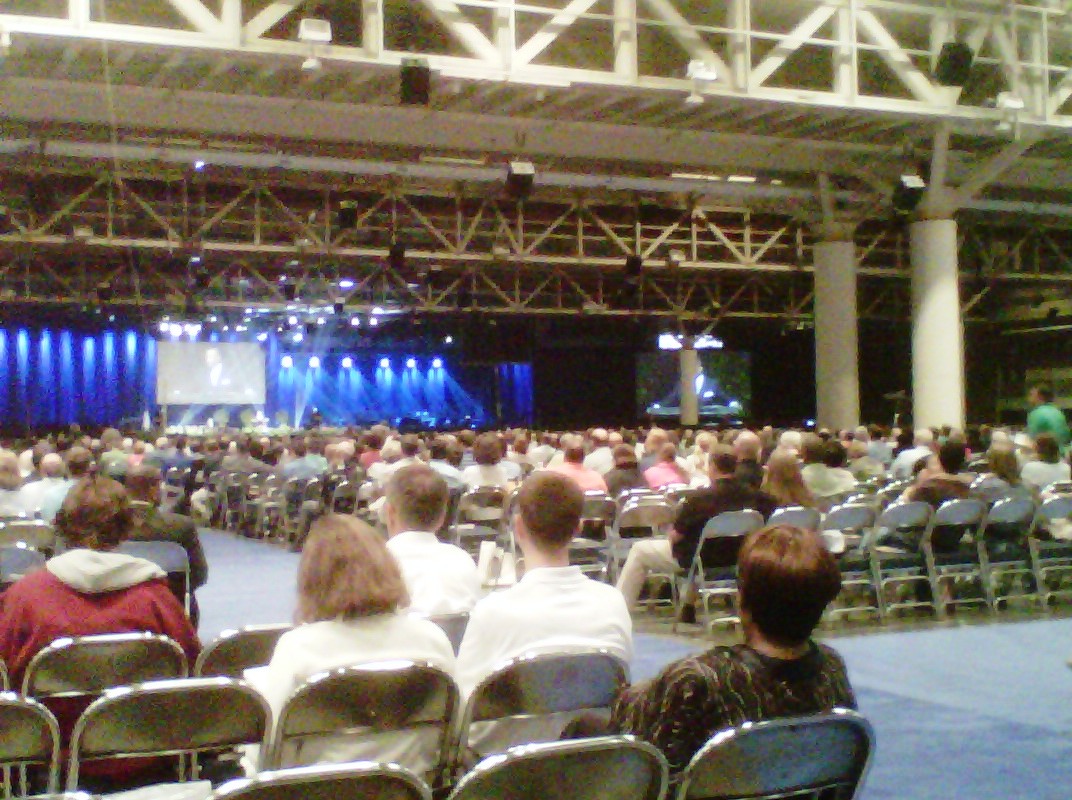 I recently attended the Southern Baptist Convention in New Orleans, where we elected our first African-American SBC president: Dr. Fred Luter, pastor of Franklin Ave. Baptist Church in New Orleans. Dr. Luter is an outstanding pastor, preacher and Southern Baptist leader. He took a congregation of 65 people and built it to thousands of members, only to see the membership decimated by Hurricane Katrina. He returned to rebuild the membership to over 4,500 in weekly attendance today. His church is a leading supporter of Southern Baptist missions. I am very excited that we have elected Dr. Luter, and I hope you will join me in praying for God to bless his leadership of our convention.
The convention also voted on changing the name of our denomination. By a 54-46% vote, messengers approved the proposal to keep the legal name Southern Baptist Convention, while at the same time encouraging anybody who wants to use a different name to call themselves “Great Commission Baptists.” I voted against this. The name “Southern Baptist” has come to stand for who we are. Changing actions is more important than changing our name. I felt that it was an unnecessary proposal, since churches do not have to use the name “Southern Baptist” in their local church name anyway to be affiliated with us, and even though the other name is just an alternative option, I feel that it will be confusing for us to be using two different names to refer to our denomination.
The convention passed nine resolutions and declined to bring forward some proposed resolutions. Resolution #3 was a hotly debated resolution affirming the use of a “sinner’s prayer” to express repentance and faith. Some people, such as David Platt, have criticized the use of a “sinner’s prayer” to give people a false hope that they are saved simply by saying a prayer, even when they have not repented of sin. The resolution affirmed that the Bible often speaks of crying out to God in faith, and that there is nothing wrong with asking people to repeat a “sinner’s prayer” of faith, as long as it is not used as manipulation or an incantation that does not include a full explanation of the gospel and expression of repentance. Makes sense, right? However, two amendments were proposed to this resolution, both of which failed. One amendment tried to completely delete the term “a sinner’s prayer.” This amendment was defeated. The other amendment tried to add specific language saying that salvation is available to all who hear and all may respond. This amendment was also defeated, since the resolution already said the gospel is offered to anyone who repents and trusts in Christ. Then the overall resolution was adopted. Apparently, the two amendments that were offered came from opposite camps in the debate over Calvinism. Some Calvinists have criticized the use of a “sinner’s prayer,” since they feel it is manipulative, and cannot bring salvation to a person unless that person is first chosen and called to faith by God. The other amendment, which stressed the availability of the gospel to all to hear and respond, seemed to be a direct attack on the Calvinist doctrine of limited atonement (the belief that Christ only died for the elect), since it was stressing a general appeal to all to believe. It is very interesting that both amendments were defeated; despite the controversy, the convention and most convention speakers seemed to desire to steer a middle course that is inclusive to both Calvinists and non-Calvinists.
Resolution #5 spoke out against the Obama administration’s violations and potential violations of religious liberty on several issues, such as the health care mandate for that violates the consciences of the Catholic church and other religious groups that do not wish to pay for contraceptives and abortion-causing drugs, and the threat to the ministry of military chaplains who do not believe in homosexuality, now that homosexuality is being approved by the military.
One resolution was of particular interest because it was not brought up for a vote. Dwight McKissic, an African-American pastor in Texas, had proposed a resolution against the racist statements in Mormon source documents. He was concerned that Mormons have been evangelizing people of color, without those people knowing that passages in the Book of Mormon such as 2 Nephi 5:21, Alma 3:6, 14 say that people with dark skin are cursed by God. An African-American member of the Resolutions Committee (I failed to get his name), said that the SBC has not been in the habit of speaking against specific religions, and implied that we didn’t want to set that precedent. He also said that since the Mormon church now allows people of color to be elders, we want to make sure we get our facts right before speaking on this issue. McKissic insisted that he still wanted the resolution to be brought up for a vote, because he said the Mormon church has never repented of these passages in their books, and the racist implications remain in Mormon “scripture.” However, the convention defeated Rev. McKissic’s motion to bring up his resolution.
Overall, it was a lively convention, attended by a little less than 8,000 registered messengers, full of inspirational reports from our International Mission Board and North American Misssion Board, great preaching and music. And of course, since it was a Baptist business meeting, there were as many different opinions as there were people in the room.
How to Pray Great Prayers
 Copyright 2012 by Bob Rogers
“Call to Me and I will answer you and tell you great and incomprehensible things you do not know.” — Jeremiah 33:3, HCSB
Some say God’s “phone number” is JER 33.3, referring to this great promise of Jeremiah 33:3 that God will give great answers to our prayers. The context of this promise is the great prayer of Jeremiah in 32:16-25. In that passage, we notice three characteristics of great prayer:
1) Pray to a great God.
Jeremiah speaks of God’s great character in verse 17: “Oh, Lord God! You Yourself made the heavens and earth by Your great power and with Your outstretched arm. Nothing is too difficult for you!” He speaks of God’s great covenant in verse 18: “You show faithful love to thousands…” He speaks of God’s great counsel in verse 19: “the One great in counsel and mighty in deed…”
2) Pray believing God still acts today.
Notice that in verse 20, Jeremiah not only remembers God’s signs and wonders in Egypt, but goes on to say that God continues to “do so to this very day.”
3) Pray believing God keeps His promises.
Jeremiah prayed in verse 24, pointing out that God was allowing the city of Jerusalem to be conquered just as He had promised would happen. God warned them that they would be punished, and they were, as Babylon laid siege to the walls of Jerusalem (see Jeremiah 32:2). But God also promised that after 70 years, He would punish Babylon and bring them home, so they had a future and a hope (Jeremiah 29:10-14). Jeremiah reasoned that if God kept His promise of punishment, He would also keep His promise of grace. Thus, believing they would come back one day, Jeremiah told the Lord in verse 25 that since God told him to buy property for the future in the land of Judah, he would buy it, even as they were about to be taken to Babylon in exile.
Can you pray believing God when all hope seems lost? If you can, you can pray a great prayer!
Notice what “great and incomprehensible things” God showed him in chapter 33. In Jeremiah 33:7 God promised a return from captivity, and in 33:15 God promised a Messiah: “In those days and at that time I will cause a Righteous Branch to sprout up for David…” God always does more than we can imagine.
So let us pray great prayers to our great God!
Guest blog: Vietnam vet reflects on Memorial Day
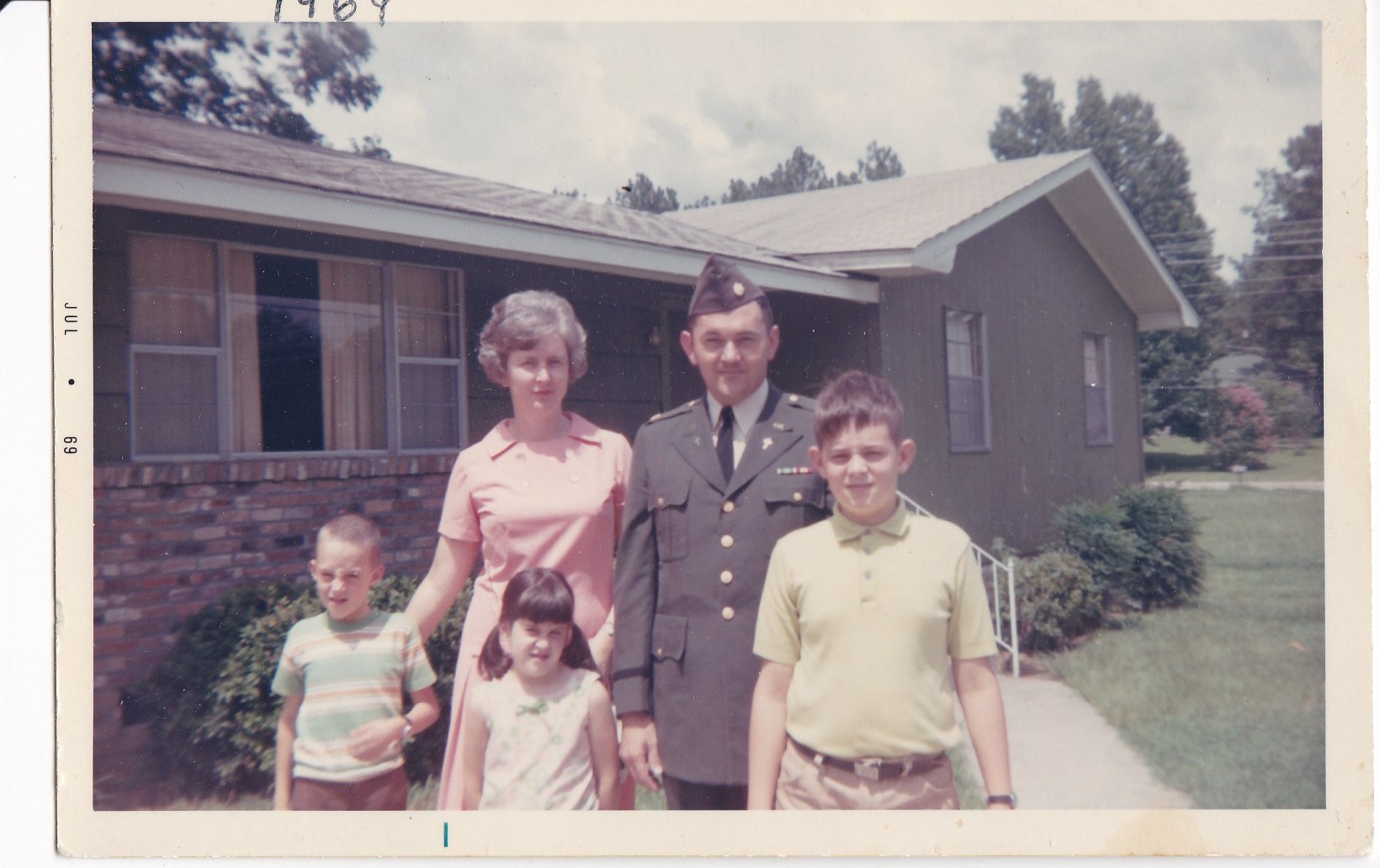
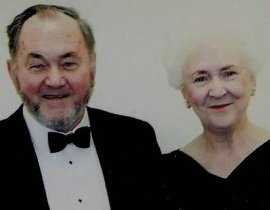 (This guest blog is by my father, retired Chaplain (Lt. Col.) Robert H. Rogers, pictured here in 1969 with our family before he left for Vietnam, and as he looks today, with my mother. Here my Dad reflects upon Memorial Day through the harsh experiences of his first days as a chaplain in the Vietnam War. I appreciate my father’s service to our country. It was a great sacrifice for him and our family, as we spent a year apart from him while he was at war, and my mom had to take care of me, in the sixth grade, and my younger brother, Todd, and sister, Nancy. It was 1969-1970.)

What does Memorial Day mean to me? It is a time to remember those who have served, but especially those who have given their lives in defense of our country.
I have many memories. Just a few days after I had arrived in Vietnam as a relatively young Army Chaplain, I was introduced to the reality of war. I flew out to a forward base in a helicopter and was dropped off with the expectation that I would come back to our base on the resupply helicopter later that day. But that helicopter never came because of a fire fight the company got into with a contingent of the North Vietnamese army. It was away from the compound where I and a few of the company waited. During this fight, the company commander and several others were killed. So after spending the night there I was asked to have a memorial service for those who had lost their lives. I did so even though I was totally unprepared both mentally and emotionally. That was the first of many memorial services I conducted during my year in Vietnam. I remember these and those who have died in all of our wars.
I also remember the sacrifice of those who fought but survived. I have some church friends who are veterans of Word War II. One of them spent about 24 hours floating with his life jacket after the ship he was on was shot out from under him. I remember his service and many others like him. I am grateful to them and to God for the free country we live in.
Guest blog: Afghan vet tells what Memorial Days means
 (This is a guest blog from my cousin, Brad Alford, shown here with his fiance, Laura Tucker. Brad is a Lieutenant in the United States Army, and veteran of Afghanistan. A big thanks to Brad for taking time to write his thoughts, and most of all for his service to our country.)
Memorial Day is definitely a day to sit and enjoy time with family. This is my first Memorial Day since my tour to Afghanistan. I can tell you that as a veteran now, holidays are much more special. Memorial Day is a day that is reserved for those who have fought but more importantly to me it is reserved for those who have died for our nation and its freedoms. I am currently out at a lake in Campbellsville, KY with my fiance and family. I couldn’t be happier than where I am at currently in my life. Holidays are important to enjoy with friends and family, but it is important to remember the reason for the holiday. Like Christmas, it is very much distorted sometimes into what is more convenient for everyone.
For me, Memorial Day is a day for me to spend time with family and friends, relax and take time away from the daily grind of work. Last year, I was in the middle of Kajran, Daykundi Province, Afghanistan. We were on a 2 day mission out to the district center to spread democracy and security for the locals. We would have weekly, sometimes bi weekly, shura’s about local security. No matter the pain of what I went through last year in Afghanistan, while a great sacrifice, pales in comparison to the ultimate sacrifice that those before me made and those after me will continue to make.
Is your worldview from Hollywood or the Bible?
Copyright by Bob Rogers.
Is your worldview more in line with Hollywood or the Bible?
Let’s take four popular Hollywood movies as an example. Titanic, The Avengers, The Hunger Games, Inception. Do you have any idea if these movies have a Christian worldview? If you live by the view of life in these movies, will you build on a rock or just blow in the wind?
So how can we avoid being blown by the wind of popular opinion? How can we build a solid foundation for our lives?
Jesus said to build on the rock in the Sermon on the Mount (Matthew 7:24-27). He was referring to Himself and His teachings. Notice how this can give you a solid foundation for life.
There are four main components to a coherent worldview: what you believe about God, mankind, ethics and reality.

1) God. In the movie The Avengers, Black Widow tells Captain America that Thor and Loki are “basically gods.” Even so, Cap adds something else. “There’s only one God,” he tells her, “and I’m pretty sure He doesn’t dress like that.”
The Bible teaches God is the Creator. Genesis 1:1 says that in the beginning, God created. It also teaches that there is one God, but He is revealed in three persons: Father, Son and Holy Spirit. So when characters on Star Wars say “may the force be with you,” Christians know the true “force” is God.
But there are many religions that believe in God. The Christian belief about God provides the answer for the other three major components of a coherent worldview, and they all fit together, like pieces of a puzzle.

2) Mankind. In the movie The Hunger Games, Katniss understands that life has great value, and she is willing to sacrifice her own life to save others. The Bible says something good and something bad and something that is potentially great about mankind. The good thing is that we are made in the image of God. The bad thing is that we are all sinners. The great thing is that through faith in Jesus Christ, we can be forgiven of sin, and have eternal life. Why? Because Jesus made the ultimate sacrifice for us by paying for our sin through His death on the cross.
3) Ethics. In the movie Titanic, Jack is having a sexual romp with Rose and says, “This is crazy; it doesn’t make any sense,” She responds, “I know, that’s why I trust it.” That kind of thinking will sink you about as fast as the iceberg. It’s sinking thinking! A coherent worldview needs to have a foundation for ethics. Philosophers like Plato and Aristotle said to do the right thing and do the reasonable thing, but how can we know what that is? That is  why we need a standard to live by, and because we believe in God, we have that standard. The Bible says gives us the Ten Commandments and many other moral teachings, but it also gives us the power to live a godly life. Somebody might say that other religions like Islam also believe in God and have a holy book with a standard of living. That is true. But other religions do not have the same motivation for ethics that Christianity has. Other religions seek to motivate good ethics by guilt, but Christianity motivates by grace. Titus 2:11-12 says, “For the grace of God that brings salvation has appeared to all men. It (grace) teaches us to say “No” to ungodliness and worldly passions…” We have the motivation of grace, and we also have the power of the Holy Spirit, as every believer is indwelled by the Spirit, so as we live by the Spirit, we are able to live ethical lives (Romans 8:4), producing the fruit of the Spirit (Galatians 5:22-23).
4) Reality. In the movie Inception, characters living in a dream within a dream within a dream. They are not even sure what reality is, whether this world is real, and whether this life is worth living. The Bible teaches that this life is very real, and that the ultimate reality is found in eternal life in heaven through faith in Jesus Christ. The purpose of life is to know Christ and share Him with oth ers, that we may please God and experience the reward of eternal life in heaven.
Do you see how all of this fits together? If we believe in the God of the Bible, then all of the pieces of the puzzle fit together. God is the source of all truth. All of this truth is found in the Bible. A Christian who does not know his or her Bible is like a cowboy with no bullets in his gun. He may look good, but in battle, he’s useless.
If an entertainer on Dancing with the Stars says that God is in her shoes, will you know your Bible well enough to know that God is separate from us and beyond us? If you go to see a movie like Clint Eastwood’s Million Dollar Baby and see the hero killing the heroine so that she won’t have to live the rest of her life as an invalid, will you know your Bible well enough to know that all life is sacred and valued by God, and that it is wrong for us to take a human life just because that life is sick or handicapped?
First Peter 3:15 (HCSB) says, “Always be ready to give a defense to anyone who asks you for the reason for the hope that is in you.” The word translated “defense” is the Greek word apologia, from which we get apologetics, defending the faith.
So know what you believe, and be ready to defend it. Don’t let Hollywood do your thinking for you.


 Bob Rogers