Category Archives: Biography
Best biographies I read in 2025
If you know me, you know that I nerd out on history. In 2025, I read a lot of biographies. These were particularly interesting to me:

*Confessions of St. Augustine. The spiritual and psychological autobiography of one of the greatest theologians in history. What more can I say? Read it!
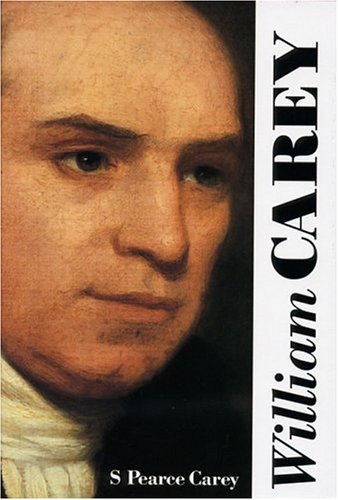
*William Carey, by S. Pearce Carey. A masterful story of the father of modern missions by his great-grandson. Inspiring beyond measure. Thanks to Dr. Bennie Crockett for recommending it.
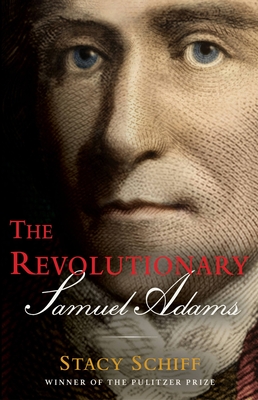
*The Revolutionary, Samuel Adams, by Stacy Schiff. With our nation’s 250th anniversary coming up, I wanted to read up on that era. Schiff shows how Samuel Adams was perhaps the greatest instigator behind the revolution. Fascinating.
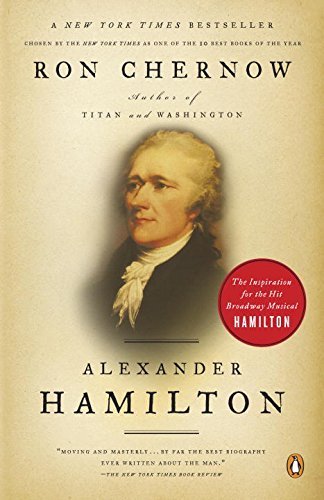
*Alexander Hamilton, by Ron Chernow. No wonder they made a Broadway play based on this book. The guy had more drama in his lifetime than some nations have in their entire history.

*The Pirates Lafitte, by William C. Davis. Entertaining and illuminating about the Gulf Coast culture and history in the early 1800s through the raucous lives of the pirates Jean and Pierre Lafitte. I really enjoyed this one.
The personal spat between Washington and Hamilton that reflects human nature
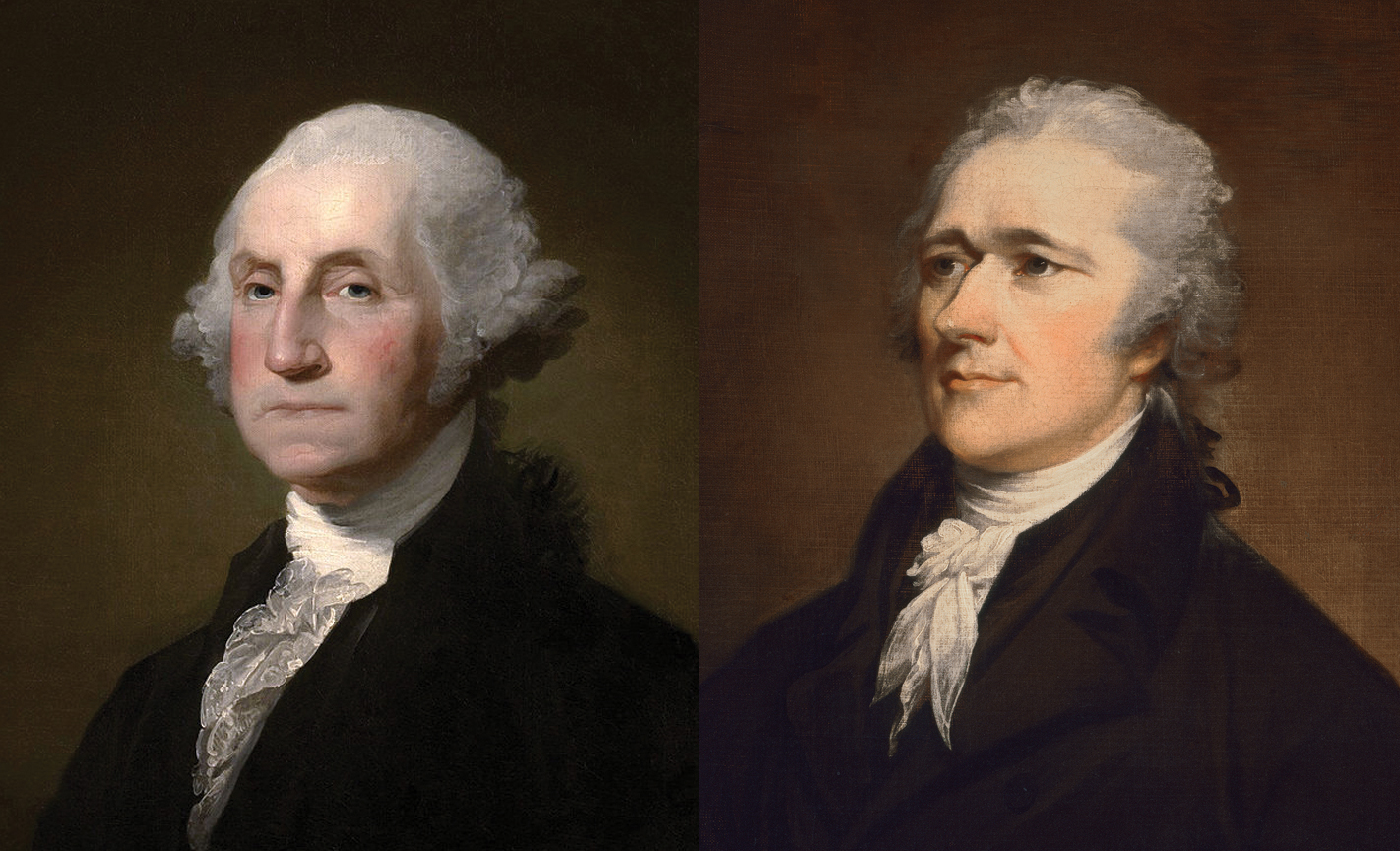
In Ron Chernow’s biography, Alexander Hamilton, he describes the personal disagreement between George Washington and Alexander Hamilton that mirrors the emotions and actions that employees and employers have to this day.
Early in the American Revolution, General Washington hired Hamilton as his aide-de-camp, recognizing Hamilton’s brilliant reasoning and writing skills. Hamilton was an enormous help, able to express Washington’s wishes in letters and other communications, including fluent messages in French. He even served as his emissary several times. However, Hamilton’s ability became a curse, because when opportunities came for Hamilton to be promoted to colonel or general and command a fighting unit, he was passed over because Washington desired to keep him by his side. It frustrated Hamilton to remain a lieutenant colonel.
One day, Washington requested to speak with Hamilton in his office, and Hamilton acknowledged the request but delayed for a few minutes to finish communicating messages to two other people in the building before turning up the stairs toward the general’s office. He was surprised to find Washington standing on the stairs, demanding to know why he had kept him waiting “these ten minutes.” Hamilton denied that he had been tardy and became so incensed that he resigned. Rather than talk him out of it, Washington accepted his resignation, losing his right-hand man, who returned to civilian life for a time.
This interesting encounter reflects human nature on several layers. Both men were proud. Hamilton was likely feeling unappreciated because he had been passed over for a promotion. Washington was offended that Hamilton did not immediately drop what he was doing to speak to him, since Washington was his commanding officer. What do you think they should have done differently? Was Washington wrong to scold Hamilton for the ten-minute delay? Should Hamilton have apologized and revealed his frustration over his lack of promotion? Should Washington have refused Hamilton’s resignation and spoken to him personally about it?
Later in the war, Hamilton was able to return to the war as an officer commanding a unit, and he led his men to capture a redoubt in the climactic battle of Yorktown. Washington recognized his talents and continued to be Hamilton’s patron. Both men continued to have great respect for each other and were big enough to forget the past. And later, when Hamilton was scandalized for committing adultery, Washington was able to forgive him, knowing how valuable he was to the country.
Beyond war, politics, and economics, history can also teach us lessons in personal relationships.
A challenge to Calvinism: M.T. Martin and the controversy that rocked Mississippi Baptists in the 1890s
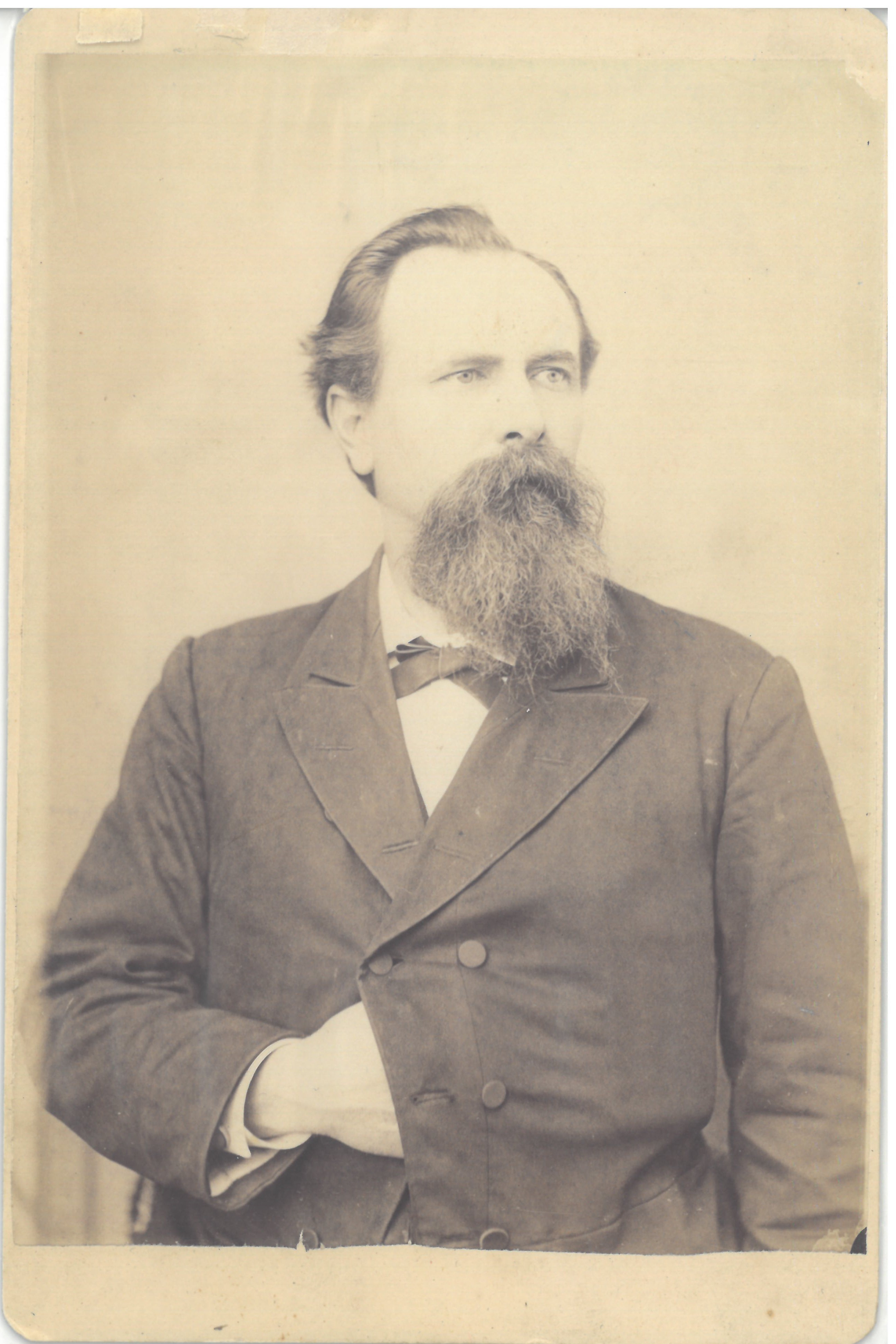
Copyright by Robert C. Rogers and the Mississippi Baptist Convention Board.
In 1893, a controversy began in the Mississippi Baptist Association and eventually spread across the state. Jesse Boyd wrote, “Its rise was gradual, its force cumulative, its aftermath bitter, and its resultant breach slow in healing.”1 While it may have been a quibble over words rather than a serious breach of Baptist doctrine, it illustrates how Mississippi Baptists clashed over Calvinist doctrine by the end of the 19th century.
M. Thomas Martin was professor of mathematics at Mississippi College from 1871-80, and he also served as the business manager of The Baptist Record from 1877-81. He moved to Texas in 1883, where he had great success as an evangelist for nearly a decade, reporting some 4,000 professions of faith. However, his methods of evangelism drew critics in Texas. According to J.H. Lane, while Martin was still in Texas, “the church in Waco, Texas, of which Dr. B. H. Carroll is pastor, tried Bro. Martin some years ago, and found him way out of line, for which he was deposed from the ministry.” In 1892 Martin returned to Mississippi and became pastor of Galilee Baptist Church, Gloster (Amite). Martin preached the annual sermon at the Mississippi association in 1893. His sermon had such an effect on those present, that the clerk entered in the minutes, “Immediately after the sermon, forty persons came forward and said that they had peace with God, and full assurance for the first time.” The following year, Mississippi association reported on Martin’s mission work in reviving four churches, during which he baptized 19 people, and another 60 in his own pastorate. Soon Mississippi Baptists echoed the Texas critics that he was “way out of line,” not because he baptized so many, but because so many were “rebaptisms.”2
The crux of the controversy was Martin’s emphasis on “full assurance,” which often led people who had previously professed faith and been baptized, to question their salvation and seek baptism again. In 1895, the Mississippi association called Martin’s teachings “heresy” and censured Martin and Galilee for practicing rebaptism “to an unlimited extent, unwarranted by Scriptures.” When the association met again in 1896, resolutions were presented against Galilee for not taking action against their pastor, but other representatives said they had no authority to meddle in matters of local church autonomy. As a compromise, the association passed a resolution requesting that The Baptist Record publish articles by Martin explaining his views, alongside articles by the association opposing those views, “that our denomination may be… enabled to judge whether his teachings be orthodox or not.” The editor of The Baptist Record honored the request, and Martin’s views appeared in the paper the following year. The association enlisted R.A. Venable to write against him, but Venable declined to do so. Martin also published a pamphlet entitled The Doctrinal Views of M.T. Martin. When these two publications appeared, what had been little more than a dust devil of controversy in one association, developed into a hurricane encompassing the entire state.3
Most of Martin’s teachings on salvation were common among Baptists. Even his opponent, J.H. Lane, admitted, “Some of Bro. Martin’s doctrine is sound.” Martin taught that the Holy Spirit causes people to be aware that they are lost, and the Spirit enables people to repent and believe in Christ. He taught that people are saved by grace alone, through faith, rather than works, and when people are saved, they should be baptized as an act of Christian obedience. Martin said that salvation does not depend on one’s feelings, and that children of God have no reason to question their assurance of salvation.
These teachings were not controversial. What was controversial, however, was what Lane called “doctrine that is not Baptist,” and what T.C. Schilling said “is not in accord with Baptists.” Martin said if a man doubted his Christian experience, then he was never true a believer.
He considered such doubt to be evidence that one’s spiritual experience was not genuine, and the person needed to be baptized again. “If you have trusted the Lord Jesus Christ,” Martin would say, “you will be the first one to know it, and the last one to give it up.” He frequently said, “We do wrong to comfort those who doubt their salvation, because we seek to comfort those whom the Lord has not comforted.” Therefore, Martin called for people who questioned their salvation to receive baptism regardless of whether they had been baptized before. “I believe in real believer’s baptism, and I do not believe that one is a believer until he has discarded all self-righteousness, and has looked to Christ as his only hope forever… I believe that every case of re-baptism should stand on its own merits, and be left with the pastor and the church.”4
The 1897 session of the Mississippi association took further action against Martinism. They withdrew fellowship from Zion Hill Baptist Church (Amite) for endorsing Martin and urged Baptists not “to recognize him as a Baptist minister.” The association urged churches under the influence of Martinism to return to the “old faith of Baptists,” and if not, they would forfeit membership. When the state convention met in 1897, some wanted to leave the issue alone, but others forced it. The convention voted to appoint a committee to report “upon the subject of ‘Martinism.’” Following their report, the convention adopted a resolution of censure by a vote of 101-16, saying, “Resolved, That this Convention does not endorse, but condemns, the doctrinal views of Prof. M. T. Martin.” While a strong majority condemned Martinism, a significant minority of Baptists in the state disagreed. From 1895 to 1900, the Mississippi association declined from 31 to 22 churches, and from 3,042 to 2,208 members. In 1905, the state convention adopted a resolution expressing regret for the censure of Martin in 1897.5
Earl Kelly observed two interesting doctrinal facts that the controversy over Martinism revealed about Mississippi Baptists during this period: “First, the Augustinian conception of grace was held by the majority of Mississippi Baptists; and second, Arminianism was beginning to make serious inroads into the previously Calvinistic theology of these Baptists.” It is significant that Mississippi association referred to Martinism as a rejection of “the old faith of Baptists,” and that when J.R. Sample defended Martin, Lane pointed out that Sample was formerly a Methodist.6
(Dr. Rogers is the author of Mississippi Baptists: A History of Southern Baptists in the Magnolia State, to be published in 2025.)
SOURCES:
1 Jesse L. Boyd, A Popular History of the Baptists of Mississippi (Jackson: The Baptist Press, 1930), 178-179.
2 Boyd, 196-197; Minutes, Mississippi Baptist Association, 1893; 7; Z. T Leavell and T. J. Bailey, A Complete History of Mississippi Baptists from the Earliest Times, vol. 1 (Jackson: Mississippi Baptist Publishing Company, 1904), 68-69; The Baptist Record, May 6, 1897.
3 Minutes, Mississippi Baptist Association, 1895; 1896, 9.
4 Boyd, 179-180; The Baptist Record, March 18, 1897, May 6, 1897, June 24, 1897, 2.
5 Minutes, Mississippi Baptist Association, 1897, 6, 14; Minutes, Mississippi Baptist Convention, 1897, 13, 17, 18, 22, 31; 1905, 47-48; Leavell and Bailey, vol. 1, 70; Boyd, 198. Martin died of a heart attack while riding a train in Louisiana in 1898, and he was buried in Gloster.
6 Earnest Earl Kelly, “A History of the Mississippi Baptist Convention from Its Conception to 1900.” (Unpublished Doctoral Thesis, Southern Baptist Theological Seminary, Lousville, Kentucky, 1953), 114; The Baptist Record, May 6, 1897.
OTD in 1973: Earl Kelly leads Mississippi Baptists

On this day, November 14, 1973, Ernest Earl Kelly became executive director-treasurer of the Mississippi Baptist Convention Board. Kelly was baptized and ordained by the Cherry Creek Baptist Church in Pontotoc County, which was also the home church of J.B. Gambrell, the first executive of the MBCB in 1885. Kelly met his wife, Amanda Harding, when he was associate pastor of Calvary Baptist Church, Tupelo. Active in state convention affairs, Kelly had been pastor of First Baptist Church, Holly Springs for 14 years, and Ridgecrest Baptist Church, Jackson for six years before his election as the executive of the MBCB.
Dr. Rogers is the author of Mississippi Baptists: A History of Southern Baptists in the Magnolia State, expected publication date in 2025.
M.P. Lowrey, Mississippi’s “fighting preacher” in the Civil War
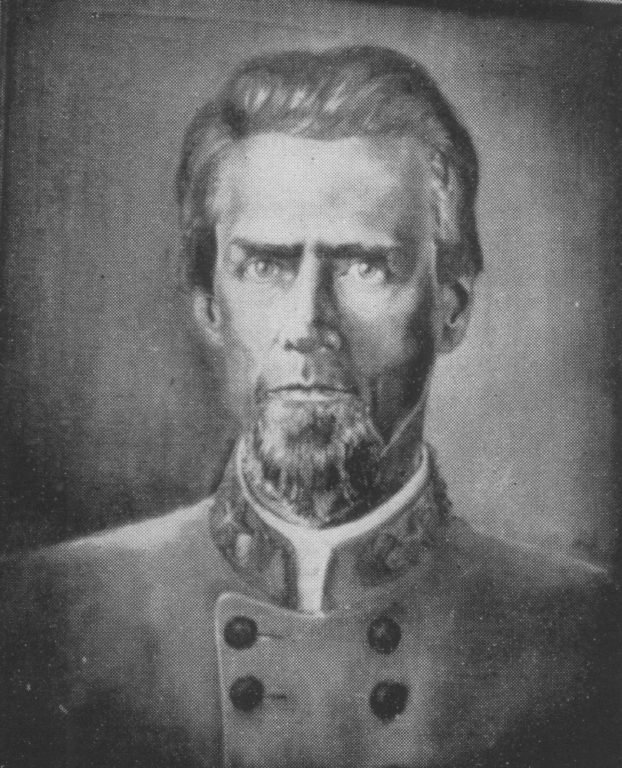
Copyright by Robert C. Rogers and the Mississippi Baptist Convention Board.
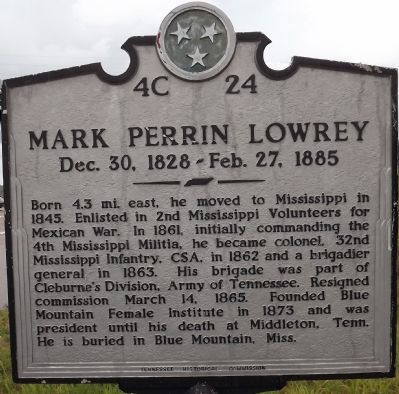
One of the most interesting Mississippi veterans of the Civil War was M. P. (Mark Perrin) Lowrey. Lowrey was a veteran of the Mexican War, then a brick mason who became a Baptist preacher in 1852. When the Civil War began, he was pastor of the Baptist churches at Ripley in Tippah County and Kossuth in Alcorn County. Like many of his neighbors in northeast Mississippi, he did not believe in slavery, yet he went to Corinth and enlisted in the Confederate Army. He was elected colonel and commanded the 32nd Mississippi Regiment. Lowrey commanded a brigade at the Battle of Perryville, where he was wounded. Most of his military career was in Hood’s campaign in Tennessee and fighting against Sherman in Georgia. He was promoted to brigadier-general after his bravery at Chickamauga, and played a key role in the Confederate victory at Missionary Ridge. In addition to fighting, he preached to his troops. One of his soldiers said he would “pray with them in his tent, preach to them in the camp and lead them in the thickest of the fight in the battle.” Another soldier said Lowrey “would preach like hell on Sunday and fight like the devil all week!” He was frequently referred to as the “fighting preacher of the Army of Tennessee.” He led in a revival among soldiers in Dalton, Georgia, and afterwards baptized 50 of his soldiers in a creek near the camp. After the war, Lowrey founded Blue Mountain College in Tippah County, and the Mississippi Baptist Convention elected Lowrey president for ten years in a row, 1868-1877.
SOURCES:
John T. Christian, “A History of the Baptists of Mississippi,” Unpublished manuscript, Mississippi Baptist Historical Commission Archives, Clinton, Mississippi, 1924, 135, 197; Robbie Neal Sumrall, A Light on a Hill: A History of Blue Mountain College (Nashville: Benson Publishing Company, 1947), 6-12.
Dr. Rogers is currently revising and updating A History of Mississippi Baptists.
Favorite Billy Graham quotes

Here are a few of my favorite quotations from the great evangelist Billy Graham, who died on February 21, 2018, at age 99:
“Without the resurrection, the cross is meaningless.”
“The Bible teaches that we are to be patient in suffering. Tears become telescopes to heaven, bringing eternity a little closer.”
“The devil doesn’t need to invent any new temptations; the old ones work as well as they ever have.”
“In some churches today and on some religious television programs, we see the attempt to make Christianity popular and pleasant. We have taken the cross away and substituted cushions.”
“Thousands of pastors, Sunday school teachers, and Christian workers are powerless because they do not make the Word the source of their preaching and teaching.”
“The Bible is the one book which reveals the Creator to the creature He created! No other book that man has conceived can make that statement and support it with fact.”
“Evangelism is not a calling reserved exclusively for the clergy. I believe one of the greatest priorities of the church today is to mobilize the laity to do the work of evangelism.”
“Philip is the only person in the Bible who was called an evangelist, and he was a deacon!”
“If God were to eradicate all evil from this planet, He would have to eradicate all evil men. Who would be exempt? God would rather transform the evil man than eradicate him.”
“I have never been to the North Pole, and yet I believe there is a North Pole. How do I know? I know because somebody told me. I read about it in a history book, I saw a map in a geography book, and I believe the men who wrote those books. I accept it by faith. The Bible says, ‘Faith cometh by hearing and hearing by the word of God’ (Romans 10:17, KJV).”
“People do not come to hear what I have to say– they want to know what God has to say.”
“When we come to the end of ourselves, we come to the beginning of God.”
“We have changed our moral code to fit our behavior instead of changing our behavior to harmonize with God’s moral code.”
“If you are ignorant of God’s Word, you will always be ignorant of God’s will.”
“Go is the first part of the word Gospel. It should be the watchword of every true follower of Christ. It should be emblazoned on the banners of the church.”
“The Gospel shows people their wounds and bestows on them love. It shows them their bondage and supplies the hammer to knock away their chains. It shows them their nakedness and provides them the garments of purity. It shows them their poverty and pours into their lives the wealth of heaven. It shows them their sins and points them to the Savior.”
“Some day you will read or hear that Billy Graham is dead. Don’t you believe a word of it. I shall be more alive than I am now. I will just have changed my address. I will have gone into the presence of God.”
Book review: “Mark Twain: A Life” by Ron Powers
 I just finished reading Mark Twain: A Life, by Pulitzer-prize winning biographer, Ron Powers (Free Press, 2006). This is an in-depth biography of the famous writer and humorist Samuel Clemens, better known by his pen name, Mark Twain. At times, it seems too detailed, as it covers more than I wanted to know. Nevertheless, Powers does an excellent job of helping the reader understand the complexities of the man, and he also helps the reader understand American culture during the 19th century, as the two are so closely intertwined. This is a biography, not a literary critique, so Powers does not put heavy emphasis on analyzing Twain’s writing, although he does give a balanced discussion of how literary critics have judged his works, with special attention to his greatest work, Huckleberry Finn.
Some new things that I learned about Twain:
*he traveled extensively as a young adult and for the rest of his life
*he had a lost love that he never forgot
*he had a fierce temper
*he believed in God, but was turned off by the hypocrisy he saw in church, causing him to struggle in his faith
*he was a sucker for bad investments, but famously paid off his debts
*he had friendships with famous Americans, such as Henry Ward Beecher, William Dean Howells, Helen Keller, Ralph Waldo Emerson, and Ulysses S. Grant
*he almost fought a battle against Ulysses S. Grant, but later became a close friend of Grant, and published Grant’s autobiography
*during his latter years, he turned to political satire
*the context of some of his famous one-liners
Speaking of one-liners, I must mention a few of my favorites from the book:
“Preachers are always pleasant company when they are off duty.”
“I worked in a bookstore, but didn’t like it because the customers bothered me so much I could not read with any comfort.”
“He would rather decline two drinks than one German verb.”
“The new hobbies in the election year 1876 are politics and pornography. But I repeat myself.”
“Do you know why Balaam’s ass spoke Hebrew? Because he was a he-brayist.”
“When I was a boy everybody was poor but didn’t know it; and everybody was comfortable and did know it.”
“You can’t pray a lie– I found that out.” (quote of Huckleberry Finn)
“The report of my death was an exaggeration.”
If you love Mark Twain and American history, and you don’t mind reading a long book, you will enjoy this biography. If you don’t want to wade through 736 pages to learn about Twain’s life, or if you are more interested in a literary analysis of his writings than the story of his life, you may want to read a different biography.


 Bob Rogers