Author Archives: Bob Rogers
Prayer against evil

Copyright by Bob Rogers.
Lord, my heart breaks when I see the suffering of the innocent. Wicked men break their promises and take what does not belong to them. They hide their faces at night and destroy in the darkness, thinking nobody can see their evil.
Shine Your light on their lies, so that people will know the truth.
Lord, confuse their minds and confound their speech, so that their evil schemes fail.
Arise, Lord! Vindicate the oppressed with Your righteous right hand.
Lord, we cast our burden on You. Give us courage to stand for what is right.
God, humble the proud, and lift up those who fear You. In the Name of Jesus, Amen.
The first African-American Baptists in Mississippi
Copyright by Robert C. Rogers and the Mississippi Baptist Convention Board.
From the start, many of the Baptists of Mississippi were African-American. Only a few of the white Baptists owned slaves, but slaves who belonged to non-Baptist slaveowners were welcomed to worship as fellow members alongside whites in Baptist churches. From 1806 to 1813, Ebenezer Baptist in Amite County listed four “Africans” who joined, out of about 50 members. For instance, on December 8, 1815, the minutes of Ebenezer read, “Received by experience an African Ben belonging to Samuel Harrell.” (Samuel Harrell does not appear in the list of church members.) In 1821, Salem Baptist on Cole’s Creek had 28 white members, listed by full name, and 32 “black” members, listed by first name only, under the names of their owners. None of the slaveowners were members of the Salem church. The common practice was for slaveowners to give a written pass for slaves to attend worship. For example, the minutes at Salem on May 3, 1816 read, “Captain Doherty’s Phil came forward with his master’s written permission to join the church by experience.” (Doherty was not a member of the church.) Although slaves were bought and sold and transported from state to state, Baptist churches still received them by letter from their former churches. In November 1816, the minutes of Sarepta Church in Franklin County read, “Bob & Ferrby servants of Walter Sellers presented letters from Cape Fear Church in N. Carolina & was received.” Slave members were disciplined, as well, as Sarepta minutes of December 1822 read, “Bro. Prather’s Rose (a servant) excluded by taking that which was not her own.” From this wording, it is likely that Walter Sellers was a slaveowner but not a Baptist, whereas “Bro. Prather” likely was a member of the Sarepta church, who had a slave named Rose.
During the antebellum era until the end of slavery, most African-Americans worshiped with whites. However, there were a few Baptist churches that were exclusively for blacks. One such church was in the Mississippi Association. Called the “African Church,” it first appeared in the minutes of the association as a member church in 1813. It met at a sawmill belonging to Josiah Flowers, pastor of Bayou Pierre Church. In 1814, the African Church sent a letter to the association, and in 1815 the association called on the various white pastors to take turns preaching to the African Church, which was then using the meeting house of Bayou Pierre church. Every year from 1816-1819, the African Church sent two messengers to the associational meeting, by the names of Levi Thompson, Hezekiah Harmon (messenger twice), E. Flower (messenger three times), William Cox, S. Goodwin, J. Flower and W. Breazeale. They never appeared in the associational minutes in any leadership position, but they did attend as duly registered representatives of the African Church, and they were given a seat alongside their white brothers in Christ. There were other African churches, as well. In 1818, members of Bogue Chitto Church granted “the Request of the Black Brethren to be constituted into a church.” In 1822, members of Zion Hill Church in Mississippi Association considered licensing Smart, a slave, to “exercise his gift” to preach, but delayed their decision “in consequences of an Act passed in the legislature.”
The situation had suddenly changed. Fearing a slave insurrection, the new state of Mississippi’s legislature enacted a law prohibiting slaves or even free people of color from assembling except under certain restricted conditions. This brought the Mississippi Baptist Association into conflict with the state legislature. When the law was applied to the African church, it forced them to discontinue meeting for a time. The association took up the cause of the African church and appointed a committee to prepare a memorial to be “laid before the next legislature of this State, praying the repeal of such parts of a state law thereof, as deprives the African churches, under the patronage of this association, of their religious privileges and that Elder S. Marsh wait on the legislature with said memorial.” The legislature did not agree with the association, and the African stopped meeting for a time, although the members were still welcome in the other churches led by whites.
In 1824, the state legislature heeded the complaints of the churches, and revised the code to permit slaves to preach to other slaves, as long as the service was overseen by a white minister or attended by at least two white people appointed by the white church. Thanks to this revision in the law, African churches could meet again, and in 1826, Zion Hill Church allowed Smart to preach. The African Church at Bayou Pierre joined the new Union Association after 1820, meeting as a separate congregation from Bayou Pierre church. In 1828, the African Church reported 75 members (its sponsor church at Bayou Pierre had 48 members). The African Church was tied with Clear Creek Church in Adams County for the largest church in the association.
Ukrainian Baptist leader speech to his churches

Speech by Valery Antonyuk (President of the Evangelical Baptist Union of Ukraine)
to ministers and churches on the occasion of war. (Translated into English.)
You can view his speech in Ukrainian on YouTube here: https://www.youtube.com/watch?v=dCKqC8NNpPQ
Dear brothers and sisters, Church Ministers!
This morning, February 24, the war in Ukraine began. What we prayed would not happen happened today. And we, as believers, accept that we will have to go through the time of this trial.
The Bible says: “The Lord is my shepherd I shall not want. Even though I walk through the valley of the shadow of death, I will fear no evil,for you are with me,your rod and your staff will comfort me”
That is why we urge everyone to continue and intensify our prayers.
This is our weapon in time of war, our way of fighting. This is the first thing believers do. And we invite everyone, wherever you are, to seek the opportunity to do this in person, in your families, in your churches, on ZOOM, wherever possible, gather together and praise the Lord.
Secondly, it’s important that the Lord gives us His peace right now and that we don’t panic, fear, reckless actions, sudden decisions that can harm us personally and our min hysteria in the ukraine.
We invite all Church ministers in these first days to give a message of hope through God’s Word to all the faithful who have to stand in this gap today and pray for our country. We need to strengthen this time with fasting and prayer because this is the time the Church continues to minister.
We say to all Church ministers, elders, deacons: think about how to maintain hospitality in your church premises, in your headquarters, where you have the opportunity to receive people in need. People moving around Ukraine today and will be targeted, especially along the border areas. Please, it is important for us to organize ourselves so that we can accommodate people in need.
We have many unanswered questions and only by moving step by step can we figure out where we can take the next step. Therefore, we ask that we can organize this at the church level. Our communities must become centers of service, shelters, for our people in times of adversity.
We ask all Christians not to spread unverified information, but to share the information that you witness and know exactly the authenticity, to turn it into an occasion of information, testimony and prayer.
We also pray for the organization of our coordination center, because in the office here near Kiev, we continue to serve and organize all the work even now. We will get in touch with all associations and coordinate in time all those processes that will prove to be important for all the Ukrainian people.
We’ll keep you updated on the situation. From time to time, we will make such calls, report on the current situation, and pray that we will all be together, united in what the Lord is doing.
We believe that God, even through us, wants His Kingdom of peace to spread today, even in times of war. We pray for the protection of our country and firmly believe that God will bless Ukraine!
Therefore, let’s unite together, we serve even in these conditions. We begin a new phase, a new page of ministry that has never been written before. God who has blessed us by making us live peacefully and serenely for decades, but in this time our whole country needs a church that is the light and salt. The Lord is our shepherd, we shall not want and he will guide us even in these moments.
God bless us as we pray for you as we serve the Lord together.
Prayer for God’s presence

Copyright by Bob Rogers.
Heavenly Father, I come before You in silence, my hands turned upward to You, my heart listening for Your voice. I take a deep breath; slowly I let it out. I want to inhale Your presence; I want to exhale distractions. I breathe in Your mercy and peace. I breathe out sin and shame. Jesus, I embrace Your grace. Drench me from head to toe with Your Spirit. As I go through this day, make me continually mindful of Your continual presence, and may I be a different man because the God-man dwells within.
The Mississippi Baptist revival during the War of 1812

Copyright by Robert C. Rogers and the Mississippi Baptist Convention Board.
On December 16, 1811, the New Madrid earthquake, with its epicenter in New Madrid in southeast Missouri Territory, was felt over a million square miles, including Natchez, where clocks stopped, houses were damaged, and the river rose and fell rapidly. A New Orleans writer said, “the shake which the Natchezians have felt may be a mysterious visitation from the Author of all nature, on them for their sins.” It would seem that many people were truly shaken to their core, not only by the earthquake, but also the War of 1812. The United States declared war on Great Britain in June 1812. In Mississippi the focus of the conflict was on the Indian tribes, especially the Creeks, who were supported by the British. In 1813, the Creeks attacked Fort Mims, north of Mobile, and massacred at least 250 people. The Creeks were eventually crushed by an army under General Andrew Jackson, but these dramatic events shook the souls of Mississippians. The annual Circular Letter of the Mississippi Baptist Association of October 1813, was on the subject of “The War.” It was a circular letter received from Ocmulgee Association in Georgia, republished with edits made by Mississippi pastors Ezra Courtney and Moses Hadley, because of “the distressed situation of our territory, and the nation in general.” It warned readers that perhaps “Divine Providence” had allowed Europe to “invade our rights” because of “our ingratitude, our avarice, and abuse of the rich blessings we have enjoyed.” It declared the war to be “a war of just and necessary defence [sic]; justifiable on every sound political and moral principle.” It called for unity to defend “the rich inheritance of freedom we possess,” and stressed how American liberty was unlike that of France, which had fallen into ungodly apostasy and lost its freedoms. “If history ever proved any one truth clearly, it is this: that no nation, without public and private virtue, ever retained its freedom long.” The message was clear: their freedoms were in danger, and if they wanted to keep their freedoms, Mississippians needed a fervent devotion to both God and country. It is not known how many people in the town of Natchez were shaken from their sins, but we do know that the territory experienced a religious revival. In 1813, 246 people were baptized into membership in the churches of the Mississippi Baptist Association, far more than any year in the decade before or after, and the total membership nearly doubled that year, from 494 to 914!
The hardest prayer to pray

(Few of us want to pray a prayer of confession. And when we do confess, we may say, “Lord, if I have sinned” (God knows we have!) or we soft-sell it with some safe sin, like, “Lord, I know I ran a red light” (He knows a lot worse things than that!) Our confession is rarely raw, vulnerable or gut-wrenching. But Biblical confesssion is brutally honest. So is this prayer, based on Psalm 38. Confession is the hardest prayer to pray, but in the end, it is the most rewarding. Copyright by Bob Rogers).
Lord, my sin is too much for me to bear! I feel the weight of my sin all the more as Your punishment presses down on me. My sin stinks like a festering wound, and my stomach turns at the smell of my foolishness. It hurts that my wrongdoing caused my loved ones and friends to stand back from me, and my enemies have used it to attack me, but it hurts even more, that I feel the pain of separation from You. I know that nothing is hidden from You. Knowing that You see my wicked heart and deceitful mind causes my skin to crawl and my heart to ache. So I confess my sin; I make no excuses; it troubles me; I am disgusted by what I have done. I trust in You, Lord, to forgive me and save me. Lord, do not leave me; hurry to help me, for You are my Savior and my only hope for forgiveness.
The first Baptist churches of Mississippi

Copyright by Robert C. Rogers and the Mississippi Baptist Convention Board.
During the two decades prior to the Second Great Awakening that began about 1800, there had only been one Baptist congregation in the Natchez District, Salem Baptist on Cole’s Creek in Jefferson County, which met informally in the 1780s, then organized in 1791 under the leadership of Richard Curtis, Jr. But the triple blessings of religious liberty, population growth and spiritual renewal certainly aided in the formation of five new churches from 1798 to 1806. The second Mississippi Baptist church was on Bayou Pierre, which was the river near the town of Port Gibson in Claiborne County. This location was the same river where Richard Curtis, Jr. and his friends had first hid from Spanish arrest in 1795. How appropriate that in the same year of his return, 1798, Curtis, along with William Thompson, John Stampley, Benjamin Curtis, Jacob Stampley, Joseph Perkins and William Thomas assisted in the constitution of the new church on Bayou Pierre. It is interesting to note that most of the members of this committee were among the arrivals in the 1780s. The Bayou Pierre church was organized in the home of Thomas Hubbards. It is unclear whether Richard Curtis left Salem to pastor Bayou Pierre, or whether he preached at both churches.
In 1800, two more churches were organized: the third Baptist church was New Hope on Second Creek in Adams County just south of Natchez, and the fourth was Bethel on Bayou Sara, four miles southwest of the town of Woodville in Wilkinson County. The fifth was New Providence in Amite County in 1805, and the sixth was Ebenezer in Amite County, near the Louisiana line, started by Richard Curtis in 1806. Curtis was likely involved in starting many, if not all of these new churches, for the records show that after Curtis started Ebenezer in May 1806, he then turned over the pastorate of Ebenezer to a South Carolina friend, Ezra Courtney, in November 1808, and Curtis became pastor of New Hope until the year of his death in 1811. Ebenezer Baptist in Amite County is the only one of these churches that continues to exist to this day, making it the oldest continually meeting Baptist church in Mississippi.
How a Baptist preacher helped America take Natchez from the Spanish
Copyright by Robert C. Rogers and the Mississippi Baptist Convention Board.
(In previous posts, I told the stories of how Baptists from South Carolina settled the Natchez District about the same time that the Spanish took control of the area from the British, and how the Baptists started Salem Baptist Church on Cole’s Creek, 20 miles north of Natchez.)
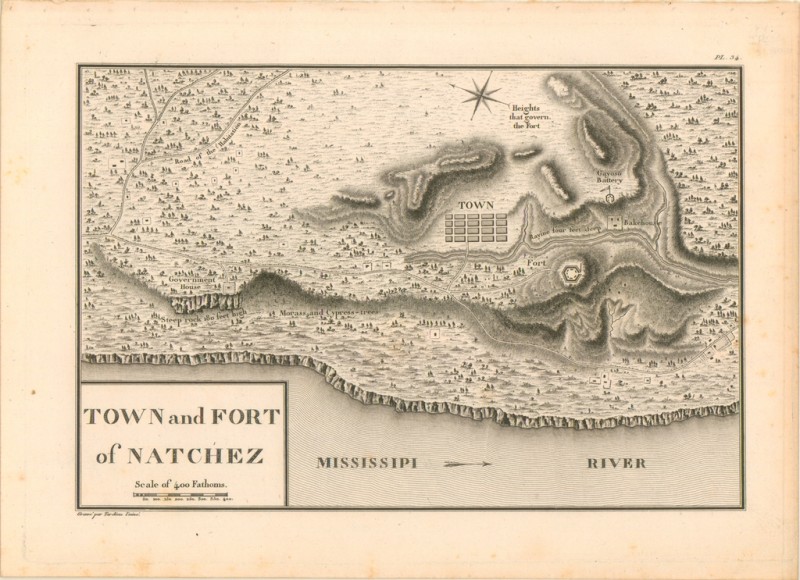
Concerned about so many English-speaking American emigrants to the Natchez District, who were not Catholic, the Spanish issued a religious edict in 1795. It declared “that if nine persons were found worshiping together, except according to the forms of the Catholic Church, they should suffer imprisonment.” They sent a man named Ebenezer Dayton to spy on the Baptists, pretending to be in sympathy with them as he was Presbyterian, and Dayton reported that their pastor, Richard Curtis, Jr. continued defend his right to preach the gospel and obey God rather than man. The Spanish Governor, Manuel Gayoso, arrested Curtis in April 1795, and forced him to sign a pledge not to preach. At the urging of his congregation, Curtis continued to preach, so Gayoso sent an armed posse to break up the house church in August 1795, but this time Curtis fled to South Carolina.
Meanwhile, the American government began the process of taking control of the Natchez District. The months between the signing of the Pinckney’s Treaty of San Lorenzo in October 1795, until the surrender of the area to the United States on March 30, 1798, were a period of turbulence and disorder in the Natchez region. The Spanish authorities controlled the government and exercised the legal authority that existed. The control of the Spanish was weakened by a large influx of American settlers and by the knowledge that the Spanish authority was of a temporary nature.
In February 1797, Louisiana’s governor sent orders to Gayoso to prepare dismantling the fort at Natchez in compliance with the treaty, but soon afterward, Gayoso received orders from Spain to postpone the departure, as Spain hoped to talk to the Americans about alterations to the treaty. The same month, Andrew Ellicott arrived with a commission from the American president to mark the southern boundary of the United States at the 31st parallel, which was about 30 miles south of Natchez, in accordance with the treaty to give to America all lands on the east side of the Mississippi River, north of the 31st parallel. He had a small army escort under Lieutenant Percy Smith Pope, and two dozen woodsmen from Fort Pitt. Ellicott, Pope and their party of Americans docked at Natchez on February 24, 1797. They camped on a knoll overlooking the town. At Patrick Connelly’s tavern atop the hill, the Americans boldly raised the United States flag, so that it could be seen by the Spanish in their fort. Gayoso and his garrison of 60 Spanish soldiers refused to leave. Ellicott and Gayoso wrote letters back and forth, neither party willing to give in, as the standoff continued for months. Lt. Pope preferred a direct attack, and even recruited 200 men from Cole’s Creek, which likely included some of the Baptists, to assault the Spanish fort, but Gayoso arrested the leaders and broke up the plot. Commissioner Ellicott, who was a Quaker, preferred negotiation and political maneuver to get the Spanish to leave. He counted on the loyalty of the majority of the American settlers, since it was only a few wealthy landowners who were solidly loyal to the Spanish. He got the leverage he needed from a Baptist preacher.
The Baptist preacher whom Ellicott needed was named Barton Hannan, who had previously been active at Salem Church on Cole’s Creek. Hannan arrived in Natchez preaching fiery words, damning the pope and recruiting volunteers for a revolt. Hannan got into a drunken brawl with some Irish Catholics on June 9, 1797, and the irate Irish Catholics mauled him. Governor Gayoso arrested Hannan for disturbing the peace, which only led to more disturbances. His wife marched to Natchez, baby in her arms, and demanded that Governor Gayoso release him. Gayoso tried to calm her by caressing the baby and giving her presents. “I don’t want your presents; I want my husband,” she said. He replied, “I cannot grant your request, madam.” She answered, “I will have him before tomorrow morning, or this place shall be deluged in blood; for there are men enough who have pledged themselves to release him before morning, or die in the attempt, to overcome any force you have here.” She was not making an idle threat, for on June 12, over 300 armed men assembled at William Belk’s tavern on the Natchez Trace to organize a rebellion. The governor released Hannan, and from that point forward, the Spanish lost real control of Natchez. In December 1797, Captain Isaac Guion arrived in Natchez with a large unit of American troops, and put greater pressure on Gayoso to leave. The Spanish finally departed on March 30, 1798.
Immediately after the Spanish had withdrawn, the American officials raised the “Stars and Stripes” over Natchez, and invited Bailey E. Chaney preach. He was the son of William Chaney, the deacon who, in Richard Curtis’s absence, was leading Salem Baptist on Cole’s Creek. Chaney preached before a large gathering, the very first sermon under the United States flag in the new Mississippi Territory. At long last, religious freedom was allowed in Natchez, and a Baptist was called on to celebrate it with God’s Word.
Prayer in dark times
Copyright by Bob Rogers.
Lord, these are dark times. At times, it is so bad that I feel like darkness is my only friend.1 Lord, why have you allowed Your light to be covered? How can I see You when I can’t even see myself in the darkness? Lord, light my lamp; God, dispel my darkness.2 Until dawn comes, remind me as I weep through the night, that joy is coming in the morning.3
Biblical references: 1 Psalm 88:18; 2 Psalm 18:28; 3 Psalm 30:5
The first Baptist church in Mississippi
Article copyright by Robert C. Rogers and the Mississippi Baptist Convention Board.
(In a previous blog post, I told the story of how a group of Baptists emigrated to the Natchez District in 1780-81. This post tells how they started the first Baptist church in Mississippi.)
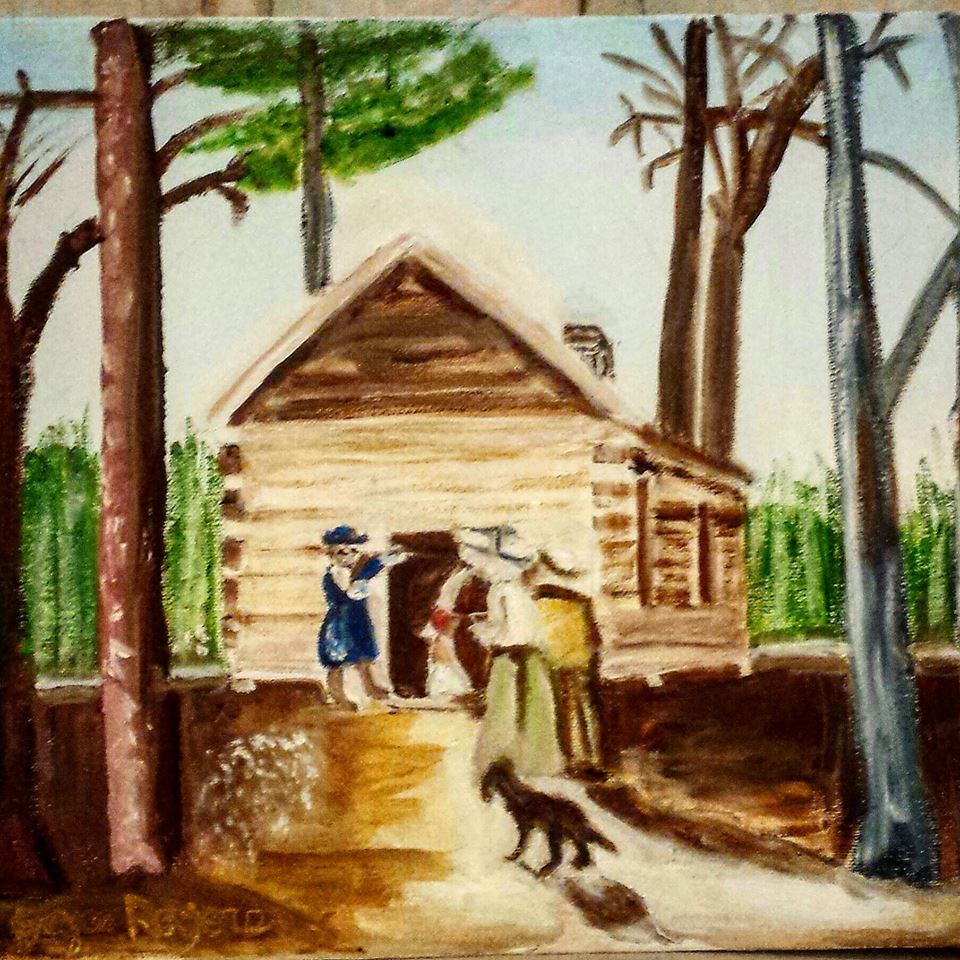
The Spaniards had taken control of the Natchez District from the British in October 1779, shortly before the emigrants arrived, but the Spanish had not established an efficient government or any control over land sales or occupation by adventurers. The first objective of the newly arrived settlers was to earn a livelihood. In this new land they were dependent upon themselves for supplying all of their needs. As they had likely arrived in the spring of 1781, they began to plant crops, as well as devote themselves to the construction of houses. They built for their protection the usual log houses from the abundant materials that were available. The experience of one of these settlers has been described by a descendant of John Jones:
“He found rich land… a plentiful supply of game in the woods and fish and water-fowl in the creek, with plenty of spring and creek water convenient for man and beast. He soon put up a log cabin, cut and burned the cane and undergrowth… and by doling out a scanty supply of seed-corn by the grain, soon had it planted… For a time, bread was not to be had, but Mr. Jones, with his trusty rifle… kept his family supplied with game, principally venison and wild turkeys.”
This patriotic band of Americans was living in an area conquered by Spain during the Revolutionary War but which was ceded to the United States by the Treaty of Paris in 1783 with Great Britain. Spain was determined to hold the territories she had captured, because of their intrinsic worth and because they afforded protection for her holdings south of the 31st parallel and the great Louisiana territory west of the river. The basic Spanish policy was to win the loyalty of those who resided in the territory and to increase the migration of Americans into the Ohio and Mississippi river valleys. The Spanish modified their traditional colonial policy by permitting the toleration of “heretics,” the admission of foreign immigrants, and the granting of a considerable degree of commercial freedom. These policies failed to win the ultimate allegiance of the settlers in the Natchez region.
Meanwhile, on Cole’s Creek, the group of settlers, most of whom were Baptists, met privately in their homes for Bible study and prayer, but did not worship publicly, thus avoiding attention from the Roman Catholic authorities. They lost their patriarch, Richard Curtis, Sr., who died on November 10, 1784, at age 56, but the embers of his faith were fanning to flame in the next generation. His young son Richard Curtis, Jr., was already a licensed preacher, though only 25 years old when they left South Carolina. Young Richard was 29 years old at the time of his father’s death; however, he was becoming known as a good preacher, and his brothers-in-law, John and Jacob Stampley, were also gifted at teaching the scriptures. Richard’s older brother William and step-brother John Jones were known for their prayers. By 1790, other American settlers were inviting them to visit their homes and share their faith. Whatever they may have lacked in education, they seemed to make up for in zeal. The conditions prevailing in 1791 thus were favorable for the establishment of formal Baptist religious worship. A group of seven people met at Margaret Stampley’s home on Cole’s Creek in what is now Jefferson County to organize themselves for religious worship. The members of this group of pioneers were: Richard Curtis, Jr., pastor; William Thompson, recording clerk; William Curtis; John Jones; Benjamin Curtis; Ealiff Lanier; and Margaret Stampley. Ealiff Lanier is the only name of this group whose name does not appear in the list of those making the journey from South Carolina in 1780-81. Notably missing are several male members of the first settlers, including Margaret Stampley’s husband, who may have died. The church was informally called Cole’s Creek Church, as late as 1806. They finally settled on the name Salem Baptist by the time the church name appears in the minutes of the Mississippi Baptist Association in 1807.
Dr. Rogers is writing a new history of Mississippi Baptists.
Prayer to endure sickness

Copyright by Bob Rogers.
Lord, I know that You are the One who removes sickness.1 Jesus, You healed the sick wherever You went.2 So I trust my sickness to You, and ask for healing. Remind me, also, that there is something worse than sickness. I know that a man’s spirit can endure sickness, but who can endure a broken spirit?3 So I pray that my sickness will be for the glory of God.4 and I pray that even in my sickness, I will find peace to my soul.5
Biblical references:
1 Deuteronomy 7:15
2 Matthew 9:35
3 Proverbs 18:14; Lamentations 3:17
4 John 11:5
5 1 Thessalonians 5:23
What to do when you get a fake friend request on Facebook

I often get a friend request on Facebook and scratch my head, thinking, “I thought I was already his friend.” What’s going on? What should I do?
I go to the search button on Facebook, and I do a quick search for the name of my friend. Often, a different acccount by the same name shows as already my friend. Aha! This tells me that the new request is fake. The one that is already my friend is the real account.
I usually take a look at the timeline of the person who is already my friend. Often they have already posted a warning saying, “Don’t accept a friend request from me! I’ve been hacked!” Technically, my friend has not been hacked; that is, nobody has gotten access to my friend’s password. Instead, somebody has taken his or her photos and created a new Facebook page by the same name, using the same pictures, and sent out friend requests to people already that person’s friend. They usually do this to send private messages under the pretend name and sell something or get money some way or another. But I digress…
So once I realize that this new friend request is coming from a fake account, what do I do? Facebook actually makes this easy. Here’s what you can do:
- Return to the friend request that you got from the fake account. Read this carefully: do not accept it, and do not delete the request, either. Instead, select the button to the right of the “accept” and “delete” buttons (usually it has some dots, but you can click on it), and select the third option, a menu of drop-down options that includes a link to Find support or report the profile. Click on that link, to report the profile.
- Next, select the option that says this person is pretending to be someone else. Notice that not only is there an option to report that they are pretending to be your friend, but there is also an option to report that they are pretending to be you. If you are the person being impersonated, you can use this option yourself to defend your account.
- Next, it will ask you to put in the name of the friend that the fake account is pretending to be. Put in the name of your real friend, and the real friend’s account should come up. Don’t worry about this being the fake account; you have not accepted the friend request from the fake account, so the only person who can come up as your friend who is being impersonated is the name of the real friend’s account. Click on the name of your real friend. This will allow you to submit the report to Facebook, letting Facebook know the name of the real account being impersonated.
- Facebook will then ask you if you want to do anything else, such as block the fake account. I usually go ahead and block the fake account, but if you prefer, you can simply delete the friend request from the fake account. Then I click that I’m done. That’s it!
As you can see, it’s a fairly easy process to report a fake account, and it is the best way for you to help your real friend. After all, isn’t that what friends are for?
The Baptist pioneer trek to Mississippi
Copyright by Robert C. Rogers and the Missississippi Baptist Convention Board
(In a previous post, I told how a group of South Carolina Baptists decided to flee the devastation of the Revolutionary War and make a new life in Mississippi. This post tells the story of how they got to Mississippi.)
The Curtis family decided to establish their new homes along the Mississippi River near Natchez, in what was then called West Florida. After the French and Indian War in 1763, the British took Florida from Spain, (West Florida included the panhandle of modern Florida and the areas now in southern Mississippi and Alabama), and Englishmen from the colonies had begun to settle there. The stories of productive farmlands that were free to all settlers and the peace they would have from the turmoil of the fratricidal strife in South Carolina must have made the prospects of beginning again very enticing. In 1779, Spain took advantage of the British distraction with the American Revolution, and Spain conquered the Natchez district from the British and added it to West Florida. Despite this, the emigrants did not anticipate any difficulty from this source. As we shall see, they were wrong.
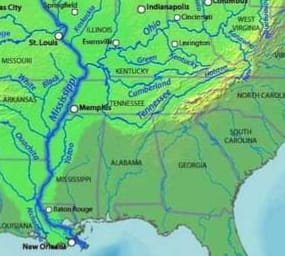
The route the migrants followed to their new homes was the familiar one used by many who were a part of the great westward migration, but it was not an easy trek. Our source for this journey is John Griffing Jones, a direct descendant of one of the travelers, John Jones. He writes that they left their homes in South Carolina early in 1780, loading their horses with their clothes, furniture and tools, and traveled north by land, crossing the Appalachian Mountains, and arrived on the banks of the Holston River near the present location of Kingsport, Tennessee, a trip of about 300 miles. Primitive roads and mountains made the trip difficult, as they carried their supplies on pack horses, the men traveling by foot. They arrived on the Holston River in the early spring and immediately began the task of raising a crop of corn, hunting game to salt and preserve, while building flatboats for the river journey that lay ahead.
In the fall of 1780, the travelers were ready to begin their voyage downriver. The party included Richard Curtis, Sr., and his wife Phoebe; two brothers William and Benjamin Curtis and their wives; Richard Curtis, Jr. and his wife Patsy; John Courtney and John Stampley and their wives (Hannah Curtis Courtney and Phoebe Curtis Stampley, respectively, daughters of Richard Curtis, Sr.); John Jones, his wife, and son William; and others whose names are unknown. On the second boat were Daniel and William Ogden and their families, and a Mr. Perkins and his family. The records do not reveal the names of the occupants of the third boat.
The emigrants knew from the experience of other travelers that they might have trouble with the Indian tribes. After all, they were planning to take lands formerly occupied by the Indians and make permanent homes for themselves. The natives did not want to give up their lands. The French had virtually exterminated the Natchez tribe in 1732, although other tribes such as the Choctaws were still in the area, but they knew they would encounter other tribes along the way, especially since the hostility of the Indians was encouraged and supported by the British against Americans during the Revolutionary War. In order to protect themselves, the emigrants always traveled in as large groups as possible.
The migrants’ travel took them down the Holston River for 87 miles to what is now Knoxville. There, they entered the Tennessee River. The three boats had only traveled about 40 miles downriver, when they faced their greatest danger. This was the country of the Cherokees, who had been faithful allies of the British during the Revolution. These Indians attacked the flotilla on a bend in the Tennessee near the mouth of the Clinch River, near present-day Kingston. The Cherokee attack focused on the first flatboat, occupied by the Curtis and Jones families. Some of the women and children took over the oars while the men fired their rifles in defense. Hannah Courtney was grazed on the head by a ball, and Jonathan Curtis was slightly wounded on the wrist. While John Jones fired his rifle, his 12-year-old son worked the oars and his wife held up a thick stool made of poplar wood as a shield. A bullet hit her stool, and later Mrs. Jones laughingly remarked that “their guns were very weak, as they did not make a very deep impression on the stool.” The second boat floated by the point of attack unharmed, but the third boat was far behind, and became an easy target for the Indians. The occupants of the third boat had contracted smallpox, and so they were floating in the rear and camping at a separate place each night. The Cherokees killed everybody on the third boat except one woman whom they captured, thereby also contracting smallpox, which took the lives of many in the tribe.
The survivors made the rest of their trip without further molestation. They traveled about 600 miles down the winding Tennessee River, riddled with rocky shoals and swift currents, until they met the Ohio River near the city of Paducah, Kentucky. A short trip of 44 miles on the Ohio River brought them to the mighty Mississippi River at Cairo, Illinois. Then they traveled another 450 miles down the Mississippi River. They landed near the mouth of Cole’s Creek, about twenty miles north of Natchez, settling 3.5 miles eastward on the creek at “Curtis Landing,” and established a village known as Uniontown, west of the present town of Fayette. Given the distance they traveled, at the mercy of the flow of the rivers and resting each night, the trip should have taken several months. Jack Curtis, a descendant of Richard Curtis who has done extensive research on the family, estimates that they arrived in the Natchez District about March, 1781. By the grace of God, they had survived a trek through the mountains, an Indian attack and navigated over 1,000 miles of rivers to reach their new home.
Dr. Rogers is revising and updating A History of Mississippi Baptists.
Prayer Poem of Hope

Copyright by Bob Rogers.
Lord, may I not be dismayed, even when I feel betrayed.
May my heart be re-fired, even when I feel so tired.
May my praise be fresh and bold, when I feel timid and old.
When I struggle to cope, fill me again with Jesus’ hope.
Amen.
The Mississippi Baptist story begins in South Carolina

Copyright by Robert C. Rogers and the Mississippi Baptist Convention Board.
The story of Mississippi Baptists begins in South Carolina. The Baptists of South Carolina furnished the first Baptist migrants to Mississippi and thus are of special importance in the history of Mississippi Baptists. Historians record that Rev. Richard Curtis, Jr. was 25 years old when he traveled with his parents and a group of fellow Baptists, who migrated from the Pee Dee River Valley of South Carolina in 1780 to settle on Cole’s Creek, about 20 miles north of Natchez, which at the time was controlled by Spain as part of West Florida. The precise location in South Carolina where these Baptists came from is unclear. One theory seeks to connect Richard Curtis and Mississippi Baptists to the historic Welsh Neck Baptist Church in Society Hill, in what is now in Darlington County, South Carolina. However, the church minutes of Welsh Neck Baptist Church from the time period are available for examination, and they never mention any of the Baptists who first settled in Mississippi. It seems more likely that they came from the region of Florence, South Carolina. There Richard Curtis, Sr., father of Richard Curtis, Jr., lived on Lake Swamp of Lynches Creek, near modern Florence, South Carolina, in 1766. In addition, Richard Curtis, Jr. was ordained by Benjamin Mosely when he fled back to South Carolina in the 1790s; Mosely was pastor of Ebenezer Baptist Church in Florence, South Carolina from 1784-1794.
The Revolutionary War period was one of great disturbance throughout South Carolina. There was a large group of Tories who were fanatical in support of England, but there was an equally powerful and more numerous citizenry who were American patriots. The conflict of these two groups stifled the economic development of South Carolina and brought fear and frustration into many parts of the colony. Over a hundred battles between American patriots and the British were fought in South Carolina alone. In 1774, Richard Curtis, Sr., and two of his sons, Benjamin and William Curtis, and his step-son, John Jones, enlisted with the American forces of Francis Marion, nicknamed the “Swamp Fox.” The records reveal that they served in three campaigns against the British, and then they were mustered out in 1779. In 1779 conditions had become almost unbearable, especially when British forces occupied Charleston. From this center, the British began a campaign to bring all of the colony under their control. The British were eventually overcome by General Nathanael Greene and his forces, but the turmoil and distress created by the war were undoubtedly a factor in encouraging some South Carolinians to seek a more peaceful place to live.
The Curtis family decided to establish their new homes along the Mississippi River near Natchez, in what was then called West Florida. After the French and Indian War in 1763, the British took Florida from Spain, and Englishmen from the colonies had begun to settle there. The stories of productive farmlands that were free to all settlers and the peace they would have from the turmoil of the fratricidal strife in South Carolina must have made the prospects of beginning again very enticing. In 1779, Spain took advantage of the British distraction with the American Revolution, and Spain conquered the Natchez district from the British and added it to West Florida. Despite this, the emigrants did not anticipate any difficulty from this source. As we shall see, they were wrong.
Dr. Rogers is writing a new history of Mississippi Baptists.


 Bob Rogers