Blog Archives
A challenge to Calvinism: M.T. Martin and the controversy that rocked Mississippi Baptists in the 1890s
Copyright by Robert C. Rogers and the Mississippi Baptist Convention Board.
In 1893, a controversy began in the Mississippi Baptist Association and eventually spread across the state. Jesse Boyd wrote, “Its rise was gradual, its force cumulative, its aftermath bitter, and its resultant breach slow in healing.”1 While it may have been a quibble over words rather than a serious breach of Baptist doctrine, it illustrates how Mississippi Baptists clashed over Calvinist doctrine by the end of the 19th century.
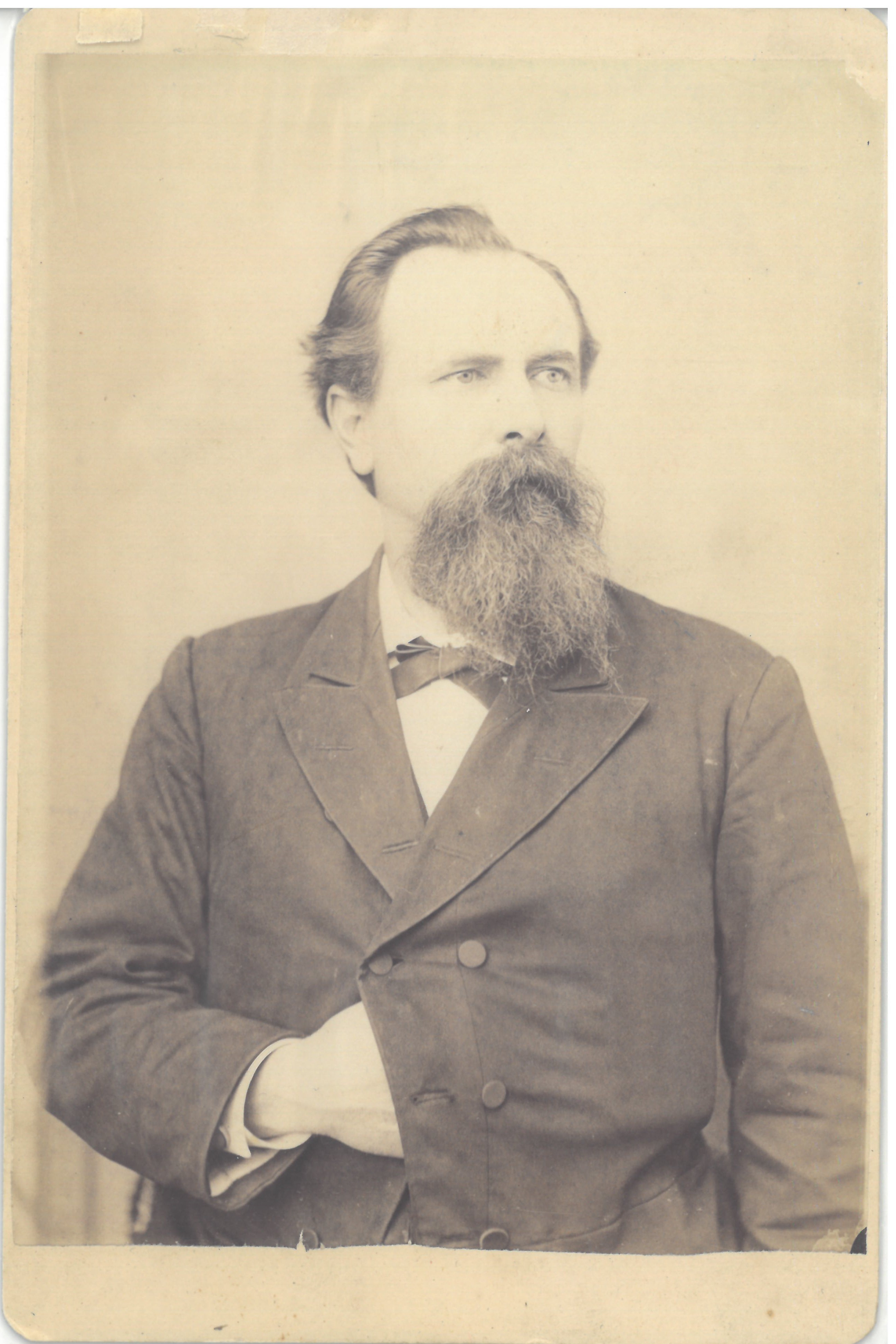
M. Thomas Martin was professor of mathematics at Mississippi College from 1871-80, and he also served as the business manager of The Baptist Record from 1877-81. He moved to Texas in 1883, where he had great success as an evangelist for nearly a decade, reporting some 4,000 professions of faith. However, his methods of evangelism drew critics in Texas. According to J.H. Lane, while Martin was still in Texas, “the church in Waco, Texas, of which Dr. B. H. Carroll is pastor, tried Bro. Martin some years ago, and found him way out of line, for which he was deposed from the ministry.” In 1892 Martin returned to Mississippi and became pastor of Galilee Baptist Church, Gloster (Amite). Martin preached the annual sermon at the Mississippi association in 1893. His sermon had such an effect on those present, that the clerk entered in the minutes, “Immediately after the sermon, forty persons came forward and said that they had peace with God, and full assurance for the first time.” The following year, Mississippi association reported on Martin’s mission work in reviving four churches, during which he baptized 19 people, and another 60 in his own pastorate. Soon Mississippi Baptists echoed the Texas critics that he was “way out of line,” not because he baptized so many, but because so many were “rebaptisms.”2
The crux of the controversy was Martin’s emphasis on “full assurance,” which often led people who had previously professed faith and been baptized, to question their salvation and seek baptism again. In 1895, the Mississippi association called Martin’s teachings “heresy” and censured Martin and Galilee for practicing rebaptism “to an unlimited extent, unwarranted by Scriptures.” When the association met again in 1896, resolutions were presented against Galilee for not taking action against their pastor, but other representatives said they had no authority to meddle in matters of local church autonomy. As a compromise, the association passed a resolution requesting that The Baptist Record publish articles by Martin explaining his views, alongside articles by the association opposing those views, “that our denomination may be… enabled to judge whether his teachings be orthodox or not.” The editor of The Baptist Record honored the request, and Martin’s views appeared in the paper the following year. The association enlisted R.A. Venable to write against him, but Venable declined to do so. Martin also published a pamphlet entitled The Doctrinal Views of M.T. Martin. When these two publications appeared, what had been little more than a dust devil of controversy in one association, developed into a hurricane encompassing the entire state.3
Most of Martin’s teachings on salvation were common among Baptists. Even his opponent, J.H. Lane, admitted, “Some of Bro. Martin’s doctrine is sound.” Martin taught that the Holy Spirit causes people to be aware that they are lost, and the Spirit enables people to repent and believe in Christ. He taught that people are saved by grace alone, through faith, rather than works, and when people are saved, they should be baptized as an act of Christian obedience. Martin said that salvation does not depend on one’s feelings, and that children of God have no reason to question their assurance of salvation.
These teachings were not controversial. What was controversial, however, was what Lane called “doctrine that is not Baptist,” and what T.C. Schilling said “is not in accord with Baptists.” Martin said if a man doubted his Christian experience, then he was never true a believer.
He considered such doubt to be evidence that one’s spiritual experience was not genuine, and the person needed to be baptized again. “If you have trusted the Lord Jesus Christ,” Martin would say, “you will be the first one to know it, and the last one to give it up.” He frequently said, “We do wrong to comfort those who doubt their salvation, because we seek to comfort those whom the Lord has not comforted.” Therefore, Martin called for people who questioned their salvation to receive baptism regardless of whether they had been baptized before. “I believe in real believer’s baptism, and I do not believe that one is a believer until he has discarded all self-righteousness, and has looked to Christ as his only hope forever… I believe that every case of re-baptism should stand on its own merits, and be left with the pastor and the church.”4
The 1897 session of the Mississippi association took further action against Martinism. They withdrew fellowship from Zion Hill Baptist Church (Amite) for endorsing Martin and urged Baptists not “to recognize him as a Baptist minister.” The association urged churches under the influence of Martinism to return to the “old faith of Baptists,” and if not, they would forfeit membership. When the state convention met in 1897, some wanted to leave the issue alone, but others forced it. The convention voted to appoint a committee to report “upon the subject of ‘Martinism.’” Following their report, the convention adopted a resolution of censure by a vote of 101-16, saying, “Resolved, That this Convention does not endorse, but condemns, the doctrinal views of Prof. M. T. Martin.” While a strong majority condemned Martinism, a significant minority of Baptists in the state disagreed. From 1895 to 1900, the Mississippi association declined from 31 to 22 churches, and from 3,042 to 2,208 members. In 1905, the state convention adopted a resolution expressing regret for the censure of Martin in 1897.5
Earl Kelly observed two interesting doctrinal facts that the controversy over Martinism revealed about Mississippi Baptists during this period: “First, the Augustinian conception of grace was held by the majority of Mississippi Baptists; and second, Arminianism was beginning to make serious inroads into the previously Calvinistic theology of these Baptists.” It is significant that Mississippi association referred to Martinism as a rejection of “the old faith of Baptists,” and that when J.R. Sample defended Martin, Lane pointed out that Sample was formerly a Methodist.6
(Dr. Rogers is the author of Mississippi Baptists: A History of Southern Baptists in the Magnolia State, to be published in 2025.)
SOURCES:
1 Jesse L. Boyd, A Popular History of the Baptists of Mississippi (Jackson: The Baptist Press, 1930), 178-179.
2 Boyd, 196-197; Minutes, Mississippi Baptist Association, 1893; 7; Z. T Leavell and T. J. Bailey, A Complete History of Mississippi Baptists from the Earliest Times, vol. 1 (Jackson: Mississippi Baptist Publishing Company, 1904), 68-69; The Baptist Record, May 6, 1897.
3 Minutes, Mississippi Baptist Association, 1895; 1896, 9.
4 Boyd, 179-180; The Baptist Record, March 18, 1897, May 6, 1897, June 24, 1897, 2.
5 Minutes, Mississippi Baptist Association, 1897, 6, 14; Minutes, Mississippi Baptist Convention, 1897, 13, 17, 18, 22, 31; 1905, 47-48; Leavell and Bailey, vol. 1, 70; Boyd, 198. Martin died of a heart attack while riding a train in Louisiana in 1898, and he was buried in Gloster.
6 Earnest Earl Kelly, “A History of the Mississippi Baptist Convention from Its Conception to 1900.” (Unpublished Doctoral Thesis, Southern Baptist Theological Seminary, Lousville, Kentucky, 1953), 114; The Baptist Record, May 6, 1897.
Book review: “Baptist Successionism: A Critical Review”
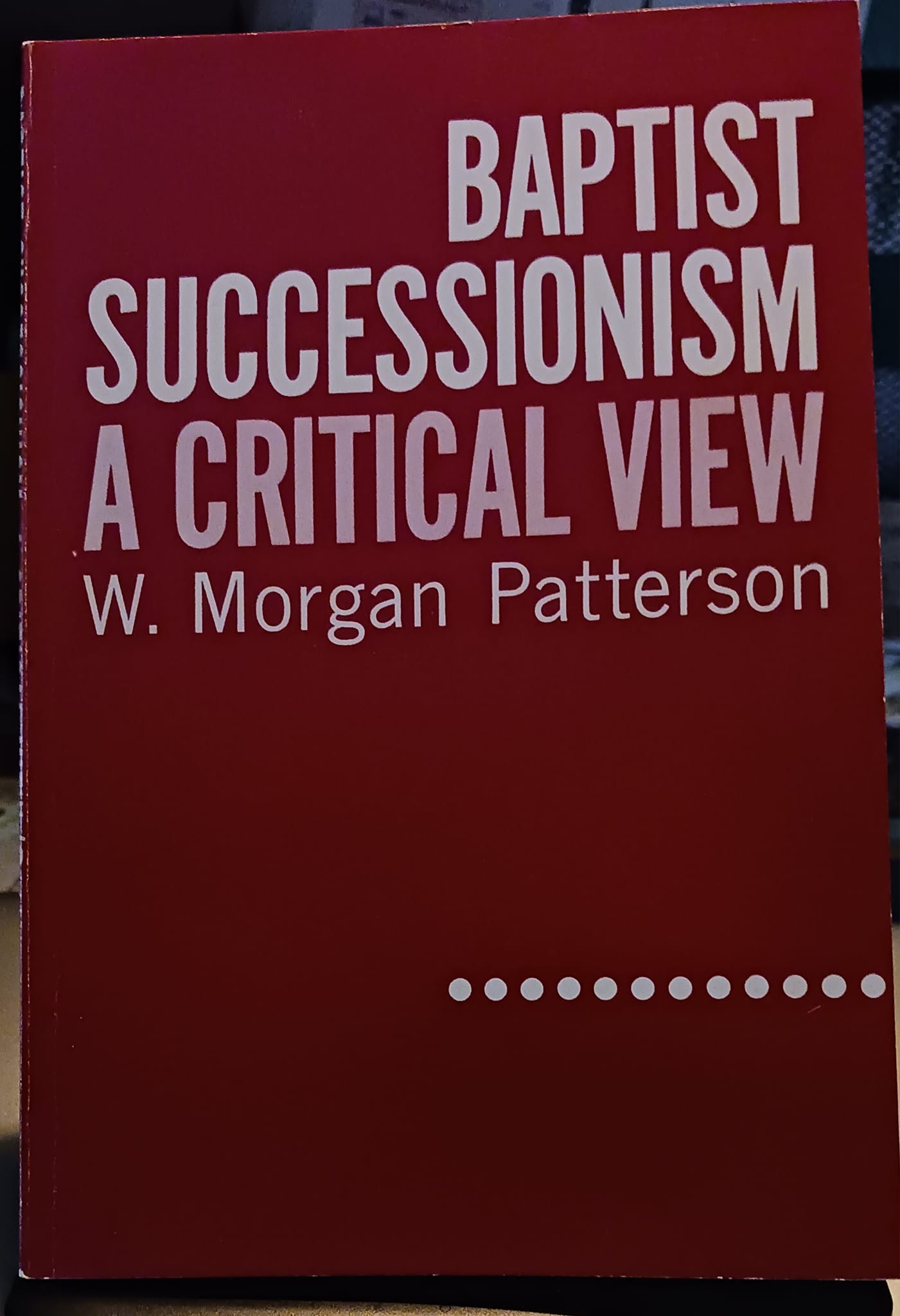
W. Morgan Patterson is a Southern Baptist historian, educated at Stetson University, New Orleans Baptist Theological Seminary, and Oxford University. This book was published in 1979, but I recently picked it up and read it in one day.
This is a concise book (four chapters, 75 pages) that analyzes the failures of the sloppy historical research of Baptists, such as Landmarkists, who believe Baptist churches are in a direct line of succession from New Testament times. The introduction explains there are four different variations of successionist writers, from those who believe they can demonstrate it and that is necessary, to those who believe neither. Chapter one explains how the successionist view was not that of the earliest Baptists, but in the 19th century it was formulated by G.H. Orchard and popularized by J.R. Graves. Chapter two shows how the successionist writers misused their sources. Chapter three shows their poor logic. Chapter four exams some of the motivations behind this erroneous view. The conclusion sums up the book, noting that the successionist view was predominant in the 19th century, but thanks to bold historians like William Whitsitt, whose research debunked the theory in the 1890s, the successionist view became a minority position among Baptist historians in the 20th century.
Patterson is scholarly historian, and he may assume a little too much about the historical knowledge of the reader when he refers to the Münster incident on page 22 without explaining that this was a violent takeover of the city of Münster, Germany in 1534 by an Anabaptist fringe group that came to be associated with Anabaptists and Baptists in the minds of their opponents, and he refers to the Whitsitt controversy on page 24 without explaining the controversy until later.
Patterson could have made his argument stronger by giving more specific details about the heretical beliefs of groups claimed by successionist writers to be Baptists, such as the Donatists, Paulicians, Cathari, etc.
While Patterson’s book is concise, it is substantive, and his reasons are sound. This is an effective critique.
Guest post: “What a hospital chaplain learned about ICU waiting when his own father died”
Copyright 2016 by Brian Williamson

(NOTE: Brian Williamson is an experienced hospital chaplain, but recently he experienced the other side of ministry, spending many hours in the waiting room of the Intensive Care Unit –ICU– as his own father died. In this post, he shares his observations, in hopes that it can help those of us who visit the sick and their families, especially those in ICU.)
These are some notes I prepared from my experiences in the ICU waiting room as a family member when my father was dying. Since I work extensively in this area as a hospital chaplain, the new experience from a personal perspective has given me insights into how I can better minister to folks going through something like this. Since my observations are filled with my own feelings, they could be negatively or positively impacted by what I’m feeling and/or experiencing. I’ve offered them to my friend and co-worker, Bob Rogers to share with others. My hope is that they will be insightful and helpful to others. So, take them for what you think they’re worth.
1. ICU family members (yes, I was guilty!) are pivoting/hinging on every little idea of their loved one getting better. You want your loved one to “be” better, so if something is “a little better” (such as a lab result, an O2 sat, blood gas, etc.) then you accentuate that and project it to everything else. This may not be the case… (“He squeezed my hand, so I know he’s getting better!” “The kidneys are looking good.” Some nurses might say, “the numbers are a little better today,” or “We turned the O2 down to 60%, so that’s a little better…” {never mind the tea-colored urine, the 9 medicines in the IV bags, the ventilator set on “C-full control” and the doctor is just hoping that you won’t have to turn it back up, etc., etc.})
2. People in the waiting room—family members, staff, pastors, etc.—tell you what to believe and what to say; and you’re usually polite enough to not slap them when they do; or to argue with them, because you know they won’t understand.
3. There is no shortage of people who want to tell you what it’s like for them. They ask you what’s going on with your loved one, but then they interrupt you to tell you “their story.” When they finish, they usually have forgotten that they haven’t heard your story.
4. Very few people really want to hear your story or talk about your memories; or what’s important to you. Fallacious clichés such as, “I know how you feel” and “I know what that’s like” are the status quo. The reality is that people in the ICU waiting room have their own pain and struggles to deal with. You feel connected to them; but, when your story starts to “go south,” they distance from you as if what you’re experiencing is contagious. If you’re loved one begins to worsen, they leave you alone and whisper to other waiting room people about what’s happening with your patient.
5. Many preachers, ministers, etc., form circles with families that block traffic in the middle of the aisles, then pray loudly—and pray, and pray and pray. Most of them leave after the prayer, and then it’s very interesting what people talk about after the minister leaves.
6. When someone is on the ventilator they have to be sedated (usually). The sedation helps keep the person relaxed so the machine can be beneficial. BUT…what I didn’t know is that every 12 hrs, the sedation has to be turned off in order to “let the person wake up a little bit.” This test helps the hospital be aware of mental changes. During the time the sedation is off, the nurse assesses the patient’s ability to respond to instructions like “squeeze my fingers,” “blink your eyes,” “wiggle your toes,” etc. In other words, you awake every 12 hrs to a tube down your throat that makes you cough and gag, you become just awake enough to know you’re not able to breathe. This can be quite punishing to the patient.
7. Silence is golden. Nurses work hard at saying the right thing and “keeping you company,” which is very special and sometimes greatly appreciated; but, I think that being quiet while being with someone is usually more valuable as their loved one is dying. One of the best questions I heard a nurse ask was, “Would you like some privacy or would you like me to stay with you a little longer?” The worst question I heard was asked by a nurse as I sat in a chair in the pod outside my dad’s room, just after his death… “Uh, you’re the chaplain, right? Well, I was wondering, “How do you feel about monogamy in marriage?”
8. Always visiting during visiting hours may not be the best idea for clergy members. Families get precious few minutes every few hours that could end up being the last minutes they have with their loved one alive. Experiment with waiting room visits followed by in-room visits. I suggest taking someone for a walk around the building, to the canteen, to the coffee shop or somewhere outside. If they ask you to “go back” with them, then go. If not, don’t.
9. There’s lots of praying going on, even though you can’t hear it.
(This is Bob again. From reading Brian’s observations, five lessons come to mind for ministry to families in ICU waiting rooms: 1. Be quiet and really listen, 2. Don’t offer pat answers, 3. Keep vocal prayers soft and short, 4. Don’t be afraid of silence, and 5. Don’t abandon them when they hurt the most. What are your thoughts? Feel free to comment below.)
Why John Calvin was wrong about Romans 9

Copyright by Bob Rogers, Th.D.
John Calvin was wrong about Romans 9.
Calvin, the Protestant reformer of Geneva, Switzerland, was a great theologian. He became famous for his emphasis on the sovereignty of God and God’s predestination of our salvation. But in his commentary on the ninth chapter of Paul’s Letter to the Romans, John Calvin took predestination beyond anything the apostle Paul intended to say.
Qualifications of what I’m saying
Don’t misunderstand me. I believe that salvation is completely by the grace of God and cannot be earned by our good deeds. I believe that God is merciful and just, and I believe in the sovereignty of God. I also believe that when we believe in Jesus Christ as Savior, the Bible says that we are chosen, or predestined.
My disagreement is with a specific brand of Calvinism and with a specific statement made by John Calvin in his own commentary on Romans. Many will argue that Calvin himself took a different position in some of his other writings, and that may be true, but it does not change the fact that Calvin was wrong in his commentary on Romans 9.
The key verses and Calvin’s comments
The debate centers around the key verses, Romans 9:18, 22 (HCSB): “So then, He shows mercy to those He wants to, and He hardens those He wants to harden… And what if God, desiring to display His wrath and to make His power known, endured with much patience objects of wrath ready for destruction?”
Calvin says in his commentary on Romans 9, “Paul teaches us, that the ruin of the wicked is not only foreseen by the Lord, but also ordained by his counsel and his will… that not only the destruction of the wicked is foreknown, but that the wicked themselves have been created for this very end—that they may perish.” (John Calvin, Commentary on Romans.)
John Calvin’s interpretation of Romans 9:18 and 22 has been called double-edged predestination. This interpretation teaches that the saved are predestined to be saved, but also that the lost are predestined to be damned. At first glance, one can see how Calvin would interpret this passage the way he did. But a study of these verses in light of the entire chapter reveals a completely different picture of what Paul was saying.
God is not unjust
Calvin’s interpretation makes God arbitrary and implies that God is unjust. Yet Paul reminds us in Romans 9:14, “Is there injustice with God? Absolutely not!” Let’s go through the chapter and see how God is both merciful and just.
Hardened clay and melted butter
When Romans 9:18 says that God shows mercy on whom He desires and hardens whom He desires, this does not mean that God is arbitrary or unfair. Let’s look at the context of this statement. In the previous verse, verse 17, Paul spoke about Pharaoh, who hardened his heart and would not let the people of Israel go from slavery. But if one reads the story in Exodus, one finds that half of the time it says God hardened Pharaoh’s heart, and half of the time it says Pharaoh hardened his own heart. What Exodus described was the process by which God brought out the hardness that was already in Pharaoh’s heart. As Dale Moody says, “The sun that hardens the clay melts the butter.” (The Broadman Bible Commmentary, vol. 10: Acts- I Corinthians, “Romans,” by Dale Moody, p. 230.) Thus God was not making Pharaoh do something that Pharaoh didn’t already want to do. Likewise, God does not take away our free will to obey or disobey.
The clay pot and the potter
Next, we note that Paul uses the example of a clay pot to illustrate predestination. He says in verses 20-21, that we have no right as mere humans to talk back to God about His will. It is interesting that Jeremiah 18:5-10 also uses the clay pot illustration to show how God reacts differently when we respond differently. Jeremiah says that if a people whom God warns will repent of their evil, then God will relent of his disaster and not inflict on them the disaster God had planned. This shows how predestination works in the mind and heart of God. Of course, God in His foreknowledge already knows what we will do, so when we choose Christ, God speaks of having chosen us.
A choice by faith
Romans 9:30-33 shows how salvation comes by a free choice to believe the gospel, not by arbitrary predestination. It does this by drawing a contrast between Gentiles who obtained righteousness and the Jews who did not obtain righteousness. What was the difference? It was their faith! Verse 30 says the Gentiles obtained a “righteousness that comes from faith.” Verse 31 says Israel did not achieve this righteousness. “Why is that?” Paul asks in verse 32. His answer: “Because they did not pursue it by faith.”
Objects of wrath and objects of mercy—treated differently
With all of this in mind, let us return to the key verses that are central to this debate, Romans 9:22-23. These verses have been interpreted as teaching double-edged predestination, because they speak of the “objects of wrath ready for destruction” and “objects of mercy that He prepared beforehand for glory.” However, what many people miss here, is that Paul describes the objects of wrath (the damned) and the objects of mercy (the saved) in different ways in this passage. The Greek grammar in verse 22 describes the “objects of wrath ready for destruction” with a perfect participle in the middle or passive voice. Thus it describes the objects of wrath, which refer to the lost, as “having been made ready for destruction,” which may mean they prepared themselves for destruction by their own unbelief. Notice also that God “endured with much patience the objects of wrath.” In other words, God patiently waited for their free choices, because, as 2 Peter 2:9 says, God is not willing that any be lost.
However, the Greek grammar is different when referring to the “objects of mercy” in verse 23. Paul describes the “objects of mercy” as those “that He prepared beforehand for glory.” This time, Paul uses the active voice to describe God’s action of salvation. In other words, Paul speaks of the saved as actively being predestined by God beforehand, but Paul speaks of the damned as passively being predestined, implying it is the result of their own choices, which God in His omniscience already knew they would make.
Why John Calvin was wrong
John Calvin said that the apostle Paul taught in Romans 9 that God created the wicked for the purpose of damning them to Hell. But when we read Paul’s words carefully and in context, we see that Calvin was wrong. Instead, Paul says that God is not unjust. He says that God hardens the heart, but those are hearts that have also freely chosen to harden themselves. He says that we are like clay pots that cannot question God who forms them, but those same clay pots do have a choice to respond to the potter’s hands. If anybody is an object of God’s wrath, it is because that person has failed to obtain salvation by faith. The choice is always ours, but God always knows what choice we will make.


 Bob Rogers