Author Archives: Bob Rogers
What really needs to change about Southern Baptists
 In 1845, the Southern Baptist Convention (SBC) was organized in Augusta, Georgia, just a couple hours’ drive north of where I now live. However, we’ve come a long way since then, not just in miles or time.
In 1845, one of the main reasons why Southern Baptists split from the North was that the SBC wanted to appoint slaveholders as missionaries. Today, many SBC churches are integrated, including my own, African-American pastor Fred Luter is our vice-president, and Luter will probably be elected president this year at the convention meeting in New Orleans.
In 1845, all of our churches were in the South. Today, we are still concentrated in the South, but we have churches in all 50 states. One of our largest churches is in California.
The idea of changing the name, particularly dropping the word “Southern” in favor of something else, has come up many times in the past century, and has always been voted down. Now the Executive Committee of the SBC is passing along the following recommendation to the annual meeting of the Southern Baptist Convention: to keep the legal name Southern Baptist, while at the same time encouraging churches that do not wish to use that name to adopt the informal name “Great Commission Baptists.”
I have mixed feelings about this recommendation. Although this is not officially a name change proposal, it could lead to name “erosion” and confusion. Imagine two Baptists who meet and ask about each other’s churches. One says, “I’m a Southern Baptist.” The other says, “I’m a Great Commission Baptist.” They have no idea their churches are affiliated with one another. How does that unify us?
While the name “Southern Baptist” is negative for some, it has positive connotations for others, such as those who received assistance in SBC disaster relief efforts after 9/11 and Hurricane Katrina, and for millions who found faith and Christian nurture in an SBC church.
I am a Southerner, but I grew up an Army chaplain’s son, and lived outside the South, as well. I remember that while attending a Southern Baptist church on Staten Island, New York, that “Southern” was not considered helpful to evangelism. After all, what New Yorker wants to join a “Southern” church? However, the church simply used the name “Baptist,” just as most SBC churches do in the South, including my own. My former youth minister, Jason McNair, who now serves in the Utah-Idaho convention, feels that a name change is a waste of time and energy and doesn’t address the most important issues.
If we earn a good reputation, people don’t care as much about the name. The Lutheran Church-Missouri Synod is the name of a conservative Lutheran denomination. Lutherans looking for a conservative church are glad to find a church by that name, even if they are not in Missouri. It’s not the name that matters; it’s the reputation behind the name. After all, New York Life Insurance sells in Georgia, and Kentucky Fried Chicken sells in California.
Some claim that “Southern” is offensive to African-Americans. I asked this question of my former classmate Cathy McNair, an African-American who graduated with me from Petal High School in Petal, Mississippi. She said, “Well….used to…back in the stone age…it was pretty much understood that Southern Baptist was a synonym for Blacks need not attend….nowadays…not so much.” (By the way, Cathy said about the same thing as Jason, that spending time on a name change was ignoring “weightier matters.”)
Cathy makes an important point about the “used to” and “nowadays” of the Southern Baptist name. Although the name remained the same, the name gained a new reputation over the years, as Southern Baptists repented of the racial sins of the past and many SBC churches opened their doors to all races.
And here is the key: we must be known for what we are for instead of what we are against. Too often we are known as those people who boycott Disney and hate gays. We should be known as the people who love all people (gays included) enough to show them how to change. Our logo says it all. The cross, Bible and globe show what we are for: the gospel of forgiveness by faith in Jesus’ death on the cross, faithfulness to the Bible, and sharing this good news with the whole world. If we are known for these things, we will please our Lord, whatever name we choose to use.
I may vote in favor of the recommendation, since it keeps the legal name and only encourages those who already don’t want to use the SBC name to at least use the same name (“Great Commission Baptist”). But for me, the bottom line is, that it’s far more important for us to change our ways than to change our name.
(The Southern Baptist Convention will hear this proposal at its meeting in New Orleans on June 19-20, 2012.)
To read more on this subject, read these reports and blogs:
http://www.bpnews.net/bpnews.asp?id=37224
Official recommendation from the task force on a name change.
http://www.edstetzer.com/2012/02/the-sbc-changing-names-is-good.html
by Ed Stetzer, researcher with LifeWay Christian Resources, favors a name change, but feels changing our actions is more important. Many comments on his blog, many of them with objections to the name change.
http://loomnwheel.wordpress.com/2012/02/28/whats-in-a-name/
by Benjie Potter, feels the name change proposal is silly, and offers a Southern Baptist revision of Shakespeare’s “Wherefore art thou Romeo?”
(Below is a photograph of the historical marker in Augusta, Georgia, where the Southern Baptist Convention was organized in 1845.)

“Prayer” by Philip Yancey is honest and inspiring
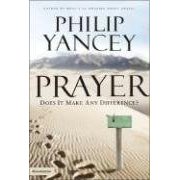 Philip Yancey did it again with his book on prayer. His book The Jesus I Never Knew is the best book I have read on Jesus. His book, What’s So Amazing About Grace? is the best book I have read about grace. His book, Prayer: Does it make any difference? (Zondervan, 2006) is the best book I have read on prayer. That is a strong statement for me to make, even as a person who loves the writings of Philip Yancey. I have read dozens of great books on prayer, including great books by people like Richard Foster, Ole Hallesby, Bill Hybels and Oswald Chambers.
What sets Yancey’s book apart is his brutal honesty about the struggles people have with prayer, balanced with inspiring stories of how prayer has changed people’s lives. Yancey is particularly self-effacing about his own struggles with prayer and his feelings of inadequacy in failing to pray. Yet by the end of the book, it is apparent that Yancey is much more of a prayer warrior than he admits at first.
The books’ 22 chapters are divided into five parts. Part One, “Keeping Company with God,” explores what prayer is. He points out that Jesus “virtually invented private prayer” (p. 63).
Part Two, “Unraveling the Mysteries,” discusses frustrations and questions that people have about the effectiveness of prayer. He gives a disarmingly profound answer to those who ask why we should bother to pray when some prayers seem unanswered: “Why pray? Because Jesus did” (p. 78). Later in the book he gives another simple but true answer: “Why pray? God likes to be asked” (p. 143).
Part Three, “The Language of Prayer,” discusses how to pray. He gives great practical advice on handling distractions to prayer, and reminds the reader that there is no right way to pray, because different styles of prayer fit different personalities. “Keep it simple, keep it honest, and keep it up” he advises (p. 191).
Part Four, “Prayer Dilemmas,” returns to questions people have about prayer, especially unanswered prayer. I would disagree slightly with his defintion of “unanswered prayer,” as he includes in that definition prayers that receive a “no” answer. Yancey’s approach to prayer for physical healing is balanced and insightful, as he reveals scientific research showing healing that cannot be explained, while recognizing the importance of using medicine and how God usually works through natural processes.
Part Five, “The Practice of Prayer,” provides motivation for faithful praying.
Yancey’s writing includes frequent illustrations from a variety of sources, from popular culture to literature to world history. Being a famous author and editor for Christianity Today magazine, Yancey has received many letters about prayer, and he shares this correspondence throughout the book. One unique quality about this book is that each chapter includes a couple of sidebars written by others, sharing personal experiences in prayer. For example, on p. 224-225 a prostitute whose prayer for deliverence resulted in her miraculous salvation. Although each sidebar story can be read alone, they relate to the chapters where they are inserted.
I disagree with Yancey in chapter 7, when he discusses Abraham’s prayer that “changed” God’s mind. Yancey does not notice that Genesis 18:33 says that it is God who ended the conversation with Abraham, not Abraham with God, so God did not change His mind.
Also, I believe that Yancey misinterprets Job 21:15 on p. 95. There he says that Job asks “What would we gain by praying to him?” However, the context of the chapter implies that Job quotes the wicked in this passage; Job does not say that he himself questions prayer.
It is remarkable that these were the only two places that I disagreed with Yancey, because he makes bold and strong statements throughout the book. I am sure many people will be offended or disagree with some things he said, just because he asserts so many strong opinions. But this is one of the values of the book: Yancey stimulates you to think deeply about prayer, and challenges your preconceived notions. Yet he does so while remaining fiercely loyal to the Bible’s teachings on prayer.
In summary, this book is destined to be a classic book on prayer, useful for group study or personal review and study over and over again.
Guest blog: “A Week in the Life of a Georgia Tech Baseball Radio Announcer (and Student)”
 (Below is a guest blog from my son, R. Wade Rogers. He is a student at Georgia Institute of Technology in Atlanta. This is the third installment of three guest blogs from my three children.)
I’m a 2nd year student at Georgia Tech and majoring in Business Administration. I am also a Baseball Announcer for WREK- 91.1 FM, the student radio station at Georgia Tech, and a huge sports fan.
Sunday, February 12, 2012:
Weather in Atlanta is in the 20s, so I have a heavy coat with me as I leave for Grace Midtown Church in the morning. Worship this morning is great and the sermon continues a series on Proverbs that has been going on this semester with a study of Proverbs 7. The head pastor is 28 years old and he is out this Sunday after the birth of his first child, so the message is delivered by an associate pastor. (Well over half of the people that attend the church are under 30 and there are a lot of college students, especially from Georgia Tech, which is nearby. Despite the predominately young congregation, people of all ages attend.)
After church, I go to Russ Chandler Stadium, home of the Georgia Tech Yellow Jackets Baseball team. I help my radio partner, Nolan Alexander, to add some decorations to the home radio booth. Today’s task is drilling in a bookshelf. We also practice a few innings of play-by-play, while the team scrimmages before the start of the 2012 season on Friday. (All of the Georgia Tech Baseball games can be heard on WREK 91.1 FM in Atlanta and WREK.org online. I am scheduled to announce at least 25 games this season after calling 11 games my freshman year.)

After I arrive back home, I spend the rest of the afternoon and night studying. I have an unusually busy week ahead with four tests and a weekend of baseball to prepare for.
Monday, February 13, 2012:
I wake up at 7:30 planning on heading to campus to help work on some technical aspects for our radio broadcast, but I get a text saying that it is covered. That means I get to spend the next few hours for some more studying. I have two tests today and I sandwich a nap in between them. After my last test, I get dinner at my apartment, watch TV, and just relax for a little while. At 7:00, I make one last trip for the day to campus, this time to the radio station, for our last formal Baseball Broadcasters’ Meeting to go over the equipment setup. After the meeting, I get some more studying in for my next test.
Tuesday, February 14, 2012:
I’m up early today at 6:30 to eat breakfast and get ready for class. I have one class at 8:00 and then a test after that. For the second straight day, I get a nice nap during the afternoon. I have one more class at 3:00, but when I get home after that class, I’m all studied out. Three of my four tests for the week are out of the way, so I am relaxing tonight.
Wednesday, February 15, 2012:
I get to sleep-in until about 11:00 today, but then I have a pair of classes separated by a two and a half hour break. After my last class ends at 5:00, I get some dinner at Chick-fil-A in the Student Center and head up to the radio station. I’m filling in as producer for the Ramblin’ Wreck Report and tonight we have our annual Baseball Preview Show. Our guests are Georgia Tech 1B/LHP Jake Davies and our closer RHP Luke Bard. (They happen to be the only current Jackets with brothers currently playing in the major leagues. Kyle Davies P for the Royals and Daniel Bard P for the Red Sox). After the show, I go home for a little bit, but I go back to campus for a bible study at 9:00. I catch a ride back to my place afterwards and study for a little while before going to bed.
Thursday, February 16, 2012:
I have a pair of classes starting at 8:00 A.M. again. In between class, I head home to study for my last test of the week, but I get a text from a friend letting me know that the Atlanta Braves are handing out applications for summer jobs in the Student Center. I head back to the school earlier than usual to try and see if I can talk to someone from the Braves and see what kind of positions they were offering, but apparently they have already left, so I move my study station over to the library. I take my last test of the week in my last class of the week and head home to pack. Around 6:30, Nolan and I gather our equipment and hit the road for Rock Hill, South Carolina, where Georgia Tech is scheduled to play four games in the Coca-Cola Classic at Winthrop University against both Winthrop and Kent State. On the way, we make an extended stop at Nolan’s house for a delicious home-cooked meal. We get to the hotel around 12:30, where we are greeted by a pair of avid, older Tech Baseball fans, who are hanging around the lobby. They talk to us for a while before we finally get away and get to sleep after 1:00.
Friday, February 17, 2012:
We arrive at Winthrop Ballpark around 11:00, three hours before first pitch, to set up our equipment and prepare for an opening day doubleheader. In the first game, we have some frustrating technical issues, but eventually we get the issue resolved. It is a tough first game for the Jackets as well vs. Kent State. The Golden Flashes All-American P David Starn pitches eight shutout innings only allowing four singles, as Tech loses 5-0.
Second game goes better for us in the booth and on the field. Matthew Grimes pitches seven innings and only allows one hit and Zane Evans pitches two perfect innings to lead Tech to a 5-0 win over Winthrop.
Saturday, February 18, 2012:
At the hotel in the morning, we hear that there have been a few changes to the schedule because of weather expected tonight and tomorrow. Our game scheduled for today is moved up from 1:00 to noon and our game scheduled for tomorrow is moved to 7:00 tonight. The noon game goes by very quickly and the broadcast is even better than the day before. Tech gets revenge against Kent State winning 6-2, as Daniel Palka homers and scores four runs.
In between games Nolan and I get some lunch away from the ballpark and head back to the hotel for a break. Will Long, another Tech baseball announcer, made the trip up for the day to Rock Hill, where he worked last summer broadcasting for the Carolina Stingers of the Southern Collegiate Baseball League. As we arrive back at the ballpark we hear that our second game has been moved up an additional hour to try and beat the rain. We get set up just in time for the first pitch. Will and Nolan do play-by-play and I rotate in to do some color broadcasting for the final game of the weekend. Tech beats Winthrop again, this time 5-3, to start the season 3-1.
Sunday, February 19, 2012:
The team headed back last night, but Nolan and I stayed at the hotel. The weather forecasts were correct as it is a rainy day in Rock Hill that would not have been conducive for baseball. We check out of the hotel and make the drive back to Atlanta after a very successful first weekend of college baseball. I arrive back at my place around 4:00 and relax as I get set for another less busy week of school with more baseball.
As you can see, my schedule as a college student can be very busy at times, but I am challenging myself with school and getting some great opportunities to be involved with things that I love.
[Wade is announcing tonight’s home game against Ohio State.]
Guest blog: “Comparing life on the Mississippi and Georgia coasts”
 (Below is a guest blog from my daughter, Lauren Rogers Knight. She met her husband Philip when they both lived on the coast of Georgia, but after they got married, they moved to their current home on the Mississippi coast. This is the second installment of three guest blogs from my three children.)
My dad asked me to write about the differences in life on the Mississippi gulf coast and life on the coast in Savannah, Georgia.
I think the first difference to note would have to be the reason each of them are tourist destinations. Savannah is a beautiful historic city, with huge beautiful trees, parks, and historic buildings. Tourists come to walk through the squares, along River Street, and visit historic sites like Civil War forts, cemeteries, and churches. On the Mississippi gulf coast, the beach is the attraction. Everything that people come to the coast for is right there along the beach. The huge attraction here is the casinos. There are also some really well-known family owned restaurants that people travel to the coast for.
Also, the weather concerns are another big difference. Both areas are hot and humid, but on the Mississippi gulf coast hurricanes and flooding are huge concerns. In Georgia, hurricanes are a threat, but not a huge concern. On the Mississippi gulf coast, insurance and property taxes prices are very high, especially if you live south of Interstate-10.
Although seafood is obviously popular in both places, there is more of a Cajun influence on the Mississippi gulf coast. Gumbo and poboys are very popular here. Catfish is also extremely popular here in Mississippi. In fact, it is not uncommon to find a catfish restaurant or “catfish house” where it is the only thing on the menu. I remember that in Savannah “low country boil” was popular. That usually includes shrimp, corn, and sausage.
In Savannah, you get out of school for St. Patrick’s Day. On the Mississippi gulf coast, you get out of school for Mardi Gras.
The last difference I can think of is time zone difference. In Georgia, people eat around 7pm, and the local news comes on at 11pm. Here on the coast people do everything earlier. We have usually already eaten by the time 7pm rolls around, and the local news comes on at 10pm.
So whether you’re into catfish or low country boil, beaches or history, Mardi Gras or St. Patrick’s Day, both places are great to visit or reside in!
Guest Blog: “The Gift of Being a New Mother”
 (Below is a guest blog from my daughter, Melissa Rogers Dalton. This is the first installment of three guest blogs from my three children.)
How exciting! This is my first guest blog post, and I’m very flattered that my dad asked me to share. We pick on him that he doesn’t like to give up his pulpit, so if his blog is any relation, it’s a real honor (even if I am family). Love you, daddy!
Well, I was asked to share about being a new mom almost a month ago, and I thought it would be easy to sit down and write it. I forgot that I was a NEW mom, and babies set the schedule. I guess I’ll start by sharing a little about myself. I’ve been married to my wonderful husband, Steven, for almost 6 years now, and we had our first child, Keagan, on December 16, 2011. I’ve been on maternity leave since then, but I went back to work on Monday, February 13 (I teach 4th grade) and will now face a whole new set of challenges. I’m nervous about it but ready to get into some sort of routine.
I’ve always known I wanted kids one day, but for years I joked that I wanted to adopt one that was potty-trained. Babies are cute, but they’ve always scared me a little. They can’t tell you what they want, keep you up at night, and I hate changing diapers! However, I’ve been seeing friend after friend become a new mommy, and my biological clock actually started to tick almost 2 years ago (I never thought it would). Steven wasn’t ready yet, and we wanted to be a little more financially stable, so we waited. When we found out we were expecting last May, both of us were thrilled and couldn’t wait to welcome our little one into the world. To make it even better, our entire small group at church was expecting as well, so we had friends to literally go through the process with us.
Since Keagan has arrived, I’m amazed how much love I have for him. He could do anything or do absolutely nothing and I still have an overwhelming amount of love for him. Even when I’m up four times in the night because he wants to snack on his bottle instead of having one good feed, all he has to do is let me hold him and my heart melts. I think he’s the most adorable little boy in the world, and it’s so cool that I can actually call him “mine”.
Don’t misunderstand me: it’s been a challenge to be a mom. Like I said earlier, sleep is constantly interrupted. I can’t just go do whatever I want whenever I want. I feel like all I do is feed him. I’ve been peed on AND pooped on multiple times. And, on a more vain note, I’m 5 sizes bigger than I used to be, and it seems like the weight will never come off.
But then I remember that God CHOSE to bless me with a child. He felt that I was worthy enough to entrust with the care of one of his own. This is a gift that is not bestowed to everyone, and I fully intend to be the best mom that I can be! It is a top priority that Keagan be taken care of to the best of my ability AND that I raise him in a Christian home that instills the values and priorities that Keagan will need to grow up as a strong Christian man. Our parents did a wonderful job with both of us. Now it’s our turn!
Guest blogs coming from my children


Mary and I have three children, and we are very proud of all three of them. In the next few days, I will be posting guest blogs by each of them, from the oldest to the youngest.
Our daughter, Melissa Rogers Dalton, is a graduate of Effingham County High School and Mercer University, and is earning a master’s degree from Longwood University. Melissa is married to Steven Dalton of Mechanicsville, Virginia, where they now live. Steven is a child labor investigator for the Virginia Department of Labor. Melissa teaches fourth grade at New Kent Elementary School, and she gave birth to our first grandson, Keagan Dalton, on December 16. She will be writing about how it feels to be a new mother.
Our daughter, Lauren Rogers Knight, is a graduate of Effingham County High School and Mississippi College and is married to Philip “Pip” Knight of Rincon. They live in Gulfport, Mississippi. Pip is an air traffic controller at the Gulfport airport, and Lauren is a service representative for Million Air, a full based operation for private planes, and she is an independent consultant for Rodan and Fields. Lauren will write about the differences and similarity of living on the Georgia coast and the Mississippi coast.
Our son, Wade Rogers, is a graduate of Effingham County High School and is a second year student at Georgia Tech, majoring in business administration. He works at WREK, the student radio station, and announces Georgia Tech baseball games on the radio. Wade will be writing about a week in the life of a college student.
“Love Out Loud: Face to Face”





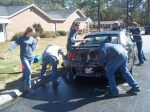
Some 400 members of First Baptist Church of Rincon wore their blue jeans and t-shirts to Sunday morning worship on February 12, because they came ready to go out and work in the community that afternoon.
Members spent the afternoon doing 15 different community service projects that touched over a thousand lives all over Effingham County, Georgia. “Too often, the world hears what we are against,” said the pastor, Dr. Bob Rogers. “We want them to hear loud and clear what we are for. We are for Jesus, we are for love and we are for loving our community personally in the name of Jesus. That’s why this is called ‘Love Out Loud: Face to Face.'”
With that in mind, everything was done for free. Free food was distributed to first responders. There was a free car wash and vehicle safety check on the church grounds– no money accepted. Several people offered the volunteers money, but they politely refused, explaining it was an illustration of God’s grace, that we cannot earn.
Some members went to local laundromats and offered to pay for people’s laundry, while others washed windshields for free at a local drive-in restaurant. Still others grabbed rakes and gloves and cleaned the yards of the sick and elderly, or took their tools to do minor repairs in homes of those in need. Back at the church, a group of volunteers were giving a party for special needs children, while a large host of volunteers descended on the local nursing home and retirement home, visiting the residents, and giving cards and goody bags to the workers.
Some volunteers focused specifically on spiritual and emotional needs, praying with people in homes where volunteer work was being done, as well as making numerous visits to the homebound. One family who has to stay at home due to illness was visited, and said, “We are blessed to be members of such an awesome church who reaches out to our community.” Free Bibles were given away in many different sites, both in English and Spanish. Volunteers from the church’s Hispanic mission participated in several of the projects.
Even though this is the third year that the church has done a “Love Out Loud” day near Valentine’s, it still required weeks of preparation, led by coordinators Beth Pye and Sherri Gordy. A group of volunteers who gave away handmade cards and goody bags, spent hours in preparation before the day of distribution. Organizers had to prepare hundreds of box lunches that could be distributed quickly, so that volunteers had time to eat and go out to serve.
Members of First Baptist Rincon who participated seemed to feel as blessed as those they helped. Kim Callahan said, “First time doing Love Out Loud. It was awesome.” Angie Griffin said, “Our trip to the nursing home was so amazing. Our grandson Carson said after we left, ‘Meme, I feel so good coming here today and spreading Gods love.'” Leonard Zeigler visited the county jail to pray with inmates, and found he was deeply moved by one inmate as they stood on opposite sides of the glass, hands touching the same window, until he saw condensation start rolling down the window.
Kim Weaver, a beautician who helped cut hair for free that day, said, “We let God out of the box.” Joseph Douberly drove around with a team that randomly approached people and offered to pray for them. While some people refused, others were eager for prayer, even calling family out of their homes to join them in prayer. Douberly said that he got “way outside my comfort zone.”
A teenager who participated was inspired to keep serving even after the day was over. Ryan Cole shared, “I had fun washing cars, trucks and our two fire trucks. At the end of church on my way home I saw a lady who needed help. No one stopped to help so I stopped; she was very nice.”
Team coordinator Beth Pye said, “It’s exciting to be part of a church family that actively takes Christ into the community. When we get out there and get involved in other people’s lives, share their pain and their joy, we’re giving them a glimpse of how God can be the fundamental source of their strength and life.”
Logistics coordinator Sherri Gordy said, “It is one thing to talk about “helping people” but that never compares with the feeling of actually reaching down, out, and over to help another person. Love out Loud crosses age, race, denomination, and does exactly what Jesus does for us, if we let Him work in our lives.”
At least five people allowed God to work in their lives in a very personal way, praying to receive Jesus Christ as their Savior and Lord.
Valentine miscommunication

People think of love at Valentine’s. However, some of us fail to communicate.
A cake decorator in New Zealand was asked to include the reference to a Bible verse on the couple’s wedding cake. They requested 1 John 4:18 because it states, “There is no fear in love, but perfect love drives out fear.” Unfortunately, the cake decorator wasn’t a Bible scholar so the cake ended up with a reference to John’s gospel instead of his epistle. In beautiful print was “John 4:18.” Had the decorator taken time to look up the verse this error would have been detected before the wedding. “You have had five husbands, and the man you now have is not your husband.”
I heard about a man who was feeling bad that he had not been romantic. So he decided to show up at his door with a coat and tie and give his wife flowers. He rang the doorbell, and when she answered, there he was in all his glory, as he handed her a dozen roses. To his surprise, she sat down in the doorway and just cried.
“What’s wrong, honey?” he asked.
She replied, “This has been a terrible day. Rachel came home from school sick, Daniel broke a window with his baseball, the microwave won’t work, and now you come home drunk!”
Even though our attempts are communicating love can sometimes be misunderstood, we should still make every effort to express our love. The Bible has an entire book, Song of Solomon, that is dedicated to the celebration of romance between a husband and wife. I know a fellow who often reads verses from the Song of Solomon to his wife. Not a bad idea. Just make sure that you read the right verse. Song of Solomon 4:9 would work: “You have captured my heart with one glance of your eyes.” But you don’t want to read to her from Song of Solomon 7:4: “Your nose is like the tower of Lebanon looking toward Damascus.”
So if you’re thinking about love this Valentine’s, make sure you say it clearly.
How to Deal with Difficult People

Copyright 2012 by Bob Rogers
Your child is wronged by another child, and when you try to talk to her parents, they tell you off.
A fellow church member gets angry with you and refuses to talk to you.
A friend always interrupts you, and you want to be friends but you always get frustrated with the conversation.
A fellow worker never shows you respect, always going over your head.
How do you deal with difficult people?
Whenever there was a disagreement in church business meetings or family squabbles, my Grandfather Rogers loved to quote Romans 12:18, “If it is possible, as far as it depends on you, live at peace with everyone.”
This verse is the pivotal verse in the passage, Romans 12:14-21. It recognizes two important facts about dealing with difficult people: 1) we should live at peace with people, and 2) it’s not always possible. In fact, the passage leading up to verse 18 talk about when it is possible, and then with verse 18, the subject switches to what to do when it is not possible to live at peace with others. So let’s look at it this way.
I. When peace is possible
Most of the time, we can live at peace with others. Whenever it is possible, we should. But how? Verses 14-16 gives us some practical ways to live at peace with difficult people.
A. Be a blessing (v. 14)
We’ve all heard of family members who refuse to speak to one another for years. How sad! Most of the time, peace is possible between two people, if you are willing to make the first move toward reconciliation. So choose to be a blessing.
Paul says, “Bless those who persecute you; bless and do not curse.” This statement, like several others here, refer back to Jesus’ word in the Sermon on the Mount. Jesus told us, “Love your enemies, and pray for those who persecute you” (Matthew 5:44).
Paul must have remembered his own past with this statement, for many years before, Paul was the young Pharisee named Saul who held the coats of those who stoned to death the first Christian martyr, Stephen. Acts 7:60 records that as he died, Stephen said, “Lord, do not hold this sin against them.” Perhaps it was the impact of Stephen’s refusal to curse his persecutors that caused Saul to be so troubled in spirit and respond to the call of God on the road to Damascus, as is recorded two chapters later, in Acts 9.
B. Be empathetic (v. 15)
In verse 15 he adds, “Rejoice with those who rejoice; mourn with those who mourn.” This is more than sympathy; it is empathy. It is identifying with those who hurt. It’s like the little 8-year-old boy who went over to see an elderly man next door whose wife had just died. When he came back, the boy’s mother asked, “What did you say?” The boy said, “Oh, nothing, we just sat on the porch and I helped him cry.” This is an extremely important response to a difficult person, because when we can identify with them and understand why they act the way they do, then we will be much better at relating to them.
C. Be agreeable (v. 16a)
Verse 16 begins, “Live in harmony with one another.” Literally, the Greek means to “have the same mind toward one another.” We can disagree in substance and still be agreeable in spirit.
D. Be humble (v. 16b)
Sometimes the reason that the other person is so difficult to deal with us because the problem is within ourselves! Thus Paul reminds us, “Do not be proud, but be willing to associate with people of low position (this can be translated, ‘be willing to do menial work.’) Do not be conceited.” As Proverbs 3:7 says, “Do not be wise in your own eyes.”
You never know how if you would just be kind to people in low position, how you may benefit from your kindness one day.
II. When peace is impossible
Paul said in verse 18 to live at peace “if it is possible” and if “it depends on you.” He was recognizing that there are times when it is impossible for us to bring about peace in our own power. So what do you do when there is no peace? What do you do when it’s out of your hands?
A. Do not seek personal revenge (v. 17a, 19a)
Although I have listed this under the category of “when peace is impossible,” it probably fits under both categories. This is a principle that goes both ways.
Verse 17 says, “Do not repay anyone evil for evil…” Verse 19 says, “Do not take revenge, my friends…” Jesus also taught the same thing in the Sermon on the Mount. He said, “If someone strikes you on the right cheek, turn to him the other also…If someone forces you to go one mile, go with him two miles” (Matthew 5:39, 41). Jesus was not talking about social injustice; He was making reference to personal insults. This sounds strange to Americans who are used to demanding our rights, but the Christian is to be willing to give up his or her rights for the greater good of bringing peace.
However, even if peace is impossible, it is still the right response to the evil person. As Proverbs 12:16 says, it is wise to ignore an insult.
B. Do what is right (v. 17b)
You see, we do not need to let the meanness of another person drag us down to their level. Thus verse 17 continues, “Be careful to do what is right in the eyes of everybody.” It would be very easy respond to the ugly text message with an ugly reply. It would be easy when a person blesses you out in front of others, to let them have it with a few choice words of your own. It would be easy when the competition cheats to get ahead, for you to cut corners and cheat, as well. We must decide that even when the other person refuses to do what is right, that we will do what is right. Even when we cannot keep the peace, we can keep our integrity.
C. Let God avenge (v. 19b)
What about a terrorist like Osama bin Laden? Is it wrong to seek revenge against somebody like that?
Verse 19 begins by saying, “Do not take revenge” but the verse goes on to say, “leave room for God’s wrath.” That is, we do not take revenge for personal insults and injuries, but we do make room for God to work his vengeance, particularly against social injustice like a terrorist.
There was a great German pastor in World War II named Dietrich Bonhoeffer who opposed Hitler. Bonhoeffer even participated in a plot to assassinate Hitler, and he was a Christian pastor! Why would he do that? Bonhoeffer did it because he knew that it would stop a greater evil. In the Old Testament, Moses was sent to Pharaoh and told to demand justice for the Hebrew slaves. God even sent a “death angel” as a final plague upon the Egyptians to set the people free. When the Hebrews fled across the Red Sea and Pharaoh chased them, God allowed the Egyptians to drown in the sea, and Exodus 15 records the song of rejoicing that Moses sang at their defeat.
How do we reconcile this with Jesus’ words in the Sermon on the Mount about turning the other cheek and loving our enemies? We need to make a distinction between personal offenses and social justice. Proverbs 24:17 says, “Do not gloat when your enemy falls.” Yet Proverbs 11:10 says that “when the wicked perish, there are shouts of joy.” Both of these statements are in the same book of the Bible, and both are true. While it is a virtue to overlook a personal insult, it is not a virtue to overlook a social injustice. The former is gracious; the latter is gross negligence.
D. Overcome evil with good (v. 20-21)
Finally, we deal with the most difficult of people, the evil person, by overcoming evil with good. The statement in verse 20 has an application both ways, like verse 17, to personal insults and difficult people with whom we might reconcile, but it also applies to the more difficult and devilish people and situations from which we can expect no reconciliation.
Paul quotes Proverbs 25:21-22, saying, “If your enemy is hungry, feed him; if he is thirsty, give him something to drink. In doing this, you will heap burning coals on his head.”
This can be interpreted two different ways. The popular way to understand it, is to mean “Kill them with kindness” and thus shame them into repentance. It reminds me of the church sign that said, “Love your enemies—it messes with their heads.” It is true many times that we overcome evil by refusing to respond with evil. By showing kindness, we can often change a heart.
Most Christians are familiar with this statement, “heap burning coals on their head,” and we’ve come to use it in the sense of shaming them by killing them with kindness. But there is a second way to understand this—a way that applies to times when it is not possible to find peace. In ancient times, Egyptians had a ritual of punishment for those who repented, where they had to walk on fiery hot coals, and in scripture, fire and hot coals were often used of punishment. Psalm 140:10 says, “Let burning coals fall upon them; may they be thrown into the fire.” How is this overcoming evil with good? Well, in the next chapter of Romans, chapter 13, Paul talks about how God has placed the government over us for our good. He says in Romans 13:4 that the government is God’s servant for God, the avenger that brings wrath on the one who does wrong. President Barack Obama and former president George W. Bush are opposites in their political views, but one thing they both agree on was the government action is removing the terrorist, Osama bin Laden. They both said that while they took no personal pleasure in the death of Osama bin Laden, nevertheless, “Justice was done.”
Thus we could read verses 20-21 this way: On a personal level, respond to evil with kindness. If your enemy is hungry, feed him. Let his evil thus be so obvious and so exposed, in such contrast to your goodness, that evil will be conquered by good. God will bring about the vengeance, often by using the government law enforcement and military to bring about justice. In this way, you will heap burning coals of punishment on his head, but leaving room for God’s wrath. We need to be like the preacher who said, “I’m not going to get even. I’m going to tell God on you!” (Charles R. Swindoll, The Tale of the Tardy Oxcart, p. 495.)
How do you deal with difficult people? If possible, as far as it depends on you, live at peace with them. If possible, be a blessing, be empathetic, be agreeable, be humble. And if none of those things are possible, you may just need to walk away and “tell God on them.”
How does God want you to deal with your difficult person?
Mrs. Irby comes to the wrong church — or comes to the church wrong

Copyright 2012 by Bob Rogers
A Baptist pastor accepted the call to a church in Sledge, Mississippi. The day that he moved in, a 90-year-old woman drove up and greeted him in his driveway. “I’m Mrs. Irby,” she said. “I was a Presbyterian until my husband died, then I went back to the Methodist Church. But I don’t ever intend on coming to your church. I just came by to say welcome to the community.” With that, she drove off, spinning wheels and throwing dirt and rocks all over the new pastor.
So the pastor was surprised months later, when Mrs. Irby showed up one Sunday morning at the Baptist church. Early in the service, the pastor asked everybody to stand and greet one another. Mrs. Irby started to head out the door. The Baptists asked her where she was going, and she said, “In my church, when you stand, it’s time to go.” They helped her back to her pew to stay for the rest of the service. The pastor began to preach, and Mrs. Irby shouted loudly to the young lady beside her, “When is he ever gonna quit?” The congregation chuckled, and the pastor wrapped up his sermon quickly. Mrs. Irby stood to go. As she greeted the pastor at the door, she said, “The only reason I came here today is that the Methodists didn’t have church because their pipes busted. But I didn’t get a thing out of your sermon. Next time I’ll have to remember to bring my hearing aids.” And with that, she was out the door, never to return.
Which reminds me: you only get out of church what you put into it. The psalmist says, “Serve the Lord with gladness! Come into his presence with singing! Enter his gates with thanksgiving, and his courts with praise!” (Psalm 100:2, 4, ESV). Come to church with a prayer in your heart, a smile on your face, a Bible in your hand, and if you need them, glasses on your eyes and hearing aids in your ears, so that you don’t miss what God wants to say to you.
Divided vote eventually unites church
 Copyright 2012 by Bob Rogers
I heard about a church that called a pastor with a vote of 200-3. The pastor spent his first six months trying to find out the names of the three who voted against him. Then he spent the next six months trying to please those three. At the end of the year, the church voted to fire the pastor. The vote was three to keep him, and 200 to get rid of him!
There’s an old saying that you can’t please everybody, and that is certainly true in church, which is why we need to try to please the Lord first. However, if the church is evenly divided, it is wise to back off a decision and seek to bring spiritual unity before proceeding, especially when voting on a pastor.
A pastor told me an interesting story about a close vote to call a pastor in a rural Baptist church near Claxton, Georgia. The church voted 51% in favor and 49% against calling a man as their pastor. Ignoring conventional wisdom, the preacher accepted the call, and came to the church as their pastor. After a couple of years, however, he resigned. Upon his resignation, he said, “I have unified the church. When I came, half of them were against me. Now all of them are against me.”
Elections can either unite people or divide people. Unfortunately, our country is pretty divided over politics. But as Christians, God calls us to be uniters, not dividers. In fact, however we voted, we are called upon to pray for those in leadership. Scripture says, “I urge, then, first of all, that requests, prayers, intercession and thanksgiving be made for everyone– for kings and all those in authority, that we may live peaceful and quiet lives in all godliness and holiness” (1 Timothy 2:1-2, NIV). Someone might say, “Yeah, but our politicians are so bad these days.” I would remind that person that in New Testament days, the politicians threw the Christians to the lions, but the Christians still prayed for them.
We can do no less.
Why Jesus Is Dangerous
Copyright 2012 by Bob Rogers
 Jesus is dangerous.
He is so dangerous that we read in Mark 3:6 that the Pharisees and the Herodians, who were total opposites and enemies of one another, plotted together to get rid of Him.
Of course, that a long time ago. Jesus is pretty harmless today, isn’t He? No, He’s not! Not the real Jesus. The real Jesus is more dangerous today than He was two thousand years ago.
As the Gospel of Mark tells his stories of Jesus in chapters 2-4, we see exactly why Jesus is dangerous.
I. Because He upsets our social status (Mark 2:17)
One of the most popular movies in 2011 was The Help. It is historical fiction, based on the novel by Kathryn Stockett. Set in Jackson, Mississippi, in the early 1960’s, it tells about life when black women worked as maids for white women all over the South, and were often treated as less than human. The help were never allowed to sit at the same table or even use the same restrooms as their employers. Yet the maids were the ones who actually brought up the white children. One of the maids repeatedly tells a little white girl who is neglected by her mother, “You is kind, you is smart, and you is important.” Even though the maid was being treated as unimportant herself, she reminds the little girl that she has value.
Jesus upset the social taboos of His own day when he went to eat dinner at the house of a tax collector named Levi. We read in Mark 3:15: “While He was reclining at the table in Levi’s house, many tax collectors and sinners were also guests with Jesus and His disciples… When the scribes and Pharisees saw that He was eating with sinners and tax collectors, they asked His disciples, ‘Why does He eat with tax collectors and sinners?’”
Notice that the same phrase is repeated three times: “tax collectors and sinners.” When they used the word “sinners,” they were using it as a technical term. This was a category of people. “Sinners” were people who failed to follow the religious law. Pharisees said the word with disgust in their voices. And nobody liked tax collectors, because they cheated people and worked for a foreign government.
Yet Jesus was eating with “those people.” The Pharisees tried to pressure Him to stop. The Old Testament law said to keep oneself pure. How could Jesus associate with such people?
Jesus said in verse 17: “Those who are well don’t need a doctor, but the sick do need one. I didn’t come to call the righteous, but sinners.” Today, that would be like saying, “I came to call prostitutes, not Sunday School teachers.”
Do you see why Jesus is dangerous? Why, if we acted like Him, we might have to go down to Savannah and love on homeless people. If we acted like Him, we might have to go out in the streets of Rincon and hand out food to people, and tell them, “You is important—to God.” This gets way outside our comfort zone. Dangerous stuff.
II. Because He replaces our religion (Mark 2:27-28)
Later in chapter two, Mark says that Jesus makes a shocking statement about the Sabbath, showing Jesus replaces our religion.
The Fourth Commandment says to keep the Sabbath Day holy (Exodus 20:8-11), because God rested on the seventh day of creation. The word Sabbath means “rest.” The Sabbath was very unique to Jews. No other religion had a day of rest like the Jews, and keeping the Sabbath set them apart from all other people. We need Sabbath rest today. With the craziness of our busy lives, we could all benefit from times of rest, worship, and reflection. But over the years, the Jewish rabbis had made up hundreds of rules about how to not work on the Sabbath. The rabbis had rules about how far you could walk before it was considered work, and how much you could harvest or cook before it was considered work. Their rules went to ridiculous extremes. So Mark 2:23 says that Jesus disciples picked some heads of grain on the Sabbath and ate it, and the Pharisees cried foul. “You can’t do that! That’s working on the Sabbath! You harvested wheat!”
Jesus replied, “The Sabbath was made for man, not man for the Sabbath.” This statement in verse 27 is only found in the Gospel of Mark. The Sabbath was supposed to help people rest, not to be a burden to them. But it had become a rat race. Lily Tomlin said the trouble with the rat race is that even if you win, you are still a rat. (David E. Garland, The NIV Application Commentary: Mark, p. 124)
Unfortunately, religion often becomes an end in itself. People think if they keep all the religious rules, they are right with God. Jesus upsets the apple cart, and says it’s not about religion. Then He goes even farther, and claims that He Himself has authority to change it all, as He says in v. 28, “So the Son of Man is Lord even of the Sabbath.” Remember, “Son of Man” is Jesus’ term for Himself. So Jesus is saying, “It’s not about religious rules. It’s about a relationship with Me.”
Do you see why Jesus is dangerous? If this kind of teaching gets out, people will think they don’t have to keep the religious rules. They might run wild! They might think they can work on Sunday and who knows what else they might do.
III. Because He passes over our politics (Mark 3:6)
We are in the middle of a presidential election. Later this fall, the Republicans and Democrats will be fighting it out. In Jesus’ day, they had political parties, as well. The Pharisees were the defenders of traditional values. They stood for the nation of Israel, independent from Rome. The Herodians were the supports of Herod the Great and his family who ruled after him. King Herod were under the authority of the Romans and supported the empire.
In Mark 3:1-5, what Jesus said about religion turned political. It was against their rules to heal on the Sabbath, but Jesus asked whether it was lawful to do good or evil on the Sabbath, and then He went ahead and healed the man. That was more than the Pharisees could take. So they went out and made an alliance with their political arch-enemies, the Herodians. Read it in Mark 3:6: “Then the Pharisees went out and began to plot with the Herodians how they might kill Jesus.”
Wow! Jesus was considered so dangerous, that it could bring the Republicans and the Democrats together for a joint session and a unanimous vote. Kill Him!
No political party has a monopoly on Jesus Christ. Politicians should not think they can press a certain hot button and have the evangelical vote. Christianity cannot be contained as a wing of a certain party and told to behave and sit down. When the Republicans are wrong on an issue, Christians must speak out, and when the Democrats are wrong on an issue, we must speak out. We must pray for our president, but our ultimate loyalty is not to him. Our ultimate loyalty is to Jesus Christ, not a government. Jesus is Lord over the Sabbath, and He is also Lord over all political alliances. Christ passes over politics.
That’s dangerous talk. People might think they don’t have to obey the government if we keep talking like that. Didn’t the early disciples say to their government, “We must obey God rather than men!” (Acts 5:29). Jesus is dangerous.
IV. Because He scares us about our sin (Mark 3:28-30)
Jesus said something in Mark 3:28 that may be the most dangerous thing we have read yet. He said, “I tell you the truth, all the sins and blasphemies of men will be forgiven them. But whoever blasphemes against the Holy Spirit will never be forgiven; he is guilty of an eternal sin.”
Wow! The unpardonable sin. That is a frightening thought, that we could commit an eternal sin that could never be forgiven. We read about it again in 1 John 5:16: “There is a sin that leads to death.”
There have been all kinds of speculation about what is the unpardonable sin. Many people think it is murder or rape or child molestation. Some churches teach that suicide is unpardonable, since it is self-murder and there is no opportunity to repent afterwards. But according to Mark 3, none of these are the unpardonable sin.
Look at the context of Jesus’ words. The Jewish religious leaders took another pot-shot at Jesus in Mark 3:22. They said the reason he had driven out demons was that Jesus was demon-possessed Himself. “By the prince of demons he is driving out demons,” they said. It was in response to being accused of being a demon that Jesus said that blasphemy against the Holy Spirit cannot be forgiven. Then just to make it clear this applied to the words of the religious leaders, read Mark’s comment in verse 30: “He said this because they were saying, ‘He has an evil spirit.’”
Thus, they committed blasphemy against the Holy Spirit because they said Jesus had an evil spirit. Clearly, the unpardonable sin is rejection of Jesus Christ.
That scares us. This goes completely against politically correct thinking. This means murderers and rapists and child molesters can be forgiven. It means a person can be forgiven of suicide. It also means that a law-abiding citizen who rejects Jesus Christ will not be forgiven and will go straight to hell. How narrow-minded is that? The world thinks we’re crazy with that kind of thinking, but that’s what Jesus says.
We would like to think that we can handle our own sin. We think as long as we’re not murders or something we don’t need to worry about our sin. But Jesus says we can’t handle it without Him. Without Him we’re hopelessly lost. Dangerous stuff.
V. Because He petrifies us with His power (Mark 4:41)
Yet there is one more reason that Jesus is dangerous. In Mark 4:36 we read that Jesus and his disciples got in a boat on the Sea of Galilee. The Sea of Galilee is 700 feet below sea level, and is surrounded by mountains. Mt. Hermon, located only 30 miles north of the sea, is 9,200 feet high. The cold air rushing down from the mountains hitting the warm air coming up from the water can turn into a sudden storm, and that is what happened to Jesus and His disciples that day.
Mark 4:37 calls it a “furious squall” that nearly swamped their boat. But verse 38 says Jesus was at the stern, sleeping on a cushion.
But what happened next was even more amazing. Jesus got up, rebuked the wind and waves, and said, “’Quiet! Be still!’ Then the wind died down and it was completely calm.”
You know what most Sunday School classes do with this story? They spiritualize it. The teacher says, “Jesus calmed the storm.” Then the teacher looks around the room and says, “What storm are you going through?” Then people talk about Jesus helping them through their problems. But this is not a story about Jesus making us comfortable when our problems make us uncomfortable. This is a story that says with Jesus, we’ve got an even bigger problem.
When the storm started, the disciples were afraid. Jesus even asked them in verse 40, “Why are you so afraid?” But when Jesus showed His power to still the storm, verse 41 says they were “terrified.”
There is a story of King Canute, the King of Denmark in the eleventh century. His courtiers were flattering him excessively, and he said, “Am I divine?” He walked to the seashore and said, “Stop,” but the ocean waves kept coming in. What he was saying was, “Only God can stop the sea, and I’m not God.” (Timothy Keller, King’s Cross, p. 50).
If Jesus is Lord over the storm, He’s Lord over everything. We can’t tuck Him away during the week and pull Him out on Sunday. He won’t stay tucked away. He is Lord over our social relationships and Lord over our religious rules and Lord over our politics. But He is much more! He is Lord over our eternal destiny and able to pardon us forever to Heaven or sentence us forever to an eternity in Hell for rejecting Him, because He is Lord over all.
The storm had a power they could not control, and Jesus had infinitely more power, and they had less control over Him. That’s dangerous. No wonder they were terrified. But here’s the difference. A storm doesn’t love you, but Jesus does.
A storm is indifferent; if you are in the path of the wind, you get blown away. But if you are in the path of the untamed love of Jesus, you are filled with His protection and care. A storm doesn’t love you, but Jesus does.
Likewise, social rules and social taboos don’t care about you. If you don’t fit in with the right crowd, then tough luck. But Jesus cares about you and accepts you; He will break the social barriers to get to you and love you.
Religion doesn’t care about you. If you don’t fit into the rules, you’re out. Religion doesn’t love you, but Jesus does. He didn’t design the Sabbath to burden you; He designed it to give you rest in His grace. He said, “Come to me, and I will give you rest.”
Political parties and political machines don’t care about you. When they don’t need you, they will discard you. Political parties don’t love you, but Jesus does. Make Jesus your resident president and you will never have to fear the unpardonable sin. In fact, you will be pardoned, forever.
Timothy Keller says that if the disciples had really understood that Jesus was both powerful and loving, they would not have been scared. They thought if Jesus loved them He wouldn’t let bad things happen to them. They were wrong. He can love somebody and still let bad things happen to them, because He is God, and He knows better than they do.
Keller says, “If you have a God great enough and powerful enough to be mad at because he doesn’t stop your suffering, you also have a God who’s great enough and powerful enough to be have reasons that you can’t understand…. If you’re at the mercy of the storm, its power is unmanageable and it doesn’t love you. The only place you’re safe is in the will of God.” (Timothy Keller, King’s Cross, p. 52)
Yes, Jesus is dangerous; you cannot control Him. But in the storm, there’s no safer place to be than in His arms. He’s dangerous, but because He’s so powerful, He is able to take care of you. Will you trust your life to Him?
Preached at First Baptist Church, Rincon, GA January 15, 2012 A.M.
Dr. Bob Rogers, pastor.
Questions about Heaven
 Melissa C. recently wrote to ask the following about Heaven, and gave me permission to post her question and my response. She wrote:
“It bothers me that heaven is described as having mansions, gold, etc. and that those type of items should be such an incentive (for lack of a better term). I know that Jesus often preached that there would be a reward in heaven but as he focused not on material things it is inconsistent that heaven is described in a materialistic manner. If the focus in heaven is praising God, why the promise of what I describe as “earthly” treasures? As I believe that we leave behind our earthly shell when we die, what is the significance of the saveds’ bodies rising from their graves when Christ returns to earth?”
My answer was:
Melissa,
You ask some good questions that others have wondered.
1. John Piper addresses the first question very well in his book, Desiring God. He points out that there is nothing wrong with the motivation of rewards and pleasure for following God. The Old Testament psalmists often spoke of the “delight” of God’s law and delight of knowing God Himself (Psalm 1:2; 37:4; 119:77). Jesus often spoke of rewards in heaven. The Sermon on the Mount is full of such references (Matthew 5:12, 19; 6:1, 4, 6, 18, 20-21; 7:11). While Jesus told us not to focus on earthly treasures, there is no reason to think that we will not receive heavenly treasures. In fact, Jesus says this very thing in Mark 10:29-30. After telling a rich young man to give away his possessions to the poor and follow Him, Jesus then assures the disciples that anyone who has left behind family or possessions for the gospel will receive a hundred times as much in reward as well as eternal life. So it’s not that there is anything wrong with having a desire for reward or for good things; the problem is when material things because our first priority before the Lord Himself. As Jesus said in Matthew 6:33, seek FIRST His kingdom, and then these things will be given to you, as well!
2. We leave behind our earthly shell when we die, and our spirits and souls go immediately to be with the Lord. But the Bible also teaches that just as Jesus’ body was literally raised to life and glorified, so our own bodies will be raised and we will have new, perfectly renewed bodies. Philippians 3:20-21 says Jesus will transform our lowly bodies so they will be like His glorious body. We read in 1 Corinthians 15:51-54 explicitly states that our corrupt, perishable bodies will be changed to incorrupt, imperishable bodies at the resurrection. This resurrection will happen at the return of Christ (1 Thessalonians 4:16-17). So the teaching of scripture is that at death our souls go to heaven, but at the Second Coming of Christ, our bodies are raised and reunited with our souls in heaven, the “new heaven” of Revelation 21:1.
A great book on this subject is Heaven by Randy Alcorn.
Jesus in Every Book of the Bible

In Genesis, Jesus is the Ram at Abraham’s altar
In Exodus, He’s the Passover Lamb
In Leviticus He’s the High Priest
In Numbers He’s the Cloud by day and Pillar of Fire by night
In Deuteronomy He’s the City of our refuge
In Joshua He’s the Scarlet Thread out Rahab’s window
In Judges He is our Judge
In Ruth He is our Kinsman Redeemer
In 1st and 2nd Samuel He’s our Trusted Prophet
And in Kings and Chronicles He’s our Reigning King
In Ezra He’s our Faithful Scribe
In Nehemiah He’s the Rebuilder of everything that is broken
And in Esther He is the Mordecai sitting faithful at the gate
In Job He’s our Redeemer that ever lives
In Psalms He is my Shepherd and I shall not want
In Proverbs and Ecclesiastes He’s our Wisdom
And in the Song of Solomon He’s the Beautiful Bridegroom
In Isaiah He’s the Suffering Servant
In Jeremiah and Lamentations it is Jesus that is the Weeping Prophet
In Ezekiel He’s the Wonderful Four-Faced Man
And in Daniel He is the Fourth Man in the midst of a fiery furnace
In Hosea He is my Love that is forever faithful
In Joel He baptizes us with the Holy Spirit
In Amos He’s our Burden Bearer
In Obadiah our Savior
And in Jonah He is the Great Foreign Missionary that takes the Word of God into all the world
In Micah He is the Messenger with beautiful feet
In Nahum He is the Avenger
In Habakkuk He is the Watchman that is ever praying for revival
In Zephaniah He is the Lord mighty to save
In Haggai He is the Restorer of our lost heritage
In Zechariah He is our Fountain
And in Malachi He is the Sun of Righteousness with healing in His wings.
In Matthew, “Thou art the Christ, the Son of the Living God”
In Mark He is the Miracle Worker
In Luke He’s the Son of Man
And in John He is the Door by which every one of us must enter
In Acts He is the Shining Light that appears to Saul on the road to Damascus
In Romans He is Our Justifier
In 1st Corinthians our Resurrection
In 2nd Corinthians our Sin Bearer
In Galatians He redeems us from the law
In Ephesians He is our Unsearchable Riches
In Philippians He supplies our every need
And in Colossians He’s the Fullness of the Godhead Bodily
In 1st and 2nd Thessalonians He is our Soon Coming King
In 1st and 2nd Timothy He is the Mediator between God and man
In Titus He is our Blessed Hope
In Philemon He is a Friend that sticks closer than a brother
And in Hebrews He’s the Blood of the Everlasting Covenant
In James it is the Lord that heals the sick
In 1st and 2nd Peter He is the Chief Shepherd
In 1st, 2nd and 3rd John it is Jesus who has the tenderness of love
In Jude He is the Lord coming with 10,000 saints
And in Revelation, lift up your eyes, Church, for your redemption draws near; He is our King of Kings and Lord of lords!
— Source Unknown
If you see a video ad below this post, I do not necessarily endorse the product.
HCSB Study Bible is outstanding
 The Holman Christian Standard Bible (HCSB) is an excellent Bible translation that premiered in 2004. It is more readable than the New American Standard Bible (NASB), but more accurate than the New International Version (NIV). However, until now there has not been a really good study Bible available in the HCSB, with the exception of the Apologetics Study Bible, which is really intended for scholarly readers. The HCSB Illustrated Study Bible was not really a study Bible, but more of a Bible with a lot of illustrations. The absence of a good popular study Bible in this good translation is about to change in October 2010.
The HCSB Study Bible was published in October 2010. I had the opportunity to study a preview copy and later I reviewed a hardbound copy.
As a busy pastor, I love the rich resources available all in one volume in the HCSB Study Bible. This study Bible takes some of the good qualities of both the HCSB Illustrated Study Bible and the HCSB Apologetics Study Bible, but much more. The Apologetics Study Bible is more scholarly, whereas the HCSB Study Bible takes a more popular approach. However, don’t let that statement mislead you. The HCSB Study Bible is very thorough in dealing with all kinds of issues of Bible interpretation and the footnotes do an excellent job of discussing the important issues of interpretation, historical background and theology. It has all of the things one would expect in a study Bible, including center column cross-references, helpful notes at the bottom of the page, maps, introductions to each book of the Bible and a concordance in the back (one negative is that the concordance is not a full concordance, but only a 12-page topical concordance; I hope this will be corrected in future editions). But it also has some extras that set it apart from any other study Bible I have seen: word studies of Hebrew and Greek words, time lines to place events in their historical chronology, a Bible reading plan and essays on theological issues. It has an abundance of full-color photographs to illustrate Bible times and places. I particularly like the word studies. When Luke’s gospel mentions that Jesus was born of a virgin, at the bottom of the page there is a text box with a more detailed explanation of the Greek word “parthenos,” translated “virgin.” The footnotes also make frequent explanation of Hebrew and Greek words used and their translation, which is not often found in study Bible footnotes.
The hardbound volume is well-made. It lies open on the desk, even if is open to Genesis or Revelation. The paper quality is thick enough to write on. I love the use of color in the text: chapters numbers and section headings are in brown, and verse numberings are in blue. This is easier on the eye and helps the reader find his or her place. At the bottom of the page, the textual notes have a tan background, which separates them from the study notes below which have a white background, again making it easier on the eye to find. This study Bible also makes generous use of full-color maps and illustrations. For example, at 2 Chronicles 12 the description of Shishak king of Egypt’s invasion of Israel is illustrated with a full-color map of the battles on the facing page; at John 9 there is a photograph of the Pool of Siloam where the blind man in John 9 washed his eyes.
While it is not perfect, this may very well be the best study Bible available to date.


 Bob Rogers