Blog Archives
The chaotic 1930 special session of the Miss. Baptist Convention

Copyright by Robert C. Rogers and the Mississippi Baptist Convention Board.
On July 15, 1930, an unprecedented second special session of the Mississippi Baptist Convention met in Newton, attended by 318 messengers. It turned into chaos.
(A first special session had been held in April to respond to the problems of the Great Depression by closing Clarke College and moving the Mississippi Baptist Orphanage to the campus of Clarke; however, some legal matters were not handled, so a second special session was called.)
This second special session erupted into a chaotic state of confusion, described by The Baptist Record as featuring “unanimous disagreement, often vociferously expressed.” MBCB executive R.B. Gunter made a plea for harmony, but it went unheard. W.N. Taylor of Clinton presented resolutions to continue Clarke College and keep the orphanage near Jackson, in effect to rescind the vote of the previous session. Convention president Gates ruled the resolutions out of order, but a challenge was made to his ruling; the messengers voted 164-154 to sustain his ruling. Next, M.P. Love of Hattiesburg moved that the property of the orphanage be mortgaged to pay the debts of Clarke College, but his resolutions were voted down. At a stalemate, the messengers then adjourned to dinner.
The Baptist Record commented that the only thing the messengers agreed about was that “the people of Newton and vicinity furnished a good dinner.” After dinner, the messengers returned and reversed their earlier actions. This time, Gates’ ruling was overturned. Next, the messengers adopted Taylor’s resolutions, voting to keep the orphanage in Jackson and to re-open Clarke College. To pay for it, the messengers authorized the trustees to borrow the money, using the property of the college and orphanage as security. In addition, they pledged an extra $10,000 each to Blue Mountain College and Mississippi Woman’s College. The debacle of these two special sessions taught Mississippi Baptists a lesson they had not learned from the 1892 convention (which attempted to relocate Mississippi College, only to have it overturned later): attempts to operate their institutions from the floor of the convention could lead to great confusion and chaos.
(Dr. Rogers is the author of the new book, Mississippi Baptists: A History of Southern Baptists in the Magnolia State.)
A challenge to Calvinism: M.T. Martin and the controversy that rocked Mississippi Baptists in the 1890s
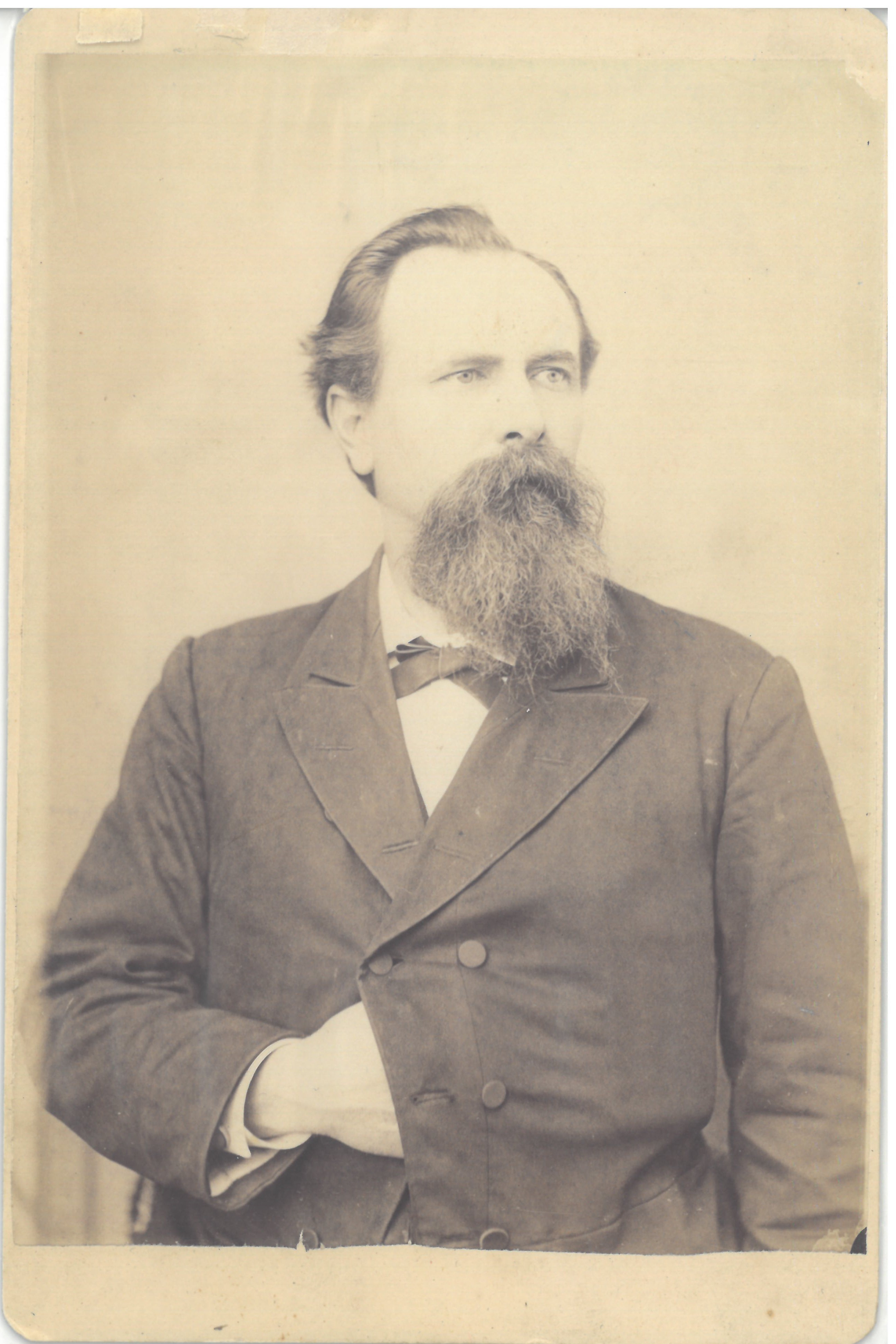
Copyright by Robert C. Rogers and the Mississippi Baptist Convention Board.
In 1893, a controversy began in the Mississippi Baptist Association and eventually spread across the state. Jesse Boyd wrote, “Its rise was gradual, its force cumulative, its aftermath bitter, and its resultant breach slow in healing.”1 While it may have been a quibble over words rather than a serious breach of Baptist doctrine, it illustrates how Mississippi Baptists clashed over Calvinist doctrine by the end of the 19th century.
M. Thomas Martin was professor of mathematics at Mississippi College from 1871-80, and he also served as the business manager of The Baptist Record from 1877-81. He moved to Texas in 1883, where he had great success as an evangelist for nearly a decade, reporting some 4,000 professions of faith. However, his methods of evangelism drew critics in Texas. According to J.H. Lane, while Martin was still in Texas, “the church in Waco, Texas, of which Dr. B. H. Carroll is pastor, tried Bro. Martin some years ago, and found him way out of line, for which he was deposed from the ministry.” In 1892 Martin returned to Mississippi and became pastor of Galilee Baptist Church, Gloster (Amite). Martin preached the annual sermon at the Mississippi association in 1893. His sermon had such an effect on those present, that the clerk entered in the minutes, “Immediately after the sermon, forty persons came forward and said that they had peace with God, and full assurance for the first time.” The following year, Mississippi association reported on Martin’s mission work in reviving four churches, during which he baptized 19 people, and another 60 in his own pastorate. Soon Mississippi Baptists echoed the Texas critics that he was “way out of line,” not because he baptized so many, but because so many were “rebaptisms.”2
The crux of the controversy was Martin’s emphasis on “full assurance,” which often led people who had previously professed faith and been baptized, to question their salvation and seek baptism again. In 1895, the Mississippi association called Martin’s teachings “heresy” and censured Martin and Galilee for practicing rebaptism “to an unlimited extent, unwarranted by Scriptures.” When the association met again in 1896, resolutions were presented against Galilee for not taking action against their pastor, but other representatives said they had no authority to meddle in matters of local church autonomy. As a compromise, the association passed a resolution requesting that The Baptist Record publish articles by Martin explaining his views, alongside articles by the association opposing those views, “that our denomination may be… enabled to judge whether his teachings be orthodox or not.” The editor of The Baptist Record honored the request, and Martin’s views appeared in the paper the following year. The association enlisted R.A. Venable to write against him, but Venable declined to do so. Martin also published a pamphlet entitled The Doctrinal Views of M.T. Martin. When these two publications appeared, what had been little more than a dust devil of controversy in one association, developed into a hurricane encompassing the entire state.3
Most of Martin’s teachings on salvation were common among Baptists. Even his opponent, J.H. Lane, admitted, “Some of Bro. Martin’s doctrine is sound.” Martin taught that the Holy Spirit causes people to be aware that they are lost, and the Spirit enables people to repent and believe in Christ. He taught that people are saved by grace alone, through faith, rather than works, and when people are saved, they should be baptized as an act of Christian obedience. Martin said that salvation does not depend on one’s feelings, and that children of God have no reason to question their assurance of salvation.
These teachings were not controversial. What was controversial, however, was what Lane called “doctrine that is not Baptist,” and what T.C. Schilling said “is not in accord with Baptists.” Martin said if a man doubted his Christian experience, then he was never true a believer.
He considered such doubt to be evidence that one’s spiritual experience was not genuine, and the person needed to be baptized again. “If you have trusted the Lord Jesus Christ,” Martin would say, “you will be the first one to know it, and the last one to give it up.” He frequently said, “We do wrong to comfort those who doubt their salvation, because we seek to comfort those whom the Lord has not comforted.” Therefore, Martin called for people who questioned their salvation to receive baptism regardless of whether they had been baptized before. “I believe in real believer’s baptism, and I do not believe that one is a believer until he has discarded all self-righteousness, and has looked to Christ as his only hope forever… I believe that every case of re-baptism should stand on its own merits, and be left with the pastor and the church.”4
The 1897 session of the Mississippi association took further action against Martinism. They withdrew fellowship from Zion Hill Baptist Church (Amite) for endorsing Martin and urged Baptists not “to recognize him as a Baptist minister.” The association urged churches under the influence of Martinism to return to the “old faith of Baptists,” and if not, they would forfeit membership. When the state convention met in 1897, some wanted to leave the issue alone, but others forced it. The convention voted to appoint a committee to report “upon the subject of ‘Martinism.’” Following their report, the convention adopted a resolution of censure by a vote of 101-16, saying, “Resolved, That this Convention does not endorse, but condemns, the doctrinal views of Prof. M. T. Martin.” While a strong majority condemned Martinism, a significant minority of Baptists in the state disagreed. From 1895 to 1900, the Mississippi association declined from 31 to 22 churches, and from 3,042 to 2,208 members. In 1905, the state convention adopted a resolution expressing regret for the censure of Martin in 1897.5
Earl Kelly observed two interesting doctrinal facts that the controversy over Martinism revealed about Mississippi Baptists during this period: “First, the Augustinian conception of grace was held by the majority of Mississippi Baptists; and second, Arminianism was beginning to make serious inroads into the previously Calvinistic theology of these Baptists.” It is significant that Mississippi association referred to Martinism as a rejection of “the old faith of Baptists,” and that when J.R. Sample defended Martin, Lane pointed out that Sample was formerly a Methodist.6
(Dr. Rogers is the author of Mississippi Baptists: A History of Southern Baptists in the Magnolia State, to be published in 2025.)
SOURCES:
1 Jesse L. Boyd, A Popular History of the Baptists of Mississippi (Jackson: The Baptist Press, 1930), 178-179.
2 Boyd, 196-197; Minutes, Mississippi Baptist Association, 1893; 7; Z. T Leavell and T. J. Bailey, A Complete History of Mississippi Baptists from the Earliest Times, vol. 1 (Jackson: Mississippi Baptist Publishing Company, 1904), 68-69; The Baptist Record, May 6, 1897.
3 Minutes, Mississippi Baptist Association, 1895; 1896, 9.
4 Boyd, 179-180; The Baptist Record, March 18, 1897, May 6, 1897, June 24, 1897, 2.
5 Minutes, Mississippi Baptist Association, 1897, 6, 14; Minutes, Mississippi Baptist Convention, 1897, 13, 17, 18, 22, 31; 1905, 47-48; Leavell and Bailey, vol. 1, 70; Boyd, 198. Martin died of a heart attack while riding a train in Louisiana in 1898, and he was buried in Gloster.
6 Earnest Earl Kelly, “A History of the Mississippi Baptist Convention from Its Conception to 1900.” (Unpublished Doctoral Thesis, Southern Baptist Theological Seminary, Lousville, Kentucky, 1953), 114; The Baptist Record, May 6, 1897.
The controversy that almost moved Mississippi College to Meridian

Copyright by Robert C. Rogers and the Mississippi Baptist Convention Board.
Few Mississippians are aware that in the 1890s, there was a huge controversy among Baptists over an attempt to remove Mississippi College from Clinton to a more prominent location, ultimately favoring Meridian. Those in favor of relocating the school were nicknamed “removalists.” The removalist movement began sometime in the mid-1880s, as it was first suggested publicly at the State Convention in 1885, and the issue came to the forefront in 1891.1
The trustees of Mississippi College tried to stop the movement by making changes in the administration of the college. The president, W. S. Webb, had served faithfully since 1873 but he appeared physically incapable of continuing as the administrator of the college. On August 11, 1891, after a closed-door meeting with the faculty, the trustees encouraged Dr. Webb to retire, which he agreed to do, and he was made an emeritus professor. Webb was succeeded by his son-in-law, Robert A. Venable, who left the pastorate of First Baptist Church of Memphis to become the college’s president. Two younger professors, R. M. Leavell and S. C. Mitchell, resigned in objection to these changes. Historian Z. T. Leavell implied that the changes involved a conflict between older and younger generations, writing that “the surging of young manhood, with progressive ideas opposed the staid thoughts of wise old age.”2
At the same time that it was making administrative changes, Mississippi College was having financial problems. More than half of all Mississippi Baptist gifts went to the college in 1891, yet the college operated at a loss. The buildings needed repairs, and the finance committee was behind in paying professor’s salaries. The school reported these deficits to the Convention from year to year, but the deficits continued to increase. The trustees urged an increase in the college endowment from $40,000 to a “minimum” of $100,000, if the school were to compete with rival institutions. It was because of these challenges that the “removalist” movement arose. Some leaders contended that the removal of Mississippi College to a larger city would give it added prestige, thus furnishing an incentive for larger gifts for its endowment. Clinton was still a village of only 354 people in 1900, whereas Meridian had 14,050 citizens, making it the second-largest city in the State after Vicksburg’s 14,834.3
At the State Convention meeting in 1891, a committee was elected to study other possible locations for Mississippi College. There was widespread interest in relocating the college, even some support among the college’s closest friends, as the study committee included two trustees of the college, and former college president W. S. Webb presided over the meeting, as he was serving as president of the Mississippi Baptist Convention at the time.4
When the State Convention met again in 1892, the committee reported an offer from the city of Meridian to donate 20 acres of land and erect a building by October 1893, if the college would relocate there. Immediately after the report, W. H. Hardy proposed that the offer of Meridian be accepted. Hardy was a resident of Meridian, former State Convention president, and one of the most prominent businessmen in the State. However, there was fierce opposition to the proposal. Walter Hillman of Clinton delivered a well-prepared speech against the relocation. Hillman was the former president of Hillman College and Mississippi College, and he had given financial aid to the college during the Reconstruction period when no one else could. Both Hardy and Hillman were respected, influential leaders. Sharp lines were drawn, but those favoring removal were in the majority. Speeches, motions and counter motions were made on each side. J. S. Solomon of Meridian raised the offer to 80 acres of land and the “removalists” guaranteed $50,000 from business men of Meridian, to remove the college to Meridian, while the opposition could only offer to repair the buildings at Clinton. Debate continued until 1:30 in the morning, when the exhausted messengers finally voted, 96-66 in favor or removing the college to Meridian. Mississippi College was to be removed from Clinton.5
While the question was settled by a vote of the Convention, it was not settled in the minds of Mississippi Baptists. The State Convention of 1892 was “the stormiest of the 19th century.” Central Association, where Clinton was located, was discontented, and the people of Clinton were determined to exhaust every resource before giving up the college. The State was deluged with circular papers condemning the removal. The debate was so heated, that editor of The Baptist Record decided to stop printing letters and circulars on the subject. W. H. Hardy pointed out that the Convention had already voted, and it was a moot issue.6
At this point, a lawyer for the Mississippi College trustees dropped a bombshell. On January 11, 1893, Judge David Shelton presented his opinion to the trustees that the college charter from the legislature fixed the name, and location of the college at Clinton, and that the Baptists took control of Mississippi College identified by name and location. Therefore, removal of the college would be a breach of the charter and the Baptists would forfeit control. The trustees took no action, but this legal opinion ultimately became the death blow to the removal movement. The committee appointed by the State Convention to supervise the relocation of the college did nothing. Meridian became impatient by the inaction and gave the Baptists a deadline of March to begin the removal. When nothing happened, Meridian withdrew its bid. As powerful as William H. Hardy was, he could not win this battle. Hardy built a railroad from Meridian to New Orleans and built another railroad from Jackson to Gulfport, Hardy established the towns of Hattiesburg and Gulfport, and Hardy had even persuaded reluctant Baptists to organize a more efficient State Convention Board, but Hardy could not move Mississippi College.7
Dr. Rogers is the author of Mississippi Baptists: A History of Southern Baptists in the Magnolia State, published by the Mississippi Baptist Convention Board in 2025. It is not sold in stores or Amazon but can be obtained by making a donation to the Mississippi Baptist Historical Commission ($15 suggested) at this link and telling them how many copies you want: https://mbcb.org/historicalcommission/.
SOURCES:
1 Richard Aubrey McLemore and Nannie Pitts McLemore, The History of Mississippi College (Jackson: Hederman Brothers, 1979), 95.
2 McLemore, The History of Mississippi College, 111; Z. T. Leavell, Baptist Annals or Twenty-Two Years With Mississippi Baptists, 1877-1899, 76, 78-79; Minutes, Mississippi Baptist Convention, 1891, 39.
3 Leavell, 77-78; Minutes, Mississippi Baptist Convention, 1891, 38-39; U.S. Census of 1920, “Mississippi: Population of Incorporated Places: 1920, 1910 and 1900,” 17-18.
4 Minutes, Mississippi Baptist Convention, 1891, 31; McLemore, The History of Mississippi College, 118-119.
5 Minutes, Mississippi Baptist Convention, 1892, 11-12, 15-16; Boyd, 191; Leavell, Baptist Annals, 82-83; McLemore, The History of Mississippi College, 120.
6 Boyd, 171; McLemore, The History of Mississippi College, 123.
7 Leavell, Baptist Annals, 85-92; Minutes, Mississippi College Board of Trustees, January 20, 1893; The Baptist Record, February 2, 1893, March 2, 1893; Boyd, 249-251.
Guest post: The Saints robbed of the Super Bowl and the unfairness of life

Article copyright by Larry Robertson.
(Below is a guest column written by my friend Larry Robertson, senior pastor of Hilldale Baptist Church, Clarksville, Tennessee.)
Perhaps you’ve heard by now that the New Orleans Saints got robbed of a chance to go to the Super Bowl, during the closing moments of the NFC Championship Game on January 20, 2019. Even the NFL admits that pass interference should’ve been called on Rams cornerback Nickell Robey-Coleman and that the call would’ve most likely led to the win for the Saints…and a trip to the Super Bowl. But after the Rams player virtually assaulted Saints wide receiver Tommylee Lewis at a critical point in the game, no yellow flag was thrown.
This is not opinion; it’s a verifiable fact. Robey-Coleman even admits that the refs missed the call. But, per league rules, judgment calls like pass interference are not subject to video review.
Life’s not fair.
That’s one of the most basic life lessons that parents should teach their children, because they’re going to experience it soon enough on their own. At least if you’re expecting it (as much as you can expect the unexpected), the reality of it all won’t knock the breath out of you when you get kicked in the gut.
Life’s not fair.
In Genesis 39, Joseph was falsely accused of sexual assault by his employer’s wife but only because he refused her relentless sexual advances. Joseph did the right thing. Yet he was thrown into prison by his employer, Potiphar, who understandably believed his wife’s false narrative.
Life’s not fair.
“…But while Joseph was there in the prison, the LORD was with him…” (Genesis 39:20-21). Life’s not fair; that’s true. But the LORD is faithful: He’s faithful in His presence…He’s faithful in His providence…He’s faithful in His promises.
I really believe that one reason some folk “lose faith” is that they mistakenly think that God’s will is always to manipulate circumstances for people of faith so that they get to eat cotton candy while riding unicorns through rainbows. And certainly no one will ever be able to push you down without a penalty! But that’s as false a narrative as Potiphar’s wife’s.
Read Romans 8:31-39. Read the list of hardships that Paul detailed. Take note, though, of verse 37. “…in all these things we are more than conquerors…” Not “in THE ABSENCE OF all these things,” but “IN all these things.”
Listen, life’s not fair. But the LORD is faithful. So, count on that…


 Bob Rogers