Monday, the day of cleansing

Copyright 2012 by Bob Rogers
Mark 11:12-19 says that Jesus returned to the temple on Monday of Holy Week, and when he found the money changers and people selling animals in the temple complex, he overturned their tables, and ran them out, cleansing the temple.
When you read Matthew and Luke’s gospel, it sounds like the temple cleansing happened on Palm Sunday, since those gospels simply tell about the triumphal entry and then say that Jesus cleansed the temple. However, Mark seems to be more precise about the time, while Matthew and Luke are not as concerned to give that detail. However, the way Jesus cleansed the temple is more important than the day He cleansed the temple. He does it with authority, demanding that the house of prayer should not be turned into a hiding place for thieves. All of this buying and selling was going on in the court of the Gentiles, the only place that Gentiles were allowed to worship near the temple. So their merchandise was a distraction from others being able to pray.
Just as Jesus cleansed the temple that day, He wants to cleanse our lives today.
Psalm 24:3 asks, “Who may ascend the hill of the Lord? Who may stand in his holy place?” The answer comes in the next verse: “He who has clean hands and a pure heart, who does not lift up his soul to an idol, or swear by what is false.”
Do my actions prevent others from worshiping God? Am I a distraction? Then I must repent and change my ways.
Monday, the day of cleansing, teaches us to cleanse our lives.
Palm Sunday, day of worship

Copyright 2012 by Bob Rogers
In ancient times, a victorious king would ride into a city on horseback. But Jesus was a different kind of king; He rode into Jerusalem on a donkey. The horse was a symbol of war. The donkey was a symbol of peace.
Jesus was fulfilling the prophecy of Zechariah 9:9: “Rejoice greatly, O Daughter of Zion! Shout, Daughter of Jerusalem! See, your king comes to you, righteous and having salvation, gentle and riding on a donkey, on a colt, the foal of a donkey.”
The people spread their cloaks on the road in front of Him, and waved branches. John’s gospel says they were palm branches (John 12:13). Mark 11:9-10 records their words of praise and worship as Jesus made His entry into Jerusalem: “Hosanna! Blessed is he who comes in the name of the Lord! Blessed is the coming kingdom of our father David! Hosanna in the highest!”
“Hosanna” is Hebrew for “save us.” They were quoting Psalm 118 as they called on Jesus as Savior. They were worshiping with their whole hearts.
Unfortunately, a lot of people come to worship at church and act as if it is a Mardi Gras parade. In New Orleans, people line the streets during Mardi Gras, with bags open and umbrellas turned upside down to catch the trinkets and candy thrown from each float. They shout, “Throw me something, mister!” Do we come to worship for what we can get out of it, or do we come to give our whole hearts to a worthy God? Isn’t our God worthy of our worship, even if we receive absolutely nothing in return? As Jesus paraded through the streets of Jerusalem, the crowds didn’t cry “Throw me something,” they shouted “Hosanna.” Do we come to worship with the same attitude?
Palm Sunday, the day of triumph, teaches us to worship.
The Holy Ways of the Holy Days
 The Gospel of Mark spends six chapters, one–third of the entire book, describing what happened in just one week. The fact that the gospel gives so much attention to the final week of Christ should tell us how very important that Holy Week was. There must be important lessons for us to learn from these days. So let’s review the entire week, and learn from God the holy ways from the holy days of Holy Week. Each day, starting with tonight’s post on Palm Sunday, I will share some thoughts on lessons we can learn from the events of Holy Week, from the Gospel of Mark.
Questions for Mormons to consider

(This is the fourth and final installment in a series of posts about Mormonism, the Church of Jesus Christ of Latter-day Saints. Scroll down to earlier posts to read about Mormon history, sources of authority, and beliefs.)
Do you believe that God was once a man?
Lorenzo Snow, fifth president of the Mormon Church, said, “As man is, God once was.”
Do you believe that you can become a god?
Lorenzo Snow went on to say, “As God is, man may become.” And it says in Doctrine and Covenants 132:19-20 that if a good Mormon gets married in the temple and dies, he will be exalted and then shall they be gods.”
Do you believe that our Heavenly Father has a body of flesh and bones like you and me?
Doctrine and Covenants 130:22 says, “The Father has a body of flesh and bones as tangible as a man’s.”
Do you believe that the Heavenly Father had a sexual relationship with a heavenly mother to give birth to Jesus and to our pre-existent spirits?
Gospel Principles (1995 edition, p. 11), says, “All men and women are literally the sons and daughters of Deity . . . The first spirit born of our heavenly parents was Jesus Christ, so he is literally our elder brother.”
Do you believe that dark skin is a curse of God?
The Book of Mormon says in 2 Nephi 5:21 and Alma 3:6 that the Lamanites, the ancestors of the American Indians, were cursed with dark skin because of their wickedness. Although the Mormon church now allows Indians and Negroes into their priesthood, this curse on dark skinned people in the Book of Mormon has never been denied or rejected.
If you do not believe these things, why do you remain in an organization that teaches so many things that you do not believe?
If you do believe these things,why does the Book of Mormon not teach these things? The Book of Mormon teaches the existence of one God (Alma 11:22, 27-29; Mosiah 15:1-5). The Book of Mormon teaches God is unchanging, not an exalted man (Mormon 9:9-11; Moroni 8:18). The Book of Mormon teaches that God is a Spirit, not a body of flesh and bones (Alma 18:24-28; 22:9-11).
Something is wrong! Mormonism and the Book of Mormon do not agree.
The way to truth is by Jesus Christ (John 14:6), who died on the cross for our sins (Romans 5:8). and rose from the grave to to give us eternal life (1 Corinthians 15:1-11). This is the “gospel,” the truths about Jesus, not any particular church. If we trust in Jesus’ sacrificial death, we can be declared “not guilty” before God the Judge by His gift of grace (Romans 3:24). Salvation by grace is not a resurrection, it is a life-changing experience of spiritual renewal (2 Corinthians 5:17). When we truly receive salvation by grace, that grace gives us the motivation to live godly lives (Titus 2:11-14). Then our bodies will be raised at the end of time, and we will live forever with God in heaven (1 Corinthians 15:51-57; 1 Thessalonians 4:14-18). The Bible says that if even an angel (like Moroni) brings a latter-day gospel different from this gospel, he is to be accursed (Galatians 1:8).
If you wish to know more about a relationship with Jesus Christ as your Savior and Lord, email me at brogers@fbcrincon.com.
If you still believe these things taught by the LDS church, then please explain this: Mormonism says all gods were once men. So where did the first man come from?
Mormonism: A Snapshot of Its Beliefs
(This is the third installment in a series of studies on the Church of Jesus Christ of Latter-day Saints, commonly known as the Mormons.)

MORMON BELIEFS
The Church of Jesus Christ of Latter-day Saints (LDS) or Mormons, often use the same terms as orthodox Christians, but they have a different meaning. “Saved by grace” to a Mormon refers to being raised in the afterlife. “Exaltation” is the term Mormons use that is nearer to what Christians mean by “salvation.” The “gospel” is used by Mormons to mean the Mormon system of belief and practice, and “Israel” or “Zion” is often used to refer to Utah. Although Mormons are famous for polygamy, the main branch of Mormonism discontinued this practice in 1890. With this in mind, let us look at three key doctrines of the LDS church:
1) The doctrine of God. Mormons believe in the existence of many gods (Book of Abraham chapters 4 & 5). The Father, Son and Holy Spirit are three separate gods, and the Father and Son each have bodies of flesh and bone today. The illustration above of the Father and Son as separate bodies comes from Mormon literature. (Doctrine & Covenants 130:22). They believe that God was once a man and progressed to become God, and that men can also progress to become gods. Lorenzo Snow, fifth president of the LDS church, said, “As man is, God once was, and as God is, man may become.”
2) The doctrine of humanity. Mormons believe that all humans pre-existed in the spirit world, the result of a sexual relationship between our Heaven Father and a Heavenly Mother. (Doctrine & Covenants 93:23, 29-33; Gospel Principles, p. 351). They believe that men can progress to “exaltation” and become gods (Doctrine & Covenants 132:19-20). However, keep in mind that the Book of Mormon teaches that dark skin is a curse (2 Nephi 5:21).
3) Doctrine of exaltation. Joseph Smith taught that there are three levels of heaven. The highest heaven is the “celestial kingdom,” the second level is the “terrestrial kingdom,” and the lowest level is the “telestial kingdom.” (Doctrine & Covenants 76:43, 70-112). Faithful Mormons who repent, are baptized, ordained into the priesthood, go through the Mormon temple ceremonies, get married in the temple, and observe the “Word of Wisdom” (Doctrine & Covenants 89) to abstain from tobacco and strong drinks, tithe, attend weekly worship services, and are obedient, can get into the celestial kingdom and can progress in their exaltation to become gods. Only about 20% of Mormons get a “temple recommend” through faithful service, so the majority of Mormons do not attain this level, and will go to the “terrestrial kingdom,” where they also expect to see most Christians and other good moral people. Wicked people may have to endure a temporary hell (Doctrine & Covenants 19:16-18), and then will go to the “telestial kingdom.” Those who become Mormons and then leave (“denied the Holy Spirit after having received it”) will go to an eternal hell (Gospel Principles, p. 298; Doctrine & Covenants 76:28-45). See the chart below that illustrates this system of heavens.
There are many other beliefs and practices of Mormonism, including baptism by proxy for the dead, two levels of priesthood, etc., but the three major doctrines above are enough to reveal that Mormonism is a completely different religion from orthodox Christianity. The fourth and final installment of this series of studies will include a Christian reply to Mormon belief and questions for Mormons to consider.

Mormonism: Its Sources of Authority
This is the second in a series of posts on the Church of Jesus Christ of Latter-day Saints, popularly known as the Mormons.

SOURCES OF MORMON AUTHORITY
Mormons have five different sources of authority– four scriptures, called “Standard Works,” and one “living prophet.” Let’s take a brief look at them:
1) The Book of Mormon. Joseph Smith claimed that the angel Moroni revealed golden plates near his home in Palmyra, New York, and allowed him to translate this book, which he published in 1830 as the Book of Mormon. It follows the style of the Bible in many ways, as it has 15 books, divided into chapters and verses, and although published in 1830, it is written in the Elizabethan English of the 1611 King James Version of the Bible. Its subtitle, “Another Testament of Jesus Christ,” points to its storyline, because it is tells stories similar to the Bible, but they are set primarily in the American continent. It tells of Jews who supposedly left Jerusalem before Babylon destroyed the city and sailed across the Pacific Ocean, landing in South America. Their descendants divided into two groups of people: the Nephites and the Lamanites. Jesus Christ came to the Americas and preached to the Nephites, but unfortunately, the Lamanites annihilated them in a great battle in A.D. 385, near modern-day Palmyra, New York (home of Joseph Smith). God cursed the Lamanites with dark skin (2 Nephi 5:21). The Lamanites were the ancestors of today’s Native Americans. Thus the Book of Mormon teaches that the Native Americans are dark-skinned as a result of a curse by God for their wickedness. There was even a prophecy in 2 Nephi 30:5-6 that when they receive the gospel not only would “scales of darkness shall begin to fall from their eyes” but also their skin itself would change: “they shall be a white and delightsome people.” After the Mormon church decided in 1978 to allow dark-skinned people to be elders, later editions of the Book of Mormon changed this verse to say “pure” instead of “white.” However, all of the other references to God cursing the Lamanites with black skin remain in the Book of Mormon, and 3 Nephi 2:15 still says when the curse is removed, “their skin became white like unto the Nephites.”
It is interesting that there are no maps in the back of the Book of Mormon, even though it names all kind of places. That is because there is no archaeological evidence that any of them existed. The Smithsonian Institution denies that it uses the Book of Mormon for any research. How different this is from the Bible, which names hundreds of places that have been discovered and excavated by archaeologists.
Although the Book of Mormon is important to Mormonism, much of their theology does not come from the Book of Mormon. In fact, the Book of Mormon teaches things that contradict other Mormon scripture. It teaches that there is one God in three persons (Alma 11:44, 2 Nephi 31:21), and it condemns polygamy (Jacob 2:24-27). So let’s move on to look at the other Mormon sources of authority.
2) Doctrine and Covenants. This is the most important Mormon book of doctrine. It is a collection of declarations, mostly by Joseph Smith. It is written in the style of the Muslim Qur’an, with 138 “sections,” similar to the Qur’an’s “suras,” and each section has verse numberings. At the end it has two “declarations.’ Also, like the Qur’an, these sections are mostly statements, rather than stories. It teaches the practice of baptism by proxy for dead people (D & C section 124, 128), commands polygamy (D & C section 132), and teaches the existence of multiple gods and that humans can progress to become gods (D & C section 132). There are two declarations at the end of Doctrine & Covenants: the first declaration, written in 1890, put an end to the practice of polygamy; the second declaration, written in 1978, allows all races to be ordained in the Mormon priesthood (despite the curse on dark skin in the Book of Mormon). All of the sections and declarations of Doctrine & Covenants were issued as divine revelations from the presidents of the Mormon church, considered living prophets.
3) The Pearl of Great Price. This has a mixture of different kinds of books, and also teaches some very important Mormon doctrine. Of particular importance is the Book of Abraham, one of the books in the Pearl of Great Price. It teaches that there are many Gods (Abraham 4-5), that God lives near a star named Kolob (Abraham 3:2-3, 16), and that the human soul pre-existed from eternity (Abraham 3:19-28). The Book of Abraham was allegedly written by Abraham while in Egypt, and Joseph Smith claimed to have translated it from Egyptian papyri he bought in 1835. Amazingly, after Smith died, his family sold the papyri to a Chicago museum, and in 1967 it was discovered in the New York Metropolitan Museum of Art. Scholars are now able to read ancient Egyptian, and when this papyri was translated, it was merely a book about dead people making their way through their journeys in the afterlife, and had nothing to do with what Joseph Smith claimed it said.
4) The King James Version of the Bible. While Mormons also use the Bible, they imply that the Bible is not always trustworthy, saying “many plain and precious things have been taken away from the book” (1 Nephi 13:28) and saying they only believe the Bible is “the word of God as far as it is translated correctly.” In contrast, they say they believe the Book of Mormon “to be the word of God” without adding any qualification that it might not be translated correctly.
5) The Living Prophet. In addition to all of the Mormon scriptures, they also believe the president of the LDS church is a living prophet. He has the authority to give a direct revelation from God. The current president of the church, their “living prophet,” is Thomas S. Monson. This fifth source of authority helps us understand how Mormons can live with so much contradiction in their books. Their concept of truth is always evolving, and whatever the latest prophet says is truth is what they say is truth.
Christians would respond that a true prophet’s teaching must agree with the revelation of Jesus Christ (Hebrews 1:1-3), and that if even an angel from heaven reveals a different (or latter-day) gospel that departs from the gospel of Jesus Christ as found in the Bible, he is to be condemned (Galatians 1:8).
Mormonism: A Snapshot of Its History
With the candidacy of Mitt Romney, many people have questions about his religion. He is a member of the Church of Jesus Christ of Latter-day Saints (LDS), often called “Mormons.” This is the first in a series of posts I will do on Mormonism.

HISTORY OF MORMONISM
Mormonism began with Joseph Smith, Jr., who was born in upstate New York in 1805. In 1823, while living in Palmyra, New York, he claimed to have visions of an angel named Moroni who told him all churches were false, and to join none of them, and instead to go to a hill and uncover some golden plates. Mormons believe that Smith found the plates, written in ancient Egyptian, and was able to translate them. The Book of Mormon tells stories of Jews fleeing the Babylonian conquest in a ship, settling in the Americas, and becoming the ancestors of the Native American Indians. The more godly Native Americans were killed off by the godless ones, and God cursed the godless Native Americans, changing their white skin to “a skin of blackness” (2 Nephi 5:21, Book of Mormon).
In 1830, Smith published his “translation,” the Book of Mormon, and established his new church. Immediately, many of his neighbors considered him a fraud, although his church grew. In 1831 he relocated his church to Kirtland, Ohio, just north of Cleveland. In the 1830’s and early 1840’s, Mormonism grew rapidly, establishing large settlements in places like Far West, Missouri and Nauvoo, Illinois. There was violent conflict between Mormons and non-Mormons in Missouri and Mormons were greatly persecuted for what their neighbors considered a hoax. During this time, Joseph Smith began to secretly teach polygamy. He recorded in the Mormon scripture, Doctrine & Covenants, chapter 132, how God told his wife Emma to accept the idea of multiple wives, but she was resistant to the idea.
In 1844, a newspaper was published in the Mormon town of Nauvoo, Illinois, publicly exposing Joseph Smith’s polygamy. Smith had the newspaper shut down, and for this, Smith was arrested and put in jail in the nearby town of Carthage, Illinois. An anti-Mormon mob stormed the jail, and Smith was killed. Thus Joseph Smith became a Mormon martyr.
With the death of their leader, Mormons had to decide what to do. Some remained behind and established the Reorganized Church of Jesus Christ of Latter-day Saints, now known as the Community of Christ, which has 250,000 members and headquarters in Independence, Missouri. But the majority followed Brigham Young in a trek west in 1846-1847, settling in the Salt Lake Valley of Utah, and he became the new prophet of the Church of Jesus Christ of Latter-day Saints (LDS). In Utah, Brigham Young began to openly practice polygamy. He himself was said to have had so many wives he could not remember them all.
In 1857, a wagon train of non-Mormons from Arkansas were passing through Mountain Meadows, Utah on their way to California. Apparently the Mormons felt threatened by the possibility that some of them might be from Missouri, which had a history of violent conflict with Mormons. Thus a group of Mormons and Native Americans massacred 120 men, women and children. Ironically, this attack culminated on September 11.
In 1890, the president of LDS church, Wilford Woodruff, added a new declaration to the Doctrine & Covenants, saying that polygamy was no longer required. Afterwards, Utah was admitted as a state into the Union. While the main group of Mormons no longer teaches polygamy, groups of fundamentalist Mormons have continued the practice, especially in some towns near the Utah-Arizona state line.
In the 1970’s, another revelation from the LDS prophet allowed dark-skinned people to be elders in the church, reversing a policy based on the Book of Mormon’s claim that American Indians were cursed with dark skin. The church also quietly changed a verse in 2 Nephi 30:6, which used to say that upon conversion they would become “white,” replacing the word “white” with “pure.”
The LDS church has grown rapidly through the years, especially by encouraging thousands of young people to go on a two-year mission before or during their college years. Today there are over 6 million Mormons in the United States, 1.2 million in Mexico, and over a million in Brazil.
Question about divorce

Copyright 2012 by Bob Rogers
I received the following question by email from someone from another church who has granted permission for me to post the question and my reply:
“I have consulted my pastor and other pastors concerning our Baptist teachings about divorce and remain confused. I am divorced. I made an oath at my wedding of “til death do us part” and finished with “so help me God.” Even though adultery entered my spouse’s life, do I remain bound by my oath? Did you do a blog on this topic? Or, better yet … will you do one and let me know.”
Dear Friend,
I understand that you are already divorced, apparently because of your spouse’s adultery, and your question is, “do I remain bound by my oath?”
It appears there are two parts to your question. First, the question of whether your divorce was permissable, and second, the question of whether you are free to remarry. So let’s take the two issues separately:
1. The question of permissable divorce. According to Jesus’ statement in Matthew 5:32, adultery is a permissable reason for divorce. Thus if your spouse committed adultery, you did have biblical grounds for divorce. The other biblical ground for divorce is found in 1 Corinthians 7:15, when one spouse is an unbeliever and leaves.
(I would caution readers, however, that just because your spouse commits adultery or leaves you for a time does not mean that you should rush into a divorce. If at all possible, you should seek a counselor and seek restoration in your marriage. I have known couples who suffered adultery and other problems in their relationship who were able to experience repentance, forgiveness and restoration.
The second caution I would give to readers is that if you are suffering physical abuse or severe verbal abuse, you may need to remove yourself from your home to an undisclosed location for your own safety.)
2. The question of remarriage after divorce. You mentioned “our Baptist teachings about divorce.” While I am glad to be a Baptist, we must make certain that our teachings come from the Bible, not Baptist tradition or any other tradition that contradicts scripture.
Jesus recognized the fact that the woman at the well had five husbands, although she was cohabitating with the man she was with at the time she met Jesus, and that man was not her husband (John 4:17-18). By this statement, Jesus recognized each of these five marriages as true marriages.
A common “Baptist teaching” about Matthew 5:32 is that it bans remarriage after divorce, because it says that anyone who divorces his wife causes her to become an adulteress, and anyone who marries the divorced woman commits adultery.
However, the New Testament Greek verb used in the original text used the passive voice, which means the subject receives the action, rather than causing the action. In other words, divorce is a stigma that the husband puts on his wife by divorcing her. It is something the first husband does to the woman and the man she remarries. The stigma is being divorced and being married to a divorced person. Notice in the verse that the stigma occurs whether or not there is ever a remarriage, because it says “anyone who divorces his wife… causes her to become an adulteress.” Notice he causes the adultery before any remarriage. It could be translated, that he adulterizes her. This is referring to the stigma of divorce. It is interesting that the 2011 revision of the New International Version translates Matthew 5:32, “But I tell you that anyone who divorces his wife, except for sexual immorality, makes her the victim of adultery…”
I recognize that this is a controversial passage, and there are differences of opinion about it, but I do not think the scripture teaches that remarriage after divorce is automatically a sin.
The tale of two church cats

Copyright 2012 by Bob Rogers
This is the story of two different cats that tried to get into two different churches in the dead of winter. The first cat was in south Georgia. The second cat was in North Carolina.
The Georgia pastor worried about the cat that he had often seen hanging around the church grounds. It was an unusually cold night from south Georgia, well below freezing, and the pastor feared that the cat might not survive. He went to the sanctuary to check on his feline friend, and sure enough, the cat was huddled next to the front door. The pastor cuddled the cat in his arms and took him inside the warmth of the worship center. Then he asked himself, “Now where do I take him?”
He could not think of a good place to put the cat, so he left the cat in a senior adult lady’s Sunday School classroom. The next day, when he went to check on the cat, the classroom was torn to pieces! Drapes and chair covers were ripped open by the cat’s claws.
The cat in North Carolina was a totally different story. He noticed a window slightly open to the boiler room of a church, so he climbed inside. Soon afterward, the custodian noticed the window ajar, and closed it. About a month later, the custodian noticed an awful smell coming from the boiler room, and when he went to check, he found the cat had died inside.
Both stories had a bad ending, but I smell a more important spiritual lesson in these stories. I wonder, what if the cats had been people? There are many desperate people, who need to come inside the church to experience the warm love of God’s people and the hope of faith in Jesus Christ. However, if we let them in, they will bring their problems with them, and they may make a mess. Would we rather they be shut out and just die?
Excuse me, I think I need to go crack open a window.
Gethsemane teaches us how to express our emotions

Copyright 2012 by Bob Rogers
There was an event in the life of Jesus Christ that can show us how to express our emotions. After His last supper with His disciples, just before Jesus went to the cross, the Gospels record that He went to the Garden of Gethsemane to pray. Mark 14:33 records that Jesus was “deeply distressed and troubled.” Verse 34 records that He said, “My soul is overwhelmed with sorrow to the point of death.” When He went to pray, He staggered to the ground. Luke 22:44 says as He prayed, He sweat great drops like blood. He was in incredible agony as He faced dying on the cross for the sins of the world. Jesus expresses extreme emotion in this passage, and He also models for us how to express our own emotion.
Jesus does not hide His emotion. Some people, especially men, try to suppress their emotions. We are told that “big boys don’t cry” and so when we get upset, we try to keep it under control. Especially when we experience the death of a loved one, witness something traumatic, and get very bad news, we often try to cope with it by containing our emotions. Some people suppress emotions by avoiding the subject, others joke around and watch happy movies and comedies on TV, while others turn to alcohol or narcotics. The problem is, that the emotion is still there. If you push it down when it tries to rise to the top, guess what? Your emotion stays deep inside you, and continues to do damage to you. You may develop depression, or physical sickness, and you may suddenly erupt with anger at the slightest thing.
So what should we do? We cannot ignore our emotions. We need to find healthy ways to express them. You will notice that Jesus went to a Gethsemane with only three of His disciples. It was there, in a quiet place with a small group of friends, that He told them of His emotional pain. Then, He went farther from them to pour out His heart in prayer to God.
This is a healthy pattern for us to follow. Find a quiet place, and at the right time, open yourself up to trusted friends, and let them know about your pain. Then you may need to weep over the matter alone. Crying can be an incredibly helpful release, particularly when it is done in private, where we have no inhibitions about who is watching us.
Don’t bottle up your emotions. Jesus was a man’s man, a carpenter who not only nailed nails but was able to take the nails for you and me. Yet He expressed His emotions when He was overwhelmed with sorrow. So can we.
How an atheist changed his mind
 I have heard Antony Flew’s name many times over the years, because every time that I would read about a Christian apologist, it seemed that Antony Flew’s name would come up as his atheist antagonist. So you can imagine my surprise when I opened my newspaper in December 2004 and read the news that Antony Flew had changed his mind and decided that he DID believe in God. What a Christmas gift to the Christian world! But was it really true? I later read that while Flew now believes in God, he has not accepted Christianity. I wondered, what caused this change, and where was he now in his thinking?
Thus I read Flew’s book There Is A God (HarperOne, 2007), with great interest to know what caused such an outspoken atheist scholar to change his mind. I was not disappointed.
While the book is only 160 pages (plus two appendices by other authors), it is thorough and deep in its content. Flew tells his own story of how he, the son of a Methodist minister in Britain, became an atheist out of disillusionment with how God could allow evil, particularly as he saw the atrocities in Nazi Germany in World War II. Flew went on to become a professor of philosophy and a writer of many influential books espousing atheism, teaching in universities in Great Britain, Canada, and finally in the United States, where he now resides. He followed the thinking of skeptics like David Hume, arguing that we must presume atheism is true and believers must prove there is a God.
So how did this atheist scholar convert to theism? Flew explains that one belief he has always held led to the change– his belief in the words of Socrates: “We must follow the argument wherever it leads.” (p. 22). As he debated and argued the issues with Christians, he gradually changed his mind as he “followed the argument” for three basic reasons, which form three of the chapters of the book:
1) The laws of nature indicate they were designed by the Mind of God. Flew quotes Paul Davies: “even the most atheistic scientist accepts as an act of faith the existence of a lawlike order in nature” (p. 107).
2) The finely-tuned universe that delicately balances life indicates it was designed by a Creator for us. He points out, for example, that if the speed of light or the mass of an electron had been the slightest degree different, then no planet would be capable of human life (p. 115).
3) The origin of life itself, with the amazingly complex communication systems of DNA cannot be explained by materialistic evolution, and only make sense if designed by God.
In addition to these three major reasons, Flew also cites the big-bang theory as scientific evidence that the universe had a beginning (p. 136). As for the problem of evil, Flew leaves the question open, but prefers the popular Christian explanation that “evil is always a possibility if human beings are truly free” (p. 156).
So has Antony Flew become a Christian? The best answer is not yet, but he is leaning that way. He says, “I am entirely open to learning more about the divine” (p. 156) and then he expresses his admiration for the person of Jesus Christ and the intellect of the apostle Paul, saying that if you want an omnipotent God “to set up a religion, it seems to me that this is the one to beat!” (p. 157).
The book has an appendix by Roy Abraham Varghese, giving a critique of the “new atheism” of bold writers such as Richard Dawkins. Appendix A is good, but even better is Appendix B by N. T. Wright, which explains why we should believe in Jesus Christ. Wright convincingly argues for belief in the authenticity of the Gospel accounts of the resurrection of Jesus Christ in a way that impresses Flew himself as “absolutely fresh.” (p. 213).
I would agree. As much as I enjoyed Flew’s book, I must say that Appendix B by N.T. Wright was worth the price of the book. My prayer is that Antony Flew will finally follow the argument of Wright as it leads him to embrace the claims of Jesus Christ on his life.
How to hear angel prayers

Copyright 2012 by Bob Rogers
“The Spirit then lifted me up, and I heard a great rumbling sound behind me– praise the glory of the LORD in His place!– with the sound of the living creatures’ wings brushing against each other…” – Ezekiel 3:12-13, HCSB
Ezekiel heard the prayers of angels. How did this happen? How can we experience such things?
1) Be in the Spirit. Ezekiel 3:12 says, “The Spirit then lifted me up.” John the Revelator also heard angels in Revelation 15:3 and 16:5, and he also was “in the Spirit on the Lord’s day” (Revelation 1:10). How can we be “in the Spirit”? First, we have to be believers in Jesus Christ. Only a believer can be in the Spirit: “But the unbeliever does not welcome what comes from God’s spirit, because it is foolishness to him; he is not able to understand it since it is evaluated spiritually” (1 Corinthians 2:14, HCSB). Second, the believer must be “filled with the Spirit” (Ephesians 5:18), which comes by filling our minds with the Word of God and filling our hearts with prayer.
2) Pay attention. Ezekiel 3:12 says, “I heard a rumbling sound.” He paid attention to what he was hearing. The shepherds on the hillside near Bethlehem paid attention when the angel of the Lord appeared to them (Luke 2:8-15). Interestingly, the shepherds heard of prayer of “Glory to God in the highest heaven” (Luke 2:13), just as Ezekiel heard “praise the glory of the LORD in His place” (Ezekiel 3:12). Too often we fail to hear because we fail to listen.
3) Be willing to obey. Ezekiel felt the bitterness of God’s anger at sin (Ezekiel 3:14), and he sat stunned for seven days (Ezekiel 3:15). It was only after he had that desire to obey that he received a word from the Lord in Ezekiel 3:16-17. Paul experienced what may have been angel prayers when he was caught up into paradise and “heard inexpressible words” (2 Corinthians 12:4). And just as Ezekiel, Paul was also willing to obey God when God would not remove the thorn from his flesh, but said His grace is sufficient. Pauls’ response was to accept God’s grace, “For when I am weak, then I am strong” (2 Corinthians 12:10).
And maybe, just maybe, when we are listening that closely to God, we might even hear the prayers of angels!
What really needs to change about Southern Baptists
 In 1845, the Southern Baptist Convention (SBC) was organized in Augusta, Georgia, just a couple hours’ drive north of where I now live. However, we’ve come a long way since then, not just in miles or time.
In 1845, one of the main reasons why Southern Baptists split from the North was that the SBC wanted to appoint slaveholders as missionaries. Today, many SBC churches are integrated, including my own, African-American pastor Fred Luter is our vice-president, and Luter will probably be elected president this year at the convention meeting in New Orleans.
In 1845, all of our churches were in the South. Today, we are still concentrated in the South, but we have churches in all 50 states. One of our largest churches is in California.
The idea of changing the name, particularly dropping the word “Southern” in favor of something else, has come up many times in the past century, and has always been voted down. Now the Executive Committee of the SBC is passing along the following recommendation to the annual meeting of the Southern Baptist Convention: to keep the legal name Southern Baptist, while at the same time encouraging churches that do not wish to use that name to adopt the informal name “Great Commission Baptists.”
I have mixed feelings about this recommendation. Although this is not officially a name change proposal, it could lead to name “erosion” and confusion. Imagine two Baptists who meet and ask about each other’s churches. One says, “I’m a Southern Baptist.” The other says, “I’m a Great Commission Baptist.” They have no idea their churches are affiliated with one another. How does that unify us?
While the name “Southern Baptist” is negative for some, it has positive connotations for others, such as those who received assistance in SBC disaster relief efforts after 9/11 and Hurricane Katrina, and for millions who found faith and Christian nurture in an SBC church.
I am a Southerner, but I grew up an Army chaplain’s son, and lived outside the South, as well. I remember that while attending a Southern Baptist church on Staten Island, New York, that “Southern” was not considered helpful to evangelism. After all, what New Yorker wants to join a “Southern” church? However, the church simply used the name “Baptist,” just as most SBC churches do in the South, including my own. My former youth minister, Jason McNair, who now serves in the Utah-Idaho convention, feels that a name change is a waste of time and energy and doesn’t address the most important issues.
If we earn a good reputation, people don’t care as much about the name. The Lutheran Church-Missouri Synod is the name of a conservative Lutheran denomination. Lutherans looking for a conservative church are glad to find a church by that name, even if they are not in Missouri. It’s not the name that matters; it’s the reputation behind the name. After all, New York Life Insurance sells in Georgia, and Kentucky Fried Chicken sells in California.
Some claim that “Southern” is offensive to African-Americans. I asked this question of my former classmate Cathy McNair, an African-American who graduated with me from Petal High School in Petal, Mississippi. She said, “Well….used to…back in the stone age…it was pretty much understood that Southern Baptist was a synonym for Blacks need not attend….nowadays…not so much.” (By the way, Cathy said about the same thing as Jason, that spending time on a name change was ignoring “weightier matters.”)
Cathy makes an important point about the “used to” and “nowadays” of the Southern Baptist name. Although the name remained the same, the name gained a new reputation over the years, as Southern Baptists repented of the racial sins of the past and many SBC churches opened their doors to all races.
And here is the key: we must be known for what we are for instead of what we are against. Too often we are known as those people who boycott Disney and hate gays. We should be known as the people who love all people (gays included) enough to show them how to change. Our logo says it all. The cross, Bible and globe show what we are for: the gospel of forgiveness by faith in Jesus’ death on the cross, faithfulness to the Bible, and sharing this good news with the whole world. If we are known for these things, we will please our Lord, whatever name we choose to use.
I may vote in favor of the recommendation, since it keeps the legal name and only encourages those who already don’t want to use the SBC name to at least use the same name (“Great Commission Baptist”). But for me, the bottom line is, that it’s far more important for us to change our ways than to change our name.
(The Southern Baptist Convention will hear this proposal at its meeting in New Orleans on June 19-20, 2012.)
To read more on this subject, read these reports and blogs:
http://www.bpnews.net/bpnews.asp?id=37224
Official recommendation from the task force on a name change.
http://www.edstetzer.com/2012/02/the-sbc-changing-names-is-good.html
by Ed Stetzer, researcher with LifeWay Christian Resources, favors a name change, but feels changing our actions is more important. Many comments on his blog, many of them with objections to the name change.
http://loomnwheel.wordpress.com/2012/02/28/whats-in-a-name/
by Benjie Potter, feels the name change proposal is silly, and offers a Southern Baptist revision of Shakespeare’s “Wherefore art thou Romeo?”
(Below is a photograph of the historical marker in Augusta, Georgia, where the Southern Baptist Convention was organized in 1845.)

“Prayer” by Philip Yancey is honest and inspiring
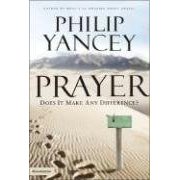 Philip Yancey did it again with his book on prayer. His book The Jesus I Never Knew is the best book I have read on Jesus. His book, What’s So Amazing About Grace? is the best book I have read about grace. His book, Prayer: Does it make any difference? (Zondervan, 2006) is the best book I have read on prayer. That is a strong statement for me to make, even as a person who loves the writings of Philip Yancey. I have read dozens of great books on prayer, including great books by people like Richard Foster, Ole Hallesby, Bill Hybels and Oswald Chambers.
What sets Yancey’s book apart is his brutal honesty about the struggles people have with prayer, balanced with inspiring stories of how prayer has changed people’s lives. Yancey is particularly self-effacing about his own struggles with prayer and his feelings of inadequacy in failing to pray. Yet by the end of the book, it is apparent that Yancey is much more of a prayer warrior than he admits at first.
The books’ 22 chapters are divided into five parts. Part One, “Keeping Company with God,” explores what prayer is. He points out that Jesus “virtually invented private prayer” (p. 63).
Part Two, “Unraveling the Mysteries,” discusses frustrations and questions that people have about the effectiveness of prayer. He gives a disarmingly profound answer to those who ask why we should bother to pray when some prayers seem unanswered: “Why pray? Because Jesus did” (p. 78). Later in the book he gives another simple but true answer: “Why pray? God likes to be asked” (p. 143).
Part Three, “The Language of Prayer,” discusses how to pray. He gives great practical advice on handling distractions to prayer, and reminds the reader that there is no right way to pray, because different styles of prayer fit different personalities. “Keep it simple, keep it honest, and keep it up” he advises (p. 191).
Part Four, “Prayer Dilemmas,” returns to questions people have about prayer, especially unanswered prayer. I would disagree slightly with his defintion of “unanswered prayer,” as he includes in that definition prayers that receive a “no” answer. Yancey’s approach to prayer for physical healing is balanced and insightful, as he reveals scientific research showing healing that cannot be explained, while recognizing the importance of using medicine and how God usually works through natural processes.
Part Five, “The Practice of Prayer,” provides motivation for faithful praying.
Yancey’s writing includes frequent illustrations from a variety of sources, from popular culture to literature to world history. Being a famous author and editor for Christianity Today magazine, Yancey has received many letters about prayer, and he shares this correspondence throughout the book. One unique quality about this book is that each chapter includes a couple of sidebars written by others, sharing personal experiences in prayer. For example, on p. 224-225 a prostitute whose prayer for deliverence resulted in her miraculous salvation. Although each sidebar story can be read alone, they relate to the chapters where they are inserted.
I disagree with Yancey in chapter 7, when he discusses Abraham’s prayer that “changed” God’s mind. Yancey does not notice that Genesis 18:33 says that it is God who ended the conversation with Abraham, not Abraham with God, so God did not change His mind.
Also, I believe that Yancey misinterprets Job 21:15 on p. 95. There he says that Job asks “What would we gain by praying to him?” However, the context of the chapter implies that Job quotes the wicked in this passage; Job does not say that he himself questions prayer.
It is remarkable that these were the only two places that I disagreed with Yancey, because he makes bold and strong statements throughout the book. I am sure many people will be offended or disagree with some things he said, just because he asserts so many strong opinions. But this is one of the values of the book: Yancey stimulates you to think deeply about prayer, and challenges your preconceived notions. Yet he does so while remaining fiercely loyal to the Bible’s teachings on prayer.
In summary, this book is destined to be a classic book on prayer, useful for group study or personal review and study over and over again.
Guest blog: “A Week in the Life of a Georgia Tech Baseball Radio Announcer (and Student)”
 (Below is a guest blog from my son, R. Wade Rogers. He is a student at Georgia Institute of Technology in Atlanta. This is the third installment of three guest blogs from my three children.)
I’m a 2nd year student at Georgia Tech and majoring in Business Administration. I am also a Baseball Announcer for WREK- 91.1 FM, the student radio station at Georgia Tech, and a huge sports fan.
Sunday, February 12, 2012:
Weather in Atlanta is in the 20s, so I have a heavy coat with me as I leave for Grace Midtown Church in the morning. Worship this morning is great and the sermon continues a series on Proverbs that has been going on this semester with a study of Proverbs 7. The head pastor is 28 years old and he is out this Sunday after the birth of his first child, so the message is delivered by an associate pastor. (Well over half of the people that attend the church are under 30 and there are a lot of college students, especially from Georgia Tech, which is nearby. Despite the predominately young congregation, people of all ages attend.)
After church, I go to Russ Chandler Stadium, home of the Georgia Tech Yellow Jackets Baseball team. I help my radio partner, Nolan Alexander, to add some decorations to the home radio booth. Today’s task is drilling in a bookshelf. We also practice a few innings of play-by-play, while the team scrimmages before the start of the 2012 season on Friday. (All of the Georgia Tech Baseball games can be heard on WREK 91.1 FM in Atlanta and WREK.org online. I am scheduled to announce at least 25 games this season after calling 11 games my freshman year.)

After I arrive back home, I spend the rest of the afternoon and night studying. I have an unusually busy week ahead with four tests and a weekend of baseball to prepare for.
Monday, February 13, 2012:
I wake up at 7:30 planning on heading to campus to help work on some technical aspects for our radio broadcast, but I get a text saying that it is covered. That means I get to spend the next few hours for some more studying. I have two tests today and I sandwich a nap in between them. After my last test, I get dinner at my apartment, watch TV, and just relax for a little while. At 7:00, I make one last trip for the day to campus, this time to the radio station, for our last formal Baseball Broadcasters’ Meeting to go over the equipment setup. After the meeting, I get some more studying in for my next test.
Tuesday, February 14, 2012:
I’m up early today at 6:30 to eat breakfast and get ready for class. I have one class at 8:00 and then a test after that. For the second straight day, I get a nice nap during the afternoon. I have one more class at 3:00, but when I get home after that class, I’m all studied out. Three of my four tests for the week are out of the way, so I am relaxing tonight.
Wednesday, February 15, 2012:
I get to sleep-in until about 11:00 today, but then I have a pair of classes separated by a two and a half hour break. After my last class ends at 5:00, I get some dinner at Chick-fil-A in the Student Center and head up to the radio station. I’m filling in as producer for the Ramblin’ Wreck Report and tonight we have our annual Baseball Preview Show. Our guests are Georgia Tech 1B/LHP Jake Davies and our closer RHP Luke Bard. (They happen to be the only current Jackets with brothers currently playing in the major leagues. Kyle Davies P for the Royals and Daniel Bard P for the Red Sox). After the show, I go home for a little bit, but I go back to campus for a bible study at 9:00. I catch a ride back to my place afterwards and study for a little while before going to bed.
Thursday, February 16, 2012:
I have a pair of classes starting at 8:00 A.M. again. In between class, I head home to study for my last test of the week, but I get a text from a friend letting me know that the Atlanta Braves are handing out applications for summer jobs in the Student Center. I head back to the school earlier than usual to try and see if I can talk to someone from the Braves and see what kind of positions they were offering, but apparently they have already left, so I move my study station over to the library. I take my last test of the week in my last class of the week and head home to pack. Around 6:30, Nolan and I gather our equipment and hit the road for Rock Hill, South Carolina, where Georgia Tech is scheduled to play four games in the Coca-Cola Classic at Winthrop University against both Winthrop and Kent State. On the way, we make an extended stop at Nolan’s house for a delicious home-cooked meal. We get to the hotel around 12:30, where we are greeted by a pair of avid, older Tech Baseball fans, who are hanging around the lobby. They talk to us for a while before we finally get away and get to sleep after 1:00.
Friday, February 17, 2012:
We arrive at Winthrop Ballpark around 11:00, three hours before first pitch, to set up our equipment and prepare for an opening day doubleheader. In the first game, we have some frustrating technical issues, but eventually we get the issue resolved. It is a tough first game for the Jackets as well vs. Kent State. The Golden Flashes All-American P David Starn pitches eight shutout innings only allowing four singles, as Tech loses 5-0.
Second game goes better for us in the booth and on the field. Matthew Grimes pitches seven innings and only allows one hit and Zane Evans pitches two perfect innings to lead Tech to a 5-0 win over Winthrop.
Saturday, February 18, 2012:
At the hotel in the morning, we hear that there have been a few changes to the schedule because of weather expected tonight and tomorrow. Our game scheduled for today is moved up from 1:00 to noon and our game scheduled for tomorrow is moved to 7:00 tonight. The noon game goes by very quickly and the broadcast is even better than the day before. Tech gets revenge against Kent State winning 6-2, as Daniel Palka homers and scores four runs.
In between games Nolan and I get some lunch away from the ballpark and head back to the hotel for a break. Will Long, another Tech baseball announcer, made the trip up for the day to Rock Hill, where he worked last summer broadcasting for the Carolina Stingers of the Southern Collegiate Baseball League. As we arrive back at the ballpark we hear that our second game has been moved up an additional hour to try and beat the rain. We get set up just in time for the first pitch. Will and Nolan do play-by-play and I rotate in to do some color broadcasting for the final game of the weekend. Tech beats Winthrop again, this time 5-3, to start the season 3-1.
Sunday, February 19, 2012:
The team headed back last night, but Nolan and I stayed at the hotel. The weather forecasts were correct as it is a rainy day in Rock Hill that would not have been conducive for baseball. We check out of the hotel and make the drive back to Atlanta after a very successful first weekend of college baseball. I arrive back at my place around 4:00 and relax as I get set for another less busy week of school with more baseball.
As you can see, my schedule as a college student can be very busy at times, but I am challenging myself with school and getting some great opportunities to be involved with things that I love.
[Wade is announcing tonight’s home game against Ohio State.]


 Bob Rogers