Blog Archives
Who is to blame for the theater shooting in Colorado?
 Copyright 2012 by Bob Rogers
The Dark Knight Rises is the name of the much-anticipated third Batman movie in the wildly popular films produced by Christopher Nolan. But it was a dark night in a different sense in a theater in Aurora, Colorado, where gunman James Holmes took to the stage himself and shot 70 people, killing at least 12.
When such horrific tragedies happen, we gasp, we hug our children, we lower our flags, we pray, and we ask, “Why?”
Soon a number of scapegoats will be brought forth to be sacrificed at the altar of our need to blame someone or something.
Some will blame a lack of gun control. They will say that if we had stricter gun control, this man could not have obtained so many weapons. However, mass shootings have occurred in other nations that have strict gun control.
Some will blame a lack of security, since the gunman carried so much artillery into the theater. Perhaps improvements in security can be made but the police and security guards cannot be everywhere.
Some will blame violence in the movies, saying that it desensitizes the viewer and can lead to copy-cat actions. Some news reports today say that the shooter was dressed as the Joker, lending some credence to this theory. However, millions of other people have seen the Batman films without having an urge to hurt anybody.
Others will blame the man’s upbringing, environment, how he may have been treated at the school where he dropped out, and so on.
But in playing the “blame game,” we often fail to look at the greatest reason for the actions of James Holmes and for each of us: the human heart.
Jeremiah 17:9 (ESV) says, “The heart is deceitful above all things, and desperately sick; who can understand it?” Jesus said that evil comes from within, out of the heart (Mark 7:21).
When the Gospel of John describes how Judas Iscariot got up from the Last Supper, left Jesus and the other disciples, and stepped outside to betray Christ, John adds this short sentence: “And it was night.” (John 13:30). John was speaking of the spiritual darkness of that moment. But after that dark night, a light arose, because this Jesus who died on the cross also arose from the dead to defeat evil and give us hope.
The greatest need that mankind has is not gun control, more police, controls over movies, or psychologists. Our greatest need is for a Savior who can change the heart. He alone can change our dark nights into bright mornings.
Tuesday, day of confrontation

Copyright 2012 by Bob Rogers
Tuesday of the final week of Christ was a long and active day of Jesus teaching in the temple. On that day he had constant confrontations with the Jewish religious leaders. Everything recorded from Mark 11:20 through Mark 14:11 happened on Tuesday: the fig tree that Jesus cursed is found withered, the Jewish religious leaders demand to know what authority Jesus has to cleanse the temple and do all that he does, Jesus tells a parable about tenants in a vineyard that implies that the Jewish religious leaders have rejected God’s Son, making them so angry they wanted to arrest Him. They try to trap Him with a question about paying taxes to Caesar and about marriage in the resurrection. Jesus turns the questions around on them, and then proclaims to the disciples that every stone in the temple will be thrown down and warns them to be on guard against persecution, false prophets and false Messiahs. Do you notice a pattern here? Jesus and the religious leaders are in constant confrontation. Finally, at the end of the day, we read that as the religious leaders were continuing to look for a way to arrest Jesus and kill Him, a woman anointed Jesus’ body with a very expensive perfume. Jesus knew where this was all heading, which is why He said that she was anointing His body for burial.
What an exhausting day of confrontation Tuesday was! From the beginning to the end of the day, it was full of conflict. Mark 11:28 records at the beginning of Tuesday the confrontational question of the religious leaders who were enraged by Jesus cleansing the temple: “By what authority are you doing these things?… And who gave you authority to do this?” Mark 14:10-11 records at the end of Tuesday how enraged Judas Iscariot was, who apparently was so disappointed in Jesus for being a humble, peaceful, sacrificial Messiah, that Judas went to the religious leaders to betray Jesus to them.
The problem they all had, from the beginning to the end of the day, was an unwillingness to submit to the Lordship of Jesus. We may not like to think of ourselves as in conflict with Christ, but whenever we say to Him, ‘No, Lord,” we aren’t really making Him Lord. Are we willing to submit ourselves to Him, or do we continue to argue with Him?
Tuesday, the day of confrontation, teaches us to make Christ Lord of our lives.
Why Jesus Is Dangerous
Copyright 2012 by Bob Rogers
 Jesus is dangerous.
He is so dangerous that we read in Mark 3:6 that the Pharisees and the Herodians, who were total opposites and enemies of one another, plotted together to get rid of Him.
Of course, that a long time ago. Jesus is pretty harmless today, isn’t He? No, He’s not! Not the real Jesus. The real Jesus is more dangerous today than He was two thousand years ago.
As the Gospel of Mark tells his stories of Jesus in chapters 2-4, we see exactly why Jesus is dangerous.
I. Because He upsets our social status (Mark 2:17)
One of the most popular movies in 2011 was The Help. It is historical fiction, based on the novel by Kathryn Stockett. Set in Jackson, Mississippi, in the early 1960’s, it tells about life when black women worked as maids for white women all over the South, and were often treated as less than human. The help were never allowed to sit at the same table or even use the same restrooms as their employers. Yet the maids were the ones who actually brought up the white children. One of the maids repeatedly tells a little white girl who is neglected by her mother, “You is kind, you is smart, and you is important.” Even though the maid was being treated as unimportant herself, she reminds the little girl that she has value.
Jesus upset the social taboos of His own day when he went to eat dinner at the house of a tax collector named Levi. We read in Mark 3:15: “While He was reclining at the table in Levi’s house, many tax collectors and sinners were also guests with Jesus and His disciples… When the scribes and Pharisees saw that He was eating with sinners and tax collectors, they asked His disciples, ‘Why does He eat with tax collectors and sinners?’”
Notice that the same phrase is repeated three times: “tax collectors and sinners.” When they used the word “sinners,” they were using it as a technical term. This was a category of people. “Sinners” were people who failed to follow the religious law. Pharisees said the word with disgust in their voices. And nobody liked tax collectors, because they cheated people and worked for a foreign government.
Yet Jesus was eating with “those people.” The Pharisees tried to pressure Him to stop. The Old Testament law said to keep oneself pure. How could Jesus associate with such people?
Jesus said in verse 17: “Those who are well don’t need a doctor, but the sick do need one. I didn’t come to call the righteous, but sinners.” Today, that would be like saying, “I came to call prostitutes, not Sunday School teachers.”
Do you see why Jesus is dangerous? Why, if we acted like Him, we might have to go down to Savannah and love on homeless people. If we acted like Him, we might have to go out in the streets of Rincon and hand out food to people, and tell them, “You is important—to God.” This gets way outside our comfort zone. Dangerous stuff.
II. Because He replaces our religion (Mark 2:27-28)
Later in chapter two, Mark says that Jesus makes a shocking statement about the Sabbath, showing Jesus replaces our religion.
The Fourth Commandment says to keep the Sabbath Day holy (Exodus 20:8-11), because God rested on the seventh day of creation. The word Sabbath means “rest.” The Sabbath was very unique to Jews. No other religion had a day of rest like the Jews, and keeping the Sabbath set them apart from all other people. We need Sabbath rest today. With the craziness of our busy lives, we could all benefit from times of rest, worship, and reflection. But over the years, the Jewish rabbis had made up hundreds of rules about how to not work on the Sabbath. The rabbis had rules about how far you could walk before it was considered work, and how much you could harvest or cook before it was considered work. Their rules went to ridiculous extremes. So Mark 2:23 says that Jesus disciples picked some heads of grain on the Sabbath and ate it, and the Pharisees cried foul. “You can’t do that! That’s working on the Sabbath! You harvested wheat!”
Jesus replied, “The Sabbath was made for man, not man for the Sabbath.” This statement in verse 27 is only found in the Gospel of Mark. The Sabbath was supposed to help people rest, not to be a burden to them. But it had become a rat race. Lily Tomlin said the trouble with the rat race is that even if you win, you are still a rat. (David E. Garland, The NIV Application Commentary: Mark, p. 124)
Unfortunately, religion often becomes an end in itself. People think if they keep all the religious rules, they are right with God. Jesus upsets the apple cart, and says it’s not about religion. Then He goes even farther, and claims that He Himself has authority to change it all, as He says in v. 28, “So the Son of Man is Lord even of the Sabbath.” Remember, “Son of Man” is Jesus’ term for Himself. So Jesus is saying, “It’s not about religious rules. It’s about a relationship with Me.”
Do you see why Jesus is dangerous? If this kind of teaching gets out, people will think they don’t have to keep the religious rules. They might run wild! They might think they can work on Sunday and who knows what else they might do.
III. Because He passes over our politics (Mark 3:6)
We are in the middle of a presidential election. Later this fall, the Republicans and Democrats will be fighting it out. In Jesus’ day, they had political parties, as well. The Pharisees were the defenders of traditional values. They stood for the nation of Israel, independent from Rome. The Herodians were the supports of Herod the Great and his family who ruled after him. King Herod were under the authority of the Romans and supported the empire.
In Mark 3:1-5, what Jesus said about religion turned political. It was against their rules to heal on the Sabbath, but Jesus asked whether it was lawful to do good or evil on the Sabbath, and then He went ahead and healed the man. That was more than the Pharisees could take. So they went out and made an alliance with their political arch-enemies, the Herodians. Read it in Mark 3:6: “Then the Pharisees went out and began to plot with the Herodians how they might kill Jesus.”
Wow! Jesus was considered so dangerous, that it could bring the Republicans and the Democrats together for a joint session and a unanimous vote. Kill Him!
No political party has a monopoly on Jesus Christ. Politicians should not think they can press a certain hot button and have the evangelical vote. Christianity cannot be contained as a wing of a certain party and told to behave and sit down. When the Republicans are wrong on an issue, Christians must speak out, and when the Democrats are wrong on an issue, we must speak out. We must pray for our president, but our ultimate loyalty is not to him. Our ultimate loyalty is to Jesus Christ, not a government. Jesus is Lord over the Sabbath, and He is also Lord over all political alliances. Christ passes over politics.
That’s dangerous talk. People might think they don’t have to obey the government if we keep talking like that. Didn’t the early disciples say to their government, “We must obey God rather than men!” (Acts 5:29). Jesus is dangerous.
IV. Because He scares us about our sin (Mark 3:28-30)
Jesus said something in Mark 3:28 that may be the most dangerous thing we have read yet. He said, “I tell you the truth, all the sins and blasphemies of men will be forgiven them. But whoever blasphemes against the Holy Spirit will never be forgiven; he is guilty of an eternal sin.”
Wow! The unpardonable sin. That is a frightening thought, that we could commit an eternal sin that could never be forgiven. We read about it again in 1 John 5:16: “There is a sin that leads to death.”
There have been all kinds of speculation about what is the unpardonable sin. Many people think it is murder or rape or child molestation. Some churches teach that suicide is unpardonable, since it is self-murder and there is no opportunity to repent afterwards. But according to Mark 3, none of these are the unpardonable sin.
Look at the context of Jesus’ words. The Jewish religious leaders took another pot-shot at Jesus in Mark 3:22. They said the reason he had driven out demons was that Jesus was demon-possessed Himself. “By the prince of demons he is driving out demons,” they said. It was in response to being accused of being a demon that Jesus said that blasphemy against the Holy Spirit cannot be forgiven. Then just to make it clear this applied to the words of the religious leaders, read Mark’s comment in verse 30: “He said this because they were saying, ‘He has an evil spirit.’”
Thus, they committed blasphemy against the Holy Spirit because they said Jesus had an evil spirit. Clearly, the unpardonable sin is rejection of Jesus Christ.
That scares us. This goes completely against politically correct thinking. This means murderers and rapists and child molesters can be forgiven. It means a person can be forgiven of suicide. It also means that a law-abiding citizen who rejects Jesus Christ will not be forgiven and will go straight to hell. How narrow-minded is that? The world thinks we’re crazy with that kind of thinking, but that’s what Jesus says.
We would like to think that we can handle our own sin. We think as long as we’re not murders or something we don’t need to worry about our sin. But Jesus says we can’t handle it without Him. Without Him we’re hopelessly lost. Dangerous stuff.
V. Because He petrifies us with His power (Mark 4:41)
Yet there is one more reason that Jesus is dangerous. In Mark 4:36 we read that Jesus and his disciples got in a boat on the Sea of Galilee. The Sea of Galilee is 700 feet below sea level, and is surrounded by mountains. Mt. Hermon, located only 30 miles north of the sea, is 9,200 feet high. The cold air rushing down from the mountains hitting the warm air coming up from the water can turn into a sudden storm, and that is what happened to Jesus and His disciples that day.
Mark 4:37 calls it a “furious squall” that nearly swamped their boat. But verse 38 says Jesus was at the stern, sleeping on a cushion.
But what happened next was even more amazing. Jesus got up, rebuked the wind and waves, and said, “’Quiet! Be still!’ Then the wind died down and it was completely calm.”
You know what most Sunday School classes do with this story? They spiritualize it. The teacher says, “Jesus calmed the storm.” Then the teacher looks around the room and says, “What storm are you going through?” Then people talk about Jesus helping them through their problems. But this is not a story about Jesus making us comfortable when our problems make us uncomfortable. This is a story that says with Jesus, we’ve got an even bigger problem.
When the storm started, the disciples were afraid. Jesus even asked them in verse 40, “Why are you so afraid?” But when Jesus showed His power to still the storm, verse 41 says they were “terrified.”
There is a story of King Canute, the King of Denmark in the eleventh century. His courtiers were flattering him excessively, and he said, “Am I divine?” He walked to the seashore and said, “Stop,” but the ocean waves kept coming in. What he was saying was, “Only God can stop the sea, and I’m not God.” (Timothy Keller, King’s Cross, p. 50).
If Jesus is Lord over the storm, He’s Lord over everything. We can’t tuck Him away during the week and pull Him out on Sunday. He won’t stay tucked away. He is Lord over our social relationships and Lord over our religious rules and Lord over our politics. But He is much more! He is Lord over our eternal destiny and able to pardon us forever to Heaven or sentence us forever to an eternity in Hell for rejecting Him, because He is Lord over all.
The storm had a power they could not control, and Jesus had infinitely more power, and they had less control over Him. That’s dangerous. No wonder they were terrified. But here’s the difference. A storm doesn’t love you, but Jesus does.
A storm is indifferent; if you are in the path of the wind, you get blown away. But if you are in the path of the untamed love of Jesus, you are filled with His protection and care. A storm doesn’t love you, but Jesus does.
Likewise, social rules and social taboos don’t care about you. If you don’t fit in with the right crowd, then tough luck. But Jesus cares about you and accepts you; He will break the social barriers to get to you and love you.
Religion doesn’t care about you. If you don’t fit into the rules, you’re out. Religion doesn’t love you, but Jesus does. He didn’t design the Sabbath to burden you; He designed it to give you rest in His grace. He said, “Come to me, and I will give you rest.”
Political parties and political machines don’t care about you. When they don’t need you, they will discard you. Political parties don’t love you, but Jesus does. Make Jesus your resident president and you will never have to fear the unpardonable sin. In fact, you will be pardoned, forever.
Timothy Keller says that if the disciples had really understood that Jesus was both powerful and loving, they would not have been scared. They thought if Jesus loved them He wouldn’t let bad things happen to them. They were wrong. He can love somebody and still let bad things happen to them, because He is God, and He knows better than they do.
Keller says, “If you have a God great enough and powerful enough to be mad at because he doesn’t stop your suffering, you also have a God who’s great enough and powerful enough to be have reasons that you can’t understand…. If you’re at the mercy of the storm, its power is unmanageable and it doesn’t love you. The only place you’re safe is in the will of God.” (Timothy Keller, King’s Cross, p. 52)
Yes, Jesus is dangerous; you cannot control Him. But in the storm, there’s no safer place to be than in His arms. He’s dangerous, but because He’s so powerful, He is able to take care of you. Will you trust your life to Him?
Preached at First Baptist Church, Rincon, GA January 15, 2012 A.M.
Dr. Bob Rogers, pastor.
Jesus in Every Book of the Bible
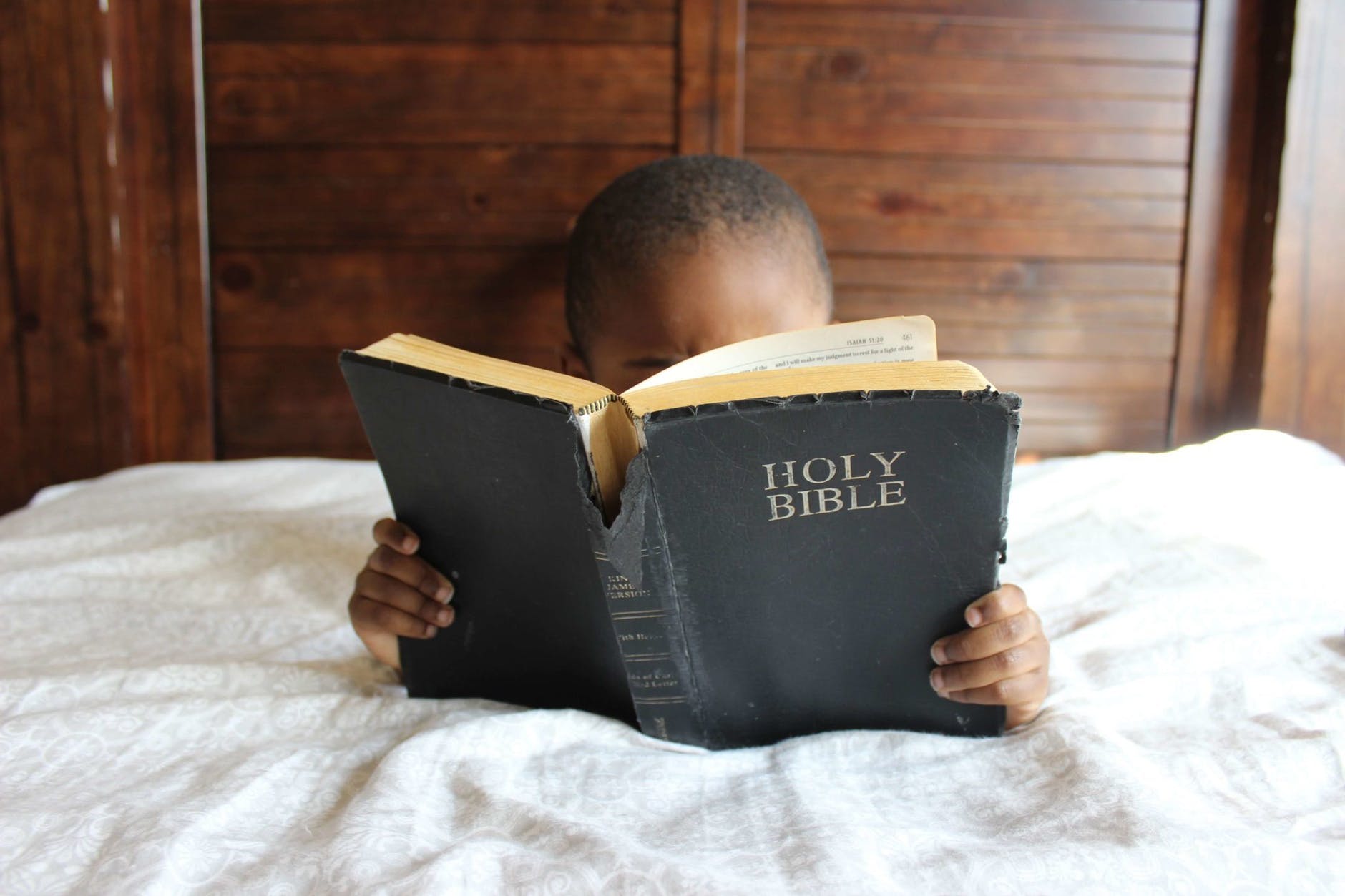
In Genesis, Jesus is the Ram at Abraham’s altar
In Exodus, He’s the Passover Lamb
In Leviticus He’s the High Priest
In Numbers He’s the Cloud by day and Pillar of Fire by night
In Deuteronomy He’s the City of our refuge
In Joshua He’s the Scarlet Thread out Rahab’s window
In Judges He is our Judge
In Ruth He is our Kinsman Redeemer
In 1st and 2nd Samuel He’s our Trusted Prophet
And in Kings and Chronicles He’s our Reigning King
In Ezra He’s our Faithful Scribe
In Nehemiah He’s the Rebuilder of everything that is broken
And in Esther He is the Mordecai sitting faithful at the gate
In Job He’s our Redeemer that ever lives
In Psalms He is my Shepherd and I shall not want
In Proverbs and Ecclesiastes He’s our Wisdom
And in the Song of Solomon He’s the Beautiful Bridegroom
In Isaiah He’s the Suffering Servant
In Jeremiah and Lamentations it is Jesus that is the Weeping Prophet
In Ezekiel He’s the Wonderful Four-Faced Man
And in Daniel He is the Fourth Man in the midst of a fiery furnace
In Hosea He is my Love that is forever faithful
In Joel He baptizes us with the Holy Spirit
In Amos He’s our Burden Bearer
In Obadiah our Savior
And in Jonah He is the Great Foreign Missionary that takes the Word of God into all the world
In Micah He is the Messenger with beautiful feet
In Nahum He is the Avenger
In Habakkuk He is the Watchman that is ever praying for revival
In Zephaniah He is the Lord mighty to save
In Haggai He is the Restorer of our lost heritage
In Zechariah He is our Fountain
And in Malachi He is the Sun of Righteousness with healing in His wings.
In Matthew, “Thou art the Christ, the Son of the Living God”
In Mark He is the Miracle Worker
In Luke He’s the Son of Man
And in John He is the Door by which every one of us must enter
In Acts He is the Shining Light that appears to Saul on the road to Damascus
In Romans He is Our Justifier
In 1st Corinthians our Resurrection
In 2nd Corinthians our Sin Bearer
In Galatians He redeems us from the law
In Ephesians He is our Unsearchable Riches
In Philippians He supplies our every need
And in Colossians He’s the Fullness of the Godhead Bodily
In 1st and 2nd Thessalonians He is our Soon Coming King
In 1st and 2nd Timothy He is the Mediator between God and man
In Titus He is our Blessed Hope
In Philemon He is a Friend that sticks closer than a brother
And in Hebrews He’s the Blood of the Everlasting Covenant
In James it is the Lord that heals the sick
In 1st and 2nd Peter He is the Chief Shepherd
In 1st, 2nd and 3rd John it is Jesus who has the tenderness of love
In Jude He is the Lord coming with 10,000 saints
And in Revelation, lift up your eyes, Church, for your redemption draws near; He is our King of Kings and Lord of lords!
— Source Unknown
If you see a video ad below this post, I do not necessarily endorse the product.
Finding Christ in the Christmas tree
Copyright 2011 by Bob Rogers
On November 25 , 2011, the day after Thanksgiving, a horse-drawn carriage brought a 19-foot balsam fir Christmas tree, grown in Wisconsin, and delivered it to the White House, met by First Lady Michelle Obama and her girls. The tradition of bringing a Christmas tree to the White House goes back to 1866.
All over America and the world, people are putting up Christmas trees for the holiday. But what does this have to do with the birth of Jesus? Is it just a pagan practice, or can we find Christ in the Christmas tree?
The tree symbolized Israel (Isaiah 5; Ezekiel 17; Daniel 4:10-12)
In ancient Israel, a tree symbolized God’s people Israel. Isaiah 5 gives a parable of a vineyard that was planted but failed to produce good fruit, and so it is torn down. Isaiah says, “For the vineyard of the Lord of Hosts is the house of Israel, and the men of Judah, the plant He delighted in.” (Isaiah 5:7, HCSB).
Ezekiel 17 gives another parable comparing Israel to a tree, saying God will plant a sprig on a mountain. “I will plant it on Israel’s high mountain so that it may bear branches, produce fruit, and become a majestic cedar… Then all the trees of the field will know that I am Yahweh.”
Thus Psalm 1:3 speaks of the righteous man as like a tree planted by water, and in Matthew 3:10, John the Baptist says every tree that doesn’t produce is cut down.
Daniel 4 tells how God used a vision of a tree to warn King Nebuchadnezzar of Babylon to beware of his pride. He told about a tree that reached to the sky, but it was cut down, and Daniel said, “That tree is you, the king.” (Daniel 4:22).
So a tree often symbolized Israel, although it could also symbolize the life of others.
The Christmas tree symbolized life (Luke 23:31)
But what about the tradition of the Christmas tree? Where did it come from?
There are many different stories, since ancient peoples have made use of trees and even worshipped them. One of my favorite stories is of St. Boniface, the missionary to the Germans in the 8th century. Boniface told them about Jesus Christ, but they worshipped a great oak tree. So Boniface boldly went to the oak with an axe and began to chop it down. The Germans were ready to kill him, when a great wind came and blew the tree down. After that, the Germans converted to Christianity in large numbers.
Some legends tell that St. Boniface later decorated a fir tree to represent Jesus instead of their pagan gods. It is uncertain whether this is true.
The best historical records indicate that Christmas trees as we know them began in the 15th or 16th century in Latvia, Estonia and northern Germany, with a tradition of bringing an evergreen tree to the town square on Christmas Day, dancing around it, and letting it burn. Eventually, people in Germany began to light a tree on Christmas Eve with candles. The Christmas tree was unknown in colonial America, but Germans brought the Christmas tree tradition to America in the 19th century. The German word, Tannenbaum in the Christmas carol “O Tannenbaum,” is translated loosely in English as “Christmas tree,” but literally it means “fir tree,” referring to an evergreen tree used at Christmas.
And here we begin to see a connection to Christ. Notice what Jesus said in Luke 23:31 when He was being taken to the cross: “For if they do these things when the wood is green, what will happen when it is dry?” The reference to the “wood is green” means when it is alive. An evergreen tree is still alive in the winter, which is why it is called “evergreen.” So the evergreen Christmas tree represents life, and eternal life.
Christ is symbolized by a tree of life (Isaiah 11:1-10) and a tree of death (1 Peter 2:24)
So if we stay with the symbolism of life in a tree, notice what we read in the prophecy of Isaiah 11: “Then a shoot will grow from the stump of Jesse, and a branch from hjis roots will bear fruit… On that day the root of Jesse will stand as a banner for the peoples. The nations will seek Him, and His resting place will be glorious.” (Isaiah 11:1, 10, HCSB).
Jesse was the name of the father of King David, so this passage is referring to the Messiah who would be a descendant of David. Notice the description of the Messiah in verses 2 and following:
“The Spirit of the Lord will rest on Him—
A Spirit of wisdom and understanding,
A Spirit of counsel and strength,
A Spirit of knowledge and the fear of the Lord…”
From the beginning to the end of the Bible, we read of a tree of life. In the Garden of Eden, Genesis 2:9 speaks of a tree of life, and in Revelation 22:2 we read that in heaven, “The tree of life was on both sides of the river, bearing 12 kinds of fruit, producing its fruit every month. The leaves of the tree are for the healing of the nations…”
Jesus is symbolized by this tree of life, for Christ gives us life. And how? Because he is also represented by a tree of death by his death on the cross!
Crucifixion was so horrible it was illegal to crucify a Roman citizen, and Jews saw it as a curse. Deuteronomy 21:23 says that anybody executed on a tree is cursed, and Galatians 3:13 repeats this. So when Jesus was nailed to the cross, which of course was made from a tree, the Jews thought He was cursed.
Yet look what we read in 1 Peter 2:24: “He Himself bore our sins in His body on the tree, so that, having died to sins, we might live for righteousness, for you have been healed by His wounds.”
Thus the tree of life became the tree of death so that by faith in Christ, we could enjoy life.
The best Christmas gift was not under a tree, but hung upon a tree, the tree of Calvary.
So you see, we can see Christ in the Christmas tree!
First United Methodist Church in Pittsburgh, Pennsylvania created a “Carols in the Park” display with 21 trees, each representing a different Christmas carol, from “Hark the Herald Angels” to the “King of Kings.”
Why don’t we have our own traditions to see Christ in the Christmas tree? Perhaps you can take a nail, and place a ribbon around it, and hang it on your Christmas tree, as a reminder that the greatest gift hang upon a tree for you and me? Perhaps you can make a Christmon tree, filled with Christian symbols. There are many ways to find Christ in the Christmas tree, if we will only look.


 Bob Rogers