Blog Archives
Question about divorce

Copyright 2012 by Bob Rogers
I received the following question by email from someone from another church who has granted permission for me to post the question and my reply:
“I have consulted my pastor and other pastors concerning our Baptist teachings about divorce and remain confused. I am divorced. I made an oath at my wedding of “til death do us part” and finished with “so help me God.” Even though adultery entered my spouse’s life, do I remain bound by my oath? Did you do a blog on this topic? Or, better yet … will you do one and let me know.”
Dear Friend,
I understand that you are already divorced, apparently because of your spouse’s adultery, and your question is, “do I remain bound by my oath?”
It appears there are two parts to your question. First, the question of whether your divorce was permissable, and second, the question of whether you are free to remarry. So let’s take the two issues separately:
1. The question of permissable divorce. According to Jesus’ statement in Matthew 5:32, adultery is a permissable reason for divorce. Thus if your spouse committed adultery, you did have biblical grounds for divorce. The other biblical ground for divorce is found in 1 Corinthians 7:15, when one spouse is an unbeliever and leaves.
(I would caution readers, however, that just because your spouse commits adultery or leaves you for a time does not mean that you should rush into a divorce. If at all possible, you should seek a counselor and seek restoration in your marriage. I have known couples who suffered adultery and other problems in their relationship who were able to experience repentance, forgiveness and restoration.
The second caution I would give to readers is that if you are suffering physical abuse or severe verbal abuse, you may need to remove yourself from your home to an undisclosed location for your own safety.)
2. The question of remarriage after divorce. You mentioned “our Baptist teachings about divorce.” While I am glad to be a Baptist, we must make certain that our teachings come from the Bible, not Baptist tradition or any other tradition that contradicts scripture.
Jesus recognized the fact that the woman at the well had five husbands, although she was cohabitating with the man she was with at the time she met Jesus, and that man was not her husband (John 4:17-18). By this statement, Jesus recognized each of these five marriages as true marriages.
A common “Baptist teaching” about Matthew 5:32 is that it bans remarriage after divorce, because it says that anyone who divorces his wife causes her to become an adulteress, and anyone who marries the divorced woman commits adultery.
However, the New Testament Greek verb used in the original text used the passive voice, which means the subject receives the action, rather than causing the action. In other words, divorce is a stigma that the husband puts on his wife by divorcing her. It is something the first husband does to the woman and the man she remarries. The stigma is being divorced and being married to a divorced person. Notice in the verse that the stigma occurs whether or not there is ever a remarriage, because it says “anyone who divorces his wife… causes her to become an adulteress.” Notice he causes the adultery before any remarriage. It could be translated, that he adulterizes her. This is referring to the stigma of divorce. It is interesting that the 2011 revision of the New International Version translates Matthew 5:32, “But I tell you that anyone who divorces his wife, except for sexual immorality, makes her the victim of adultery…”
I recognize that this is a controversial passage, and there are differences of opinion about it, but I do not think the scripture teaches that remarriage after divorce is automatically a sin.
The tale of two church cats

Copyright 2012 by Bob Rogers
This is the story of two different cats that tried to get into two different churches in the dead of winter. The first cat was in south Georgia. The second cat was in North Carolina.
The Georgia pastor worried about the cat that he had often seen hanging around the church grounds. It was an unusually cold night from south Georgia, well below freezing, and the pastor feared that the cat might not survive. He went to the sanctuary to check on his feline friend, and sure enough, the cat was huddled next to the front door. The pastor cuddled the cat in his arms and took him inside the warmth of the worship center. Then he asked himself, “Now where do I take him?”
He could not think of a good place to put the cat, so he left the cat in a senior adult lady’s Sunday School classroom. The next day, when he went to check on the cat, the classroom was torn to pieces! Drapes and chair covers were ripped open by the cat’s claws.
The cat in North Carolina was a totally different story. He noticed a window slightly open to the boiler room of a church, so he climbed inside. Soon afterward, the custodian noticed the window ajar, and closed it. About a month later, the custodian noticed an awful smell coming from the boiler room, and when he went to check, he found the cat had died inside.
Both stories had a bad ending, but I smell a more important spiritual lesson in these stories. I wonder, what if the cats had been people? There are many desperate people, who need to come inside the church to experience the warm love of God’s people and the hope of faith in Jesus Christ. However, if we let them in, they will bring their problems with them, and they may make a mess. Would we rather they be shut out and just die?
Excuse me, I think I need to go crack open a window.
Gethsemane teaches us how to express our emotions

Copyright 2012 by Bob Rogers
There was an event in the life of Jesus Christ that can show us how to express our emotions. After His last supper with His disciples, just before Jesus went to the cross, the Gospels record that He went to the Garden of Gethsemane to pray. Mark 14:33 records that Jesus was “deeply distressed and troubled.” Verse 34 records that He said, “My soul is overwhelmed with sorrow to the point of death.” When He went to pray, He staggered to the ground. Luke 22:44 says as He prayed, He sweat great drops like blood. He was in incredible agony as He faced dying on the cross for the sins of the world. Jesus expresses extreme emotion in this passage, and He also models for us how to express our own emotion.
Jesus does not hide His emotion. Some people, especially men, try to suppress their emotions. We are told that “big boys don’t cry” and so when we get upset, we try to keep it under control. Especially when we experience the death of a loved one, witness something traumatic, and get very bad news, we often try to cope with it by containing our emotions. Some people suppress emotions by avoiding the subject, others joke around and watch happy movies and comedies on TV, while others turn to alcohol or narcotics. The problem is, that the emotion is still there. If you push it down when it tries to rise to the top, guess what? Your emotion stays deep inside you, and continues to do damage to you. You may develop depression, or physical sickness, and you may suddenly erupt with anger at the slightest thing.
So what should we do? We cannot ignore our emotions. We need to find healthy ways to express them. You will notice that Jesus went to a Gethsemane with only three of His disciples. It was there, in a quiet place with a small group of friends, that He told them of His emotional pain. Then, He went farther from them to pour out His heart in prayer to God.
This is a healthy pattern for us to follow. Find a quiet place, and at the right time, open yourself up to trusted friends, and let them know about your pain. Then you may need to weep over the matter alone. Crying can be an incredibly helpful release, particularly when it is done in private, where we have no inhibitions about who is watching us.
Don’t bottle up your emotions. Jesus was a man’s man, a carpenter who not only nailed nails but was able to take the nails for you and me. Yet He expressed His emotions when He was overwhelmed with sorrow. So can we.
How an atheist changed his mind
 I have heard Antony Flew’s name many times over the years, because every time that I would read about a Christian apologist, it seemed that Antony Flew’s name would come up as his atheist antagonist. So you can imagine my surprise when I opened my newspaper in December 2004 and read the news that Antony Flew had changed his mind and decided that he DID believe in God. What a Christmas gift to the Christian world! But was it really true? I later read that while Flew now believes in God, he has not accepted Christianity. I wondered, what caused this change, and where was he now in his thinking?
Thus I read Flew’s book There Is A God (HarperOne, 2007), with great interest to know what caused such an outspoken atheist scholar to change his mind. I was not disappointed.
While the book is only 160 pages (plus two appendices by other authors), it is thorough and deep in its content. Flew tells his own story of how he, the son of a Methodist minister in Britain, became an atheist out of disillusionment with how God could allow evil, particularly as he saw the atrocities in Nazi Germany in World War II. Flew went on to become a professor of philosophy and a writer of many influential books espousing atheism, teaching in universities in Great Britain, Canada, and finally in the United States, where he now resides. He followed the thinking of skeptics like David Hume, arguing that we must presume atheism is true and believers must prove there is a God.
So how did this atheist scholar convert to theism? Flew explains that one belief he has always held led to the change– his belief in the words of Socrates: “We must follow the argument wherever it leads.” (p. 22). As he debated and argued the issues with Christians, he gradually changed his mind as he “followed the argument” for three basic reasons, which form three of the chapters of the book:
1) The laws of nature indicate they were designed by the Mind of God. Flew quotes Paul Davies: “even the most atheistic scientist accepts as an act of faith the existence of a lawlike order in nature” (p. 107).
2) The finely-tuned universe that delicately balances life indicates it was designed by a Creator for us. He points out, for example, that if the speed of light or the mass of an electron had been the slightest degree different, then no planet would be capable of human life (p. 115).
3) The origin of life itself, with the amazingly complex communication systems of DNA cannot be explained by materialistic evolution, and only make sense if designed by God.
In addition to these three major reasons, Flew also cites the big-bang theory as scientific evidence that the universe had a beginning (p. 136). As for the problem of evil, Flew leaves the question open, but prefers the popular Christian explanation that “evil is always a possibility if human beings are truly free” (p. 156).
So has Antony Flew become a Christian? The best answer is not yet, but he is leaning that way. He says, “I am entirely open to learning more about the divine” (p. 156) and then he expresses his admiration for the person of Jesus Christ and the intellect of the apostle Paul, saying that if you want an omnipotent God “to set up a religion, it seems to me that this is the one to beat!” (p. 157).
The book has an appendix by Roy Abraham Varghese, giving a critique of the “new atheism” of bold writers such as Richard Dawkins. Appendix A is good, but even better is Appendix B by N. T. Wright, which explains why we should believe in Jesus Christ. Wright convincingly argues for belief in the authenticity of the Gospel accounts of the resurrection of Jesus Christ in a way that impresses Flew himself as “absolutely fresh.” (p. 213).
I would agree. As much as I enjoyed Flew’s book, I must say that Appendix B by N.T. Wright was worth the price of the book. My prayer is that Antony Flew will finally follow the argument of Wright as it leads him to embrace the claims of Jesus Christ on his life.
How to hear angel prayers

Copyright 2012 by Bob Rogers
“The Spirit then lifted me up, and I heard a great rumbling sound behind me– praise the glory of the LORD in His place!– with the sound of the living creatures’ wings brushing against each other…” – Ezekiel 3:12-13, HCSB
Ezekiel heard the prayers of angels. How did this happen? How can we experience such things?
1) Be in the Spirit. Ezekiel 3:12 says, “The Spirit then lifted me up.” John the Revelator also heard angels in Revelation 15:3 and 16:5, and he also was “in the Spirit on the Lord’s day” (Revelation 1:10). How can we be “in the Spirit”? First, we have to be believers in Jesus Christ. Only a believer can be in the Spirit: “But the unbeliever does not welcome what comes from God’s spirit, because it is foolishness to him; he is not able to understand it since it is evaluated spiritually” (1 Corinthians 2:14, HCSB). Second, the believer must be “filled with the Spirit” (Ephesians 5:18), which comes by filling our minds with the Word of God and filling our hearts with prayer.
2) Pay attention. Ezekiel 3:12 says, “I heard a rumbling sound.” He paid attention to what he was hearing. The shepherds on the hillside near Bethlehem paid attention when the angel of the Lord appeared to them (Luke 2:8-15). Interestingly, the shepherds heard of prayer of “Glory to God in the highest heaven” (Luke 2:13), just as Ezekiel heard “praise the glory of the LORD in His place” (Ezekiel 3:12). Too often we fail to hear because we fail to listen.
3) Be willing to obey. Ezekiel felt the bitterness of God’s anger at sin (Ezekiel 3:14), and he sat stunned for seven days (Ezekiel 3:15). It was only after he had that desire to obey that he received a word from the Lord in Ezekiel 3:16-17. Paul experienced what may have been angel prayers when he was caught up into paradise and “heard inexpressible words” (2 Corinthians 12:4). And just as Ezekiel, Paul was also willing to obey God when God would not remove the thorn from his flesh, but said His grace is sufficient. Pauls’ response was to accept God’s grace, “For when I am weak, then I am strong” (2 Corinthians 12:10).
And maybe, just maybe, when we are listening that closely to God, we might even hear the prayers of angels!
What really needs to change about Southern Baptists
 In 1845, the Southern Baptist Convention (SBC) was organized in Augusta, Georgia, just a couple hours’ drive north of where I now live. However, we’ve come a long way since then, not just in miles or time.
In 1845, one of the main reasons why Southern Baptists split from the North was that the SBC wanted to appoint slaveholders as missionaries. Today, many SBC churches are integrated, including my own, African-American pastor Fred Luter is our vice-president, and Luter will probably be elected president this year at the convention meeting in New Orleans.
In 1845, all of our churches were in the South. Today, we are still concentrated in the South, but we have churches in all 50 states. One of our largest churches is in California.
The idea of changing the name, particularly dropping the word “Southern” in favor of something else, has come up many times in the past century, and has always been voted down. Now the Executive Committee of the SBC is passing along the following recommendation to the annual meeting of the Southern Baptist Convention: to keep the legal name Southern Baptist, while at the same time encouraging churches that do not wish to use that name to adopt the informal name “Great Commission Baptists.”
I have mixed feelings about this recommendation. Although this is not officially a name change proposal, it could lead to name “erosion” and confusion. Imagine two Baptists who meet and ask about each other’s churches. One says, “I’m a Southern Baptist.” The other says, “I’m a Great Commission Baptist.” They have no idea their churches are affiliated with one another. How does that unify us?
While the name “Southern Baptist” is negative for some, it has positive connotations for others, such as those who received assistance in SBC disaster relief efforts after 9/11 and Hurricane Katrina, and for millions who found faith and Christian nurture in an SBC church.
I am a Southerner, but I grew up an Army chaplain’s son, and lived outside the South, as well. I remember that while attending a Southern Baptist church on Staten Island, New York, that “Southern” was not considered helpful to evangelism. After all, what New Yorker wants to join a “Southern” church? However, the church simply used the name “Baptist,” just as most SBC churches do in the South, including my own. My former youth minister, Jason McNair, who now serves in the Utah-Idaho convention, feels that a name change is a waste of time and energy and doesn’t address the most important issues.
If we earn a good reputation, people don’t care as much about the name. The Lutheran Church-Missouri Synod is the name of a conservative Lutheran denomination. Lutherans looking for a conservative church are glad to find a church by that name, even if they are not in Missouri. It’s not the name that matters; it’s the reputation behind the name. After all, New York Life Insurance sells in Georgia, and Kentucky Fried Chicken sells in California.
Some claim that “Southern” is offensive to African-Americans. I asked this question of my former classmate Cathy McNair, an African-American who graduated with me from Petal High School in Petal, Mississippi. She said, “Well….used to…back in the stone age…it was pretty much understood that Southern Baptist was a synonym for Blacks need not attend….nowadays…not so much.” (By the way, Cathy said about the same thing as Jason, that spending time on a name change was ignoring “weightier matters.”)
Cathy makes an important point about the “used to” and “nowadays” of the Southern Baptist name. Although the name remained the same, the name gained a new reputation over the years, as Southern Baptists repented of the racial sins of the past and many SBC churches opened their doors to all races.
And here is the key: we must be known for what we are for instead of what we are against. Too often we are known as those people who boycott Disney and hate gays. We should be known as the people who love all people (gays included) enough to show them how to change. Our logo says it all. The cross, Bible and globe show what we are for: the gospel of forgiveness by faith in Jesus’ death on the cross, faithfulness to the Bible, and sharing this good news with the whole world. If we are known for these things, we will please our Lord, whatever name we choose to use.
I may vote in favor of the recommendation, since it keeps the legal name and only encourages those who already don’t want to use the SBC name to at least use the same name (“Great Commission Baptist”). But for me, the bottom line is, that it’s far more important for us to change our ways than to change our name.
(The Southern Baptist Convention will hear this proposal at its meeting in New Orleans on June 19-20, 2012.)
To read more on this subject, read these reports and blogs:
http://www.bpnews.net/bpnews.asp?id=37224
Official recommendation from the task force on a name change.
http://www.edstetzer.com/2012/02/the-sbc-changing-names-is-good.html
by Ed Stetzer, researcher with LifeWay Christian Resources, favors a name change, but feels changing our actions is more important. Many comments on his blog, many of them with objections to the name change.
http://loomnwheel.wordpress.com/2012/02/28/whats-in-a-name/
by Benjie Potter, feels the name change proposal is silly, and offers a Southern Baptist revision of Shakespeare’s “Wherefore art thou Romeo?”
(Below is a photograph of the historical marker in Augusta, Georgia, where the Southern Baptist Convention was organized in 1845.)

“Prayer” by Philip Yancey is honest and inspiring
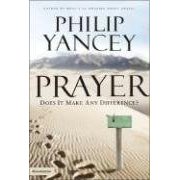 Philip Yancey did it again with his book on prayer. His book The Jesus I Never Knew is the best book I have read on Jesus. His book, What’s So Amazing About Grace? is the best book I have read about grace. His book, Prayer: Does it make any difference? (Zondervan, 2006) is the best book I have read on prayer. That is a strong statement for me to make, even as a person who loves the writings of Philip Yancey. I have read dozens of great books on prayer, including great books by people like Richard Foster, Ole Hallesby, Bill Hybels and Oswald Chambers.
What sets Yancey’s book apart is his brutal honesty about the struggles people have with prayer, balanced with inspiring stories of how prayer has changed people’s lives. Yancey is particularly self-effacing about his own struggles with prayer and his feelings of inadequacy in failing to pray. Yet by the end of the book, it is apparent that Yancey is much more of a prayer warrior than he admits at first.
The books’ 22 chapters are divided into five parts. Part One, “Keeping Company with God,” explores what prayer is. He points out that Jesus “virtually invented private prayer” (p. 63).
Part Two, “Unraveling the Mysteries,” discusses frustrations and questions that people have about the effectiveness of prayer. He gives a disarmingly profound answer to those who ask why we should bother to pray when some prayers seem unanswered: “Why pray? Because Jesus did” (p. 78). Later in the book he gives another simple but true answer: “Why pray? God likes to be asked” (p. 143).
Part Three, “The Language of Prayer,” discusses how to pray. He gives great practical advice on handling distractions to prayer, and reminds the reader that there is no right way to pray, because different styles of prayer fit different personalities. “Keep it simple, keep it honest, and keep it up” he advises (p. 191).
Part Four, “Prayer Dilemmas,” returns to questions people have about prayer, especially unanswered prayer. I would disagree slightly with his defintion of “unanswered prayer,” as he includes in that definition prayers that receive a “no” answer. Yancey’s approach to prayer for physical healing is balanced and insightful, as he reveals scientific research showing healing that cannot be explained, while recognizing the importance of using medicine and how God usually works through natural processes.
Part Five, “The Practice of Prayer,” provides motivation for faithful praying.
Yancey’s writing includes frequent illustrations from a variety of sources, from popular culture to literature to world history. Being a famous author and editor for Christianity Today magazine, Yancey has received many letters about prayer, and he shares this correspondence throughout the book. One unique quality about this book is that each chapter includes a couple of sidebars written by others, sharing personal experiences in prayer. For example, on p. 224-225 a prostitute whose prayer for deliverence resulted in her miraculous salvation. Although each sidebar story can be read alone, they relate to the chapters where they are inserted.
I disagree with Yancey in chapter 7, when he discusses Abraham’s prayer that “changed” God’s mind. Yancey does not notice that Genesis 18:33 says that it is God who ended the conversation with Abraham, not Abraham with God, so God did not change His mind.
Also, I believe that Yancey misinterprets Job 21:15 on p. 95. There he says that Job asks “What would we gain by praying to him?” However, the context of the chapter implies that Job quotes the wicked in this passage; Job does not say that he himself questions prayer.
It is remarkable that these were the only two places that I disagreed with Yancey, because he makes bold and strong statements throughout the book. I am sure many people will be offended or disagree with some things he said, just because he asserts so many strong opinions. But this is one of the values of the book: Yancey stimulates you to think deeply about prayer, and challenges your preconceived notions. Yet he does so while remaining fiercely loyal to the Bible’s teachings on prayer.
In summary, this book is destined to be a classic book on prayer, useful for group study or personal review and study over and over again.
Why Jesus Is Dangerous
Copyright 2012 by Bob Rogers
 Jesus is dangerous.
He is so dangerous that we read in Mark 3:6 that the Pharisees and the Herodians, who were total opposites and enemies of one another, plotted together to get rid of Him.
Of course, that a long time ago. Jesus is pretty harmless today, isn’t He? No, He’s not! Not the real Jesus. The real Jesus is more dangerous today than He was two thousand years ago.
As the Gospel of Mark tells his stories of Jesus in chapters 2-4, we see exactly why Jesus is dangerous.
I. Because He upsets our social status (Mark 2:17)
One of the most popular movies in 2011 was The Help. It is historical fiction, based on the novel by Kathryn Stockett. Set in Jackson, Mississippi, in the early 1960’s, it tells about life when black women worked as maids for white women all over the South, and were often treated as less than human. The help were never allowed to sit at the same table or even use the same restrooms as their employers. Yet the maids were the ones who actually brought up the white children. One of the maids repeatedly tells a little white girl who is neglected by her mother, “You is kind, you is smart, and you is important.” Even though the maid was being treated as unimportant herself, she reminds the little girl that she has value.
Jesus upset the social taboos of His own day when he went to eat dinner at the house of a tax collector named Levi. We read in Mark 3:15: “While He was reclining at the table in Levi’s house, many tax collectors and sinners were also guests with Jesus and His disciples… When the scribes and Pharisees saw that He was eating with sinners and tax collectors, they asked His disciples, ‘Why does He eat with tax collectors and sinners?’”
Notice that the same phrase is repeated three times: “tax collectors and sinners.” When they used the word “sinners,” they were using it as a technical term. This was a category of people. “Sinners” were people who failed to follow the religious law. Pharisees said the word with disgust in their voices. And nobody liked tax collectors, because they cheated people and worked for a foreign government.
Yet Jesus was eating with “those people.” The Pharisees tried to pressure Him to stop. The Old Testament law said to keep oneself pure. How could Jesus associate with such people?
Jesus said in verse 17: “Those who are well don’t need a doctor, but the sick do need one. I didn’t come to call the righteous, but sinners.” Today, that would be like saying, “I came to call prostitutes, not Sunday School teachers.”
Do you see why Jesus is dangerous? Why, if we acted like Him, we might have to go down to Savannah and love on homeless people. If we acted like Him, we might have to go out in the streets of Rincon and hand out food to people, and tell them, “You is important—to God.” This gets way outside our comfort zone. Dangerous stuff.
II. Because He replaces our religion (Mark 2:27-28)
Later in chapter two, Mark says that Jesus makes a shocking statement about the Sabbath, showing Jesus replaces our religion.
The Fourth Commandment says to keep the Sabbath Day holy (Exodus 20:8-11), because God rested on the seventh day of creation. The word Sabbath means “rest.” The Sabbath was very unique to Jews. No other religion had a day of rest like the Jews, and keeping the Sabbath set them apart from all other people. We need Sabbath rest today. With the craziness of our busy lives, we could all benefit from times of rest, worship, and reflection. But over the years, the Jewish rabbis had made up hundreds of rules about how to not work on the Sabbath. The rabbis had rules about how far you could walk before it was considered work, and how much you could harvest or cook before it was considered work. Their rules went to ridiculous extremes. So Mark 2:23 says that Jesus disciples picked some heads of grain on the Sabbath and ate it, and the Pharisees cried foul. “You can’t do that! That’s working on the Sabbath! You harvested wheat!”
Jesus replied, “The Sabbath was made for man, not man for the Sabbath.” This statement in verse 27 is only found in the Gospel of Mark. The Sabbath was supposed to help people rest, not to be a burden to them. But it had become a rat race. Lily Tomlin said the trouble with the rat race is that even if you win, you are still a rat. (David E. Garland, The NIV Application Commentary: Mark, p. 124)
Unfortunately, religion often becomes an end in itself. People think if they keep all the religious rules, they are right with God. Jesus upsets the apple cart, and says it’s not about religion. Then He goes even farther, and claims that He Himself has authority to change it all, as He says in v. 28, “So the Son of Man is Lord even of the Sabbath.” Remember, “Son of Man” is Jesus’ term for Himself. So Jesus is saying, “It’s not about religious rules. It’s about a relationship with Me.”
Do you see why Jesus is dangerous? If this kind of teaching gets out, people will think they don’t have to keep the religious rules. They might run wild! They might think they can work on Sunday and who knows what else they might do.
III. Because He passes over our politics (Mark 3:6)
We are in the middle of a presidential election. Later this fall, the Republicans and Democrats will be fighting it out. In Jesus’ day, they had political parties, as well. The Pharisees were the defenders of traditional values. They stood for the nation of Israel, independent from Rome. The Herodians were the supports of Herod the Great and his family who ruled after him. King Herod were under the authority of the Romans and supported the empire.
In Mark 3:1-5, what Jesus said about religion turned political. It was against their rules to heal on the Sabbath, but Jesus asked whether it was lawful to do good or evil on the Sabbath, and then He went ahead and healed the man. That was more than the Pharisees could take. So they went out and made an alliance with their political arch-enemies, the Herodians. Read it in Mark 3:6: “Then the Pharisees went out and began to plot with the Herodians how they might kill Jesus.”
Wow! Jesus was considered so dangerous, that it could bring the Republicans and the Democrats together for a joint session and a unanimous vote. Kill Him!
No political party has a monopoly on Jesus Christ. Politicians should not think they can press a certain hot button and have the evangelical vote. Christianity cannot be contained as a wing of a certain party and told to behave and sit down. When the Republicans are wrong on an issue, Christians must speak out, and when the Democrats are wrong on an issue, we must speak out. We must pray for our president, but our ultimate loyalty is not to him. Our ultimate loyalty is to Jesus Christ, not a government. Jesus is Lord over the Sabbath, and He is also Lord over all political alliances. Christ passes over politics.
That’s dangerous talk. People might think they don’t have to obey the government if we keep talking like that. Didn’t the early disciples say to their government, “We must obey God rather than men!” (Acts 5:29). Jesus is dangerous.
IV. Because He scares us about our sin (Mark 3:28-30)
Jesus said something in Mark 3:28 that may be the most dangerous thing we have read yet. He said, “I tell you the truth, all the sins and blasphemies of men will be forgiven them. But whoever blasphemes against the Holy Spirit will never be forgiven; he is guilty of an eternal sin.”
Wow! The unpardonable sin. That is a frightening thought, that we could commit an eternal sin that could never be forgiven. We read about it again in 1 John 5:16: “There is a sin that leads to death.”
There have been all kinds of speculation about what is the unpardonable sin. Many people think it is murder or rape or child molestation. Some churches teach that suicide is unpardonable, since it is self-murder and there is no opportunity to repent afterwards. But according to Mark 3, none of these are the unpardonable sin.
Look at the context of Jesus’ words. The Jewish religious leaders took another pot-shot at Jesus in Mark 3:22. They said the reason he had driven out demons was that Jesus was demon-possessed Himself. “By the prince of demons he is driving out demons,” they said. It was in response to being accused of being a demon that Jesus said that blasphemy against the Holy Spirit cannot be forgiven. Then just to make it clear this applied to the words of the religious leaders, read Mark’s comment in verse 30: “He said this because they were saying, ‘He has an evil spirit.’”
Thus, they committed blasphemy against the Holy Spirit because they said Jesus had an evil spirit. Clearly, the unpardonable sin is rejection of Jesus Christ.
That scares us. This goes completely against politically correct thinking. This means murderers and rapists and child molesters can be forgiven. It means a person can be forgiven of suicide. It also means that a law-abiding citizen who rejects Jesus Christ will not be forgiven and will go straight to hell. How narrow-minded is that? The world thinks we’re crazy with that kind of thinking, but that’s what Jesus says.
We would like to think that we can handle our own sin. We think as long as we’re not murders or something we don’t need to worry about our sin. But Jesus says we can’t handle it without Him. Without Him we’re hopelessly lost. Dangerous stuff.
V. Because He petrifies us with His power (Mark 4:41)
Yet there is one more reason that Jesus is dangerous. In Mark 4:36 we read that Jesus and his disciples got in a boat on the Sea of Galilee. The Sea of Galilee is 700 feet below sea level, and is surrounded by mountains. Mt. Hermon, located only 30 miles north of the sea, is 9,200 feet high. The cold air rushing down from the mountains hitting the warm air coming up from the water can turn into a sudden storm, and that is what happened to Jesus and His disciples that day.
Mark 4:37 calls it a “furious squall” that nearly swamped their boat. But verse 38 says Jesus was at the stern, sleeping on a cushion.
But what happened next was even more amazing. Jesus got up, rebuked the wind and waves, and said, “’Quiet! Be still!’ Then the wind died down and it was completely calm.”
You know what most Sunday School classes do with this story? They spiritualize it. The teacher says, “Jesus calmed the storm.” Then the teacher looks around the room and says, “What storm are you going through?” Then people talk about Jesus helping them through their problems. But this is not a story about Jesus making us comfortable when our problems make us uncomfortable. This is a story that says with Jesus, we’ve got an even bigger problem.
When the storm started, the disciples were afraid. Jesus even asked them in verse 40, “Why are you so afraid?” But when Jesus showed His power to still the storm, verse 41 says they were “terrified.”
There is a story of King Canute, the King of Denmark in the eleventh century. His courtiers were flattering him excessively, and he said, “Am I divine?” He walked to the seashore and said, “Stop,” but the ocean waves kept coming in. What he was saying was, “Only God can stop the sea, and I’m not God.” (Timothy Keller, King’s Cross, p. 50).
If Jesus is Lord over the storm, He’s Lord over everything. We can’t tuck Him away during the week and pull Him out on Sunday. He won’t stay tucked away. He is Lord over our social relationships and Lord over our religious rules and Lord over our politics. But He is much more! He is Lord over our eternal destiny and able to pardon us forever to Heaven or sentence us forever to an eternity in Hell for rejecting Him, because He is Lord over all.
The storm had a power they could not control, and Jesus had infinitely more power, and they had less control over Him. That’s dangerous. No wonder they were terrified. But here’s the difference. A storm doesn’t love you, but Jesus does.
A storm is indifferent; if you are in the path of the wind, you get blown away. But if you are in the path of the untamed love of Jesus, you are filled with His protection and care. A storm doesn’t love you, but Jesus does.
Likewise, social rules and social taboos don’t care about you. If you don’t fit in with the right crowd, then tough luck. But Jesus cares about you and accepts you; He will break the social barriers to get to you and love you.
Religion doesn’t care about you. If you don’t fit into the rules, you’re out. Religion doesn’t love you, but Jesus does. He didn’t design the Sabbath to burden you; He designed it to give you rest in His grace. He said, “Come to me, and I will give you rest.”
Political parties and political machines don’t care about you. When they don’t need you, they will discard you. Political parties don’t love you, but Jesus does. Make Jesus your resident president and you will never have to fear the unpardonable sin. In fact, you will be pardoned, forever.
Timothy Keller says that if the disciples had really understood that Jesus was both powerful and loving, they would not have been scared. They thought if Jesus loved them He wouldn’t let bad things happen to them. They were wrong. He can love somebody and still let bad things happen to them, because He is God, and He knows better than they do.
Keller says, “If you have a God great enough and powerful enough to be mad at because he doesn’t stop your suffering, you also have a God who’s great enough and powerful enough to be have reasons that you can’t understand…. If you’re at the mercy of the storm, its power is unmanageable and it doesn’t love you. The only place you’re safe is in the will of God.” (Timothy Keller, King’s Cross, p. 52)
Yes, Jesus is dangerous; you cannot control Him. But in the storm, there’s no safer place to be than in His arms. He’s dangerous, but because He’s so powerful, He is able to take care of you. Will you trust your life to Him?
Preached at First Baptist Church, Rincon, GA January 15, 2012 A.M.
Dr. Bob Rogers, pastor.


 Bob Rogers