Blog Archives
Book review: “Baptist Successionism: A Critical Review”
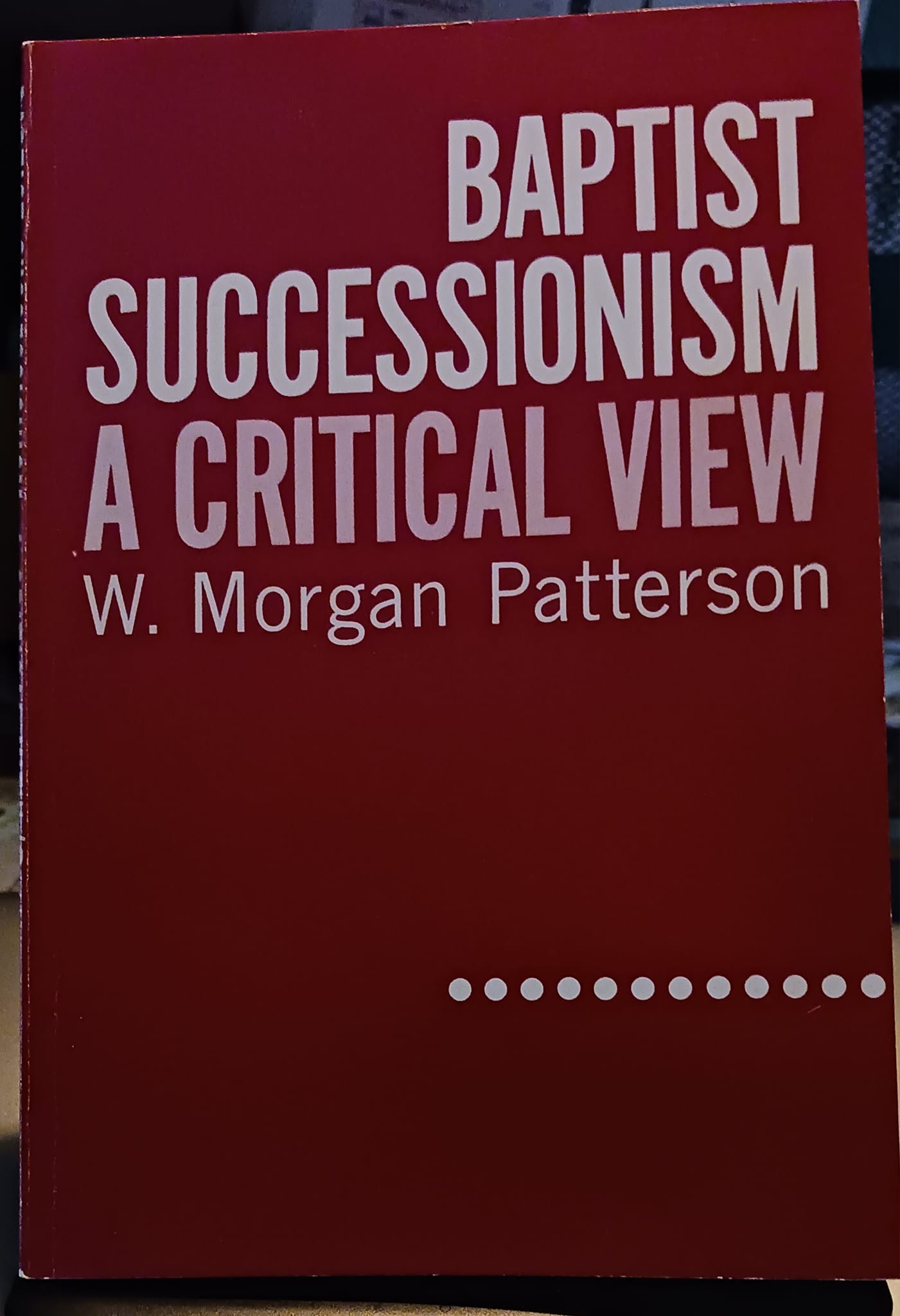
W. Morgan Patterson is a Southern Baptist historian, educated at Stetson University, New Orleans Baptist Theological Seminary, and Oxford University. This book was published in 1979, but I recently picked it up and read it in one day.
This is a concise book (four chapters, 75 pages) that analyzes the failures of the sloppy historical research of Baptists, such as Landmarkists, who believe Baptist churches are in a direct line of succession from New Testament times. The introduction explains there are four different variations of successionist writers, from those who believe they can demonstrate it and that is necessary, to those who believe neither. Chapter one explains how the successionist view was not that of the earliest Baptists, but in the 19th century it was formulated by G.H. Orchard and popularized by J.R. Graves. Chapter two shows how the successionist writers misused their sources. Chapter three shows their poor logic. Chapter four exams some of the motivations behind this erroneous view. The conclusion sums up the book, noting that the successionist view was predominant in the 19th century, but thanks to bold historians like William Whitsitt, whose research debunked the theory in the 1890s, the successionist view became a minority position among Baptist historians in the 20th century.
Patterson is scholarly historian, and he may assume a little too much about the historical knowledge of the reader when he refers to the Münster incident on page 22 without explaining that this was a violent takeover of the city of Münster, Germany in 1534 by an Anabaptist fringe group that came to be associated with Anabaptists and Baptists in the minds of their opponents, and he refers to the Whitsitt controversy on page 24 without explaining the controversy until later.
Patterson could have made his argument stronger by giving more specific details about the heretical beliefs of groups claimed by successionist writers to be Baptists, such as the Donatists, Paulicians, Cathari, etc.
While Patterson’s book is concise, it is substantive, and his reasons are sound. This is an effective critique.
How Mississippi Baptists nearly split over Landmarkism in 1860
Copyright by Robert C. Rogers and the Mississippi Baptist Convention Board.
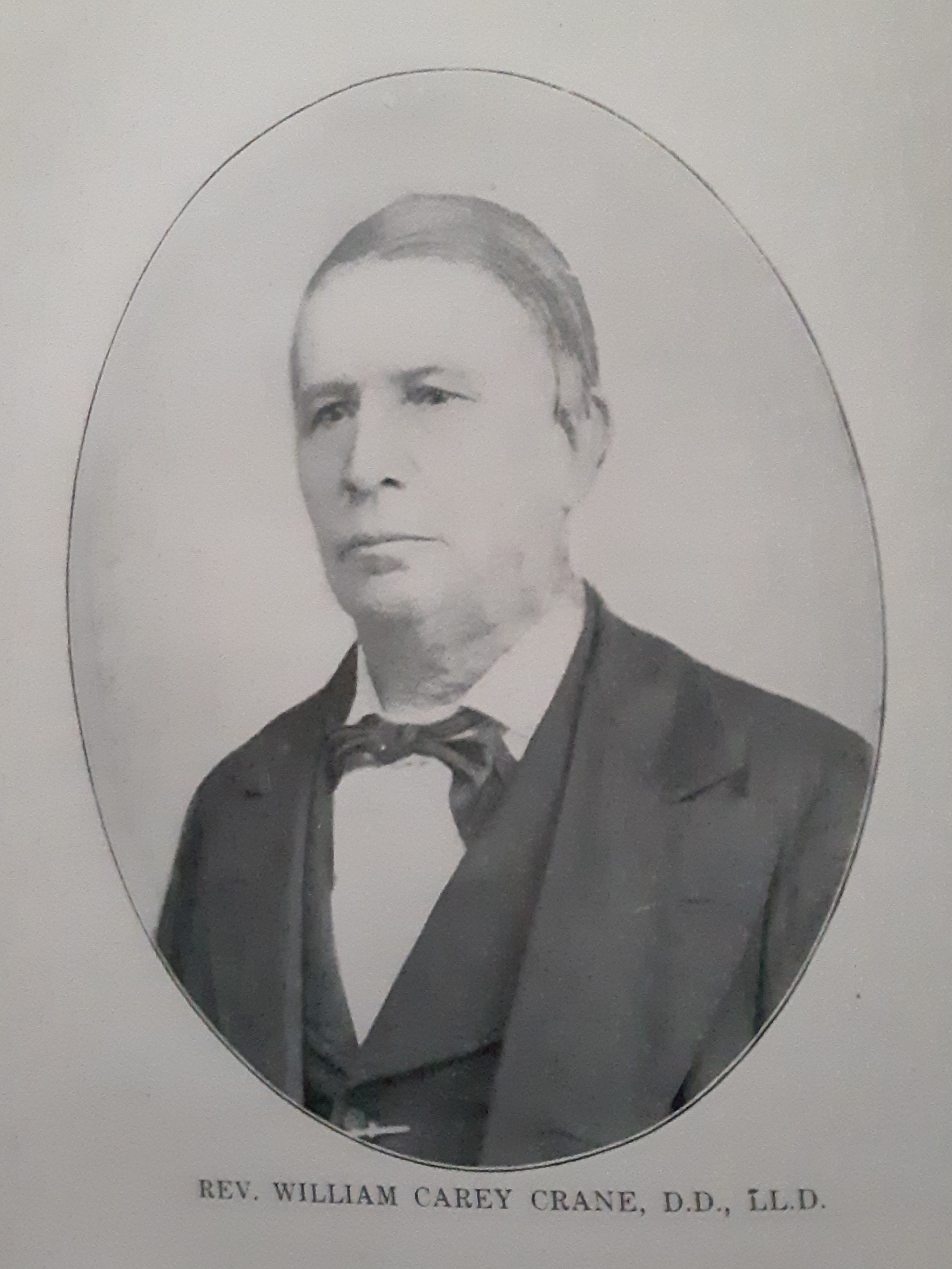
The influence of Landmarkism, particularly in north Mississippi, nearly led to a split in the Mississippi Baptist Convention in 1860. J.R. Graves was the leader of the Landmark movement, which taught that Baptists were the only true churches, and the only true baptism was baptism done in a Baptist church. Graves’s newspaper, The Tennessee Baptist, enjoyed a wide circulation in northern Mississippi, and siphoned off potential subscribers to The Mississippi Baptist, which had failed in 1849 but restarted by the State Convention in 1857. J. T. Freeman, editor of The Mississippi Baptist, spoke out against the efforts of William Carey Crane in north Mississippi. William Carey Crane of Hernando had established Semple-Broadus College at Center Hill, De Soto County, which he hoped would rival Mississippi College, the school in Clinton newly affiliated with Baptists. Crane had an opportunity to be president of Mississippi College in 1850 when it was taken over by the State Convention, but he had not taken the position. Crane was in “close allegiance” with J. R. Graves. This was apparent as early as 1855, when Crane was president of the State Convention, and the circular letter from the Convention promoted Landmark views. The circular said, “Baptist churches are the only Gospel churches in Christendom.” This circular repeated the Landmark version of Baptist history, claiming the first Baptist church was organized in the upper room in Jerusalem. Ironically, despite these views, Crane preached at the Methodist church in Lexington, when churches of other denominations provided use of their buildings for Baptist preachers during the 1857 Mississippi Baptist State Convention. Crane went so far as to organize a rival State Convention at Oxford in November 1859, called the General Association of Baptists in North Mississippi. Instead of representation based on financial contributions, it based representation on the local church, an approach favored by Landmark Baptists. Delegates were chosen from member churches and associations based on one delegate for every one hundred members.1
The Landmark controversy dominated the 1860 meeting of the Mississippi Baptist Convention in Natchez. Resolutions on the subject were introduced, and recognizing deep feelings on the subject, it was referred to the Committee on Resolutions, chaired by Isham Harrison, Jr. The committee reported a revised resolution to the Convention, which was approved. The resolution began to stating agreement with Landmarkers that a church is a congregation of immersed believers and autonomous in governing itself. However, it stated, “the issue presented and known as ‘An Old-Landmark Reset’ is not a just or sufficient cause of denominational or personal contentions… but is one of those questions about which differences of opinion and practice ought to have the broadest Christian toleration.” Having said that, the State Convention clearly came down on the side of those opposed to Landmarkism, by defending the use of mission boards and agencies: “Resolved, That the Baptist denomination of this State are emphatically a missionary people; and… we are not prepared to abandon those organizations which the wisdom of the experience of the denomination have adopted for that purpose, but will, as heretofore, heartily co-operate with them…” The resolution also affirmed the publication and use of Baptist “Sabbath School Literature,” which some Landmarkers attacked since it came from a board rather than a local church. Concerned “that these controversies, if they have not already, will… degenerate into a personal character mainly” they asked the State Convention President to appoint a committee of ten men as “to offer their mediation” and seek to reconcile the parties involved.2
The Mediation Committee named by the Mississippi Baptist Convention included people on both sides of the controversy, including J. T. Freeman of Jackson, editor of The Mississippi Baptist, and Moses Granberry of Grenada, who was treasurer of the north Mississippi splinter group. This “Peace Committee” met with resistance, as they gave a report at the 1861 State Convention, but “after remarks from a number of brethren, the Convention refused to adopt the report.” Nevertheless, Mississippi Baptists were able to avoid a split over Landmarkism, as Crane, it’s most influential leader, moved to Texas, and the outbreak of the Civil War turned their attention to more urgent issues of survival. However, the influence of Landmark ideas would continue to linger in Mississippi.3
SOURCES:
1 Minutes, Mississippi Baptist Convention, 1846, 16; 1855, 37; 1857, 8-10; Jesse L. Boyd, A Popular History of the Baptists in Mississippi (Jackson: The Baptist Press, 1930), 108-109.
2 Ibid, 1860, 17-19.
3 Ibid, 1860, 1861, 8; Boyd, 108.


 Bob Rogers