Blog Archives
Mississippi Baptists and the civil rights struggle in the 1950s and 1960s
Copyright by Robert C. Rogers and the Mississippi Baptist Convention Board.
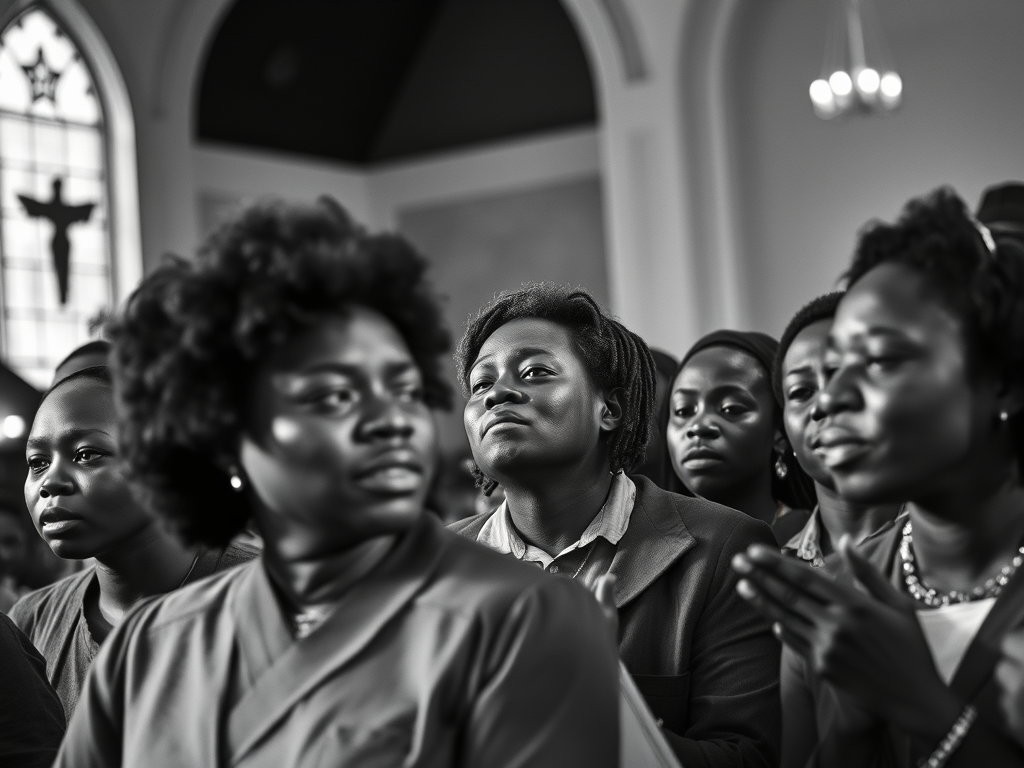
On May 17, 1954, the Supreme Court struck down public school segregation in Brown v. Board of Education, saying, “Separate educational facilities are inherently unequal.” The Southern Baptist Convention, meeting only weeks later, became the first major religious denomination to endorse the decision, saying, “This Supreme Court decision is in harmony with the constitutional guarantee of equal freedom to all citizens, and with the Christian principles of equal justice and love for all men.” Mississippi Baptists, however, would have none of it. A.L. Goodrich, editor of The Baptist Record, accused the Southern Baptist Convention of inconsistency on the issue for not endorsing other types of integration as well. Goodrich was “indignant” at this example of “the church putting its finger in state matters,” but he told Mississippi Baptist readers that they “need not fear any results from this action.” First Baptist Church, Grenada (Grenada) made a statement condemning the Supreme Court decision. The Mississippi Baptist Convention, meeting November 16-18, 1954, passed several resolutions, but it made no mention of the Supreme Court decision.1
The Supreme Court deferred application of integration, and Mississippi’s governor, Hugh White, met with Black leaders, expecting that they would agree to maintain segregated schools if the state improved funding for Black schools. H.H. Humes represented the largest Black denomination in the state, as president of the 400,000-member General Missionary Baptist Convention. He responded to the governor, “the real trouble is that for too long you have given us schools in which we could study the earth through the floor and the stars through the roof.”2
In the 1950s, most White Baptists were content with a paternalistic approach of sponsoring ministry to Black Baptists, while keeping their schools, churches and social interaction segregated. There were some rare exceptions. Ken West recalls attending Gunnison Baptist Church, (Bolivar) in the 1950s, when the congregation had several Black members of the church, mostly women, who actively participated in WMU. However, most White Baptists agreed with W. Douglas Hudgins, pastor of First Baptist Church, Jackson (Hinds), who told reporters that he did not expect “Negroes” to try to join his church. When pressed specifically about the Brown v. Board of Education decision of the Supreme Court, Douglas evasively called it “a political question and not a religious question.” Alex McKeigney, a deacon from First Baptist Church, Jackson, was more direct, saying that “the facts of history make it plain that the development of civilization and of Christianity itself has rested in the hands of the white race” and that support of school desegregation “is a direct contribution to the efforts of those groups advocating intermarriage between the races.” Dr. D.M. Nelson, president of Mississippi College, wrote a tract in support of segregation that was published by the White Citizens’ Council in 1954. In the tract, Nelson said that in part, the purpose of integration was “to mongrelize the two dominant races of the South.” Baptist lay leader Owen Cooper recalled that during the 1950s, he avoided the moral issue that troubled him later: “To be quite honest I did not ask myself what Jesus Christ would have done had He been on earth at the time. I didn’t ask because I already knew the answer.”3
In 1960, Baptist home missionary Victor M. Kaneubbe sparked controversy over segregated schools for another racial group in Mississippi, the American Indians. Kaneubbe was a member of the Choctaw Nation of Oklahoma, who came to Mississippi to do mission work with the Mississippi Band of Choctaw Indians. However, since his wife was White, no public schools would admit their daughter, Vicki. The White schools denied Vicki because she was Choctaw, and the Choctaw schools denied her because she was White. Kaneubbe enlisted the support of many White Baptists who campaigned for Vicki. This eventually led to the establishment Choctaw Central High School on the Pearl River Reservation in Neshoba County, an integrated school that admitted students with partial Choctaw blood.4
The minutes of Woodville Heights Baptist Church, Jackson (Hinds) illustrate how local churches began to struggle with the issue of integration in the 1960s. At the monthly business meeting of Woodville Heights in August 1961, the issue of racial integration came up. The minutes read, “Bro. Magee gave a short talk on integration attempts. Bro. Sullivan gave his opinion on this subject. Bro. Sullivan said he would contact Sheriff Gilfoy concerning the furnishing of a Deputy during our services.” Interestingly, the very next month, the pastor, Dr. Percy F. Herring, resigned, and so did one of the trustees, Samuel Norris. In his resignation letter, Herring did not make a direct reference to the integration issue, only saying, “My personal circumstances and the situation here in the community have combined to bring me to the conclusion that I should submit my resignation as Pastor of this church.”5
Woodville Heights was not alone in the struggle. Throughout the 1960s, many Mississippi Baptists wrestled with racism in their local churches, associations, and the state convention. In the early part of the decade, it was common for Southern Baptist churches in Mississippi to have what was called a “closed door policy” against attendance by Black people. White Baptists were known to be active in the Ku Klux Klan, such as Sam Bowers, leader of the White Knights of the KKK, who taught a men’s Sunday school class at a Baptist church in Jones County. Some Baptist leaders were disturbed by the violence of the KKK. In November 1964, a few months after the murders of civil rights workers in Neshoba County, Owen Cooper presented a resolution on racism at the state convention. Cooper’s resolution, which was adopted, recognized that “serious racial problems now beset our state,” and said, “we deplore every action of violence… We would urge all Baptists in the state to refrain from participating in or approval of any such acts of lawlessness.” In 1965, it was front-page news in The Baptist Record when First Baptist Church, Richmond, Virginia admitted two Nigerian college students as members. When First Baptist Church, Montgomery, Alabama adopted an “open door policy” toward all races the same year, it was again news in The Baptist Record. Clearly, it was not yet the norm in White Mississippi Baptist churches.6
As the decade progressed, some Mississippi Baptists began to accept integration and work toward racial justice and reconciliation. Tom Landrum, a Baptist layman in Jones County, secretly spied on the White Knights of the Ku Klux Klan. Landrum’s reports to the Federal Bureau of Investigation (FBI) were instrumental in the arrest of the Klansmen who killed civil rights leader Vernon Dahmer in 1965. Earl Kelly, in his presidential address in 1966, told the Mississippi Baptist Convention that “the race question” had to be faced. Baptist deacon Owen Cooper took this challenge seriously, helping to charter and becoming chairman of Mississippi Action for Progress (MAP) on September 13, 1966; MAP was able to secure millions of dollars to keep alive Head Start programs, which primarily benefitted impoverished Black children, that were in danger of losing their funds. When civil rights leader Martin Luther King, Jr. was assassinated in 1968, The Baptist Record quoted Baptist leaders who expressed “shock, grief and dismay at the murder” of King. In 1969, Jerry Clower, the popular Mississippi entertainer and member of First Baptist Church, Yazoo City (Yazoo), was speaking out against racism at Baptist events. Clower confessed that as a child, he was taught that “a Negro did not have a soul, but he found out he was wrong when he became a Christian.” By that year, 1969, all the state colleges and hospitals had agreed to sign an assurance of compliance with racial integration.7
(Dr. Rogers is the author of Mississippi Baptists: A History of Southern Baptists in the Magnolia State, to be published in 2025.)
SOURCES:
1 Jesse C. Fletcher, The Southern Baptist Convention: A Sesquicentennial History (Nashville: Broadman and Holman Publishers, 1994), 200; Annual, Southern Baptist Convention, 1954, 36; Minutes, Mississippi Baptist Convention, 1954, 45-49; The Baptist Record, June 10, 1954, 1, 3; July 8, 1954, 4.
3 Ibid, 62-63; Letter from Ken West, Leland, Mississippi, to Bob Rogers, Hattiesburg, Mississippi, 28 January 2022, Original in the hand of Robert C. Rogers; D. M. Nelson, Conflicting Views on Segregation (Greenwood, MS: Educational Fund of the Citizens’ Council, 1954), 5, 10; The Clarion-Ledger, April 4, 1982, cited in Dittmer, 63.
4 Jamie Henton, “Their Culture Against Them: The Assimilation of Native American Children Through Progressive Education, 1930-1960s,” Master’s Theses, University of Southern Mississippi, 2019, 85-92.
5 Minutes, Woodville Heights Baptist Church, Jackson, Mississippi, August 9, 1961; September 6, 1961.
6 Curtis Wilkie, When Evil Lived in Laurel: The ‘White Knights’ and the Murder of Vernon Dahmer (New York: W.W. North & Company, 2021), 26, 43-51; Minutes, Mississippi Baptist Convention, 1964, 43-44; The Baptist Record, January 28, 1965, 1; April 29, 1965, 2.
7 Wilkie, 20, 138; Dittmer, 377-378; The Baptist Record, November 17, 1966, 1, 3; December 21, 1967; April 11, 1968, 1; July 17, 1969, 1, 2; November 29, 1969, 1.
The first Baptist missions to Native Americans in Mississippi

Copyright by Robert C. Rogers and the Mississippi Baptist Convention Board.
Native Americans were an area of concern for Mississippi Baptists. The white man wanted the Indian lands, and but the Baptists desired the conversion of their souls. In 1817, the Mississippi Baptist Association began an aggressive policy by sending Thomas Mercer and Benjamin Davis to visit the Creek Indians and see what cold be done to establish the gospel among them. The missionaries started out on their mission, but the project collapsed when Mercer died. Baptists in Kentucky started an academy for Choctaws in that State in 1819, but it closed in 1821. Richard Johnson, a Baptist leader in Kentucky, then opened an academy for Mississippi Choctaws in 1825 in the district of Choctaw chief Mushulatubbee, which was approximately the area between the modern cities of Columbus and Meridian. This school’s curriculum was secular, but the teachers hoped to “civilize” the Choctaws and lead them to faith in Christ. They met with some success among students, but the missionaries had little impact on adults in the tribe. A young female student wrote: “I do not know that one adult Choctaw has become a Christian. We all pray for them, but we cannot save them; and if they die where will they go? May the Lord pour out his Spirit upon the poor Choctaw people.” It would be many years before missions to the Choctaw tribe would have much impact.
This is one in a series of blog posts about Mississippi Baptist history. Click the links on this blog to read other posts on Mississippi Baptist history. More stories to come.
(Source: T. M. Bond, A Republication of the Minutes of the Mississippi Baptist Association (New Orleans: Hinton & Co., 1849), 60, 71; Clara Sue Kidwell, Choctaws and Missionaries in Mississippi, 1818-1918 (Norman, OK: University of Oklahoma Press, 1995), 100-113.)
The Baptist pioneer trek to Mississippi
Copyright by Robert C. Rogers and the Missississippi Baptist Convention Board
(In a previous post, I told how a group of South Carolina Baptists decided to flee the devastation of the Revolutionary War and make a new life in Mississippi. This post tells the story of how they got to Mississippi.)
The Curtis family decided to establish their new homes along the Mississippi River near Natchez, in what was then called West Florida. After the French and Indian War in 1763, the British took Florida from Spain, (West Florida included the panhandle of modern Florida and the areas now in southern Mississippi and Alabama), and Englishmen from the colonies had begun to settle there. The stories of productive farmlands that were free to all settlers and the peace they would have from the turmoil of the fratricidal strife in South Carolina must have made the prospects of beginning again very enticing. In 1779, Spain took advantage of the British distraction with the American Revolution, and Spain conquered the Natchez district from the British and added it to West Florida. Despite this, the emigrants did not anticipate any difficulty from this source. As we shall see, they were wrong.
The route the migrants followed to their new homes was the familiar one used by many who were a part of the great westward migration, but it was not an easy trek. Our source for this journey is John Griffing Jones, a direct descendant of one of the travelers, John Jones. He writes that they left their homes in South Carolina early in 1780, loading their horses with their clothes, furniture and tools, and traveled north by land, crossing the Appalachian Mountains, and arrived on the banks of the Holston River near the present location of Kingsport, Tennessee, a trip of about 300 miles. Primitive roads and mountains made the trip difficult, as they carried their supplies on pack horses, the men traveling by foot. They arrived on the Holston River in the early spring and immediately began the task of raising a crop of corn, hunting game to salt and preserve, while building flatboats for the river journey that lay ahead.
In the fall of 1780, the travelers were ready to begin their voyage downriver. The party included Richard Curtis, Sr., and his wife Phoebe; two brothers William and Benjamin Curtis and their wives; Richard Curtis, Jr. and his wife Patsy; John Courtney and John Stampley and their wives (Hannah Curtis Courtney and Phoebe Curtis Stampley, respectively, daughters of Richard Curtis, Sr.); John Jones, his wife, and son William; and others whose names are unknown. On the second boat were Daniel and William Ogden and their families, and a Mr. Perkins and his family. The records do not reveal the names of the occupants of the third boat.
The emigrants knew from the experience of other travelers that they might have trouble with the Indian tribes. After all, they were planning to take lands formerly occupied by the Indians and make permanent homes for themselves. The natives did not want to give up their lands. The French had virtually exterminated the Natchez tribe in 1732, although other tribes such as the Choctaws were still in the area, but they knew they would encounter other tribes along the way, especially since the hostility of the Indians was encouraged and supported by the British against Americans during the Revolutionary War. In order to protect themselves, the emigrants always traveled in as large groups as possible.
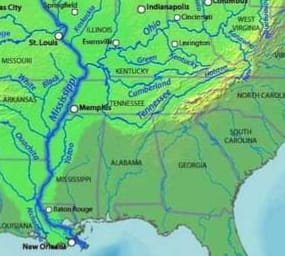
The migrants’ travel took them down the Holston River for 87 miles to what is now Knoxville. There, they entered the Tennessee River. The three boats had only traveled about 40 miles downriver, when they faced their greatest danger. This was the country of the Cherokees, who had been faithful allies of the British during the Revolution. These Indians attacked the flotilla on a bend in the Tennessee near the mouth of the Clinch River, near present-day Kingston. The Cherokee attack focused on the first flatboat, occupied by the Curtis and Jones families. Some of the women and children took over the oars while the men fired their rifles in defense. Hannah Courtney was grazed on the head by a ball, and Jonathan Curtis was slightly wounded on the wrist. While John Jones fired his rifle, his 12-year-old son worked the oars and his wife held up a thick stool made of poplar wood as a shield. A bullet hit her stool, and later Mrs. Jones laughingly remarked that “their guns were very weak, as they did not make a very deep impression on the stool.” The second boat floated by the point of attack unharmed, but the third boat was far behind, and became an easy target for the Indians. The occupants of the third boat had contracted smallpox, and so they were floating in the rear and camping at a separate place each night. The Cherokees killed everybody on the third boat except one woman whom they captured, thereby also contracting smallpox, which took the lives of many in the tribe.
The survivors made the rest of their trip without further molestation. They traveled about 600 miles down the winding Tennessee River, riddled with rocky shoals and swift currents, until they met the Ohio River near the city of Paducah, Kentucky. A short trip of 44 miles on the Ohio River brought them to the mighty Mississippi River at Cairo, Illinois. Then they traveled another 450 miles down the Mississippi River. They landed near the mouth of Cole’s Creek, about twenty miles north of Natchez, settling 3.5 miles eastward on the creek at “Curtis Landing,” and established a village known as Uniontown, west of the present town of Fayette. Given the distance they traveled, at the mercy of the flow of the rivers and resting each night, the trip should have taken several months. Jack Curtis, a descendant of Richard Curtis who has done extensive research on the family, estimates that they arrived in the Natchez District about March, 1781. By the grace of God, they had survived a trek through the mountains, an Indian attack and navigated over 1,000 miles of rivers to reach their new home.
Dr. Rogers is revising and updating A History of Mississippi Baptists.


 Bob Rogers