Blog Archives
Best biographies I read in 2025
If you know me, you know that I nerd out on history. In 2025, I read a lot of biographies. These were particularly interesting to me:

*Confessions of St. Augustine. The spiritual and psychological autobiography of one of the greatest theologians in history. What more can I say? Read it!

*William Carey, by S. Pearce Carey. A masterful story of the father of modern missions by his great-grandson. Inspiring beyond measure. Thanks to Dr. Bennie Crockett for recommending it.
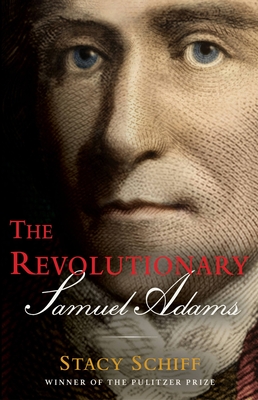
*The Revolutionary, Samuel Adams, by Stacy Schiff. With our nation’s 250th anniversary coming up, I wanted to read up on that era. Schiff shows how Samuel Adams was perhaps the greatest instigator behind the revolution. Fascinating.
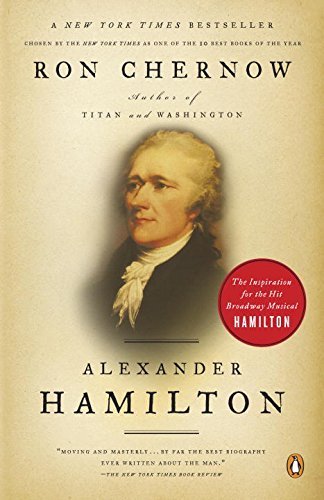
*Alexander Hamilton, by Ron Chernow. No wonder they made a Broadway play based on this book. The guy had more drama in his lifetime than some nations have in their entire history.

*The Pirates Lafitte, by William C. Davis. Entertaining and illuminating about the Gulf Coast culture and history in the early 1800s through the raucous lives of the pirates Jean and Pierre Lafitte. I really enjoyed this one.
The personal spat between Washington and Hamilton that reflects human nature
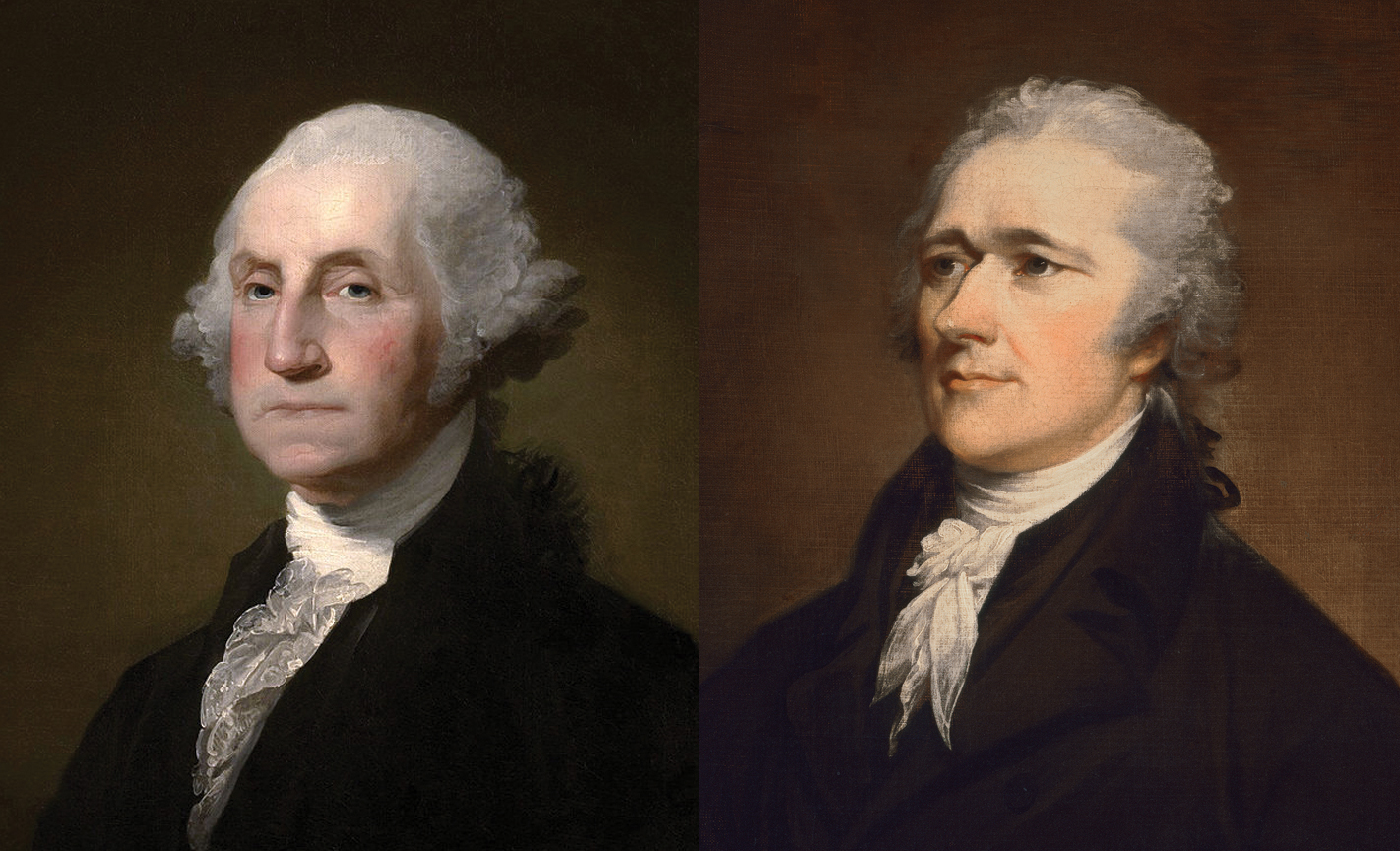
In Ron Chernow’s biography, Alexander Hamilton, he describes the personal disagreement between George Washington and Alexander Hamilton that mirrors the emotions and actions that employees and employers have to this day.
Early in the American Revolution, General Washington hired Hamilton as his aide-de-camp, recognizing Hamilton’s brilliant reasoning and writing skills. Hamilton was an enormous help, able to express Washington’s wishes in letters and other communications, including fluent messages in French. He even served as his emissary several times. However, Hamilton’s ability became a curse, because when opportunities came for Hamilton to be promoted to colonel or general and command a fighting unit, he was passed over because Washington desired to keep him by his side. It frustrated Hamilton to remain a lieutenant colonel.
One day, Washington requested to speak with Hamilton in his office, and Hamilton acknowledged the request but delayed for a few minutes to finish communicating messages to two other people in the building before turning up the stairs toward the general’s office. He was surprised to find Washington standing on the stairs, demanding to know why he had kept him waiting “these ten minutes.” Hamilton denied that he had been tardy and became so incensed that he resigned. Rather than talk him out of it, Washington accepted his resignation, losing his right-hand man, who returned to civilian life for a time.
This interesting encounter reflects human nature on several layers. Both men were proud. Hamilton was likely feeling unappreciated because he had been passed over for a promotion. Washington was offended that Hamilton did not immediately drop what he was doing to speak to him, since Washington was his commanding officer. What do you think they should have done differently? Was Washington wrong to scold Hamilton for the ten-minute delay? Should Hamilton have apologized and revealed his frustration over his lack of promotion? Should Washington have refused Hamilton’s resignation and spoken to him personally about it?
Later in the war, Hamilton was able to return to the war as an officer commanding a unit, and he led his men to capture a redoubt in the climactic battle of Yorktown. Washington recognized his talents and continued to be Hamilton’s patron. Both men continued to have great respect for each other and were big enough to forget the past. And later, when Hamilton was scandalized for committing adultery, Washington was able to forgive him, knowing how valuable he was to the country.
Beyond war, politics, and economics, history can also teach us lessons in personal relationships.
The Mississippi Baptist story begins in South Carolina

Copyright by Robert C. Rogers and the Mississippi Baptist Convention Board.
The story of Mississippi Baptists begins in South Carolina. The Baptists of South Carolina furnished the first Baptist migrants to Mississippi and thus are of special importance in the history of Mississippi Baptists. Historians record that Rev. Richard Curtis, Jr. was 25 years old when he traveled with his parents and a group of fellow Baptists, who migrated from the Pee Dee River Valley of South Carolina in 1780 to settle on Cole’s Creek, about 20 miles north of Natchez, which at the time was controlled by Spain as part of West Florida. The precise location in South Carolina where these Baptists came from is unclear. One theory seeks to connect Richard Curtis and Mississippi Baptists to the historic Welsh Neck Baptist Church in Society Hill, in what is now in Darlington County, South Carolina. However, the church minutes of Welsh Neck Baptist Church from the time period are available for examination, and they never mention any of the Baptists who first settled in Mississippi. It seems more likely that they came from the region of Florence, South Carolina. There Richard Curtis, Sr., father of Richard Curtis, Jr., lived on Lake Swamp of Lynches Creek, near modern Florence, South Carolina, in 1766. In addition, Richard Curtis, Jr. was ordained by Benjamin Mosely when he fled back to South Carolina in the 1790s; Mosely was pastor of Ebenezer Baptist Church in Florence, South Carolina from 1784-1794.
The Revolutionary War period was one of great disturbance throughout South Carolina. There was a large group of Tories who were fanatical in support of England, but there was an equally powerful and more numerous citizenry who were American patriots. The conflict of these two groups stifled the economic development of South Carolina and brought fear and frustration into many parts of the colony. Over a hundred battles between American patriots and the British were fought in South Carolina alone. In 1774, Richard Curtis, Sr., and two of his sons, Benjamin and William Curtis, and his step-son, John Jones, enlisted with the American forces of Francis Marion, nicknamed the “Swamp Fox.” The records reveal that they served in three campaigns against the British, and then they were mustered out in 1779. In 1779 conditions had become almost unbearable, especially when British forces occupied Charleston. From this center, the British began a campaign to bring all of the colony under their control. The British were eventually overcome by General Nathanael Greene and his forces, but the turmoil and distress created by the war were undoubtedly a factor in encouraging some South Carolinians to seek a more peaceful place to live.
The Curtis family decided to establish their new homes along the Mississippi River near Natchez, in what was then called West Florida. After the French and Indian War in 1763, the British took Florida from Spain, and Englishmen from the colonies had begun to settle there. The stories of productive farmlands that were free to all settlers and the peace they would have from the turmoil of the fratricidal strife in South Carolina must have made the prospects of beginning again very enticing. In 1779, Spain took advantage of the British distraction with the American Revolution, and Spain conquered the Natchez district from the British and added it to West Florida. Despite this, the emigrants did not anticipate any difficulty from this source. As we shall see, they were wrong.
Dr. Rogers is writing a new history of Mississippi Baptists.


 Bob Rogers